Can large language models retain information from past interactions and reuse it in the next task?
Introducing MemT-1.0: Towards Memory-Native Evolution.
This time, we've built memory directly into the model architecture.
Our MemT-1.0-Nano and MemT-1.0-Flash make persistent memory part of model computation, carrying information across interactions.
Without access to the original history at query time, the two models achieve average scores of 50.6 and 47.0 across 11 memory benchmarks, ranking #1🏅 and #2���� among the parametric memory methods evaluated.
We also explore experience reuse in coding agents: retrieved procedural experience is written into internal memory to help the model complete subsequent tasks.
A correct answer can still hide stale or unauthorized memory.
Our latest article shares 12 practical measures to observe agent memory after launch: write quality, retrieval, corrections, deletion, and task outcomes.
Read more to know more 👇🏻 https://t.co/7T3zhjXaaM
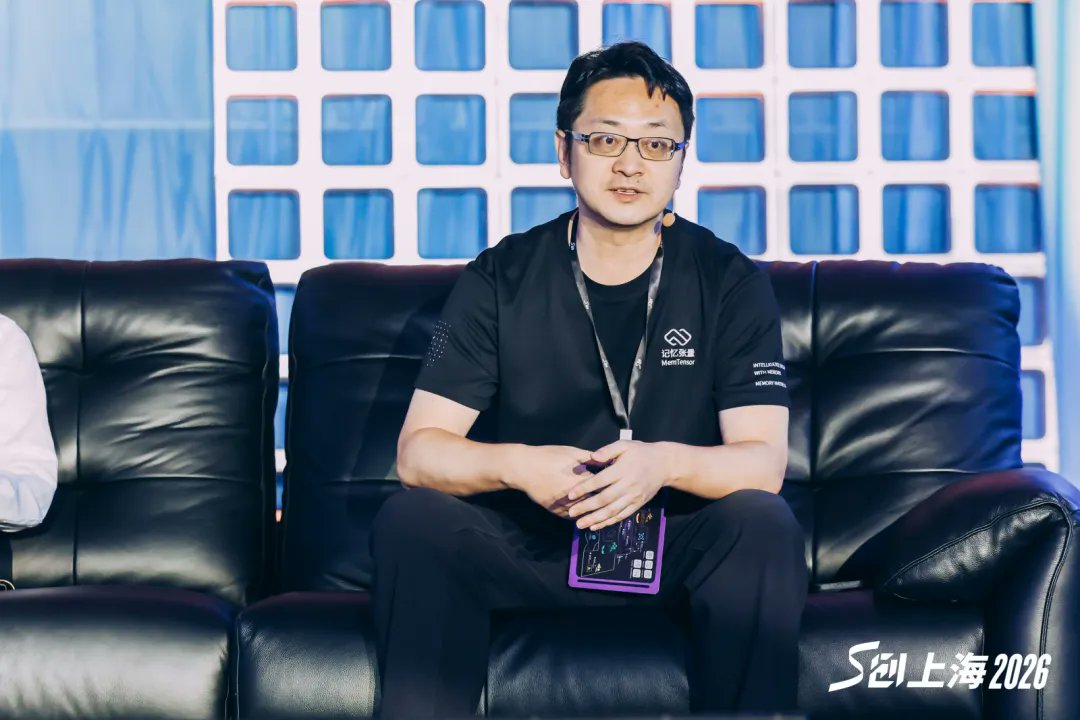
September 23 at S-Tron Shanghai 2026 Innovation Event, our founder & CEO, Feiyu Xiong @superbearmaster, joined Angus Dunn, Patricia Bubner, PhD, and Bing Li, to discuss a question many founders are facing now: If AI lowers the barriers to building a startup, do founders still need to move to Silicon Valley?
For our team, the most relevant part of the conversation was the distinction between making execution easier and making decisions better.
AI can help founders code, automate operations, and iterate with smaller teams. But the harder questions remain human: Which direction is worth pursuing? How do we evaluate what we’ve built? What expertise is needed to know whether an answer is actually useful?
Feiyu shared that AI-era startups will need 2 kinds of talent: practitioners who can turn AI into deliverables, and technical specialists with deep architectural and domain expertise. Tool literacy will become widespread; industry knowledge will become scarcer and more valuable.
The discussion also explored why Silicon Valley’s role is changing rather than disappearing. Teams can build globally, open source can create a path to early users, and a well-positioned lightweight model can gain traction without chasing the state of the art. But biotech still needs physical labs, and strong industry networks still benefit from being in the room.
Our takeaway: AI is a powerful enabler, not a substitute for judgment. Sustainable advantage still comes from strategic clarity, domain expertise, and the ability to turn insight into something people can use.
Thanks to Bing, Angus, Patricia, and the S-Tron team for a thoughtful conversation. We're bringing these questions back as we continue building for an AI-native world 🪐
MemOS can help agents carry memory across sessions, so customers don't repeat their story when switching.
The example follows a headphone exchange, showing reusable workflows, policy retrieval, and isolated customer memories.
Check the full walkthrough👇🏻 https://t.co/6hsl4iaRn2
Retrieval can’t repair a memory that was wrong when written.
One lucky query becomes a reusable rule, and the error spreads. Agents need an admission layer that separates user statements, facts, inferences, and procedures first.
Read more 👇🏻 https://t.co/slwpjTSado
Anthropic's Claude made memory visible and editable, which is real progress.
But production agents need a governed memory layer: what’s stored, who can retrieve it, how it’s updated or deleted, independent of any model or chat surface.
Read more 👇🏻 https://t.co/S2lJahdBGc
Agents need memory that stays useful as users, facts, and tasks change.
Our latest guide explains how agent memory works with RAG and compares memory solutions on lifecycle, access control, deployment, and fit.
Read the full guide 👇🏻 https://t.co/YtzAQ0zHw9
MemOS is heading to SF @Techweek_ 🚀
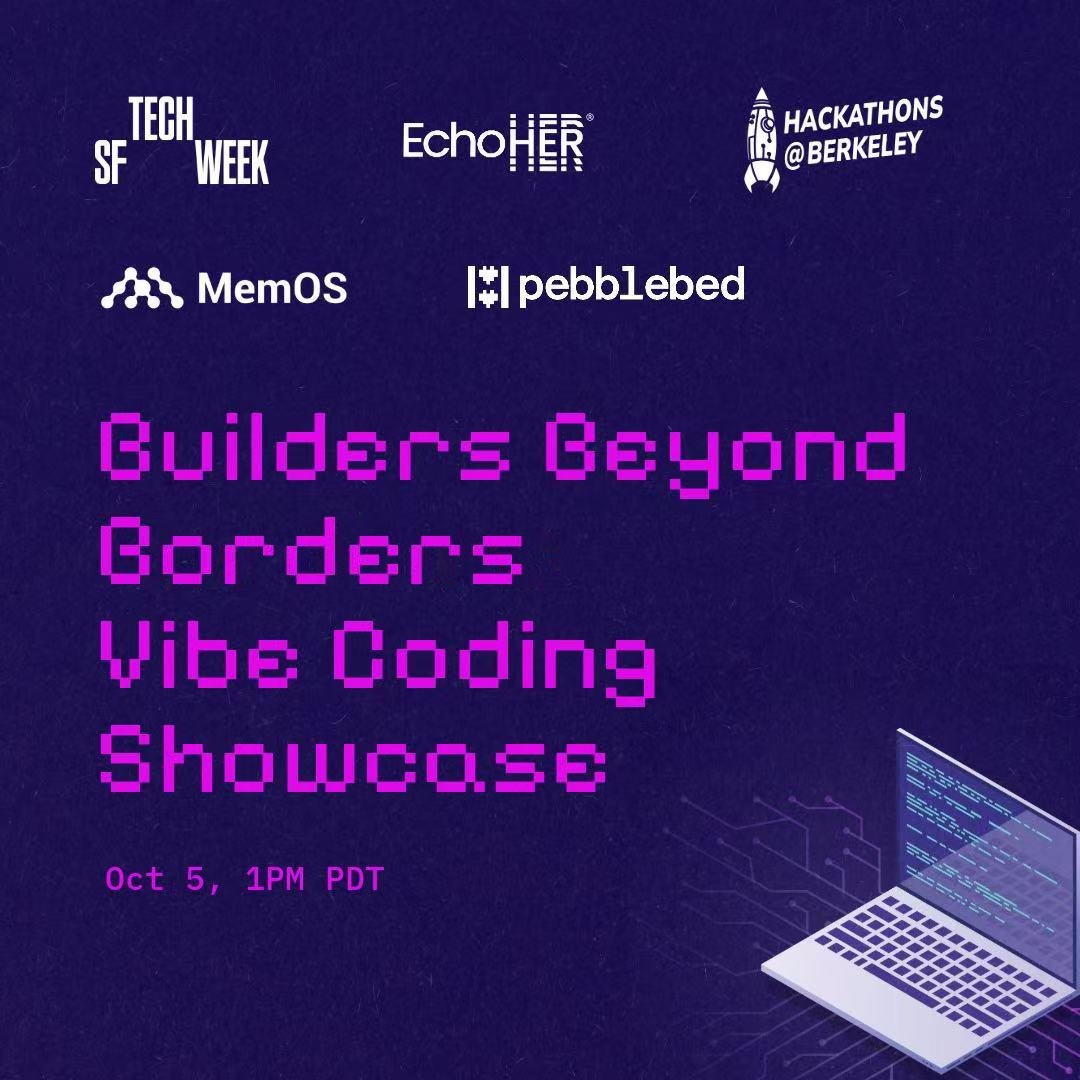
On October 5, we're co-hosting the Builders Beyond Borders: Vibe Coding Showcase with EchoHer, @CalHacks, and @pebble_bed in San Francisco.
Building with AI? We'd love to see what you're working on.
→ Submit your project: https://t.co/yyd3jeaiJg
→ Join us: https://t.co/HovSIwuVLX
BREAKING NEWS: SF and LA Tech Week calendars are LIVE!
You can now register for events: https://t.co/IElfyON9rg
2,300+ event submissions across San Francisco and Los Angeles
📍SF: October 5-11
📍LA: October 12-18
People always ask about the data, so a few stats:
-SF once again takes the crown for “biggest tech week ever” with 1,500+ events
-1 in 7 SF events is about agentic AI: 213 events in SF and 53 in LA are explicitly about agents (in the title or description). In 2024 there were only about a dozen!
-There are 124 hackathons across the two weeks, and the variety is huge: everything from hardware to defense, media/creative, fintech, civic/social good, etc. Everyone is a builder now.
- LA, the OG Tech Week (now in its fifth year!), has seriously doubled down on deep tech with 100+ events and lots of El Segundo activity.
Last year, Tech Week saw attendees from over 100 countries. It’s going to be a party.
See you there! 🥳
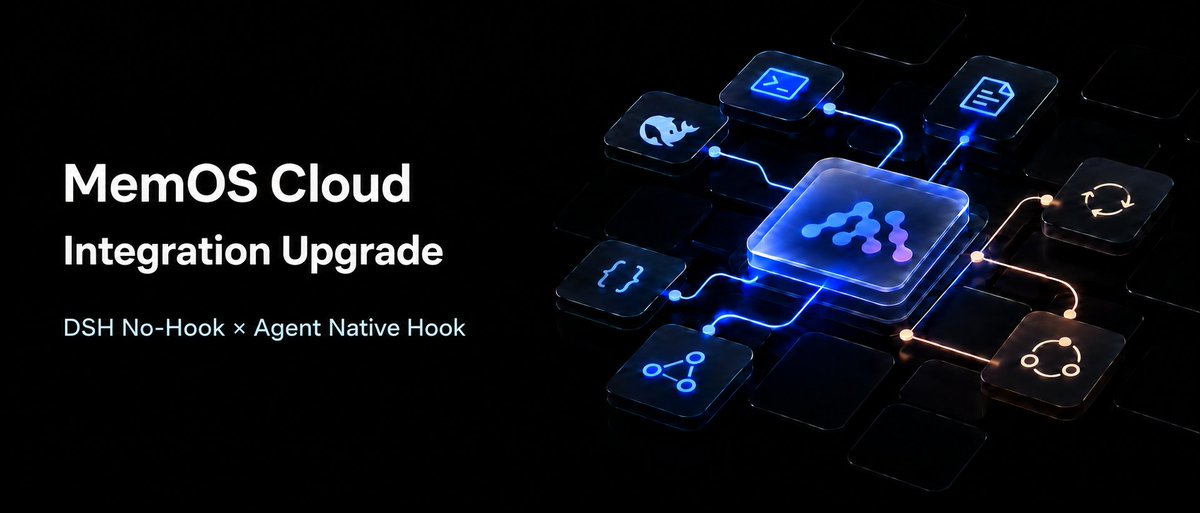
MemOS Cloud CLI just got DSH support + Native Hook integration 🔌
Same project, new session, same background to explain again and again.
Your prefs, past decisions & lessons from completed tasks shouldn't disappear into old chats.
Once initialized, you can keep working while the memory flow runs with your conversations. No need to manually run memory commands each time.
⚡ On LoCoMo, MemOS CLI uses over 80% fewer tokens than OpenClaw’s native memory.