What happens when your users can’t tell you if your product failed?
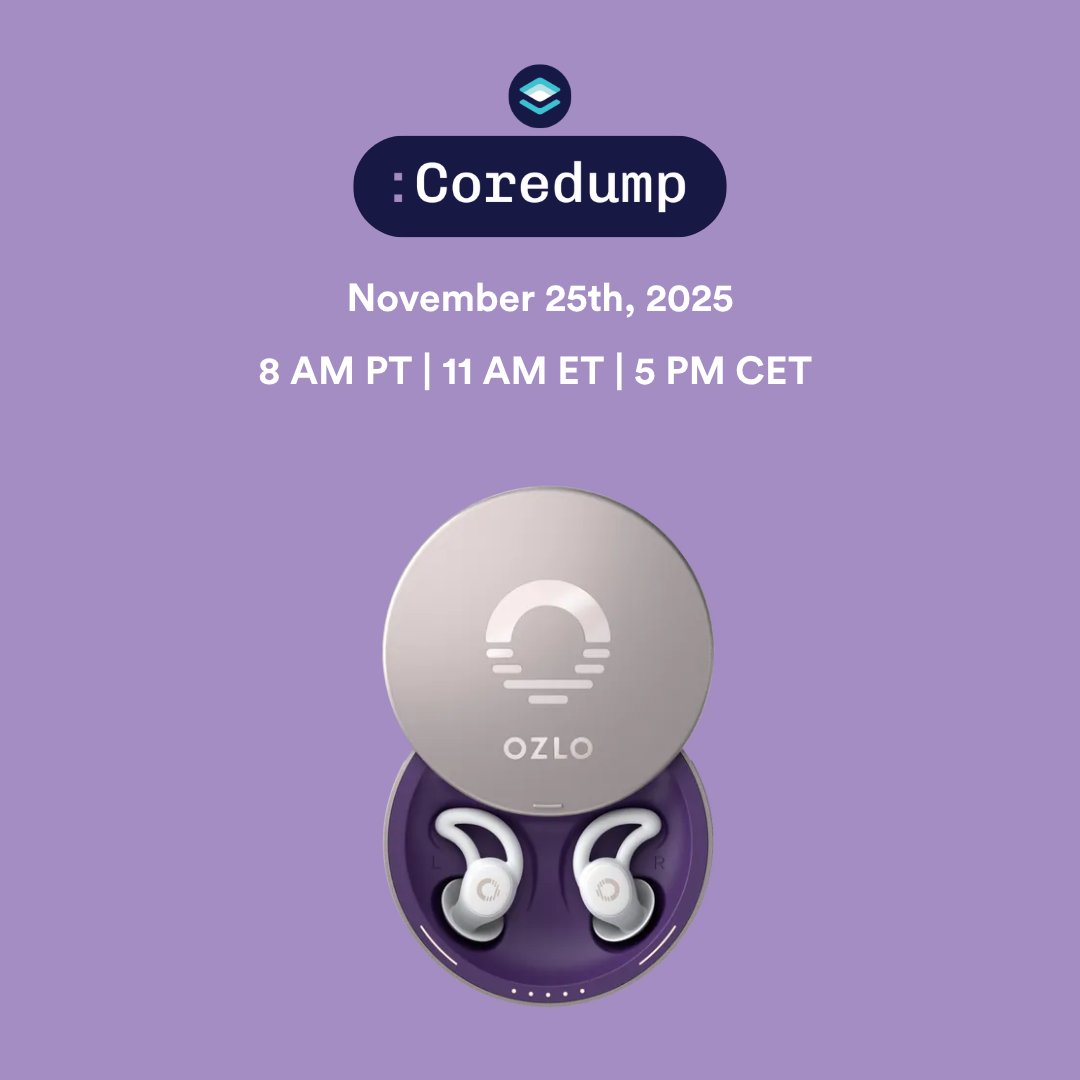
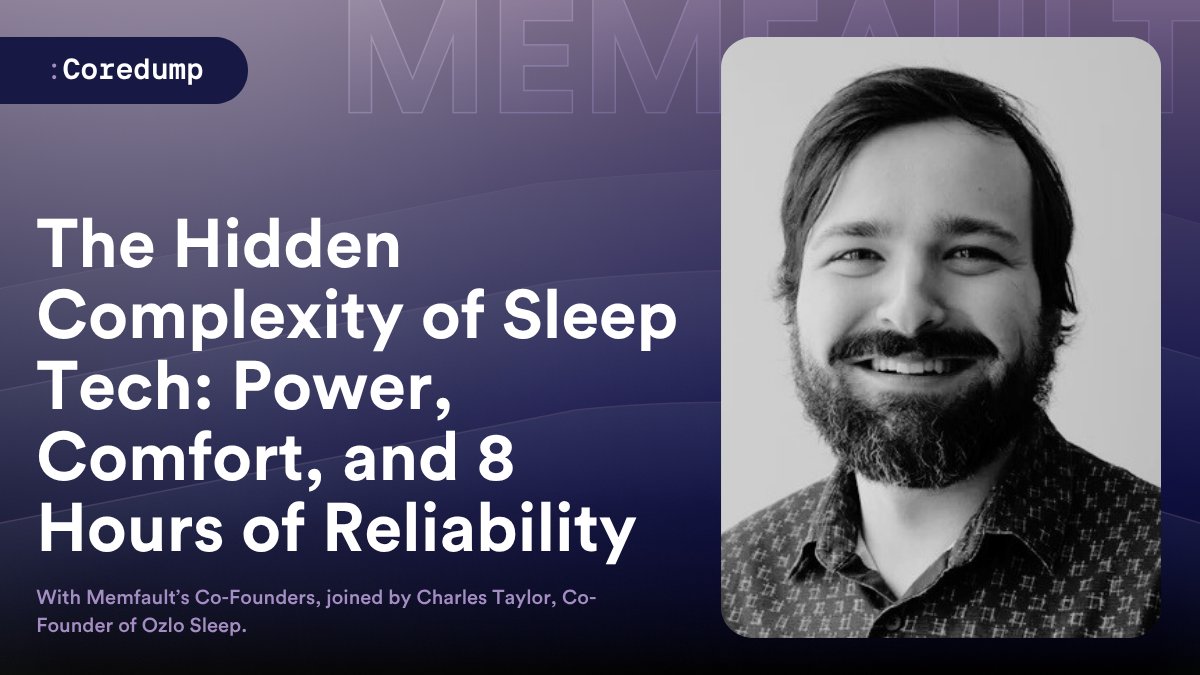
We’re live in 4 hours with @OzloSleep’s Charles Taylor to talk about the engineering behind the new Sleepbud — built to perform all night while its user sleeps.
Join us →
https://t.co/dxfjcJiyUg
The Sleepbud’s story is a rare one in consumer tech:
2017 → Born at @Bose as a sleep-focused wearable
2018 → Launched, loved, then quietly discontinued
2023 → Revived by ex-Bose engineers under @OzloSleep
2024 → Back in retail with smarter, longer-lasting design
Register to hear the full story live → https://t.co/5yzYSFtiqZ
Most embedded engineers start from either hardware or software—but rarely both.
This practical roadmap by Meysam Parvizi helps bridge that gap, with structured guidance and resources shaped by real-world experience.
Read → https://t.co/vMVXesiaie
#EmbeddedSystems#Firmware
In Part 2 of the Open Ring series on our developer blog, Interrupt, Mikolaj Stawiski breaks down the rigid-flex PCB, antenna tuning, dual-MCU architecture, and the $10 haptics hack that made it all work.
https://t.co/bBTKUysS43
#embedded#wearables#opensource
Our favorite articles & learnings from June have been bundled up into our monthly roundup; now available on our developer blog, Interrupt.
Check out what we were reading in June: https://t.co/wreTHwiYgd
#embedded#embeddedsystems#firmware#hardware#developerreads
🚀 It’s official: @Memfault is joining @NordicTweets
We’re launching the first chip-to-cloud platform for connected device lifecycle management.
⚠️ Memfault will continue to support all hardware — not just Nordic. Learn more: https://t.co/5S6YZ1s7Mj
How do you build a #BLE device that fits on your finger?
In Part 1 of this new series on Interrupt, Mikolaj Stawiski breaks down the prototyping and teardown process behind Open Ring - a tiny, open source smart ring.
https://t.co/cQxiLp0RUy
#embedded#hardware#wearables #opensource
What happens when you mix @ZephyrIoT, a retro internet protocol, and an AI assistant?
In 3 hours (and 15 prompts), Gophyr was built—a working Gopher client for Zephyr using Claude.
Old-school protocol, modern embedded workflows: https://t.co/E1ZPXkJVZb
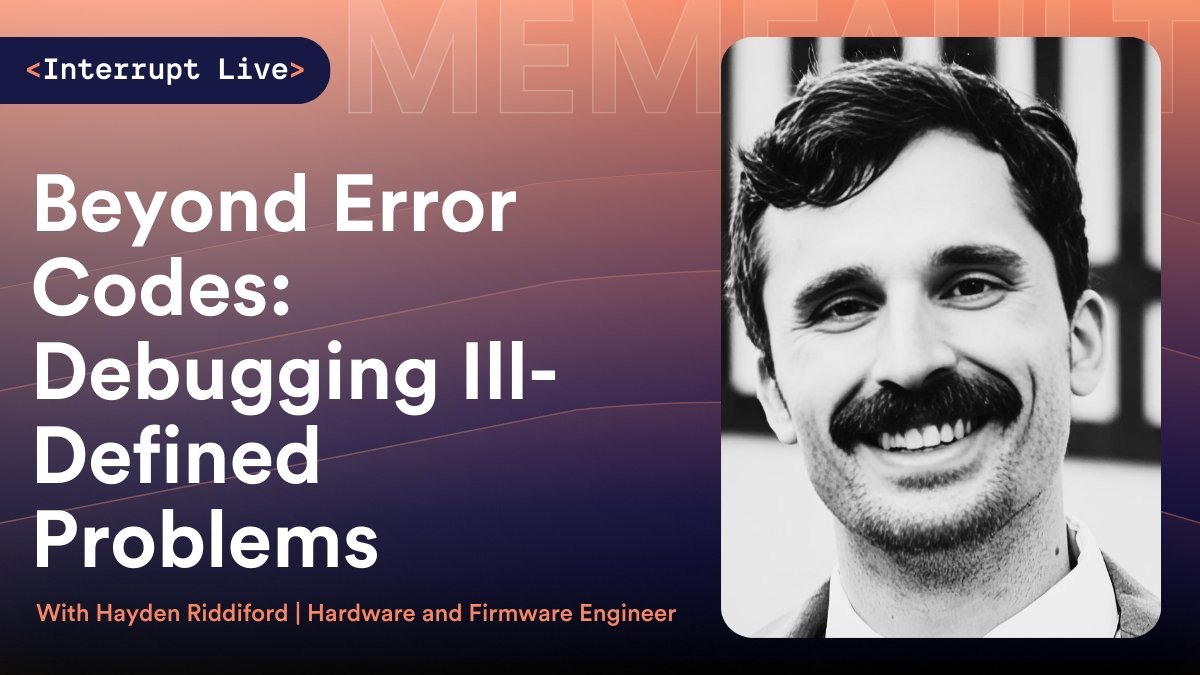
We’re going live in t-minus 3 hours with Hayden Riddiford.
Hayden has lived with the bugs that don’t show up in logs, and today on Interrupt Live, he’s breaking down exactly how he found them.
We’re talking memory corruption, stack clobbering, and the kind of debugging that starts when your tools fall short.
If you read "Debugging Ill-Defined Problems" on the Interrupt blog this month, now’s your chance to see how it played out in real time.
The session is live, unscripted, and only 20 minutes.
Join Us → https://t.co/9URZvNQ8By
📢 Just dropped: The podcast for people who build devices that last.
We know technical leaders, product managers, and embedded engineers are busy. That’s why we made Coredump Sessions available on the go.
Coredump Sessions is now a podcast. 🎙️
Tune in for conversations with engineering leaders from @BleconHQ ,@1NCE_IoT ,@GoliothOfficial, and more. It’s the same sharp insights, now in a format you can queue up on your commute, at your bench, or between builds.
If you're building connected devices and want to stay ahead of the curve, this podcast was made for you.
Subscribe on Spotify, Apple Podcasts, Amazon Music, or wherever you get your podcasts → https://t.co/9BUtLzRCZz
Hayden Riddiford has seen things. He's lived the bugs that don’t show up in logs, and figured out how to fix them. We need to know every detail!
This Friday on Interrupt Live, Hayden will walk us through how he tracked down memory corruption and stack clobbering issues that left no clear trace.
From his latest Interrupt contribution: "Debugging Ill-Defined Problems" we'll get the candid, live recap of what happens when your tools fall short and instincts take over.
It’s a focused 20-minute session with practical takeaways and a few surprise questions from host Tyler Hoffman.
Friday, May 9th: 9 AM PT | 12 PM ET | 5 PM CET
Save the Date → https://t.co/9URZvNQ8By
#Coredumps are key to postmortem #debugging, but often too large for #embedded devices. Blake explains how to reduce size without losing signal in Part 2 of his #Linux series on our developer blog, Interrupt.
https://t.co/ep7fWu5YW2
In today’s Coredump session, we’re teaming up with @GoliothOfficial to explore how embedded development is evolving— and to ask two big questions:
How much of our firmware will we actually write in the future?
What role should AI and open source tooling play in the stack?
Join us at 8AM PT | 11AM ET | 5PM CET → https://t.co/CUxocD5kVC
AI is writing code, open source tools are on the rise, and embedded devs are rethinking how much of their firmware stack they’ll actually build from scratch.
We’re digging into the shift with Golioth in the next episode of Coredump.
Catch it live, Tuesday April 29 at 8 AM PT | 11 AM ET | 5 PM CET.
Register to attend to get the recording → https://t.co/CUxocD4N64
We're live this week at #hardwarepioneers 2025.
Stand #C4 → See Memfault in action: OTA updates, fleet monitoring, and faster debugging for embedded teams.
Drop a comment if you're attending 👇
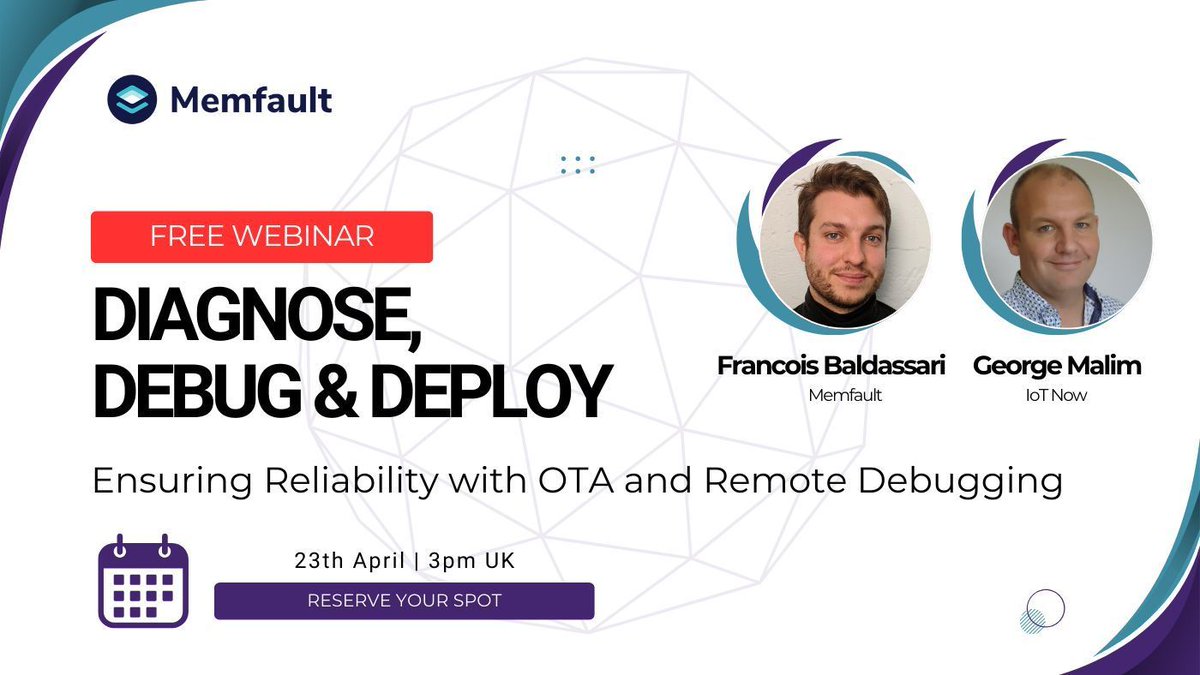
WEBINAR TOMORROW : Ensure Device Reliability with OTA and Remote Debugging.
Date: 23 April 2025 | 3 PM | UK
Save Your Spot! https://t.co/LIVSMNBu0m
#techevents#smartdevices#iotinnovation@Memfault
What do you do when your firmware bricks and your usual debugging tools fail?
In this Interrupt post, Hayden Riddiford shares a step-by-step approach to tackling elusive embedded bugs, along with 4 real-world case studies.
https://t.co/pPCxBgDhxn
#debugging#firmware#embedded