The significance of tumour-adipocyte interaction at the invasive front of colorectal carcinoma attracts increasing attention. In this meta-analysis, the authors show convincing associations with survival. They also discuss terminology. #GIpath#openaccess
https://t.co/aXg4SqoGjp
You don’t want to miss this presentation! @pathologyCast and PBPS announces an amazing lecture from Dr. Shi: Pancreatobiliary Neuroendocrine Neoplasms: Updates on the New WHO Tumor Classification on 6/30, 9:00 AM PST, 12:00 PM ET.
Check from: https://t.co/r8KoU7pO7K
How to grade prostate cancer in small biopsy specimens remains one of the most challenging and controversial areas in daily urologic pathology practice.
This recent review article published in Urologic Clinics of North America, “Prostate Cancer Grading: An Update,” by Drs. John Hanna, Gennady Bratslavsky, Jeffrey S. Ross, Oleksandr Kravtsov, provides an excellent practical overview of many real-world diagnostic dilemmas encountered in prostate biopsy interpretation.
The review discusses contemporary Gleason grading, Grade Groups, quantification of Gleason pattern 4, cribriform morphology, intraductal carcinoma, grading pitfalls in minute tumor foci, interobserver variability, and emerging AI applications in prostate pathology.
Article link: https://t.co/rs5EwjMDkF
TEX is the culmination of my PhD research. Not only do we describe & figure our new species in exhaustive detail, but we include a revised phylogenetic dataset for analysis of Mosasauridae, & my measurement dataset for HUNDREDS OF MOSASAURS & EXTANT LIZARDS-& it's ALL OPEN ACCESS
Please check out this excellent review of cholangiocarcinoma by top expert Professor Yoh Zen, from Kings College Hospital, London. It summarises contemporary classification systems, molecular changes, pitfalls in interpretation, and differential diagnosis. https://t.co/EiVN5Fdsfl
A new Spinosaurus species uncovered in northern Niger appears to have been a wading predator of fish like its close relatives, but it lived as many as 1000 kilometers inland from the Tethys Sea. The fossil find may represent a third phase of evolution for this group of massive, fish-eating dinosaurs.
Learn more this week in Science: https://t.co/VeNZ7Vktix
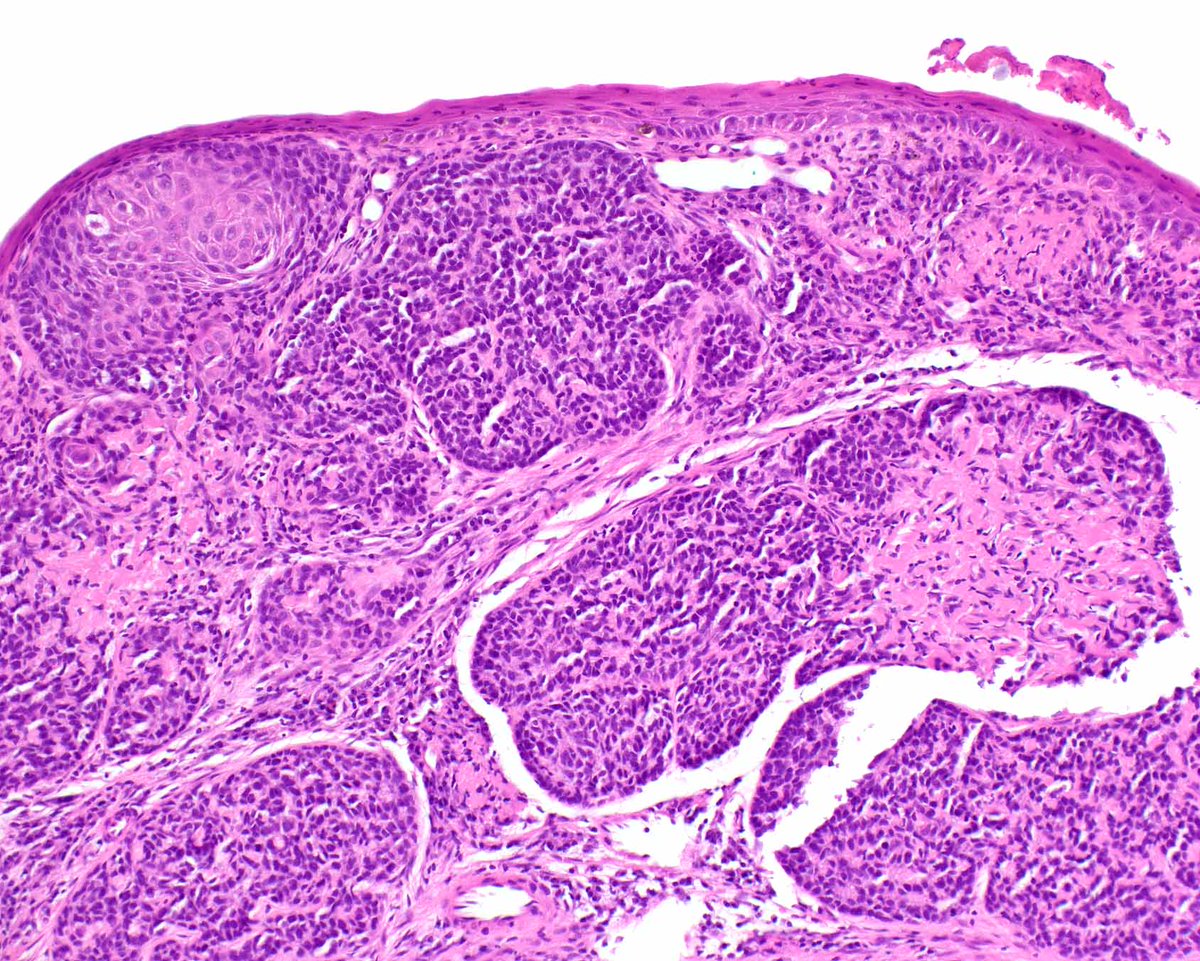
This HPV-associated anal lesion most likely harbors a CYLD mutation based on the morphology. It is essentially a basaloid variant of squamous cell carcinoma that produces peculiar basement membrane material.
Williams EA, Montesion M, Sharaf R, Corines J, Patel PJ, Gillespie BJ, Pavlick DC, Sokol ES, Alexander BM, Williams KJ, Elvin JA, Ross JS, Ramkissoon SH, Hemmerich AC, Tse JY, Mochel MC. CYLD-mutant cylindroma-like basaloid carcinoma of the anus: a genetically and morphologically distinct class of HPV-related anal carcinoma. Mod Pathol. 2020 Dec;33(12):2614-2625. PMID: 32461623; PMCID: PMC7685972.
In 2010, Stanford professor Robert Sapolsky gave a 1-hour masterclass on "Human Behavioral Biology."
He broke down how:
- Biology collapses moral
- Behavior changes w/o intention
- Mind & body rewrite each other
10 lessons that'll make you a master at human behavior:
This useful study records a tendency to overdiagnose fibrolamellar carcinoma (FLC) of the liver, for example when there are fibrotic bands in steatohepatitic HCC. In the appropriate clinical setting, diagnosis of FLC without molecular testing is possible. https://t.co/TRCHv0EV1f
Bread and butter - Epithelial misplacement/ pseudoinvasion in colon adenomas results from extension along glands in breaks in the muscularis mucosae accompanying lymphoid aggregates. Adenomas grow "top-down" and this one has yet to reach the mucosal base.
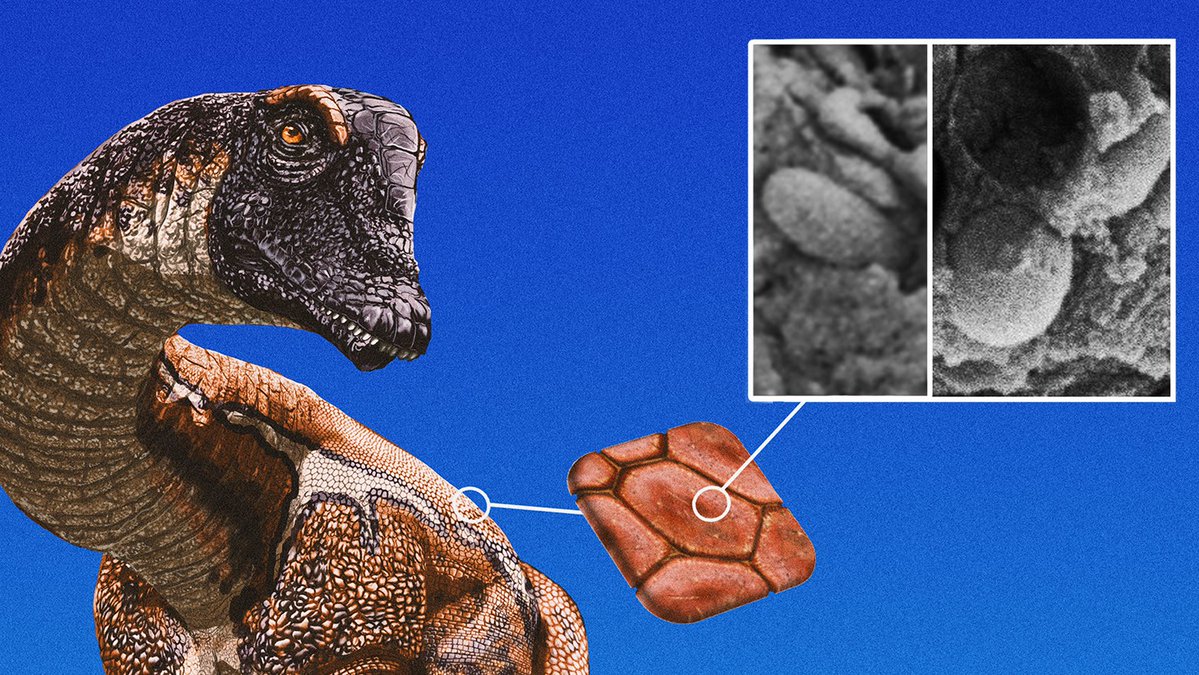
While the paper hasn't come out just yet, the news certainly has. Proud to announce our discovery of color patterning in a sauropod dinosaur. Will go in depth tomorrow.
Still my favorite 3D reconstruction of a pancreatic tissue.
Using the CODA workflow, we mapped a billion individual cells in 3D.
Red: pre-cancer lesions
Navy blue: ducts
Light blue: islets of Langerhans
Purple: acini
Green: blood vessels
More here: https://t.co/RsB0RYoPIy
Interesting review article concentrating on some proximal causes of mass extinctions, namely the environmental toxicity of heavy metals.
This forms a view of past mass extinctions as complex multi-factorial crises.
https://t.co/pPt8Pmsd2G
cc: @svalver@niles_eldredge@CoelhoPre
Colorectal carcinoma with sarcomatoid component: isolated SMARCA2 loss and high PD‐L1 expression as a potential therapeutic target - Aknar - Histopathology - Wiley Online Library #gipath https://t.co/YERkkiM628
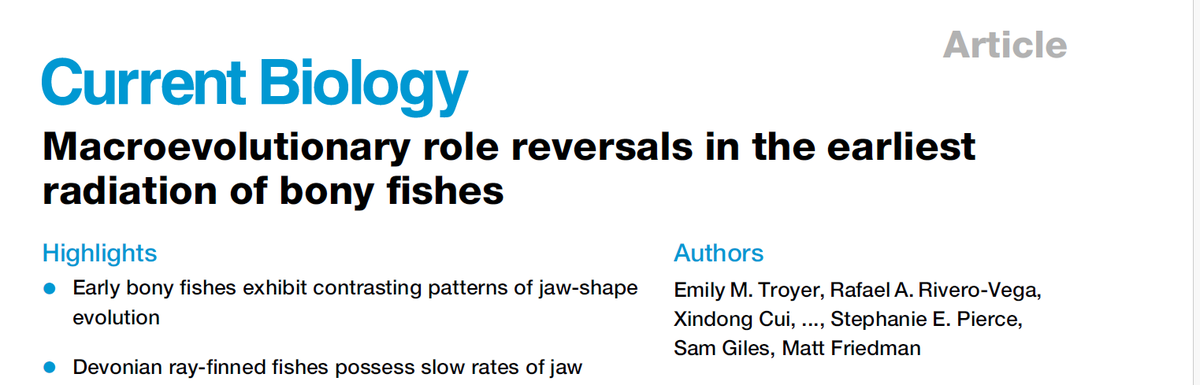
Excited to announce that the 1st paper from my postdoc is now out in @CurrentBiology Using a large dataset of 3D preserved fossils, we explore the diversification of jaws in early bony fishes. 1/15
https://t.co/qUteZPnrRr