Just completed a new @airtable and @softr_io project
A clinical case management portal for aligner providers.
Good systems create structure, visibility, and consistency long before automation enters the picture.
Process design determines whether the system succeeds.
More leads don't always mean more sales.
Sometimes they just mean more wasted time.
If your team is sending technicians to jobs outside your service area or spending hours chasing prospects who were never going to buy, the problem probably isn't lead generation.
It's lead qualification.
A simple framework built around service type, location, urgency, budget, and decision authority helps your team focus on the opportunities that actually matter.
Automation comes after that.
Because automating a poor qualification process just helps you make bad decisions faster.
I shared more of my thoughts in my latest article on designing a lead qualification framework that sales teams can trust.
If you're in construction, home services, or solar, I'd love to hear how your team qualifies leads today.
Construction and field service businesses don't have a communication problem.
They have an information access problem.
When customers can't check project status...
When techs can't log hours...
When quotes are buried in email...
Everything lands on the owner's desk.
Good systems don't just automate work.
They keep you out of the middle.
Field service companies don't have a technician problem. They have a dispatch problem.
47% of appointments don't go as planned. Not from bad technicians. From missing information before the job even leaves the building.
The gap between average (60% utilization) and elite (90%) field service companies was never about who's better at the job.
It's about what they knew before they left.
You can't coach someone out of a system built to fail them.
Your policy documents already answer most support questions. Nobody reads them.
So I built an AI agent that does.
It answers customer questions about refunds, shipping, warranties, and tracking using your actual documents. Your rules, your wording, in seconds.
A plain AI model will invent policies you do not have. Mine retrieves your real documents first. If the answer is not there, it does not guess.
Update a policy, drop it in a folder, the agent updates itself. No retraining. No new hires.
I build these for ecommerce brands tired of copy-pasting the same replies.
What if your inbox sorted itself?
I built an AI email classification system that reads every incoming email, decides what it is, and acts on it. No human touching it.
The stack: @n8n_io , Google and Groq (Llama)
Here's what it does:
→ Classifies every email by category and priority using AI
→ Labels, archives, and stars automatically
→ Flags urgent emails the second they land
→ Logs business inquiries and purchases to @airtable , so the inbox becomes a searchable database
Sorting time went from an hour a day to basically zero. And because it runs on @GroqInc , the AI cost is nearly free.
Most people are still dragging emails into folders in 2026. That's an hour a day you don't get back.
If you're a founder, a consultant, or an operations lead drowning in email, this pays for itself in the first week. If you run a service business where leads arrive via email, this is no longer optional. A lead that waits four hours for a reply is a lead your competitor already answered.
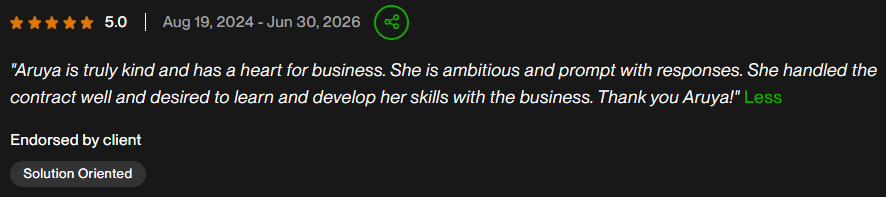
I got a review today. ❤️
A client described me as kind, prompt, and someone who has a heart for business.
That last part means the most.
For me, having a heart for business means understanding how a business works before automating it.
I help founders and growing teams improve their operations with Airtable, no-code tools, automation, and process documentation.
Because good systems don't just save time.
They help businesses grow with confidence.
Nobody owns the lead. That's the real problem.
For many roofing, HVAC, plumbing, and electrical companies, leads aren't lost because of bad marketing.
They're lost because no one owns the first 60 seconds after a lead arrives.
Fix the process before buying another CRM.
Field service businesses don't have a marketing problem.
They have a process problem dressed up as one.
Leads are coming in. Through calls. Messages. Forms. Referrals.
They're just not being caught.
No system. No structure.
You can't automate a process that doesn't exist.
January 2025, I started showing up. Wasn't sure anyone would care.
One decision. Projects across solar, real estate, construction, healthcare, and logistics.
I'm Mercy Aruya. I help founders and growing businesses replace messy operations with systems that support growth.
Most companies don't have an AI problem.
They have an operations problem.
AI agents are not magic.
They're multipliers.
If your processes are clear, AI creates leverage.
If your workflows are broken, AI creates faster and more expensive mistakes.
That's why many AI projects fail.
The hardest part of growth isn't failure.
It's the in-between.
When you've outgrown where you are, but haven't reached where you're going.
The doubts get louder.
The path gets blurry.
But you're not stuck.
You're evolving.
Keep going.
Growth doesn’t break businesses.
Weak operations do.
Unclear ownership → chaos.
Undocumented processes → repeated mistakes.
Knowledge in one head → dependency.
Scaling isn’t hard because of the team.
It’s hard because the system was never built to hold growth
Most businesses do not need more client updates.
They need better client visibility.
A shared folder is not a portal.
@softr_io , @NolocoHQ , and @zite make this easier now, but the real issue is operational design.