All #pathboards takers, here is the QR code and links for High Intensity Chicago Board Review Series (#CBRS) course - sorry our webpage was getting updated-https://t.co/Si1qns3MrI
Spread the word - awesome faculty as always - some frequent flyers, some first timers
Opened YouTube and this video was in my suggested section.
I've always struggled to remember CD markers and it's almost as if the algorithm knew🤔
https://t.co/VOFA4Gp0t3
Check out the video and others; songs about immunology, anatomy, biochemistry and general medical topics too.
By definition, a wild-type GIST simply lacks a KIT or PDGFRA mutation. The vast majority of GISTs occurring in the pediatric population lack these mutations (even though c-KIT overexpression may deceive one to think otherwise) and are therefore of the wild-type. The vast majority of this vast majority has a genetic alteration affecting succinate dehydrogenase that should be investigated. Likewise, pediatric GISTs almost exclusively occur in the stomach, but, like the rarity of a non-SDH altered pediatric GIST, there are always exceptions to "always".
I am excited to welcome our new residents @UTMemPathRes! I can't wait to work with you all!
And that's the way we found out about our match result!! 😃
#PathTwitter#pathmatch2023
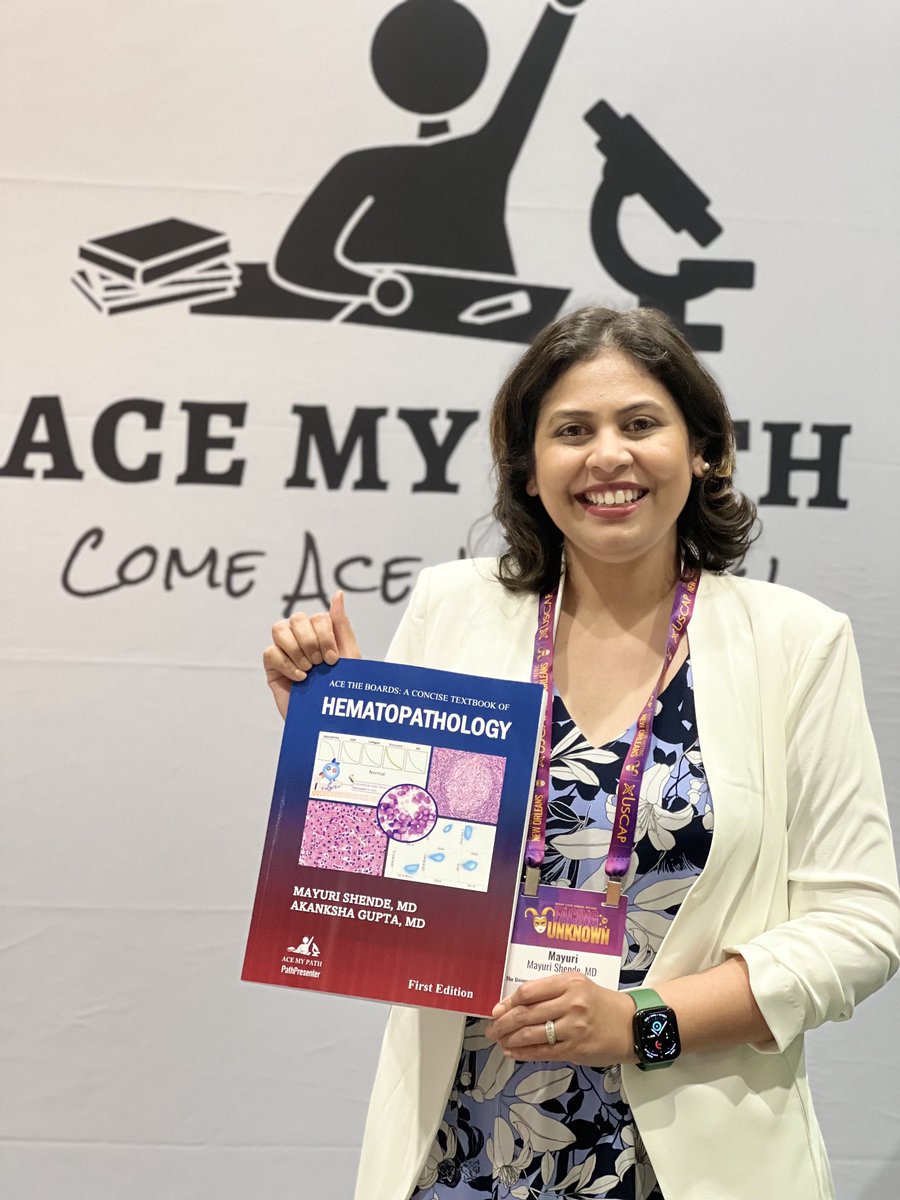
So happy to be at #USCAP2023 NOLA with #AMP booth 607. Check out the book I authored “Ace the Boards: A Concise textbook of Hematopathology”! Come ace with us! Can’t wait to meet you all!!
Calling all Lab Med educators! Introducing AACC Learning Lab: https://t.co/krzlJUeIWN proud to be a small part of this amazing laboratory medicine learning resource through AACC and... https://t.co/y2Z4GeLxwi