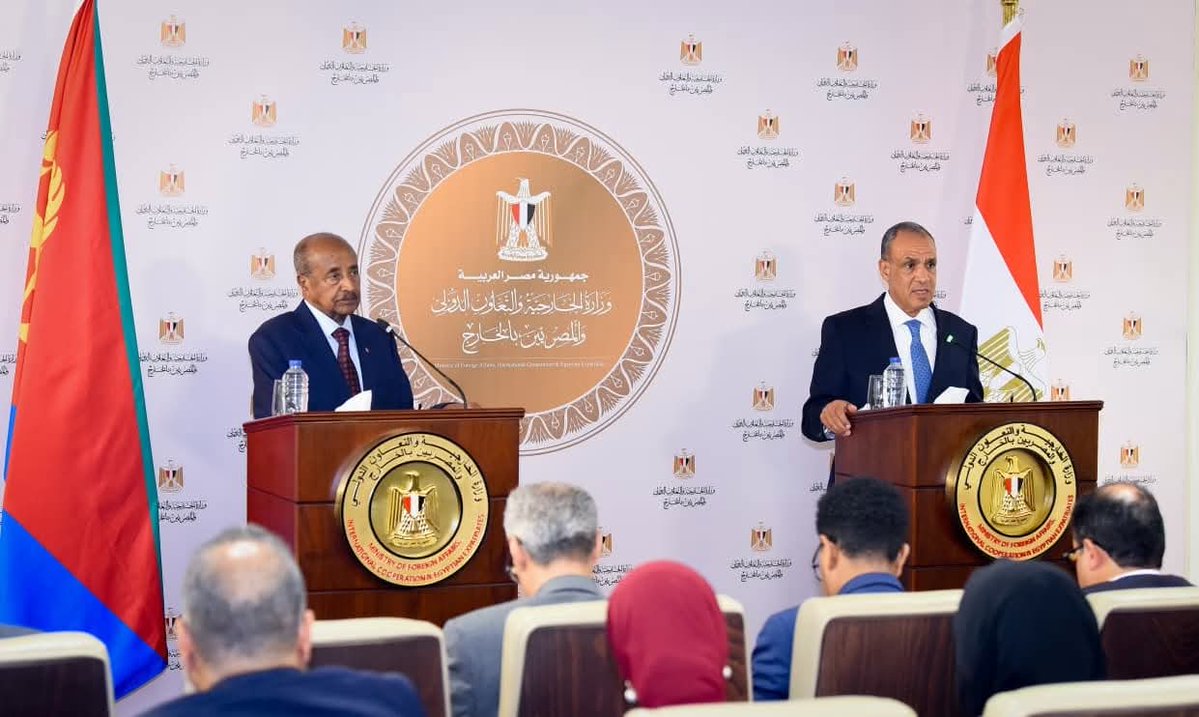
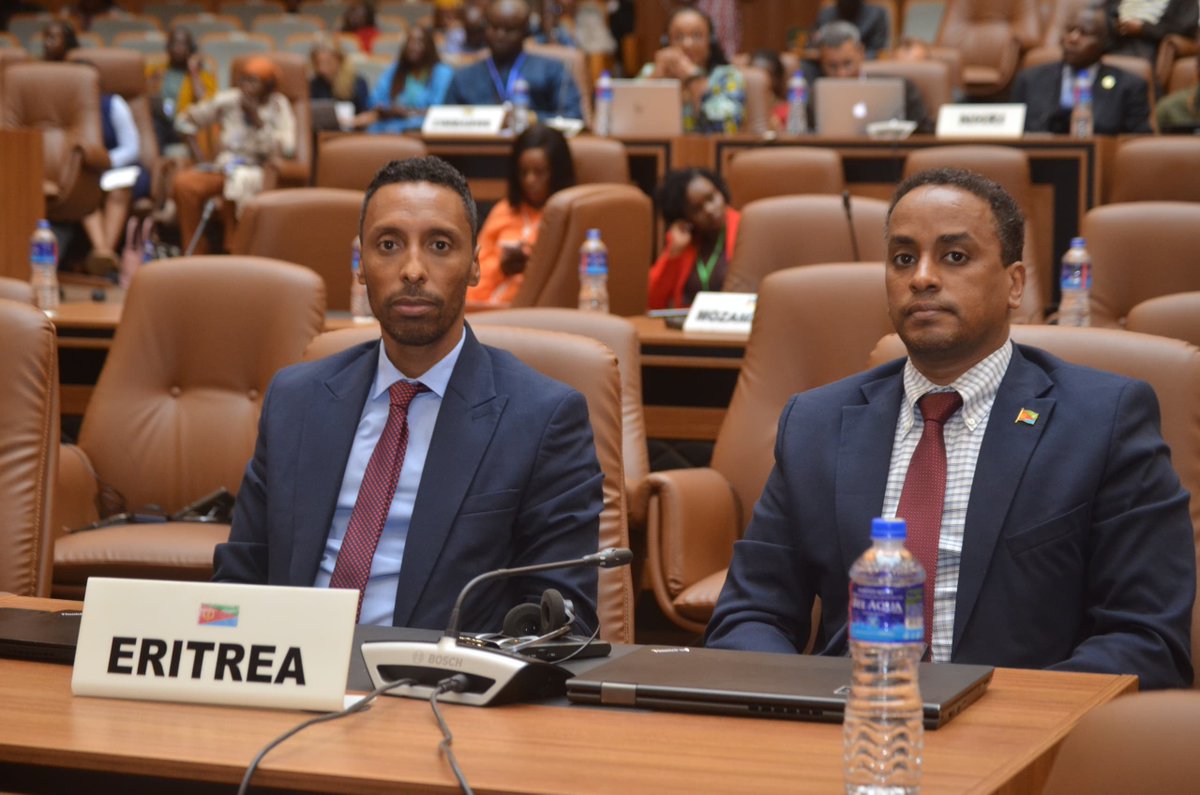
Eritrea and Egypt have agreed, in talks held this afternoon between Foreign Minister Osman Saleh and his Egyptian counterpart, Dr. Badr Abdellaty, to strengthen their all-rounded bilateral ties of cooperation and to coordinate their respective positions on issues of common interest.
In a Joint Press Conference held after the talks, the two Foreign Ministers:
- Invoked the historical and brotherly ties that exist between Eritrea and Egypt and the extensive talks held between President Isaias Afwerki and President Abdel Fattah el-Sisi in Cairo on 8 June this week.
- Affirmed that the two sides have reached a cooperation agreement on the sectors of mining, infrastructure, housing, the pharmaceutical industry, maritime transport, ports connectivity as well as ports development especially in Assab, Massawa and Marsa Fatima; and, land, air and maritime connectivity between the two countries.
- Egypt reiterated its full support for the sovereignty and territorial integrity of Eritrea.
- In regard to the security of the Red Sea and the region as a whole, they reiterated the need and urgency of bolstering the capabilities of national institutions as the bedrock of stability and development. This was in line with the pronounced and aligned positions of the two Heads of State on the imperative of respecting the foundational principles of international law on the sovereignty and territorial integrity of all States.
The two Foreign Ministers further affirmed the continuation of periodic consultative meetings in Cairo and Asmara between relevant government bodies of the two sides as well as coordination in their positions on regional and international matters.
#Eritrea has been elected by the General Assembly to serve as a member of the United Nations Economic and Social Council (#ECOSOC) for the term 2027-2029.
#Eritrea congratulates the newly elected members of the Council, and looks forward to working together with all member states to realize the shared objectives of sustainable development, partnership and cooperation.
#Eritrea #ECOSOC
UN #Eritrea welcomes @UNESCO Assistant Director-General a.i. & Regional Director to 🇪🇷. From high-level engagements to visits to Asmara’s iconic heritage sites and cultural institutions, the mission strengthens partnership in education, culture & sustainable development. #UNESCO
Paving the Path to Social Justice: Eritrea’s Post-Independence Road Construction
By: Mussie Efriem
When Eritrea was liberated on May 24 1991 following a long armed struggle, it immediately faced the monumental task of reconstruction and nation building. To undertake this formidable task, the government has prioritized sustainable national development designed to secure a bright and prosperous future for generations to come. Central to this vision was a commitment to equitable growth across the entire country, ensuring equal opportunities and the inclusive provision of resources for the whole population.
To realize this inclusive goal, the government has committed itself to the core principle of social justice by allocating equal opportunities and essential public services to every citizen, regardless of their geographic location. This foundational principle transformed national recovery efforts into a structured campaign for civic well-being, ensuring that healthcare, education, and clean water are treated as basic human rights.
To ensure the successful realization of these nationwide goals, the Eritrean youth have been placed at the very center of the country’s development programs. Under national initiatives, thousands of young men and women regularly undergo technical and vocational training at centers across the country. Students acquire critical skills in essential fields such as technical drafting, heavy machinery operation, building technology, and infrastructural engineering. Armed with essential technical knowledge and skills, the empowered workforce has been crucial in transforming the country’s domestic transport network.
Transportation infrastructure is critical in ensuring access to essential human needs and opportunities within a society. Beyond its economic use, transportation bridges socioeconomic gaps, directly linking diverse communities to healthcare, quality education, employment centers, and civic spaces. Ultimately, investing in reliable roads, bridges, and public transportation systems is an investment in social justice and community resilience, transforming society through collective well-being.
Communities that were formerly isolated and cut off from timely medical and emergency services due to lack of transport infrastructure prior to Eritrea’s independence have been fully integrated into the national network through newly constructed roads. This widespread expansion of roads has converted arduous journeys that took days into trips that take just a few hours. A notable testament to this milestone is the critical coastline route linking the strategic port cities of Massawa and Assab. The journey used to take two to three days over harsh terrain, but it now takes not more than a day.
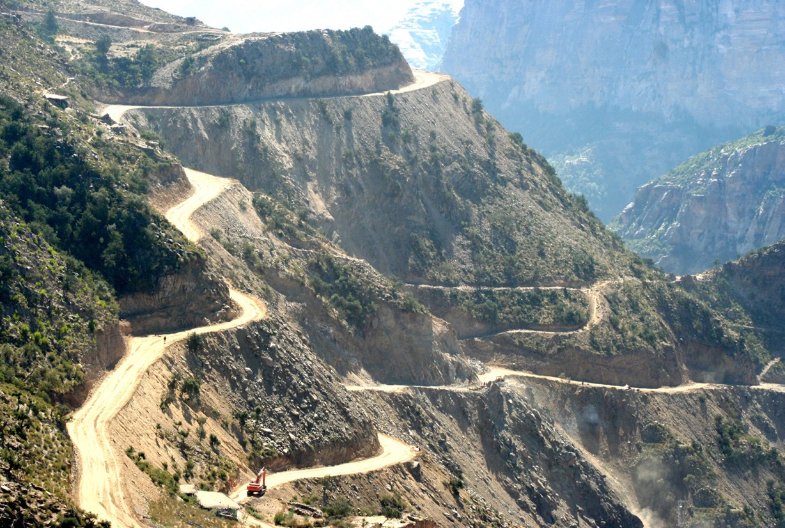
Another significant achievement of the post-independence era is the modernization of the strategic Barentu-Tessenei highway, a route that goes as far as neighboring Sudan. In the first few years following Eritrea’s independence, this vital road was rather difficult to navigate; however, with the government’s timely intervention, it was transformed into a fully modernized, asphalted route that facilitates efficient cross-border connection. The construction of the Serejeqa-Shebah road, built under the Warsay Yikealo development campaign, stands as another monumental product. Carving a path through some of the country’s steepest, most treacherous mountain escarpments required profound sacrifice and dedication. This magnificent road cuts through the breathtaking Eritrean Green Belt, a beautiful ecological zone that is one of the country’s thriving natural habitats and premier tourist attractions celebrated for its rich and diverse fauna and flora.
In addition to these major arteries, the government has achieved tremendous progress in the country’s Western lowlands by converting impassable tracks into reliable transport routes. This includes the road from Akurdet to Sawa, which was upgraded with a combination of modern half-asphalt and high-quality, compacted soil layers. Similar infrastructural upgrades have fundamentally transformed roads across the Western lowlands, replacing difficult journeys with vastly improved networks connecting Keren to Geleb, Afabet to Felket, Afabet to Nakfa, Akurdet to Grmayka, Tessenei to Omhajer, and Akurdet to Kerkebet.
Alongside the eastern escarpments, the construction of the iconic Egila-Demhina road stands as a monumental engineering achievement linking Adi Keyih subzone to Foro subzone. Penetrating through cliffs and once-impenetrable mountains via Robrobya, Karibosa, and Wi’a, this new passage replaces the old, highly circuitous Nefasit-Ghinda’e- Gahtelay route, enormously cutting the original travel distance from 300 kilometers to just 120 kilometers.
Building on these successes, ongoing development works are advancing rapidly along the vital Nefasit-to-Serha route, from Dekemhare to Tera Emni and from Adi Quala to Enda Gergis. Furthermore, ongoing projects are shaping the connection from Forto Sawa to Tessenei via Adibara and Tamarat. This aggressive blueprint for countrywide social justice has trickled down to the most isolated populations, remarkably granting full road connectivity to around 90 villages in Mai Mine subzone that previously lacked any form of access to transport.
Some of the world’s most monumental infrastructures have been engineered and executed by military workforces. Prime historical examples include Egypt’s iconic Aswan High Dam, which successfully tamed the Nile River to provide electricity and irrigation, and the Panama Canal, an engineering marvel constructed under the direction of the United States Army Corps of Engineers to redefine global maritime trade permanently. Utilizing a disciplined, highly organized defense force for public works allows nations to mobilize a large-scale workforce rapidly. This proven strategy of civil-military intervention demonstrates how state institutions can use the military, during peacetime, to serve as primary catalysts for national recovery, turning structured labor toward the vital tasks of building dams, expanding highways, and constructing the foundational frameworks necessary for long-term economic sovereignty.
Similarly, as part of the Warsay Yikelao campaign, members of the Eritrean Defense Forces have served in the nationwide development works, translating their disciplined organization into historic civil engineering achievements. A prime manifestation of this is the road project that stretches from Gulo to Talha Ner’e, Senafe subzone. This vital route cuts across the challenging Emba Soira mountain range, passing through the nation’s highest elevation at approximately 3,018 meters above sea level. In parallel with these rural connections, urban infrastructure have undergone significant modernization in the post-independence years, notably exemplified by the ongoing construction of the strategic Asmara ring road. Once completed, this critical infrastructure will form a comprehensive loop around the capital, seamlessly redirecting heavy trucks around the outskirts, drastically reducing inner-city congestion and minimizing municipal road wear.
In addition to this extensive road network, hundreds of modern bridges have been constructed across the nation over the past 35 years of independence. These crucial structures were erected through the dedication, resilience, and unyielding determination of Eritrean construction companies. By bridging these physical divides, they have not only prevented hazardous washouts during the heavy rainy seasons but have also permanently secured the safety and continuity of national transit. This monumental bridge-building campaign stands as a defining symbol of Eritrea’s self-reliance, demonstrating that the country’s domestic workforce has the technical capacity and stamina to resolve its most complex infrastructure challenges independently.
ASMARA —⚡️The closing ceremony of the 35th Eritrea Independence Day was unforgettable, and the fireworks display was absolutely breathtaking. A spectacular celebration of pride, unity, and resilience. 🇪🇷
ዓወት ንሓፋሽ! ✌️#EritreaAt35
The Permanent Mission of Eritrea to the United Nations hosted a reception commemorating #Eritrea’s 35th Independence Anniversary under the theme “Our Resilience: Our Guarantee.” The event, “Tastes and Sounds of Eritrea,” brought together Permanent Representatives, diplomats, senior officials from the UN Secretariat, representatives of regional organizations, members of the media, civil society organizations, and friends of #Eritrea for an evening celebrating Eritrean culture, heritage, and national resilience.
Eritreans working throughout the @UN system, as well as members of the #Eritrean community from the Greater #NewYork area, also joined the celebration, adding to the warm and festive atmosphere of the evening. Their participation reflected the strong connection between Eritreans at home and abroad and underscored the important role of the Eritrean Diaspora in preserving and promoting the country’s cultural identity and national values.
The reception showcased Eritrea’s rich cultural diversity through traditional music, dance performances, and authentic Eritrean cuisine representing the country’s various regions and communities. Guests were offered a vibrant cultural experience highlighting Eritrea’s long-standing traditions of unity, social cohesion, and hospitality. The evening also served as an opportunity for diplomatic engagement and cultural exchange, reflecting Eritrea’s continued commitment to constructive multilateralism and international cooperation.
In remarks delivered during the event, Her Excellency @AmbStesfamariam underscored the significance of #Eritrea’s independence as the culmination of decades of sacrifice and determination, while reaffirming the country’s commitment to sovereignty, self-reliance, and regional peace and stability. She also highlighted the importance of cultural diplomacy in fostering mutual understanding and strengthening relations among nations and peoples.
#Independence #EritreaShinesAt35 #OurResilienceOurGuarantee #Eritrea #UnitedNations
#Eritrea 🇪🇷 2025 — a year of measurable progress!
From stronger health and education systems to expanded livelihoods, protection, and climate resilience, the results are in!
Over the coming weeks, we’ll unpack the key achievements.
Download Report🔗https://t.co/YG6vu0aiq5
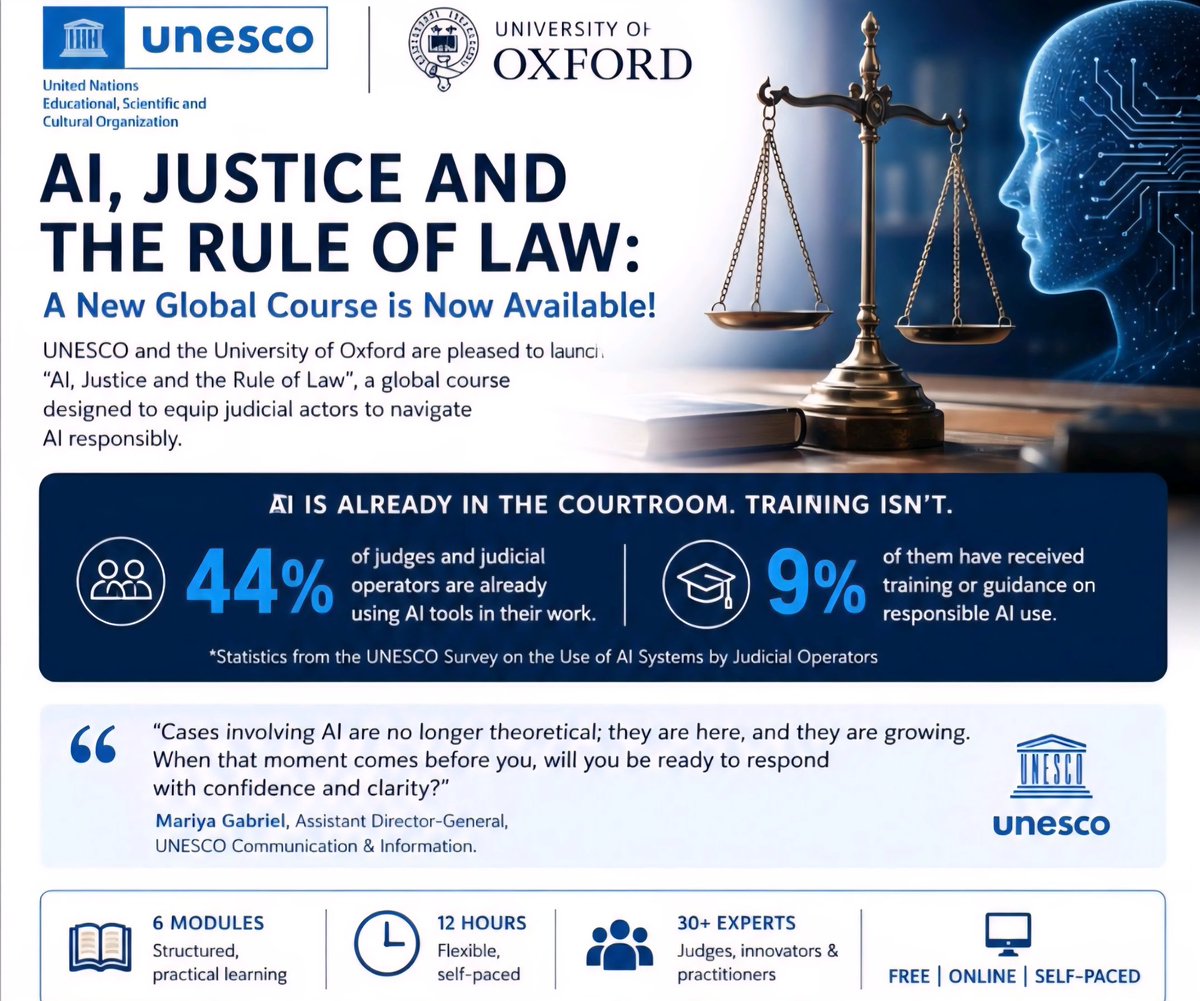
Are you a lawyer, or someone interested in AI regulation? @UNESCO, in collaboration with the @UniofOxford, has just launched a global course.
Register here: https://t.co/jHiMYZfda7
AI, Justice and the Rule of Law.
It is designed to equip judges, lawyers, policymakers, academia, and others with the requisite knowledge to navigate AI responsibly.
It goes further to talk about how AI affects access to justice and the Rule of Law.
It has 6 modules taught by 30+ global AI experts, with both graded and non-graded assessments. And of course, a reflective portfolio to work on.
At the end, if you pass at least 50%, you will be qualified for a globally recognized certificate.
Repost, bookmark and share to someone 👏
Statement by #Eritrea's Delegation at 87th Ordinary Session of the African Commission on Human and Peoples' rights; 13 May 2026, Banjul (The Gambia)
*"...Few days from now, on 24th of May, Eritrea will celebrate the 35th Anniversary of its Independence, under the theme ‘Our Resilience: Our Guarantee’. In celebrating this momentous occasion, Eritreans renew their oath to fulfill the Martyrs’ vision by building a peaceful and prosperous nation".
*"...Eritrea’s achievements in the promotion of human rights are deeply rooted in the principles of social justice, and strong community participation. Community-led infrastructure development and public mobilization campaigns continue to serve as important mechanisms for advancing sustainable development and ensuring local ownership of national programs".
https://t.co/rlwahgBKng
The Permanent Mission of #Eritrea to the United Nations and other International Organizations in Geneva is pleased to provide opportunities for young members of the Eritrean community in the diaspora to experience and engage with the work of multilateral fora.
Creating space for the next generation to observe, learn, and contribute to international dialogue is an important priority, and we are happy to be able to support their involvement in these settings.
https://t.co/UF0PT2vRfg
The acclaimed #Eritrea|n Fulbright scholar @senaiwoldeab (PhD) has been appointed Arbitrator at #SHIAC. A well-deserved milestone reflecting his brilliance, passion, & commitment to the law. Heartfelt congratulations to my former professor & thesis advisor; your journey inspires.
Women lead 40 of the 193 Permanent Missions at 🇺🇳 #UNHQ. 🌐
For International Delegates Day (25 April), we salute these #WomenInDiplomacy 🕊️ for
📜 advancing dialogue
🤝 enhancing mutual understanding
✒️ strengthening multilateralism through diplomacy
Bravo! 👏
Mendefera Referral Hospital 🇪🇷 has secured a 24-hour oxygen supply for newborns thanks to the "Plant in a Box" a solar power system that is ensuring life-saving oxygen for children and the hospital in general.
Watch the transformation
@UNICEFSupply
#Eritrea's 35th Independence Anniversary will be celebrated under the fitting theme: "Our Resilience: Our Guarantee".
The mantra is indeed a perfect epitome for the odyssey/historical trajectory of two Eritrean generations - the Yikaalo and Warsai generations - who had to summon and display unparalleled heroism and resilience and who were compelled to pay, in the process, precious sacrifices to ascertain and later protect their inviolable rights of decolonization and nationhood.
Indeed, the small nation had to endure and suffer under stifling and over-arching geopolitical calculus of major powers in the 1940s to be entangled in a bogus "Federal Arrangement" that soon degenerated into blatant annexation; conduct Africa's longest armed struggle for liberation after all its legal and peaceful pleas for redress were utterly ignored; face, in the aftermath of independence, imposed wars of destabilization against its sovereignty and territorial integrity; and, grapple with associated hostilities including unwarranted sanctions as well as subtle subterfuges of "strategic depopulation", unremitting defamation, etc. ርዝነት ናጽነትና እምበኣር ብዝሓለፎ ከቢድን መዘና-ኣልቦን ጉዕዞ'ዩ ዝትመን!
SPOTLIGHT
#Eritrea - Community Centered Justice System: Bringing Justice Closer to the People
By: Ministry of Justice
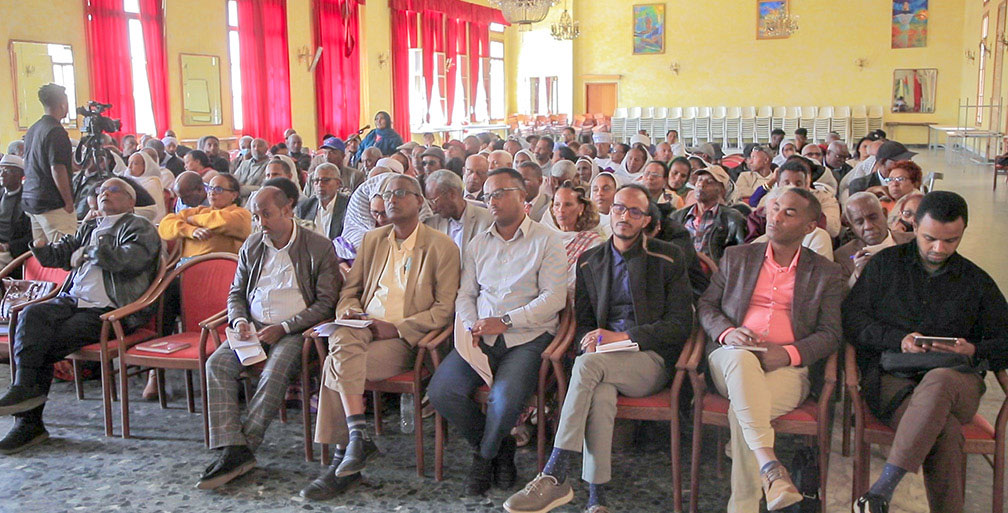
The two-tier institutional arrangement where family and other minor disputes are resolved through community mediation while Courts adjudicate complex legal matters in accordance with the Country's Civil, Penal and Commercial Codes is expected to enhance and optimize more efficient and effective dispensation of justice.