Seven Things This 63 Year Old Surgeon Would Tell My 40-Year-Old Self
I am 63 now, and I spend my days as an orthopedic surgeon watching how people's earlier choices show up in their bodies decades later. I see it in my college friends, high school buddies, and patients that I have known for 20+ years. If I could sit across from myself at 40, here is what I would want that man to understand. None of what follows is complicated, and all of it compounds over the decades… either against you… or in your favor. You are largely in control.
I’ve been thinking a lot about steps lately.
After letting my step count fall off badly at the end of 2025, I’ve averaged more than 10,000 steps/day so far in 2026.
And the more I look at it, the more I think daily steps may be one of the most underrated metabolic levers we have.
A sedentary 50-year-old going from 2,000–3,000 steps/day to 7,500 isn’t just “moving a little more.”
They’re sending a completely different daily signal to the body.
• More glucose being cleared by working muscle.
• Better insulin sensitivity.
• Better circulation.
• More sunlight and fresh air.
• More usable fitness.
• More confidence.
• More momentum.
And according to the research, moving from very low steps to roughly 7,000/day is associated with significantly better outcomes across mortality, cardiovascular disease, dementia, depression, falls, and type 2 diabetes.
No, walking isn’t “magic.”
But neither is a prescription pad.
And unlike many prescriptions, walking is free, available, adjustable, and comes with side effects like better mood, better sleep, better fitness, and a better chance of feeling like you’re back in control.
PS: There’s no rule that says you have to fix everything by Monday.
Go from 2,000 to 3,000. Hold that for a few weeks. Then go to 4,000. Then 5,000. Build the habit at a pace you can actually live with.
The goal isn’t to prove how hard you can push for 3 days.
The goal is to become the kind of person who moves more every day, keeps promises to oneself, and slowly upgrades the signal being sent to one’s body.
THAT is where the “magic” is.
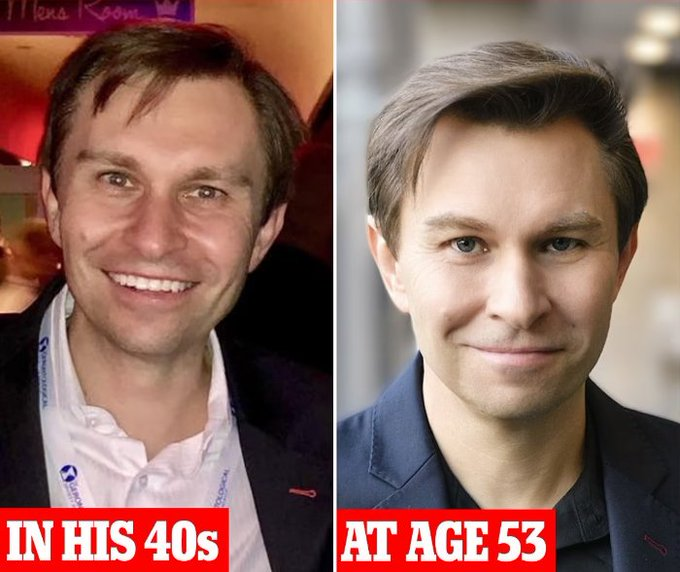
Este es el profesor David Sinclair
Tiene 53 años pero parece que está en sus 20
Es profesor de Genética en Harvard y estos son sus secretos para revertir el envejecimiento:
1. Hacer ejercicio hasta el punto de perder el aliento
I hate to break it to you but….
Lifting 2-3x a week, walking 7–10k steps daily, eating mostly real food, limiting alcohol, and sleeping properly will make your mind and body healthier than 90% of the population.
She had tried and failed so many times before…
At 55, she realized this was her last chance. It wasn’t about the numbers on the scale - it was about coming back to herself, finding her strength, her confidence, her peace.
If not now, then when? Start today. 🏋🏽
A Monk Once Said:
If you're 37. Instead of regretting that you can't wake up age 18 again, pretend to yourself that you're 90 and you've woken up age 37 again, and that you get to magically, wonderfully have the next 50 years again.
As you start today with all the motivation in the world, remember this: it won’t last.
Build a routine. Do it no matter what. When you really can’t, don’t quit or beat yourself up, just do it the next day. Show up, over and over.
It is the only thing that works.
@AJA_Cortes Stubborn adherence to feeling miserable and hungry all the time
1.5 gallons of water daily
1g+ caffeine daily
30mg+ nicotine daily
Whey protein + Greek yogurt
Treating dessert like a CIA honeypot prostitute
Passively munching on carrots and celery
A soul full of spite
Me at 40:
• No self-confidence
• No career plan
• No money
Me at 53:
• Determined
• Fulfilling career
• Financially secured
Time can change everything.
Keep growing. It's never too late