Passionate Exercise physiologist and pracademic focusing on metabolic health for Obesity, PCOS, NAFLD, Alzheimer's & Diabetes.
~Open yet critical mindset~
During this conversation, @BradSchoenfeld shared something most lifters have never been told.
Muscle growth is driven primarily by mechanical tension, not simply the amount of weight on the bar.
Research shows that when sets are performed with high effort and close to failure, loads as low as 30% of maximum can produce similar hypertrophy to much heavier training.
“A ketogenic diet for anorexia”
You heard that right. A new study published TODAY suggests cutting carbs might help in anorexia.
The reason that pairing sounds so paradoxical is that we’re still largely trapped in a framework that views eating disorders as purely psychological phenomena, and assumes restrictive eating should never be treated with a restrictive diet.
On the surface, that logic seems reasonable.
But one of the most important shifts occurring in psychiatry is the growing recognition that the brain, like every other organ, is fundamentally metabolic.
When metabolism goes awry in the brain, the consequences can manifest as psychiatric illness—including eating disorders.
From that perspective, it becomes far less surprising that a metabolic therapy such as a ketogenic diet could help treat anorexia nervosa, one of the deadliest psychiatric disorders in existence.
Quoting from the author of the research @GuidoFrank “The level of recovery [on a keto diet] was far better than what we see in other anorexia treatments.”
Huge kudos to @janellison@BaszuckiGroup for supporting this life-saving work.
Drink your coffee black (no additives) if you want the full health benefits.
2-3 cups per day has been associated with a 25% reduction in all-cause mortality. That benefit goes away when cream and/or sugar are added.
I think this happens for a few reasons:
• Dairy proteins can bind to coffee’s antioxidants and polyphenols and slow their absorption.
• Heavy cream, butter, and MCT-heavy coffee don’t necessarily block coffee polyphenols, but they can add substantial saturated fat and calories. For someone watching ApoB or LDL-C, this can work against the very cardiovascular benefits they’re hoping to get from coffee.
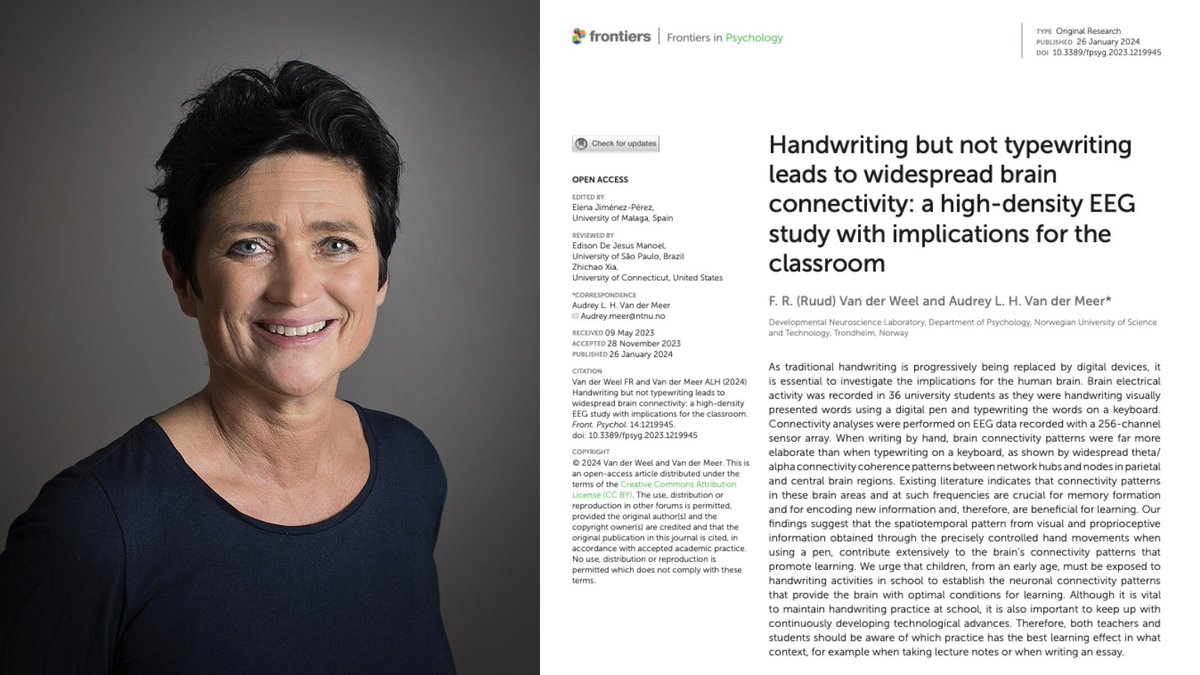
A Norwegian neuroscientist spent 20 years proving that the act of writing by hand changes the human brain in ways typing physically cannot, and almost nobody outside her field has read the paper.
Her name is Audrey van der Meer.
She runs a brain research lab in Trondheim, and the paper that closed the argument was published in 2024 in a journal called Frontiers in Psychology. The finding is brutal enough that it should have changed every classroom on Earth.
The experiment was simple. She recruited 36 university students and put each one in a cap with 256 sensors pressed against their scalp to record brain activity. Words flashed on a screen one at a time.
Sometimes the students wrote the word by hand on a touchscreen using a digital pen, and sometimes they typed the same word on a keyboard. Every neural response was recorded for the full five seconds the word stayed on screen.
Then her team looked at the part of the data most researchers had ignored for years, which is how different parts of the brain were communicating with each other during the task.
When the students wrote by hand, the brain lit up everywhere at once.
The regions responsible for memory, sensory integration, and the encoding of new information were all firing together in a coordinated pattern that spread across the entire cortex. The whole network was awake and connected.
When the same students typed the same word, that pattern collapsed almost completely.
Most of the brain went quiet, and the connections between regions that had been alive seconds earlier were nowhere to be found on the EEG.
Same word, same brain, same person, and two completely different neurological events.
The reason turned out to be something nobody had really paid attention to before her work. Writing by hand is not one motion but a sequence of thousands of tiny micro-movements coordinated with your eyes in real time, where each letter is a different shape that requires the brain to solve a slightly different spatial problem.
Your fingers, wrist, vision, and the parts of your brain that track position in space are all working together to produce one letter, then the next, then the next.
Typing throws all of that away. Every key on a keyboard requires the exact same finger motion regardless of which letter you are pressing, which means the brain has almost nothing to integrate and almost no problem to solve.
Van der Meer said it plainly in her interviews.
Pressing the same key with the same finger over and over does not stimulate the brain in any meaningful way, and she pointed out something that should scare every parent who handed their kid an iPad.
Children who learn to read and write on tablets often cannot tell letters like b and d apart, because they have never physically felt with their bodies what it takes to actually produce those letters on a page.
A decade before her, two researchers at Princeton ran the same fight using a completely different method and ended up at the same answer. Pam Mueller and Daniel Oppenheimer tested 327 students across three experiments, where half took notes on laptops with the internet disabled and half took notes by hand, before testing everyone on what they actually understood from the lectures they had watched.
The handwriting group won by a wide margin on every question that required real understanding rather than surface recall.
The reason was hiding in the transcripts of what the two groups had actually written down.
The laptop students typed almost word for word, capturing more total content but processing almost none of it as they went, while the handwriting students physically could not write fast enough to transcribe a lecture in real time, which forced them to listen carefully, decide what actually mattered, and put it in their own words on the page.
That single act of choosing what to keep was the learning itself, and the keyboard had quietly skipped the choosing and skipped the learning along with it.
Two studies. Two countries. Same answer.
Handwriting makes the brain work. Typing lets it coast.
Every note you have ever typed instead of written went into your brain through a thinner pipe. Every meeting, every book highlight, every idea you captured on your phone instead of on paper was processed at half depth.
You did not forget those things because your memory is bad. You forgot them because typing never woke the part of the brain that would have made them stick.
The fix is the thing your grandmother already knew.
Pick up a pen. Write the thing down. The slower road is the faster one.
You experience mental fatigue as emotional exhaustion because the brain hides the metabolic problem underneath the psychological one.
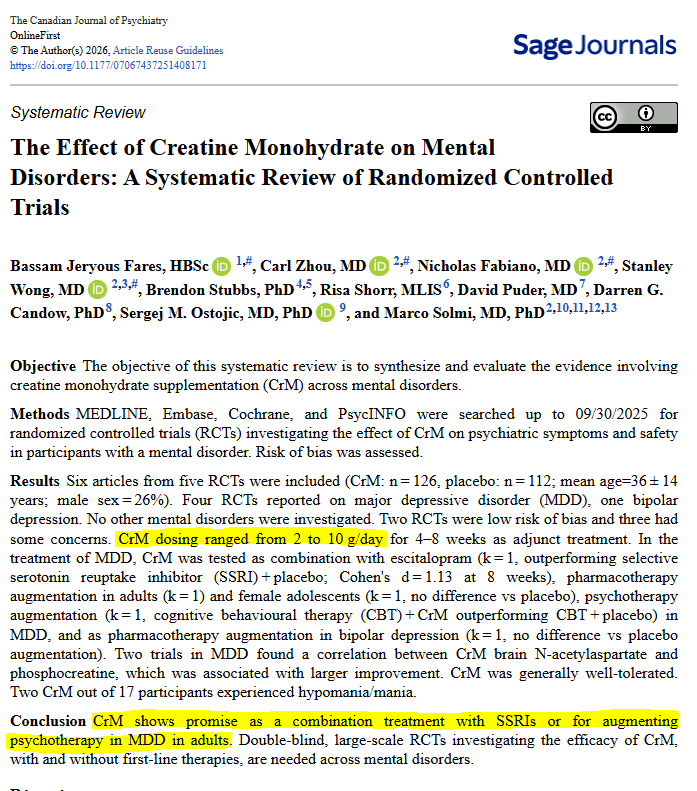
Creatine increases phosphocreatine availability inside neural tissue. That matters because cognition is an energy conversion process.
Some of the people calling themselves burned out are operating with a brain running an energy deficit under extreme demand.
That is not mindset. That is bioenergetics.
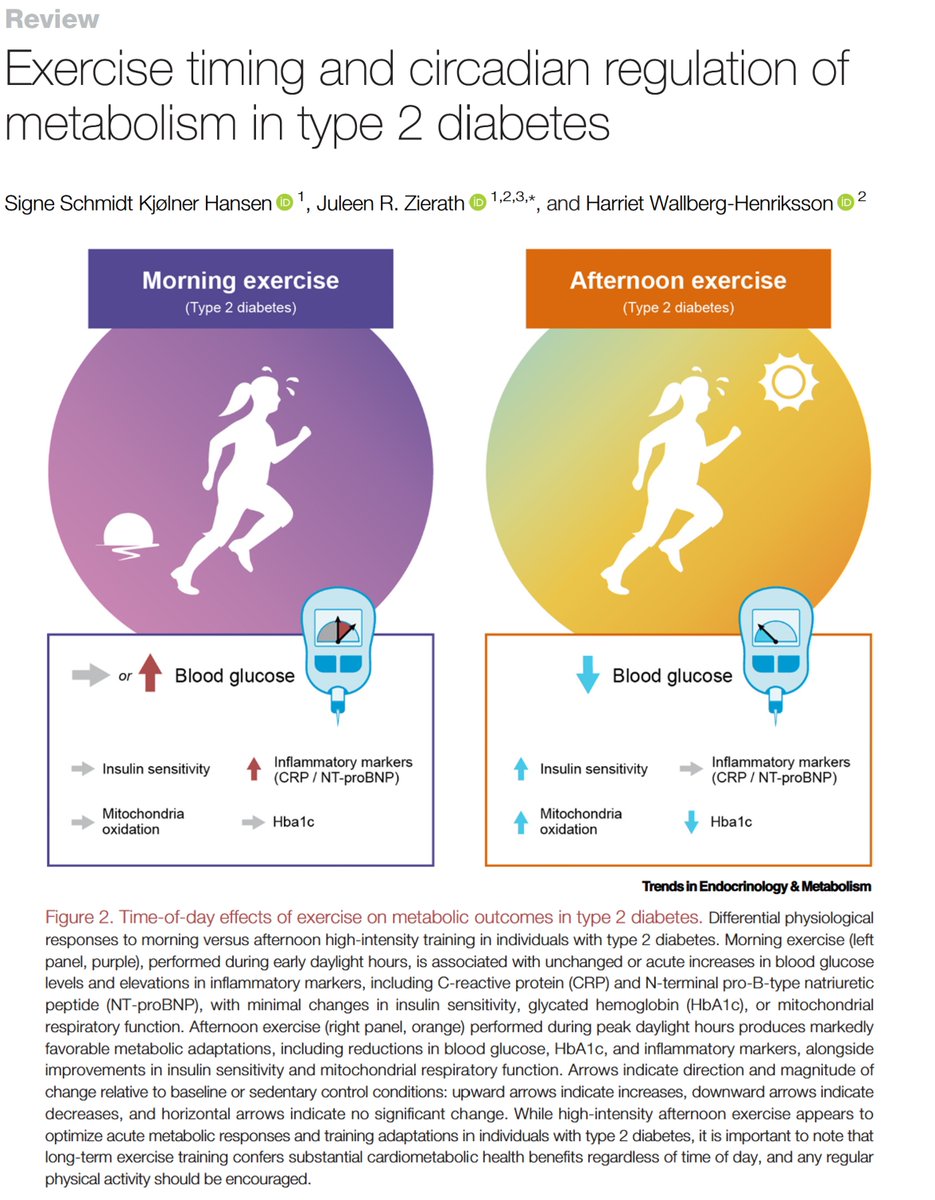
Timing matters 🕒 For type 2 diabetes, afternoon/evening exercise boosts insulin sensitivity & glycemic control, while morning workouts may raise blood sugar. Later workouts are also linked to lower cortisol, less inflammation & better oxidative capacity. #Diabetes #ExerciseScience @WuTsaiAlliance
https://t.co/5Bc0PUAE9O
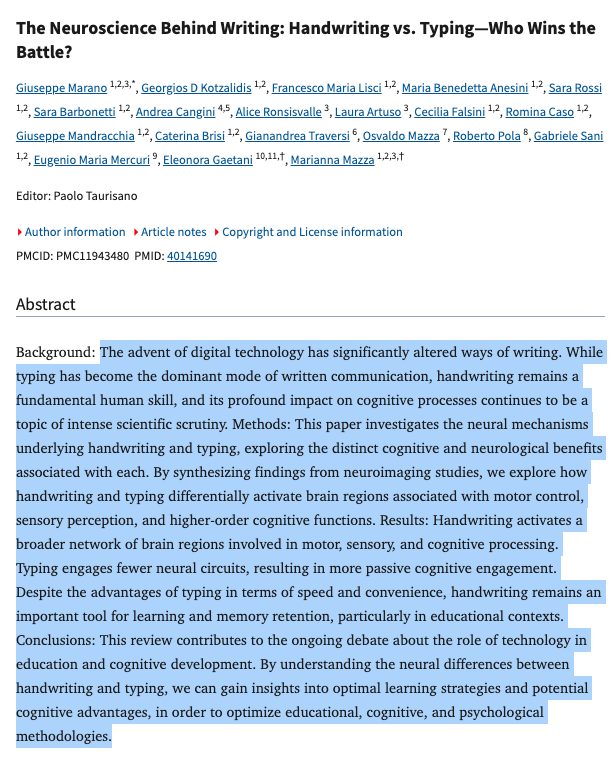
Your brain physically rewrites itself every time you pick up a pen.
Neuroscientists at Norwegian University scanned students' brains while they handwrote letters versus typing the same letters on a keyboard.
The results shattered decades of assumptions about how we process information.
Handwriting activated massive networks in the sensorimotor cortex, the visual processing centers, and the hippocampus simultaneously. Complex neural symphonies lit up across multiple brain regions, creating rich interconnected pathways between motor control, visual recognition, and memory formation.
Typing the same letters? The brain activity looked like someone had dimmed the lights across entire cognitive districts. The neural networks that flourished during handwriting simply went dark.
The difference?
When you form letters by hand, your brain constructs elaborate spatial maps of each character. The motor cortex learns the precise pressure, angle, and trajectory needed to create an 'A' versus a 'B.' Your visual system tracks the ink flowing from pen to paper in real time. Your parietal lobe integrates hand position with eye movement. Your hippocampus encodes not just what you wrote, but how the writing felt, where you paused, which words required more pressure.
Typing activates almost none of that circuitry. You press a key, a letter appears. The motor movement is binary. The visual feedback is uniform. The spatial relationship between thought and symbol gets mediated by a machine that standardizes every character into identical fonts and spacing.
Your brain treats these as fundamentally different cognitive tasks.
The evolutionary context makes this obvious once you see it. Human hands developed for manipulation, creation, and fine motor control over millions of years. We painted on cave walls, carved bone tools, and shaped clay vessels long before we invented written language. When writing emerged 5,000 years ago, it built on top of existing neural infrastructure that already connected hand movement with symbolic thinking.
Keyboards appeared 150 years ago. Touchscreen typing maybe 20 years ago. From an evolutionary timeline perspective, we started using them approximately yesterday. Our brains are still running ancient software that expects physical engagement with symbols.
That software produces dramatically different learning outcomes.
Students who take handwritten notes consistently outperform students who type the same information on memory tests, comprehension assessments, and creative applications of the material. The difference persists even when researchers account for typing speed, note length, and time spent studying.
The act of forming letters by hand forces deeper processing at the moment of information encounter. You cannot handwrite as fast as someone speaks, so your brain must actively filter, summarize, and prioritize information in real time. The motor effort required to form each word creates additional memory traces that typing does not generate.
Children who learn to write letters by hand develop reading skills faster than children who learn letters primarily through typing or screen interaction. The sensorimotor experience of creating letterforms helps their brains recognize those same letterforms when they encounter them in text.
Adults who handwrite shopping lists, daily schedules, or meeting notes remember the information better than adults who type identical lists into phones or computers. The spatial memory of where you wrote something on a page provides retrieval cues that digital text does not offer.
These findings collide directly with how education and work environments have evolved over the past two decades. Schools replaced handwriting instruction with typing classes. Offices converted from paper systems to fully digital workflows. Students take notes on laptops. Professionals draft documents on screens.
We optimized for speed and efficiency while accidentally severing the neural pathways that evolution spent millions of years developing.
The implications reach beyond memory and learning into fundamental questions about human cognition. If the physical act of forming symbols changes how your brain processes ideas, what happens to thinking itself when you remove the physical component?
Digital text is infinitely searchable, instantly editable, and perfectly shareable. But it may be creating brains that process information more superficially, store memories less durably, and connect ideas more weakly than brains that regularly engage in handwriting.
The neuroscience suggests we traded cognitive depth for technological convenience without realizing what we were giving up.
Some of the most innovative thinkers across history were obsessive handwriters. Darwin kept detailed handwritten journals. Einstein worked through complex theories in handwritten notebooks. Virginia Woolf wrote her novels by hand before transcribing them. Steve Jobs famously took handwritten notes during Apple meetings even as he was building the most advanced computers on Earth.
Perhaps they intuited something about the relationship between hand, brain, and insight that we measured in brain scanners but somehow forgot in practice.
Your pen is literally a cognitive enhancement device that activates neural networks digital keyboards cannot reach.
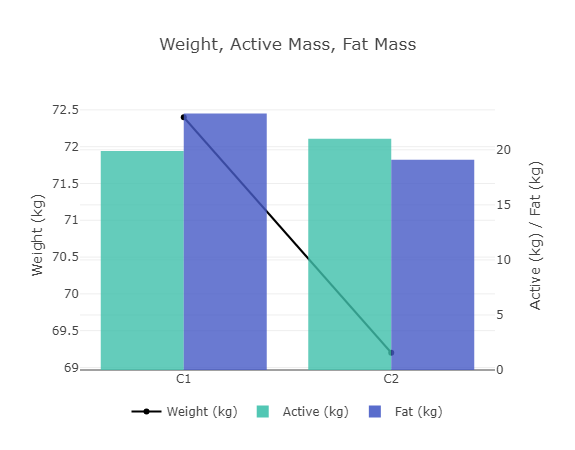
F, 51 after seeing her results "You made my day"
There is something powerful about metabolic data. She did all the hard work, yet i am lucky to be able to help patients make an informed choice.
@MHS_tweeting
Sitting on the floor is one of the single highest-leverage habits you can have for staying mobile into old age
The inability to get up and down off the ground unassisted is one of the top reasons people end up in nursing homes, yet most adults haven't practiced it in decades
With this, you start restoring the end-range hip, knee, and ankle positions modern life strips away
20–30 minutes a day is all it takes
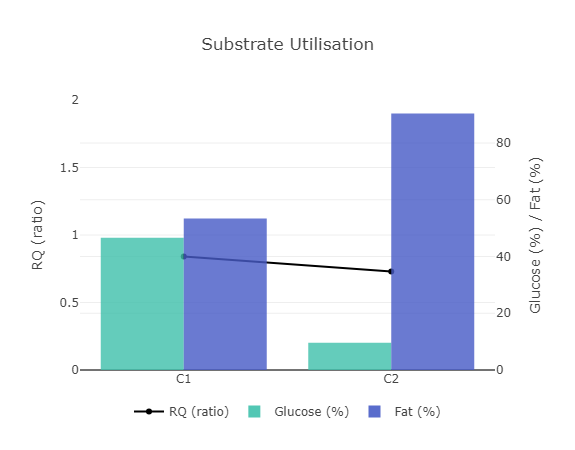
➡️Expected metabolic rate
➡️ Improved metabolic flexibility prioritising protein
➡️Next: gut health - fermented food & bone broth...pathology, fasting, stress/sleep
@MHS_tweeting
Myth Busted 🥩🥚
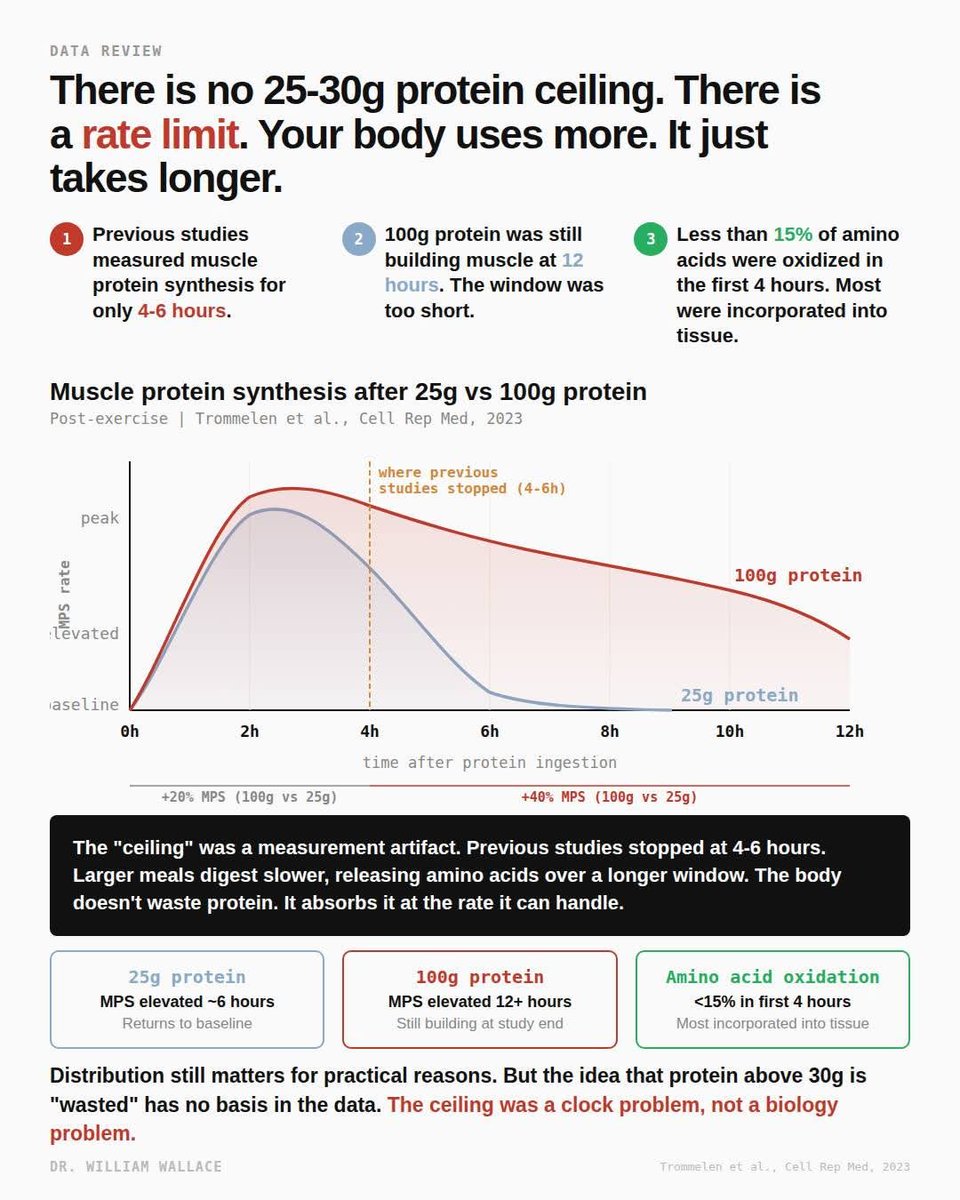
"Your body can only use 25-30g of protein per meal. Anything above that gets wasted."
In reality our bodies work on biology not maths, & total protein load over the day matters the most.
"Your body can only use 25-30g of protein per meal. Anything above that gets wasted."
This claim has been repeated in fitness nutrition for over a decade, and it was built on studies that measured the right thing over the wrong timescale.
Moore 2009 gave six young men 0, 5, 10, 20, or 40g of egg protein after leg-only resistance exercise and tracked muscle protein synthesis for four hours. MPS plateaued at 20g. Witard 2014 repeated a similar dose-response with whey protein after unilateral leg exercise in 48 resistance-trained men and found MPS rose 49% at 20g and 56% at 40g over four hours, with the authors concluding 20g was sufficient for maximal stimulation. Case closed, or so it seemed. The problem wasn't the dose. It was that a 4-hour window captures the peak response to 20g but only the opening chapter of what 40g is doing.
Think of digestion as a funnel with a fixed flow rate. Pour a cup of water through it and it drains in minutes. Pour a gallon and it doesn't overflow. The funnel just drains at the same rate over a longer period. Protein behaves the same way. A smaller dose gets absorbed and used quickly. A larger dose digests over a longer window because the stomach slows gastric emptying and the intestine releases amino acids gradually. Muscle tissue keeps incorporating them wave after wave. The "ceiling" in those early studies wasn't a biological saturation point. It was what you see when you stop watching before the larger dose finishes working.
Trommelen et al. (2023, Cell Reports Medicine) tested this directly. They randomized 36 recreationally active young men to 0g, 25g, or 100g of milk protein after a 60-minute whole-body resistance session and tracked muscle protein synthesis for twelve hours using a quadruple isotope tracer. In the first four hours, myofibrillar protein synthesis was only about 20% higher after 100g than after 25g. In the four-to-twelve-hour window, that gap widened to roughly 40%. That later window is where the bigger dose actually separates from the smaller one, and it's exactly where every prior dose-response study stopped measuring. The authors also reanalyzed the oxidation data from Moore and Witard and concluded that postprandial amino acid oxidation represents less than 15% of the increment in ingested protein. The paper states it plainly: "Protein ingestion has a negligible impact on whole-body protein breakdown rates or amino acid oxidation rates."
Caveats belong in the read. This was young recreationally active men following a single bout of resistance exercise. Not trained athletes, not women, not older adults, not a longitudinal hypertrophy trial. A 2024 Witard commentary in the International Journal of Sport Nutrition and Exercise Metabolism flagged that the finding may not translate to resistance-trained young women with different anabolic kinetics.
Practically: you don't need to portion exactly 25-30g of protein every three hours to avoid "wasting" it. Larger meals extend the anabolic window rather than capping it. Distribution across the day still matters for satiety, blood sugar, and hitting your daily target. But the rigid per-meal rule has weaker biology behind it than previously believed.
Sources:
https://t.co/AHrjZkIGRp
https://t.co/Cq27xvSl92
https://t.co/HPFcXBTlKV
https://t.co/SPjf72NSX9
https://t.co/q5hcTQ50FP
Most people who take CoQ10 think of it as an antioxidant. It is one. But that is not the most important thing it does.
CoQ10 is the only lipid-soluble mobile electron carrier in the inner mitochondrial membrane. The electron transport chain has four protein complexes fixed in the membrane. Complex I accepts electrons from NADH. Complex II accepts them from FADH2. But neither can pass those electrons directly to Complex III. They hand them to CoQ10, which physically shuttles across the lipid bilayer to deliver them. Complex III passes them to cytochrome c, the second mobile carrier, which delivers them to Complex IV. Complex IV reduces oxygen to water. The proton gradient pumped by Complexes I, III, and IV powers ATP synthase to produce ATP.
Without CoQ10, the chain breaks between Complex I/II and Complex III. Electrons have nowhere to go. Proton pumping stops. ATP production stalls. This is not an antioxidant function. This is the core mechanism of aerobic energy production.
CoQ10 is predominantly synthesized endogenously through the mevalonate pathway, the same pathway that produces cholesterol. HMG-CoA reductase is the rate-limiting enzyme of the pathway. Statins inhibit HMG-CoA reductase. That is how they lower cholesterol. It is also how they lower CoQ10.
An updated meta-analysis by Qu et al. (2018) pooled 12 RCTs with 1,776 participants and found statins significantly reduced circulating CoQ10. The reduction was present across statin types, intensities, and durations. Both lipophilic and hydrophilic statins showed the effect, with no significant difference between them. This is consistent with what the biochemistry predicts: the pathway is shared.
On top of statin-induced depletion, CoQ10 in human heart tissue declines naturally with age. Kalén et al. (1989) measured CoQ10 concentrations in myocardial tissue and found levels peak around age 20, decline by more than 30% by age 40, and drop approximately 50% by age 80. The organ with the highest energy demand loses half its electron carrier over a lifetime.
A 2025 meta-analysis by Kovacic et al. (Journal of Nutritional Science, 7 RCTs, 389 patients) found CoQ10 supplementation significantly reduced statin-associated muscle symptoms measured by pain intensity. This is the most current pooled data on clinical outcomes.
One important nuance: while plasma CoQ10 depletion from statins is well established, whether intramuscular CoQ10 drops proportionally is inconsistent. Some studies found no change or even increases in muscle tissue CoQ10 during statin treatment.
The plasma reduction may partly reflect reduced LDL particles, which are the primary carriers of CoQ10 in blood. The clinical significance of depletion beyond muscle symptoms remains debated.
Roughly 200 million people worldwide take statins. The mevalonate pathway that produces their target also produces the electron carrier their mitochondria depend on. The mechanism is not controversial. The clinical implications are still being debated
Sources:
https://t.co/FW28zwXlEh
https://t.co/V6LXk7xA0C
https://t.co/p7xnFBoFJd
The "no coffee after 2pm" rule is a population average. CYP1A2 activity varies 15 to 40-fold across adults. Caffeine half-life ranges from about 2 to 10 hours. Smoking speeds clearance. OCPs roughly double half-life. Third-trimester pregnancy can triple it to 15+ hours. Your cutoff is a half-life, not a clock.
https://t.co/vPPB575r0y
If you want one stretch that hits everything, do this:
It’s called world’s greatest stretch
It hits your hips, hamstrings, and T-spine all at once
- start in a deep lunge, back leg straight
- bring elbow to the inside of foot
- rotate and reach to ceiling
Go slow & controlled
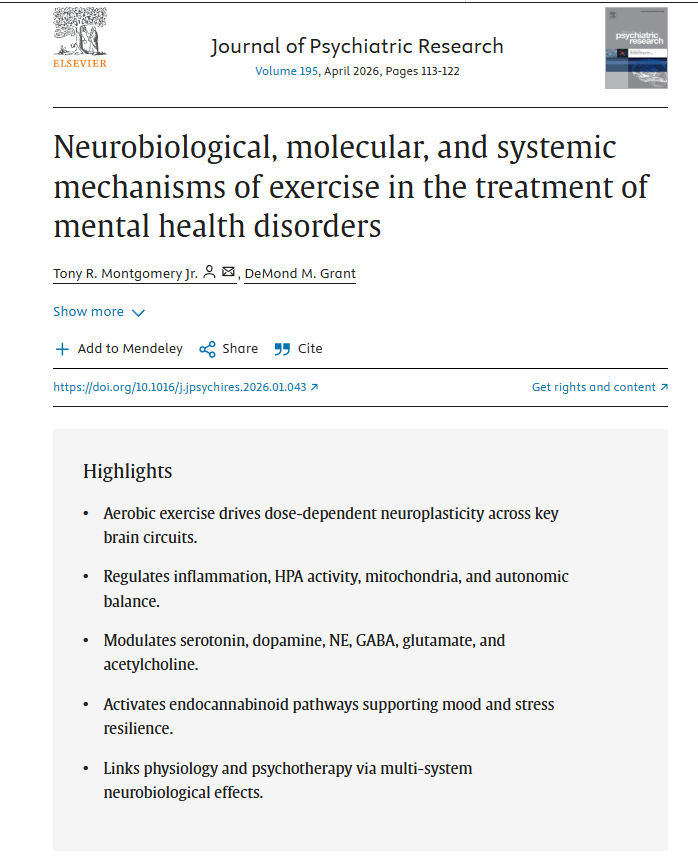
How exercise rewires BDNF, dopamine, and stress systems across the brain
Your brain does not respond to exercise the way you think.
It is not stress relief. It is a systems-level recalibration.
Aerobic load increases BDNF as a control signal. It drives synaptic plasticity, hippocampal neurogenesis, and rewires communication between the prefrontal cortex and amygdala.
At the same time, it is rebalancing your neurochemistry.
Dopamine adjusts motivation.
Norepinephrine sharpens attention.
Serotonin stabilizes emotional tone.
Not separately. As one coordinated system.
It is also suppressing chronic inflammation, restoring mitochondrial output, and tightening HPA axis feedback so your stress response stops overshooting reality.
This is why the effect rivals pharmacology.
You are not feeling better.
You are changing the operating conditions of the system that produces every decision you make.




![nicknorwitz's tweet photo. “A ketogenic diet for anorexia”
You heard that right. A new study published TODAY suggests cutting carbs might help in anorexia.
The reason that pairing sounds so paradoxical is that we’re still largely trapped in a framework that views eating disorders as purely psychological phenomena, and assumes restrictive eating should never be treated with a restrictive diet.
On the surface, that logic seems reasonable.
But one of the most important shifts occurring in psychiatry is the growing recognition that the brain, like every other organ, is fundamentally metabolic.
When metabolism goes awry in the brain, the consequences can manifest as psychiatric illness—including eating disorders.
From that perspective, it becomes far less surprising that a metabolic therapy such as a ketogenic diet could help treat anorexia nervosa, one of the deadliest psychiatric disorders in existence.
Quoting from the author of the research @GuidoFrank “The level of recovery [on a keto diet] was far better than what we see in other anorexia treatments.”
Huge kudos to @janellison @BaszuckiGroup for supporting this life-saving work.](https://pbs.twimg.com/media/HJ6DlQ2XUAAJaqu.jpg)