🇺🇸 Trump fumbled the Medal of Honor clasp and improvised, tying it on instead🤣
Meanwhile the recipient stood like a statue, flawless military bearing, completely unbothered.
SpaceX's market cap crossed above $3 trillion today in after hours trading.
That's higher than the market cap of Amazon ($2.65 trillion) & Microsoft ($2.97 trillion).
Microsoft Sales: $318 billion
Microsoft Net Income: $125 billion
Amazon Sales: $743 billion
Amazon Net Income: $91 billion
SpaceX Sales: $19 billion
SpaceX Net Income: -$9 billion
Microsoft just banned its own engineers from using AI.
The tool was literally costing MORE than the humans it was supposed to replace.
They lied to you about AI adoption and now the whole narrative is blowing up:
Microsoft gave thousands of engineers access to Claude Code six months ago and encouraged them to use it.
Engineers loved it and adoption exploded. But then the invoices arrived.
Token-based pricing means every query, every code review, every debugging session costs money. At scale across 100,000 engineers, the numbers became so large that Microsoft issued an internal order to cancel nearly all Claude Code licenses by end of June and force everyone onto their own cheaper tool instead.
The company that invested $5 billion in Anthropic just told its own people to stop using Anthropic's product because it costs too much.
Uber's story is even worse...
Their CTO Praveen Neppalli Naga told The Information that the budget he planned for the full year was "blown away already" by April.
Uber had rolled out Claude Code in December 2025. By March, 84% of their 5,000 engineers were using it with 70% of all committed code coming from AI systems.
Heavy users were burning $500 to $2,000 per month each. Naga himself spent $1,200 in a single two-hour demo session.
The company had even built internal leaderboards ranking engineers by how much AI they used. They literally gamified the spending and then ran out of money.
Now look at what Nvidia's own VP of applied deep learning Bryan Catanzaro said to Axios last month. Direct quote:
"For my team, the cost of compute is far beyond the costs of the employees."
This is a VP at the company that SELLS the chips saying that using AI is more expensive than paying humans.
Think about what this means for the entire AI narrative.
Every CEO on every earnings call for the past two years has said the same thing:
AI will make us more efficient, reduce headcount, and cut costs.
The stock market rewarded every company that said it.
Fired workers, stock goes up. Announced AI adoption, stock goes up.
But the actual companies deploying AI at scale are discovering the math doesn't work. The MORE employees use AI, the HIGHER the bill.
Goldman Sachs forecasts a 24x increase in token consumption by 2030 as companies adopt AI agents. Gartner just published a report showing that even though individual token prices will drop 90% by 2030, total enterprise AI costs will go UP because agents consume exponentially more tokens per task than basic tools.
Meta built an internal dashboard called "Claudeonomics" to track which employees use the most AI. Amazon started pushing engineers to "tokenmaxx," their internal term for consuming as many AI tokens as possible.
Both companies are spending hundreds of billions on AI infrastructure this year alone.
And Microsoft, the company that bet its entire future on AI, just told 100,000 engineers to stop using the tool they liked best because the per-token bills got out of control.
The companies building AI are telling investors it saves money. The companies using AI are finding out it costs more than the humans it was supposed to replace. And even the company that makes the chips just admitted it through its own VP.
This is the gap nobody on Wall Street is pricing in.
$725 billion in AI infrastructure spending this year across Big Tech. And the first companies to actually deploy these tools at scale are already pulling back because the economics don't work.
What do you think?
@MartinSonneborn Ruttes Mutter starb 2020 mit 96 im Pflegeheim. Er hat nie bei ihr gewohnt, lebte allein in Den Haag und ist jetzt in Brüssel als NATO-Generalsekretär. Altes Meme.
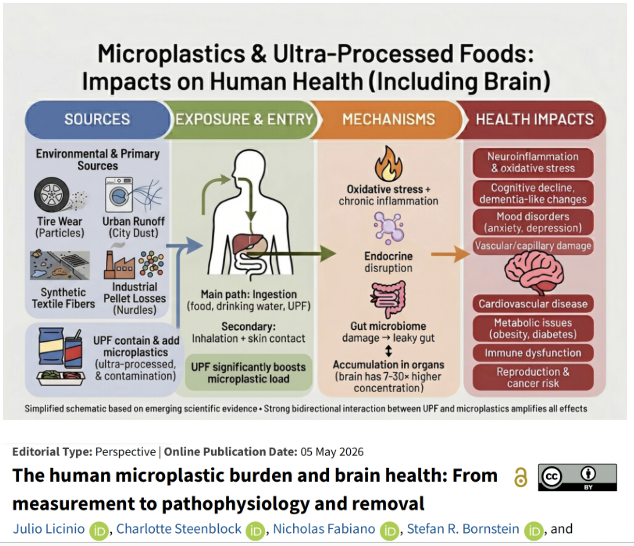
This new perspective study reports that our brains are carrying 3,000x more microplastic than our blood.
Microplastic burden of the human brain rose ~50% between 2016 and 2024.
The average brain now carries roughly:
> 11x the load of the liver
> 11x the kidney, and on a per-mass basis around
> 3,000x the concentration found in circulating blood (on a per-mass basis)
This study argues that eliminating ultra-processed foods (i.e. chicken mcnuggets, breaded shrimp) carries an additional benefit: reducing brain microplastic accumulation.
This is based on an inferred chain of mechanisms rather than proven causality in humans, yet the convergence is striking.
The paper outlines four pathways through which microplastics plausibly damage the brain:
> oxidative stress and chronic inflammation
> endocrine disruption
> gut-microbiome injury
> and vascular damage.
These map onto various brain and mental diseases including: depression, anxiety, cognitive decline, stroke, dementia.
The same conditions are independently linked to ultra-processed food consumption in large prospective cohorts
Each 10% increase in ultra processed food intake
> 25% higher dementia risk
> 16% higher cognitive impairment risk
> 8% higher stroke risk
High versus low ultra processed food consumption tracks with 44% higher odds of depression and 48% higher odds of anxiety.
While we do not yet have a human study showing UPF intake directly raises brain microplastic burden. Here is what we do have:
A study found that the more processed forms of protein foods carry significantly more microplastic particles.
> Chicken nuggets contained 31x more microplastics per gram than raw chicken breast (least processed item in the study)
> Breaded shrimp, the most processed item in the study, carried ~130x the level in raw chicken breast (caveat: shrimp also carries higher baseline contamination from ocean and water pollution)
> A 1,031-woman pregnancy cohort showed each 10% higher UPF intake tracked with 13.1% higher urinary phthalates, the plasticizers that leach from food packaging
Microplastics cross from the blood to the brain.
Animal research shows mechanistically how microplastic particles do cross the blood-brain barrier.
In mice, polystyrene nanoparticles at 293 nm reached the brain within 2 hours of oral exposure. Particles at 1.14 μm and 9.55 μm did not cross at all.
While most microscopy-based microplastic tests have a detection floor around 1 μm.
The fraction that actually crosses into the brain sits below that threshold. If a test picks up larger particles in your blood, the smaller, BBB-crossing fraction is almost certainly there too, just below the detection window.
The big ones are a proxy for the dangerous small ones.
Cut all microplastic input where you can and avoid ultra processed foods, this another important one.
In addition: use a water filtration system for your drinking water, reverse osmosis with remineralization is the gold standard.
I recently reported complete elimination of microplastics from my semen (first in human demonstration) and a 87% reduction in my blood.
A Russian biophysicist spent 30 years proving that shining red light on a cell could double its energy, and almost nobody believed her until a tech billionaire named Bryan Johnson made her work the most searched biohack on the internet.
Her name was Tiina Karu.
She worked in a Moscow lab through the 1980s and 1990s, and the discovery she defended for decades sat in journals nobody read while the rest of medicine ignored her.
The whole thing started by accident.
In 1967, a Hungarian doctor named Endre Mester was trying to use a new device called a laser to burn tumors out of mice. His laser was broken. It did not have enough power to burn anything. He used it anyway. The mice grew their hair back faster than the control group. Their wounds healed faster too. He had no idea why.
Tiina Karu picked up his work and asked the question that mattered. Why does this happen.
She ran experiments for 20 years. Different wavelengths. Different doses. Measuring what happens inside the cell when red light hits it. The answer she landed on was almost too specific to be true.
The thing in your body that responds to red light is one enzyme. Cytochrome c oxidase. It sits inside your mitochondria.
Mitochondria are the part of your cell that makes energy. They take oxygen and food and turn it into a molecule called ATP, which is the fuel your cells run on. Your body makes 40 to 70 kilograms of ATP every single day just to keep you alive. If your mitochondria slow down, you age faster, heal slower, lose hair, lose muscle, and get inflamed easier.
Cytochrome c oxidase does most of the work. It contains copper and iron atoms. Those atoms happen to absorb light at very specific colors. Red light at 630 to 670 nanometers. Near-infrared light at 810 to 850 nanometers.
Other colors do almost nothing. Blue does not work. Green does not work. The biology is locked to those two windows because that is what the metal inside the enzyme can physically catch.
When a red photon hits that enzyme, three things happen.
The enzyme runs faster. ATP production jumps 30 to 40% within minutes.
Nitric oxide gets released. Blood vessels widen. More oxygen and nutrients flow in.
A small stress signal goes off inside the cell that tells it to repair itself. The same signal it gets after exercise.
Red light is not adding anything to the cell. It is just unlocking work the cell was already trying to do.
For 30 years almost nobody outside her field cared. Red light therapy lived inside dental clinics for mouth ulcers and physical therapy offices for tendonitis. Medical schools did not teach it. The science sat in obscure journals.
Then the evidence started piling up.
A 2024 review of 18 trials confirmed red light speeds up wound healing.
Another 2024 review found it lowered inflammation markers by 38% over 4 weeks.
Athletes using red light before training had 45% less muscle soreness the next day.
Seven separate trials on hair loss showed visible regrowth in every single one.
A 2024 study found 15 minutes of red light before a meal cut blood sugar spikes by 27.7%.
In March 2026, Nature published a 4,000 word feature on red light therapy. The most respected scientific journal on Earth officially admitted there was real biology under the hype. That was the moment the field crossed from fringe to mainstream.
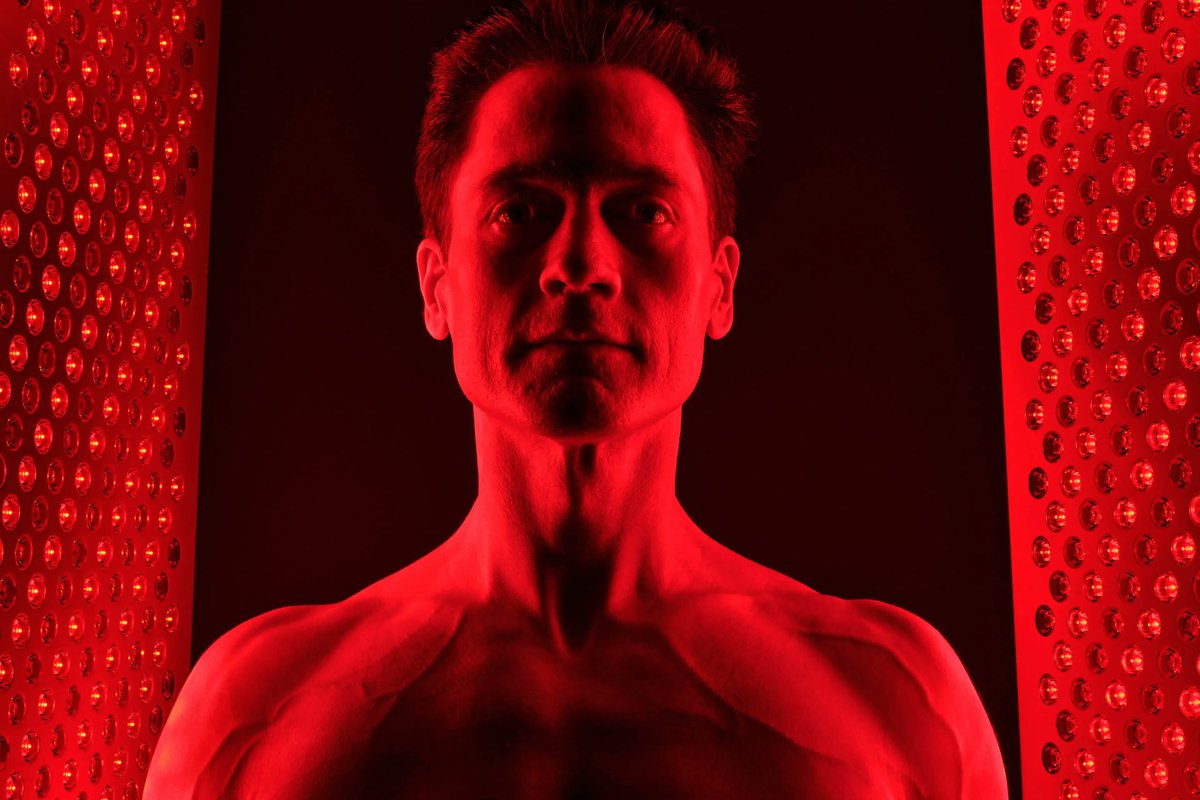
Bryan Johnson is the reason the average person now knows any of this exists. He uses a red light cap on his scalp for 6 minutes daily and a full-body panel three times a week. He posted his hair regrowth photos and his skin scans, and the algorithm did the rest. Red light masks went from biohacker forums to Sephora shelves in two years.
Tiina Karu died in 2019. She did not live to see Nature validate her. She did not live to see a billionaire turn the enzyme she identified into a billion dollar industry.
Every red light mask, panel, cap, and bed on the planet right now is just a way to deliver the photons she proved mattered.
The wavelengths were always there. The enzyme was always there. The biology was always real.
It just took a Hungarian doctor with a broken laser, a Russian scientist nobody listened to, and one tech billionaire willing to stand in front of a glowing panel for the world to finally pay attention.
That sinking feeling in your stomach? It might be your future self trying to warn you.
Scientists now believe your consciousness isn't trapped in the present moment.
It can leap forward. Backward. Bend around time itself.
And those random "gut feelings" you brush off? They could be memories leaking back from a version of you that hasn't happened yet.
Cognitive neuroscientist Julia Mossbridge has spent years wiring people up to monitors and measuring something that shouldn't exist, your body reacting to events seconds before they actually occur.
Subjects sit calmly. A computer randomly flashes images, some peaceful sunrises, some violent car crashes. The wild part? Their brains spike with stress before the disturbing image ever appears on screen.
No way to predict it. No pattern to follow. Yet the body knows.
Dean Radin, chief scientist at the Institute of Noetic Sciences, ran the original version of this experiment back in the mid-1990s at the University of Nevada. His results have been replicated roughly three dozen times since.
Even the CIA got curious. In 1995, the agency declassified its own precognition research after independent statisticians reviewed the data and called it statistically reliable.
So how does this even work?
Radin and Mossbridge point to quantum entanglement, the strange phenomenon Einstein famously called "spooky action at a distance." Particles stay linked across vast distances, and possibly across time itself.
Their theory? Your brain might be entangled with its own future state. What feels like instinct is actually a signal bouncing backward through the timeline.
"In quantum mechanics, time may not even be part of our physical reality," Radin explains. It exists, but not the neat, linear way humans experience it.
Mossbridge puts it plainly. Precognition isn't hard to understand. It's just hard to believe, especially for people who've never felt it themselves.
The resistance, she says, isn't really about science. It's about fear. Fear that reality doesn't play by the rules we were taught.
Your gut isn't superstition. It might be the only part of you already living tomorrow.
Source: Popular Mechanics
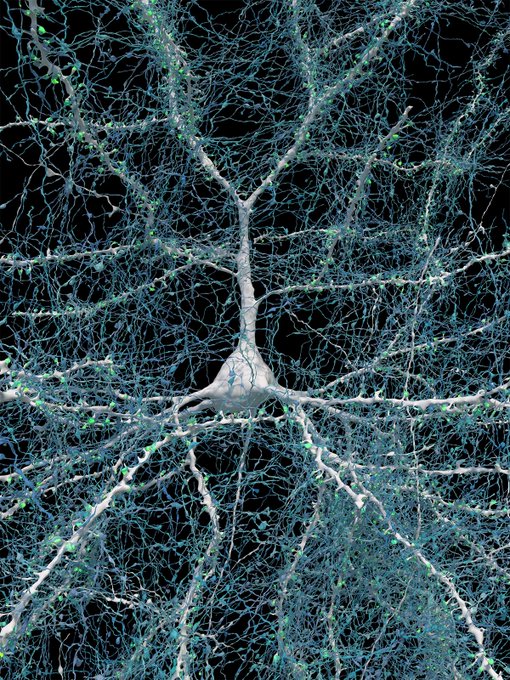
This is the most detailed view of a human brain to date.
A team of researchers used electron microscopy (EM) to image a cubic millimeter-sized piece of human brain tissue at high resolution and this is a single neuron with 5,600 of the nerve fibers that connect to it.
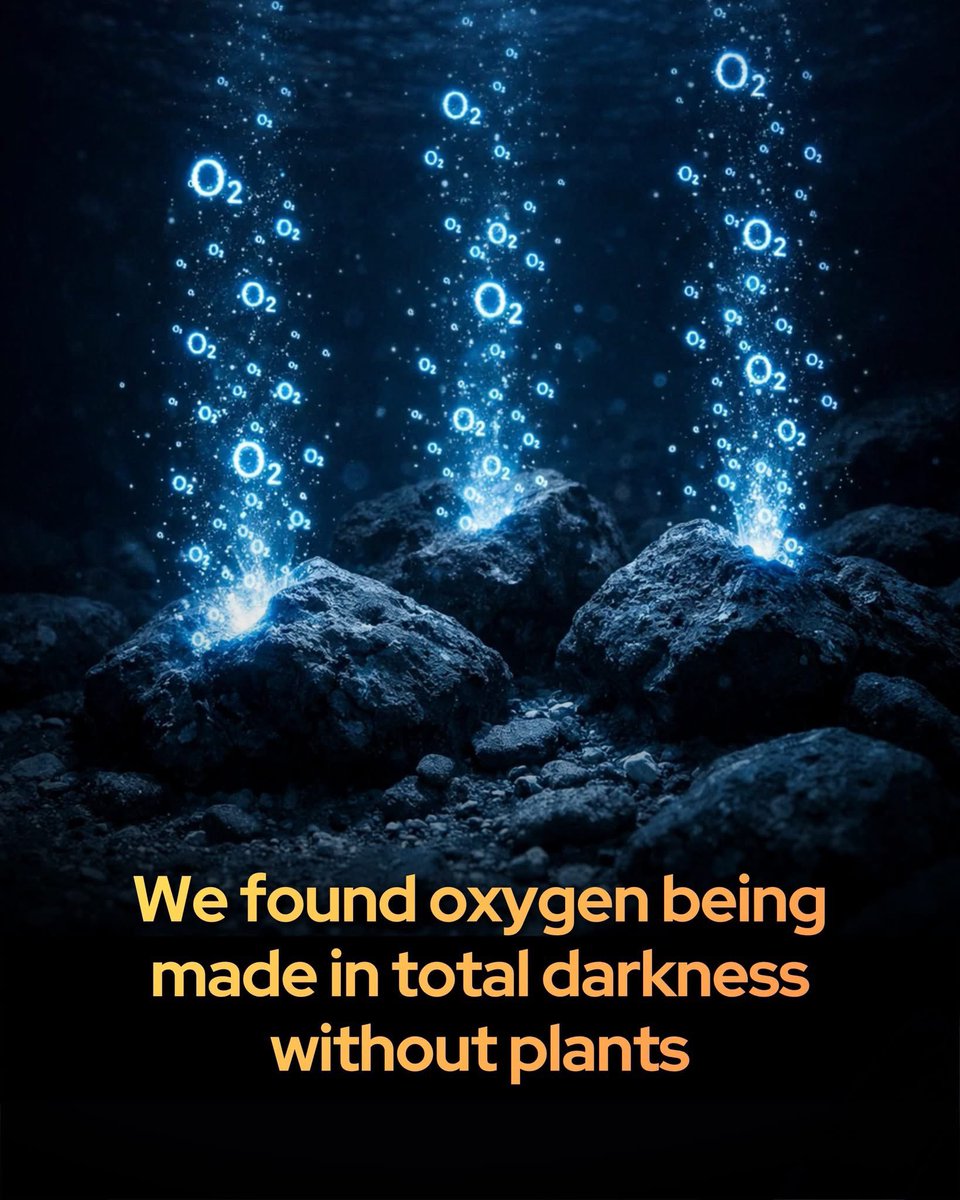
CONFIRMED: Oxygen can be created without photosynthesis.
Scientists have discovered that the deep ocean produces oxygen without sunlight, challenging the belief that photosynthesis is the only source of life-sustaining air.
In the absolute darkness 13,000 feet below the Pacific surface, a team led by the Scottish Association for Marine Science has discovered "dark oxygen," produced entirely without sunlight.
While surveying the Clarion-Clipperton Zone, researchers identified polymetallic nodules—potato-sized rocks rich in cobalt and nickel—that function as natural "geobatteries." These electrically charged rocks generate enough voltage to trigger seawater electrolysis, a chemical process that splits H2O into hydrogen and oxygen. This finding overturns centuries of biological theory which held that only photosynthetic life like plants and algae could generate oxygen.
This geological breakthrough could rewrite the origins of life on Earth, suggesting that aerobic organisms may have evolved in the deep sea long before photosynthesis began on the surface. However, the discovery also introduces a significant conflict for the green energy transition. These same oxygen-producing nodules are the primary targets for deep-sea mining companies seeking metals for electric vehicle batteries. By harvesting these minerals, we may inadvertently destroy the very mechanisms that oxygenate and sustain the abyssal ecosystem, forcing scientists to urgently reassess the ecological costs of mineral extraction.
source: Sweetman, A. K., et al. Evidence of dark oxygen production at the abyssal seafloor. Nature Geoscience.
Humans are nearly blind — sensing less than 5% of the physical universe.
Most of physical reality is literally invisible to us. Yes, seriously.
Our perception of reality is a narrow window. While we navigate the world through sight and sound, our biological hardware only captures a tiny fraction of what actually exists. Human eyes perceive a slim band of light between 380 and 770 nanometers, while our ears are deaf to anything outside the narrow range of 20 Hz to 20 kHz. This leaves a vast spectrum of ultraviolet light, radio waves, and ultrasonic frequencies buzzing around us completely unnoticed. Even as modern technology like infrared sensors unveils these hidden layers, we remain largely oblivious to the invisible forces—such as the billions of ghostly neutrinos passing through our bodies every second—that define our physical existence.
The true scale of our sensory limitation becomes even more profound when looking toward the stars. Scientific estimates suggest that a staggering 95 percent of the cosmos is composed of dark matter and dark energy, substances that remain entirely beyond our current ability to sense or detect directly. While we have developed sophisticated tools to bridge these gaps, we are still only scratching the surface of a reality that is predominantly invisible. This hidden architecture suggests that what we call "reality" is merely the tiny sliver of existence we have evolved to perceive, leaving the vast majority of the physical world a mystery waiting to be decoded.
source: National Aeronautics and Space Administration. (2024). Anatomy of an Electromagnetic Wave and the Universe Overview. NASA Science.
41 kidnappings of crypto holders in France in 3.5 months of 2026.
Why?
🥖 French tax officials selling crypto owners' data to criminals (Ghalia C.) + massive tax database leaks.
Now the state also wants IDs and private messages of social media users.
More data = More victims.
The vacuum just pushed two metal plates together.
No fuel. No magnets. Nothing.
The Casimir effect — confirmed 1997. The quantum vacuum is not empty. It's active, structured, and measurable.
ISF's geometric framework predicted the proton's size from geometry alone. 99.97% accurate. No free parameters.
The research is ongoing.
https://t.co/tiZsdIHfr0
Managing diabetes may soon be as simple as applying a lotion…
Scientists created a new polymer that carries insulin through the skin's protective barrier.
Delivering insulin through the skin has long been considered an impossible feat because large, water-loving insulin molecules cannot naturally penetrate the oily, protective barrier of human skin. Researchers have finally overcome this obstacle by engineering a "smart" polymer that hitches a ride on the body's natural chemistry. This innovative material changes its charge based on skin depth: it remains positively charged at the acidic surface to navigate the outer barrier, then releases the insulin once it reaches the neutral environment of deeper tissue.
In trials featuring mice, minipigs, and lab-grown human skin, the topical cream provided a smooth, sustained reduction in blood sugar levels comparable to traditional injections. The application showed no signs of inflammation, offering a glimpse into a future where diabetes management is completely painless and non-invasive. While human trials are the next critical step, this breakthrough promises to free millions from the daily burden of needles and improve long-term health outcomes through easier adherence.
source: Nature Research. (2025). A new insulin cream passes through skin and controls blood sugar without needles. Nature.