Congratulations to Dalia Miller https://t.co/v7c8ALkkAV TMED Candidate & mentor Dr Kim Dunham-Snary on paper in Frontiers | Preclinical models of mitochondrial dysfunction: mtDNA and nuclear-encoded regulators in diverse pathologies @queensutime https://t.co/D8AUp5iqOu
I am so grateful to have had the privilege of attending #SfRBM2024, and for the opportunity to share our research and connect with experts in the field. Huge thanks to @KimSnary for your support and guidance!
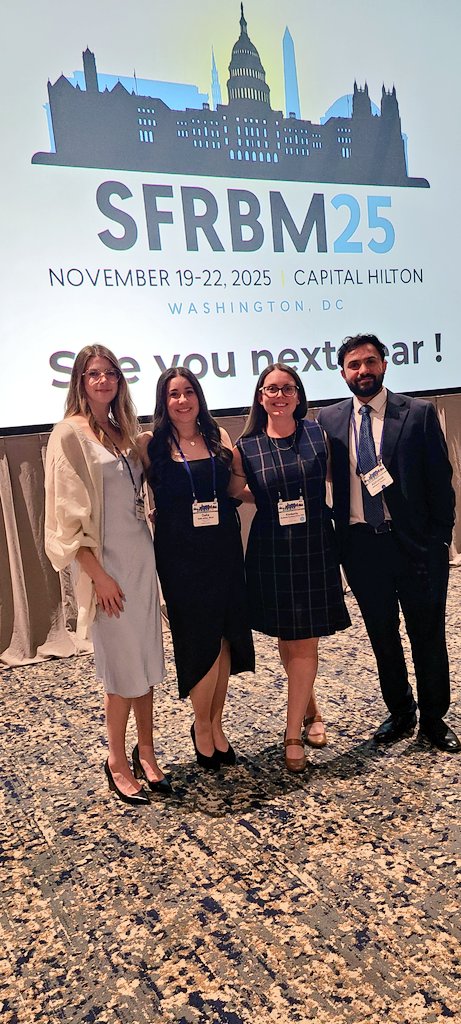
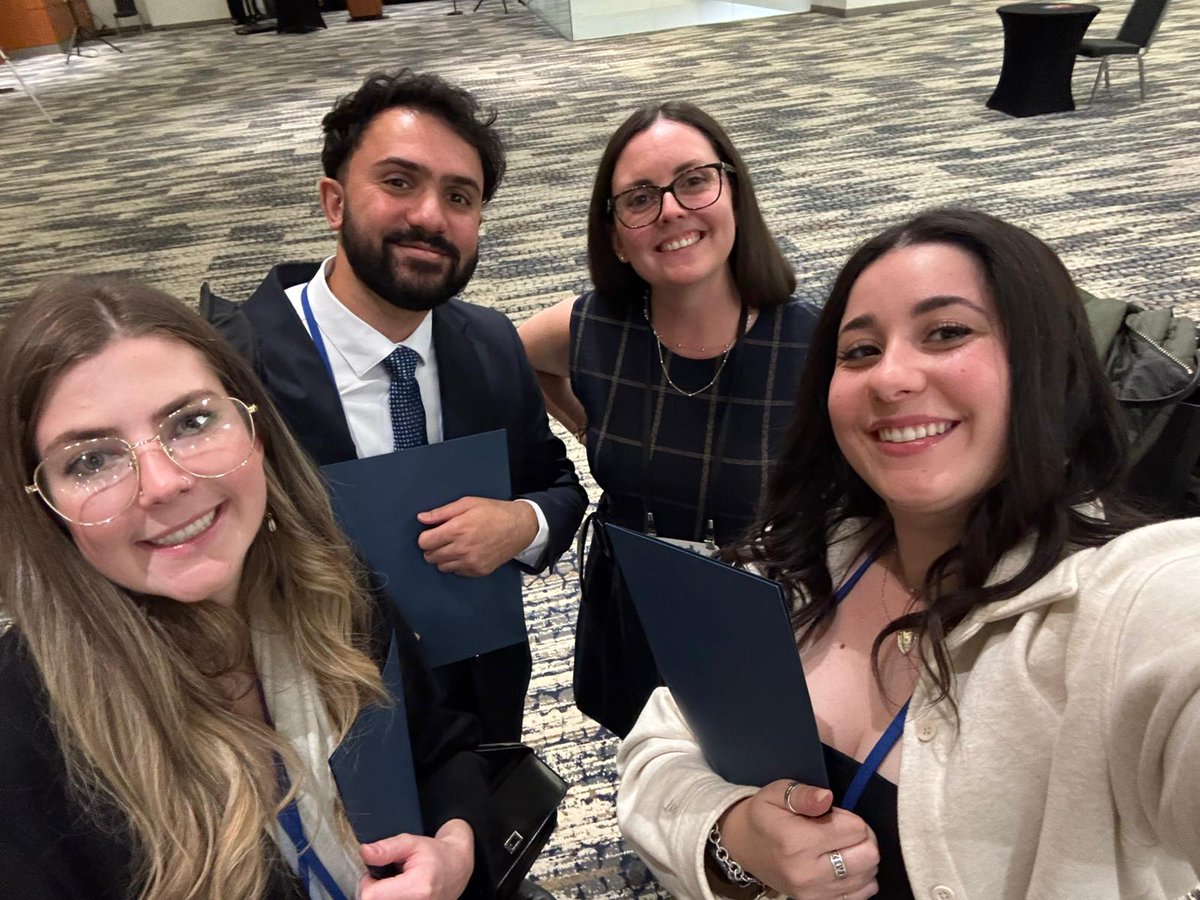
#SfRBM2024 has wrapped! Team @MitoMetabLab collected their abstract/travel awards (#proudPI), and we wish to congratulate @DrEMBahnson on his Mentoring Excellence Award and Dr. Holly van Remmen, the inaugural Trailblazer Award recipient. See everyone in DC next year!
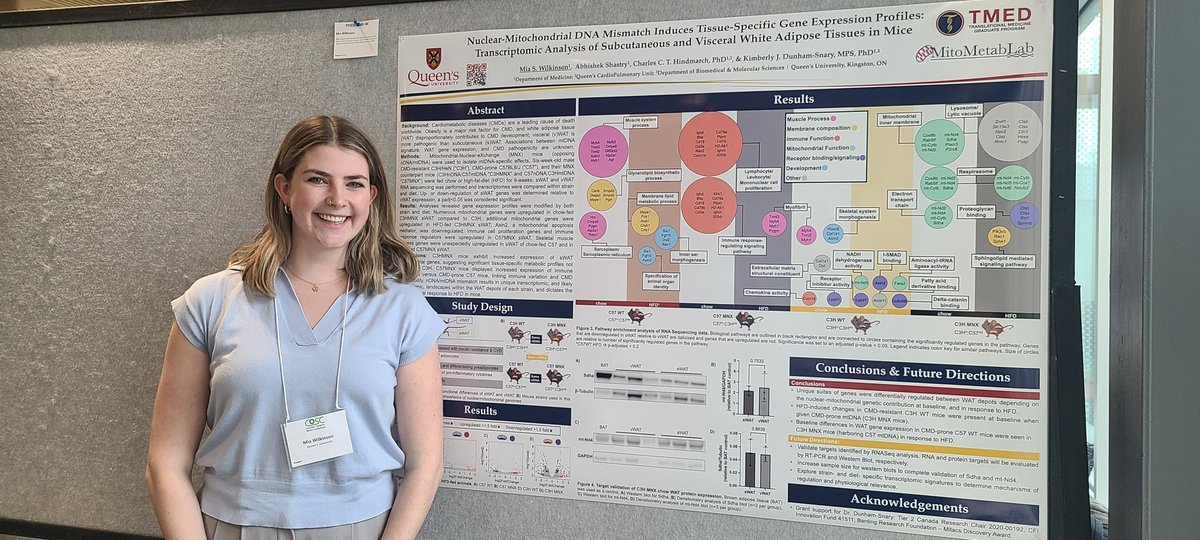
Research in progress with @tmedQueens students-Mia Wilkinson (Dunham-Snary lab) presented her poster on measurement of platelet metabolism as a liquid biopsy to assess muscle metabolism in cardiometabolic syndrome (for SFRBM meeting) KUDOS Mia @QueensuCPU
It was a big day for @MitoMetabLab. The first-ever paper written by one of my stellar trainees was submitted today! 🥳 Congratulations @MiaSWilkinson - en route to Montreal for COSC right after submission! 🤓 @tmedQueens preparing students well! #teamworkmakesthedreamwork
@schinhail @tmedQueens@LintonSophia@Asish_Dasgupta@queensutime@QueensuDOM@QueensUHealth Thanks for the question! I think as Dr. Abdel-Qadir alluded to, as much assessment as possible would be ideal, but barriers such as imaging wait times make this a feasibility issue. Typically, at-risk patients would have preventive measures taken before and during treatment, 1/
@MattiMcfarlane@tmedQueens@LintonSophia@Asish_Dasgupta@queensutime@QueensuDOM@QueensUHealth Thanks for your response! To answer your first question:
While some breast cancer therapies have more favourable CVD risk profiles, known cardio-toxic agents are often necessary for curative cancer treatment. Choice of therapy is dictated by tumour and patient characteristics 1/
@abby_mocho@tmedQueens@LintonSophia@Asish_Dasgupta@queensutime@QueensuDOM@QueensUHealth effectively communicate these risks to patients. As I touched on in my blog post, information about treatment risks may be confusing or scary from a patient's perspective, but it is the responsibility of the physician to appropriately outline all pertinent information 2/
@abby_mocho@tmedQueens@LintonSophia@Asish_Dasgupta@queensutime@QueensuDOM@QueensUHealth Great question! Patient autonomy is very important, especially in a field such as oncology where many treatment options have significant adverse effects. Oncologists should be aware of the cardio-toxic effects of possible treatments they may prescribe, and be able to 1/
Proud of my colleague, Dr Kim Dunham-Snary @QueensuDOM , who just received her official Tier 2 Canada Research Chair certificate for mitochondrial metabolic research from @JustinTrudeau -lucky to have you here @queensuResearch in DBMS & the DOM!