A single arterial blood gas analysis is unreliable for determining prognosis in patients with non-asphyxial hypothermic cardiac arrest. Initial hypoxemia does not preclude a favorable neurological outcome.
Link: https://t.co/mpAMYpMu8g
@piotr_makowiec@JacekGorka Uwielbiam argument pt. "płaci składki". Szanowny Panie - składki jakie większość pacjentów uzbierała przez całe życie jest niekiedy ułamkiem kosztów pobytu takiego pacjenta w Oddziale Intensywnej Terapii.
(...) Severe hypoglycemia (16 -54 mg/dL; 0.9 - 3.0 mmol/L) cannot be considered a factor disqualifying patients from extracorporeal cardiopulmonary resuscitation in hypothermic cardiac arrest.
In patients with hypothermic cardiac arrest, glucose concentrations in the range between 0.9 and 3 mmol/l (16 – 54 mg/dl) before extracorporeal cardiopulmonary resuscitation do not rule out survival with good neurological outcome.
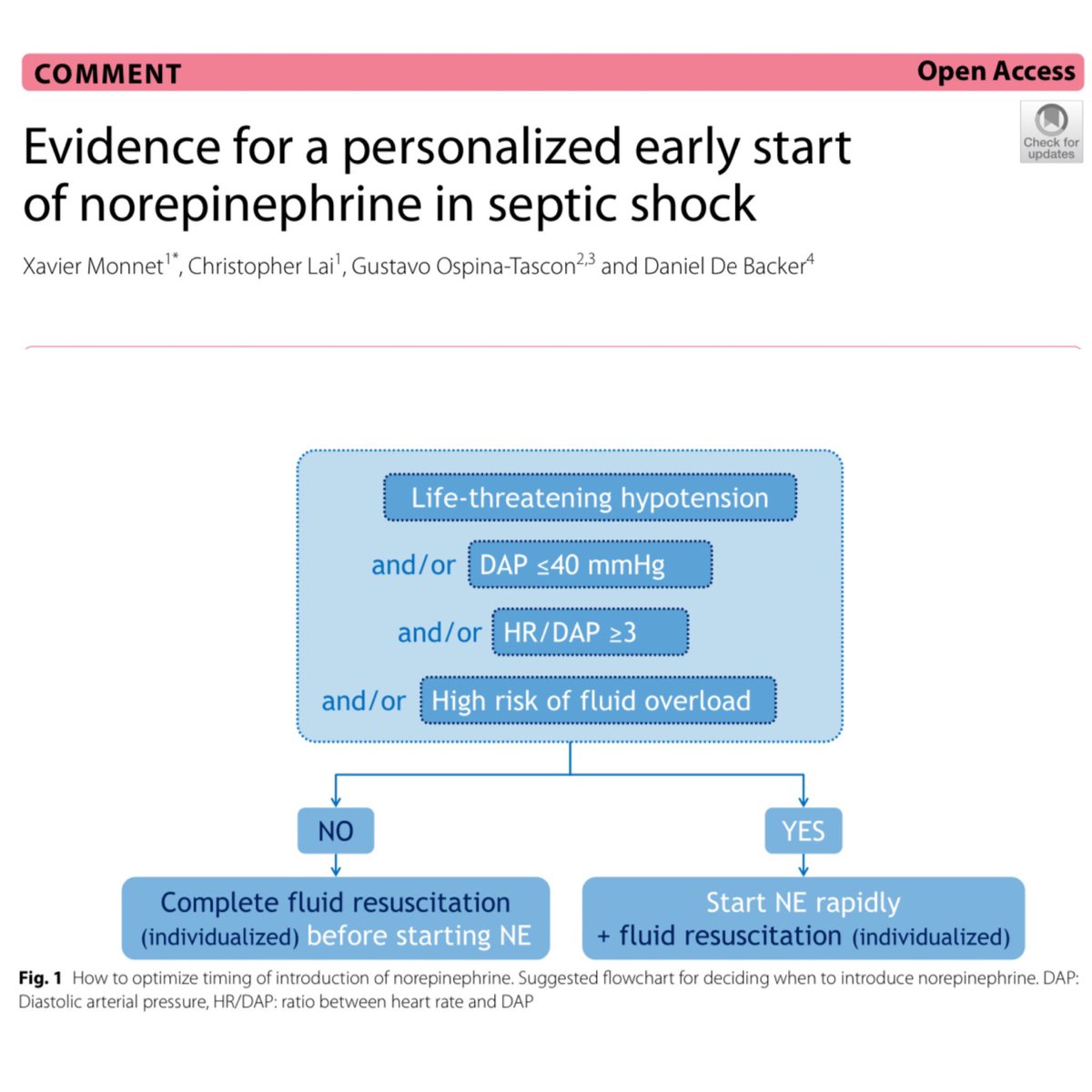
Do you struggle to decide how early in resuscitation to start norepinephrine? Try this simple algorithm. Stabilizing the hemodynamics as soon as possible has numerous benefits. 🎩 tip to the authors including the legendary @Prof_XMonnet
https://t.co/Sfr6vCn6le
Use of artificial intelligence in decision-making for eCPR in patients with hypothermic cardiac arrest risks unjustifiably withdrawing treatment from patients who have a chance of survival with a good neurological outcome
Link: https://t.co/aPTXPSIGs5
Hyperkalemia management: No supporting clinical effect was identified for calcium or bicarbonate. Is it time to rewrite all the order sets? 🎩 tip to the authors.
https://t.co/Sfr6vCn6le
The process of selecting patients for ECPR in hypothermic cardiac arrest represents a compromise between minimizing the risk of excluding patients who have a chance of survival with ECPR and lowering the number of futile therapies (..)
Full: https://t.co/xqfTfly7qK
Qualification of patients with hypothermic cardiac arrest for ECLS rewarming should not be strictly based on guidelines for normothermic cardiac arrest..
Full: https://t.co/TwPFnbq0m7
Just published! I invite you to read our expert consensus on the brain damage due to cardiovascular procedures, published in Nature
Reviews Cardiology
https://t.co/a6zXx73AI6
In patients with suspected sepsis admitted to the Intensive Care Unit, presepsin does not accurately predict the risk of in-hospital death, but it can predict a positive microbiological culture.
Full: https://t.co/Yu5ij3ksLt
The FDA has approved Traumagel.
a plant-based gel that quickly stops bleeding and helps the body’s natural clotting process.
This could be vital for first responders, military personnel, and remote care.
Thoughts?
#FDAApproval#TraumaCare
@R_Tyminski .. a nieprawidłowy wynik dimeru-d to już tylko krok od zlecenia angio-TK tętnic płucnych. Tu się dopiero prawdziwe koszty. Przychodzi pacjent z ciałem obcym w oku, a wychodzi z angio-TK tętnic płucnych - i to wcale nie science fiction ;)
Initial IM dose (5 mg i.m.) of adrenaline as an adjunct to standard care was associated with improved survival to hospital admission, survival to hospital discharge, and functional survival in out-of-hospital cardiac arrest
Full: https://t.co/qeyQ2MxBu4
A 2-gram out-of-hospital TXA bolus in patients with moderate/severe TBI and ICH resulted in lower 28-day mortality and lower 6-month DRS than placebo and standard TXA dosing.
https://t.co/ea1oSgIVQp