Author of the Internet Book of Critical Care (100% free, link below) 🖋️ Board certified in critical care, pulmonology, and neurocritical care 🤓 No COI💰
@mikeditillo@PChestovichMD yeah APRV works great with proning. the combo is probably the most effective recruitment maneuver known for dependent atelectasis. then APRV may help maintain recruitment when you suppinate the patient.
@apsmunro@DrToddLee@ABsteward 💯 The number of journals is insane.
Despite doing lots of literature reviews for years, I keep on encountering new journals that I never heard of.
@apsmunro@DrToddLee@ABsteward this was published in 1994, when the problem wasn't NEARLY as bad as it is now.
since 1994 every major journal has spawned 2-3 progeny journals, all of which are eagerly pumping out papers which probably wouldn't have been publishable in the 1990s.
I'm a big proponent of stopping non-essential medications for patients admitted to ICU. If you continue a dozen home meds and add two dozen ICU meds, you create a 36-drug medication list that's impossible to safely maintain (in terms of drug-drug interactions, GFR shifts, additive toxicities).
This is actually a great opportunity for deprescribing:
[#1] At admission, pare back the med list & focus on treating the acute problem.
[#2] At discharge, think carefully about whether all those meds were needed in the first place, make sure the home med list is short & sensible.
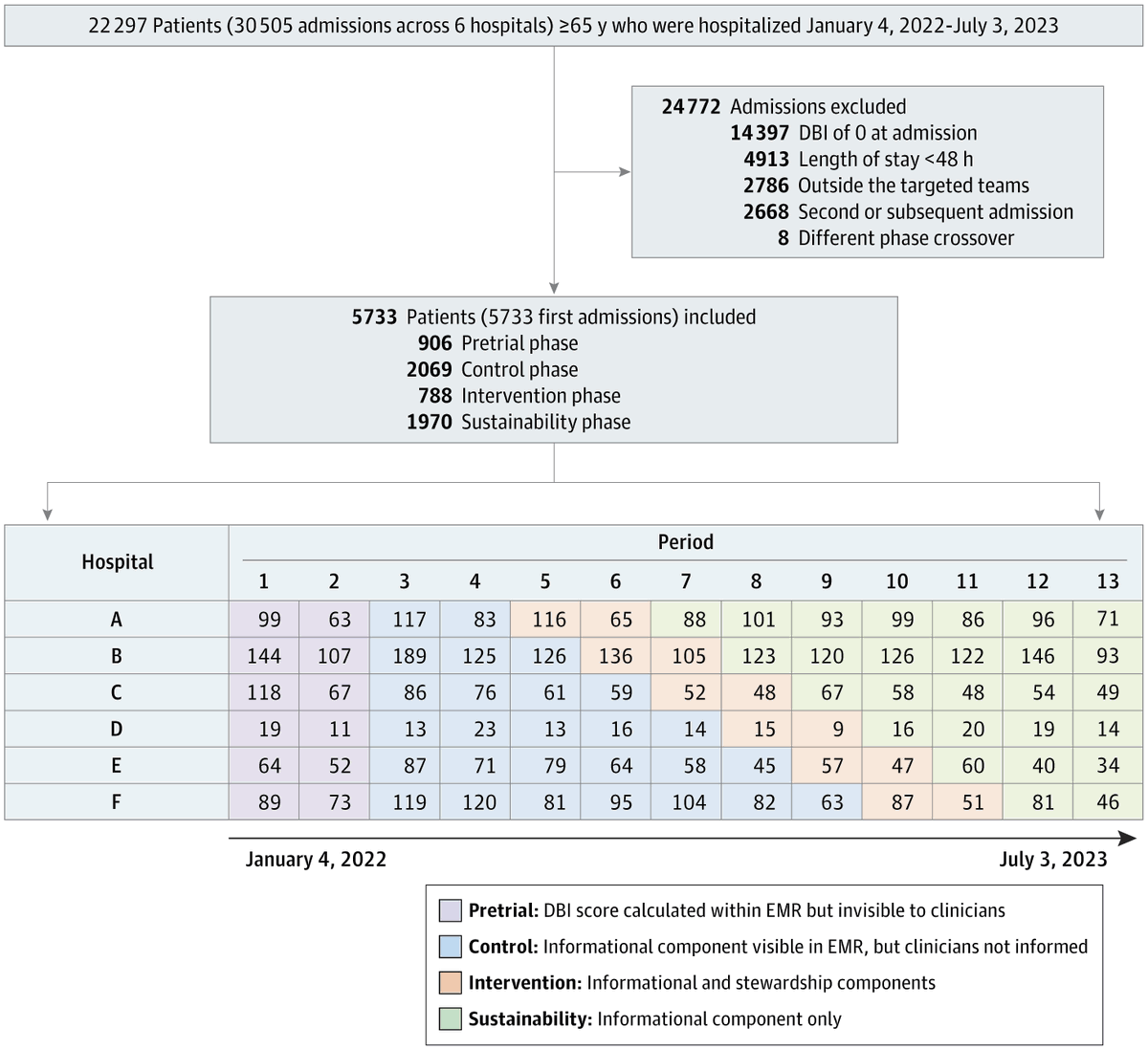
Among older inpatients, a #DrugBurdenIndex stewardship intervention increased deprescribing of anticholinergic and sedative medications at discharge, but the increase was not sustained after stewardship support ended.
https://t.co/A10PySaaYC
@DrToddLee@ABsteward We really need to have a serious discussion about the incredible bloat of scientific literature, and how this overwhelms our ability to focus on papers that are actually good (RCTs etc).
We're drowning in a tsunami of bad papers.
@IdVilchez@DrToddLee@DrEmilyMcD@ABsteward Linezolid has very good in vitro anaerobic activity including for bowel anaerobes. Since anaerobes are usually bystanders, not main players in polymicrobial setting, & as Ben Lipksy says, the MOST EFFECTIVE ANTIBIOTIC FOR ANAEROBES IS OXYGEN, Im fine with it in this setting.
PS - I just updated the IBCC chapter on smoking cessation, it's here: https://t.co/mYNHAZD1zT
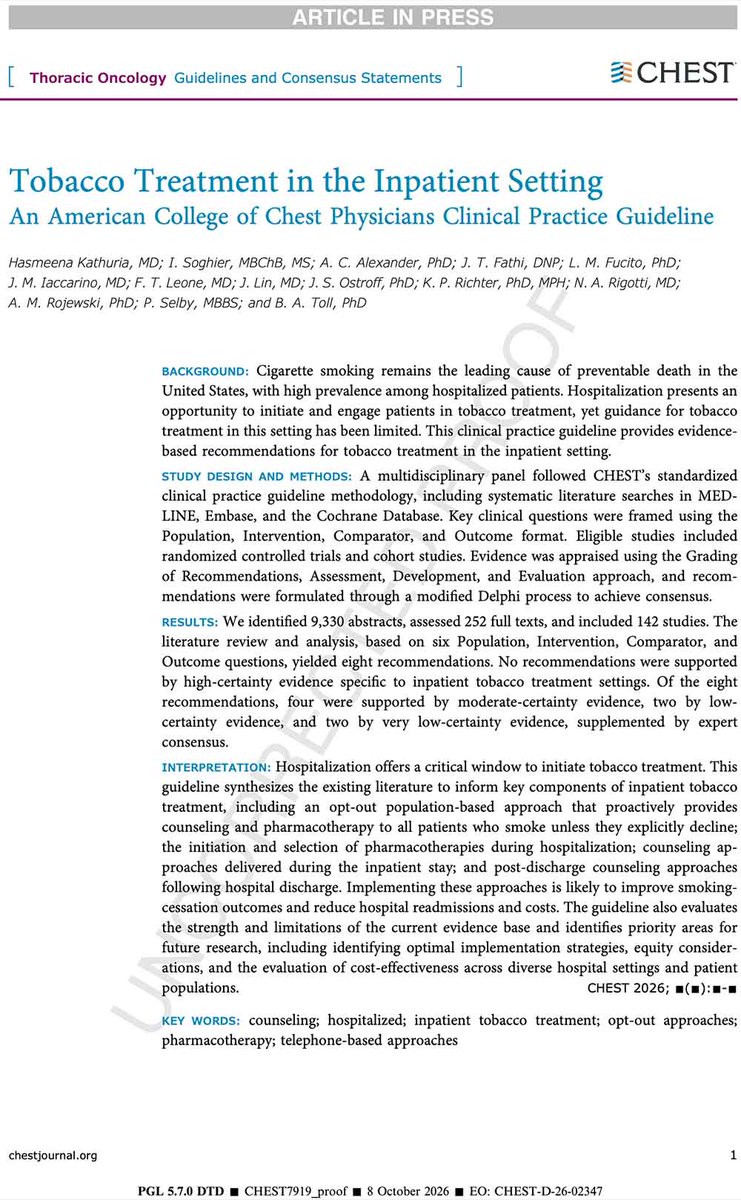
It incorporates the new CHEST guidelines and also a recent statement by the Canadian Cardiovascular Society.
Admittedly focuses more on meds than counseling (which is often hard to access).
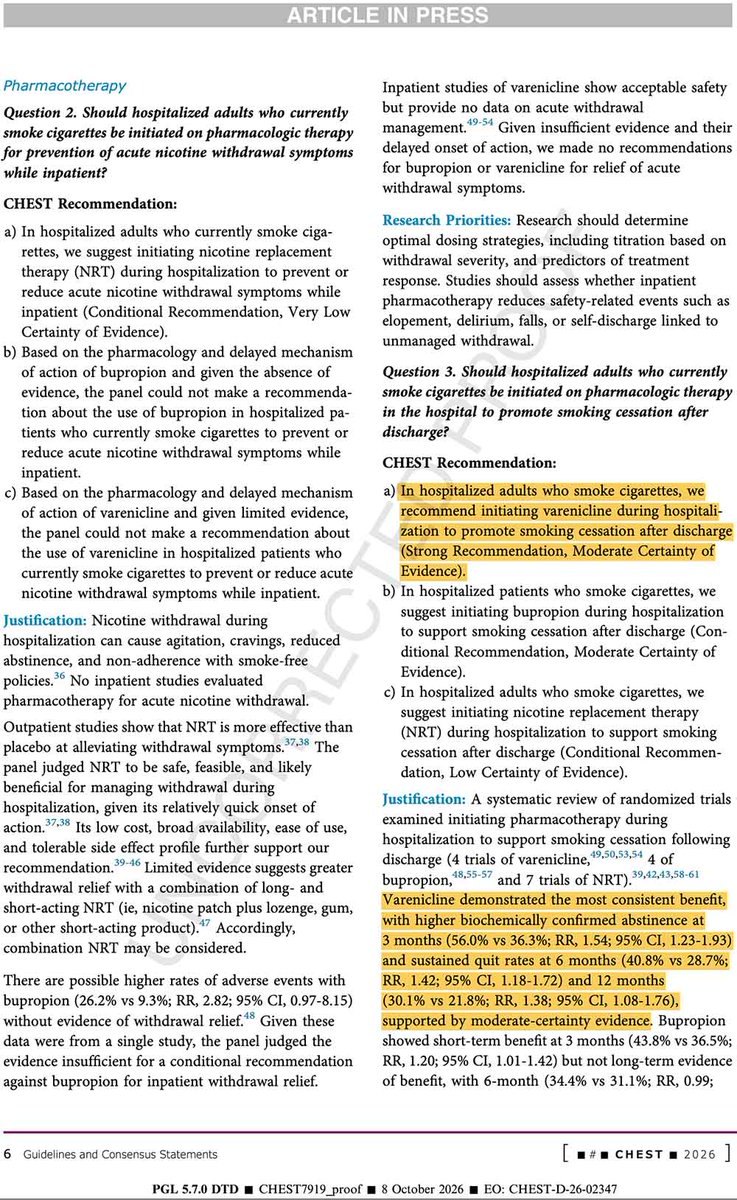
New CHEST guidelines on inpatient management of tobacco use make a strong recommendation to start varenicline in the hospital 🔥
This seems evidence-based and sensible, especially for patients where tobacco use is driving repeated admissions (e.g. COPD, asthma).
If we treat the acute exacerbation without addressing the underlying causes, we're spinning our wheels.
What do folks think about this? Is anyone practicing this already?
@pulmtoilet@accpchest yeah TBH I feel like we should always be doing more about EtOH and tobacco cessation... I get really jazzed about it when I revise the IBCC chapters on this but it's hard to maintain effort in real life. But we should.
Casually inferring that 98% of cardiac surgeons are lazy and incompetent is WILD.
Why do this?
Simple punchlines drive clicks and views.
Most readers don't want nuanced, murky, challenging concepts.
I'm not kidding.
Excessively aggressive radiology reads are bad practice and expose you to medicolegal liability for no reason.
It's fine to say that pneumonia is the leading diagnostic consideration or the film is consistent with pneumonia. But if you just read the film as "pneumonia" you will be wrong eventually.
🚨Radiologists, read this if you don't want to get sued 🚨
I see this mistake a lot and it drives me bananas.
Radiology sees an opacity on chest radiograph and diagnoses pneumonia.
But, pneumonia is a *clinical* diagnosis that shouldn't be made in the radiology reading room.
When the radiologist makes an excessively confident diagnosis of pneumonia, this may lead to premature diagnostic closure & unnecessary antibiotics. (These over-aggressive "pneumonia" interpretations put a LOT of pressure on the treating team to give antibiotics.)
Usually in the cases I'm involved with the "pneumonia" ends up being atelectasis or CHF, but it could also be an unusual cancer or PE. Chest radiograph is a blunt survey tool that isn't good at making a specific diagnosis.
Folks make fun of radiologists for hedging on their reads, but that's a conservative & safe way that they should be practicing.
(PS - There's also a LOT else wrong with this case, like not getting a PE protocol CT scan. The differential diagnosis on this retrocardiac opacity may include pulmonary infarct due to PE. For a patient with 30 pack-years tobacco history presenting with hemoptysis, only getting a chest radiograph is like bringing a knife to a gun fight. The chest radiograph will generally be insufficient and you're almost always going to need a PE protocol CT. Not ordering a CT angiogram isn't the radiologist's fault.)
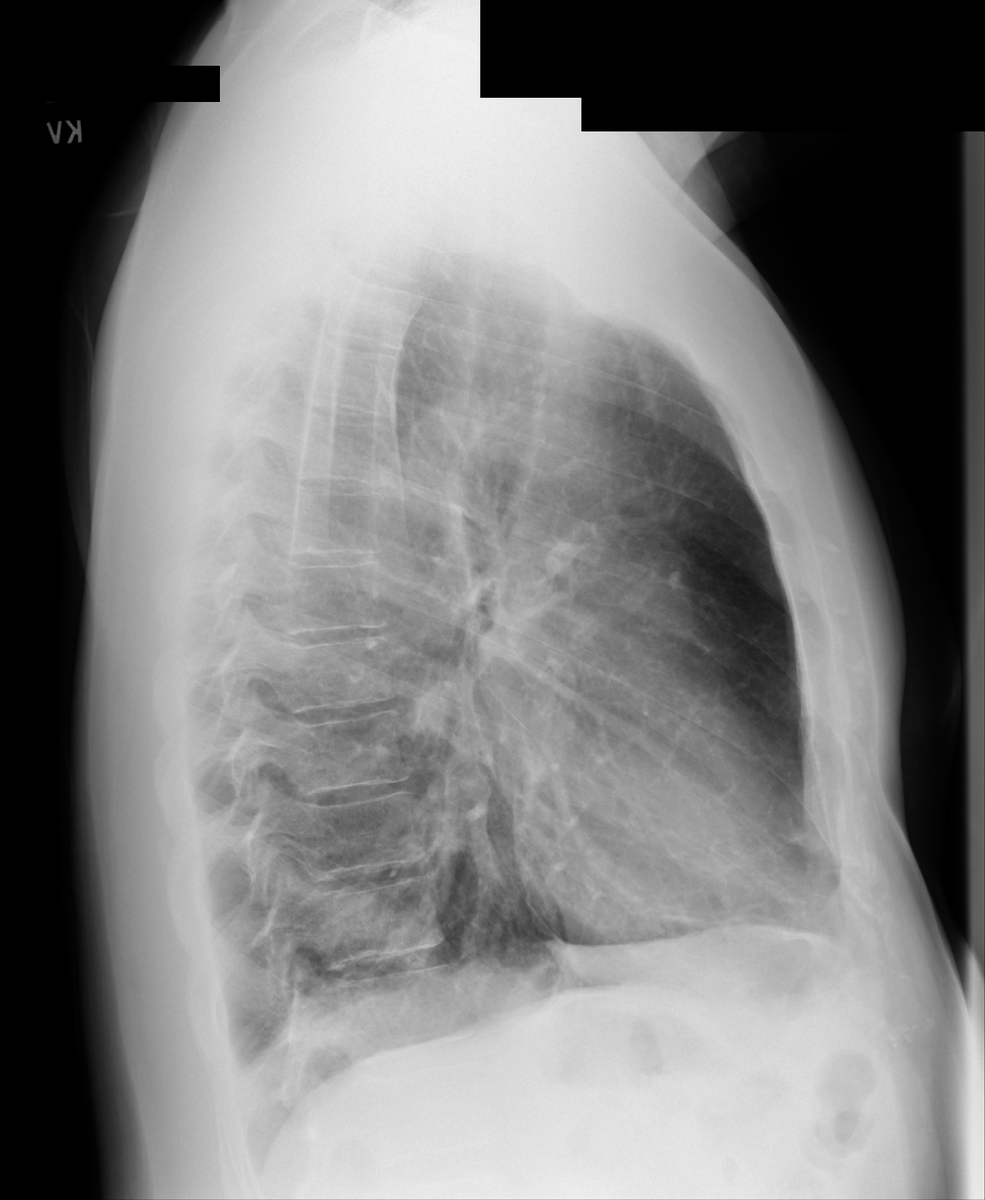
A STAT chest X-ray, a defense verdict, and a plot twist.
These are actual PA and lateral radiographs obtained from court documents.
"Reason: cough"
What would you report? 🧵
I didnt dig that deep into the case but TBH that doesnt necessarily change how I feel about the case
it sounds like there is no clear pneumonia clinical syndrome
in the absence of an obvious pneumonia (fever, sputum etc) then you’re going to need a CT
I’d just get a CTA to evaluate for malignancy and PE simultaneously and be done with it so you don’t need to keep worrying about PE 🤷♂️
@ScottRohren@GossyPi on the flip side, a no-frills read might force the ordering practitioner to realize they’re in over their head and they should ask someone else for help. 🤷♂️
@pulmtoilet@EMHighAK well in their defense ARDS has been redefined so many times and so broadly that it’s kinda easy to “diagnose” someone as having the global definition of ARDS 😆