Design leaders: if your designers ship PRs, put it in the career ladder. Most ladders still grade the file, the spec and the handoff, so designers who've moved past handoff get reviewed on work they've stopped making. Ramp's job ad already says its designers are "shipping PRs".
Hiring managers: before you open a design engineer req, look at the designers you already have. Hinge Health gave every designer one goal: a reviewed production PR within a month. Every one of them got there, and they kept the product context a new hire takes months to learn.
You tried faux elitism by wearing face mask like lágbájá of tech.
As e no work, you rush remove the face mask make investor fit see say you be real human being.
You don't really care about your users, you just want to make money. In the coming weeks, it will become clear.
Bro, you can't tell someone how they choose to express their greif.
Organising the biggest event of your life at a time, and an unplanned life event happens and you think it's wrong to put both in the same content.
Abeg just relax on this one. your comment doesn't go with the post.
You're trying to make someone feel bad for an harmless post with the comment insinuating a disrespect to his father's memory.
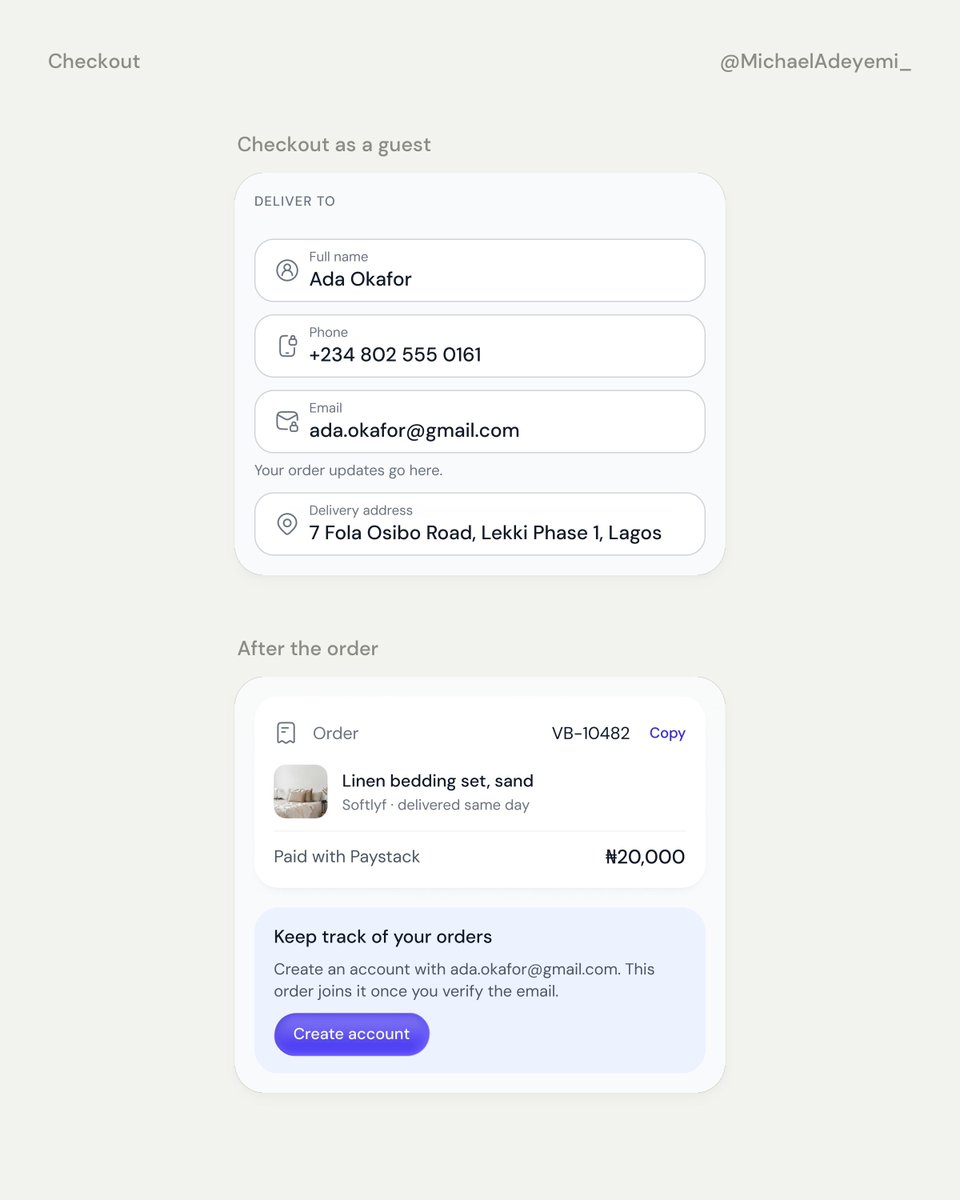
A guest can buy without an account: a name, a phone, an email for updates and an address.
The account is offered once, after the order, with the email they just used. In Baymard's survey, 18% of US shoppers had abandoned an order rather than create an account.
I've designed products for eight years. For the last year and a half I've also shipped what I design, in code, directing an agent. Hierarchy, flow, states and polish all came with me. What changed is where the work ends: a reviewed pull request, not a handoff file.
Before an agent builds a screen, I write its words: the empty state, each error, what the button says while it loads. Every error says what happened and what to do next. Leave the agent to invent a string and you get "Something went wrong", right when people need help most.
When an agent builds a screen, I review it one state at a time: empty, loading, error, a name three times longer than the mock, one item and three hundred. The happy path usually comes out right. The states are where the agent guesses, and they're what people actually hit.
@tombohdalek I agree, i see a future where designing in IDE becomes normal like designing in FIgma. and every changes is updating the code in real time
The decisions a handoff loses most often are the ones a static frame can't show: focus order, what a screen reader announces, what an animation does with reduced motion on. I build them into the component, so every screen that uses it gets them right without anyone remembering.
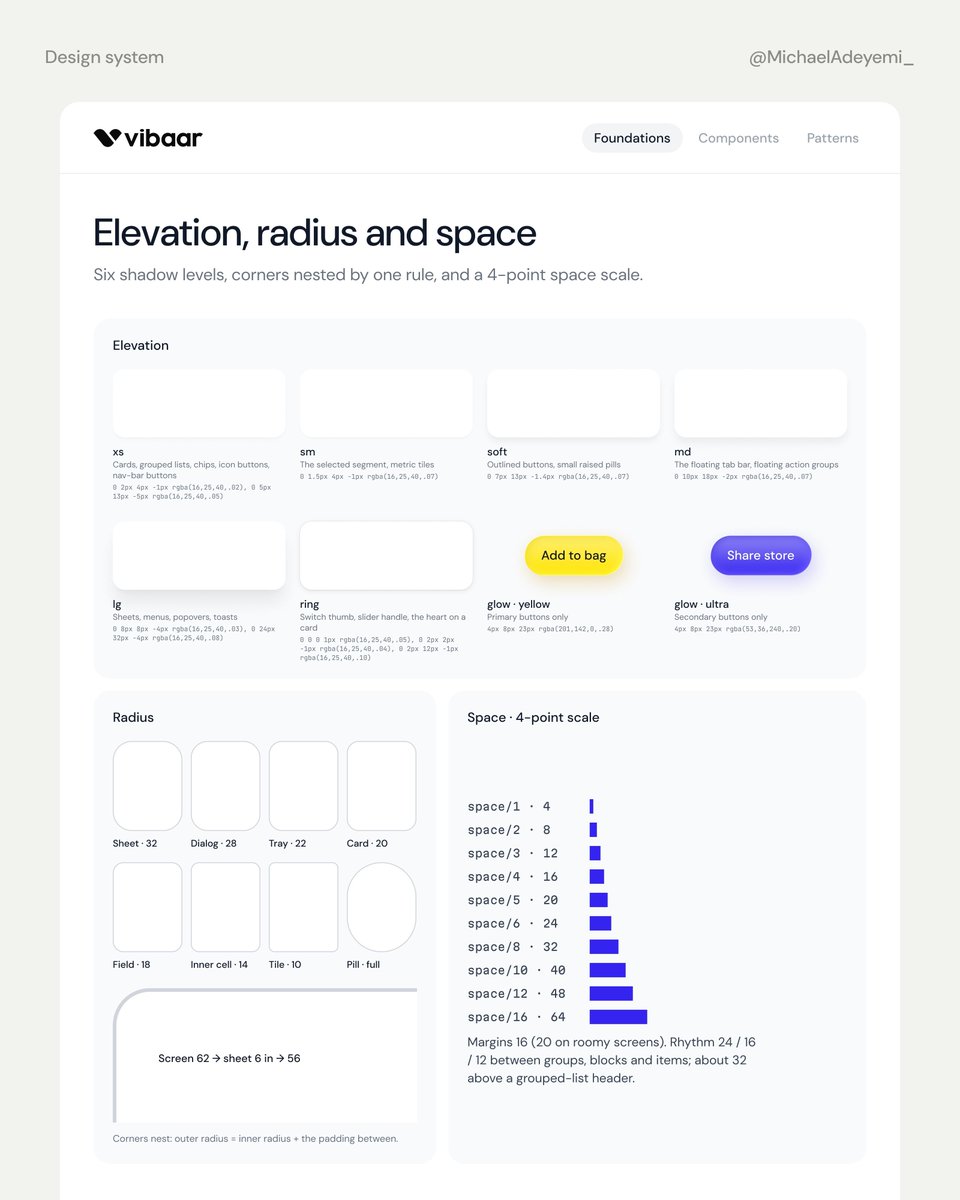
The Vibaar design system: the brand colours and the roles built on them, typography, elevation, radius and space, and the components the product screens are built from.
Designed in Figma.
Vibaar's report chart is one component with two properties: Metric and Scrubbing.
Tap Views and it redraws: new colour, new axis, last week still underneath in grey. Drag along it and it snaps day by day, each against the same day last week. 230 views, 180 the Saturday before.
Vibaar's design system lives in Figma and in the Next.js code under the same names: one type scale, semantic tokens, every component with all its states. I built both sides. When a screen looks off, the first question is quick: did the file drift or the code?
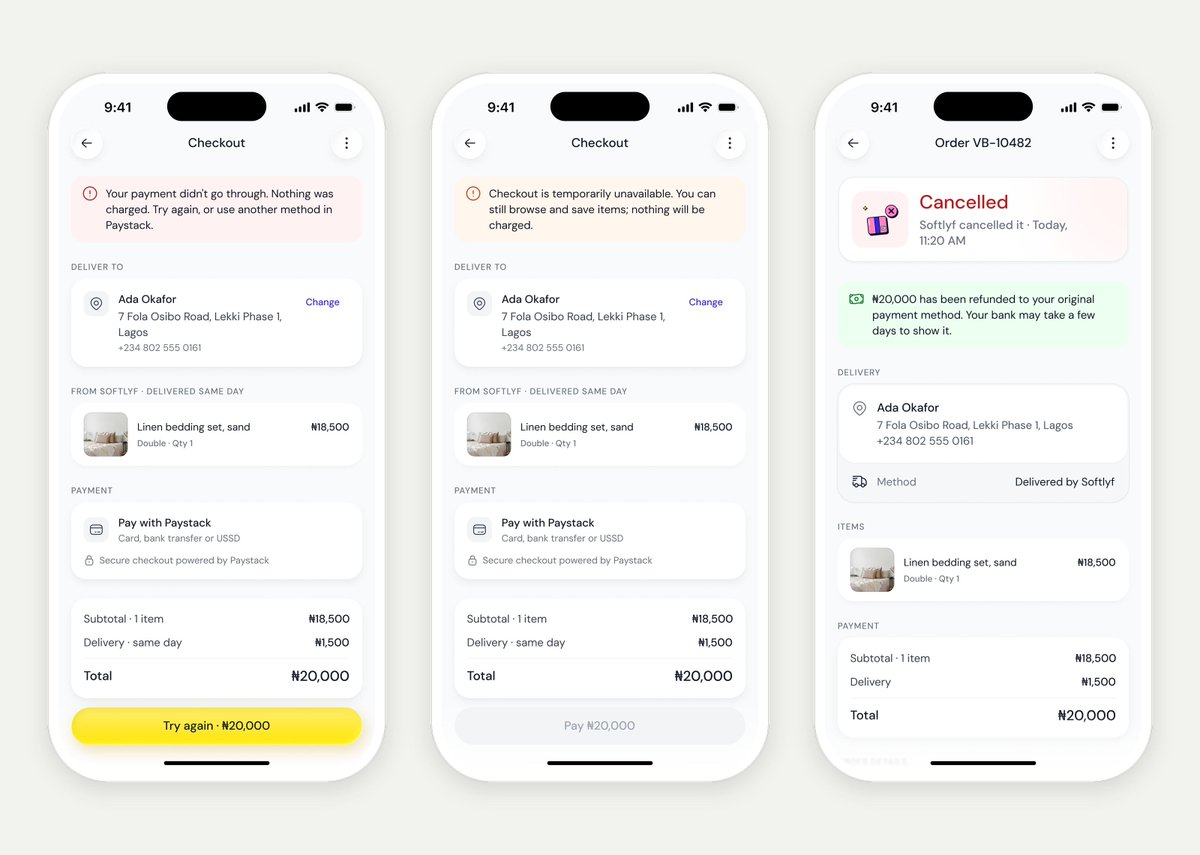
Three ways checkout goes wrong, and what each one says.
Payment fails: same page, everything intact, "Nothing was charged."
Checkout is off: browse and save still work.
The store cancels: where the refund went, and that banks take a few days.
The real advantage of a designer who ships isn't speed. It's that the person who cares how it feels is the one building it. The bottom bar clears the home indicator, the keyboard pushes the button up instead of covering it, and every tap target fits a thumb. No ticket needed.
If you run product, pull every UI ticket open for more than a month. That backlog is the cost of design waiting in an engineer's queue. Alan started its "Everyone can build" program after a button color change took weeks. Non-engineers shipped 283 PRs in two quarters.