A team of @ScharSchool students & faculty have spent the last 3 years working on a series of cross-Strait OSINT projects. Today, we're excited to launch a new website to showcase the public side of our efforts. Check it out! https://t.co/ZwL6E1x2f8
Exciting news! The first two 2025 updates of @EricGomezAsia's Taiwan arms sales backlog are now available on our NEW website: https://t.co/URgfF6W2N8
Our website also contains our analysis and data, alongside a collection of resources to aid in your Taiwan security research!
NEW: Two Chinese government vessels entered the restricted waters near Taiwan's Taiping Island for the first time today, marking the fifth CCG incident this month.
Taiwan's Coast Guard shadowed the incident throughout, which started this afternoon and lasted around 2 hours.
This is the 1st reported incursion around Taiping Island in 2026, and the 28th overall.
1/6 🧵 NEW: Taiwan Security Monitor’s May Strait Snapshot is out from the PLA Activity Center. Here are some of our findings:
Figure 1 shows May’s defining features: PLA air activity reached its highest level of 2026, but paused entirely during the May 14–15 Trump-Xi summit.
NEW: U.S. Secretary of Defense Pete Hegseth, at the annual Shangri-La Dialogue, just confirmed the pause in Taiwan arms sales is not due to munitions conservation concerns owing to the conflict in the Middle East.
Hegseth: "Yeah, on the Taiwan arms sales I would decouple the two. We feel very good about our stockpiles, both how we use them and in Epic Fury, in this historic moment."
He added that "Hung Cao is fantastic, but I would not couple the two at all."
NEW: Moments ago, President Trump told reporters he will speak with Taiwanese President Lai Ching-te via telephone before making a decision on US arms sales to Taiwan.
If it occurs, it would be the first publicly disclosed direct phone call between the US and Taiwanese presidents since 1979. Trump previously called then-President Tsai Ing-wen when he was President-elect in late 2016.
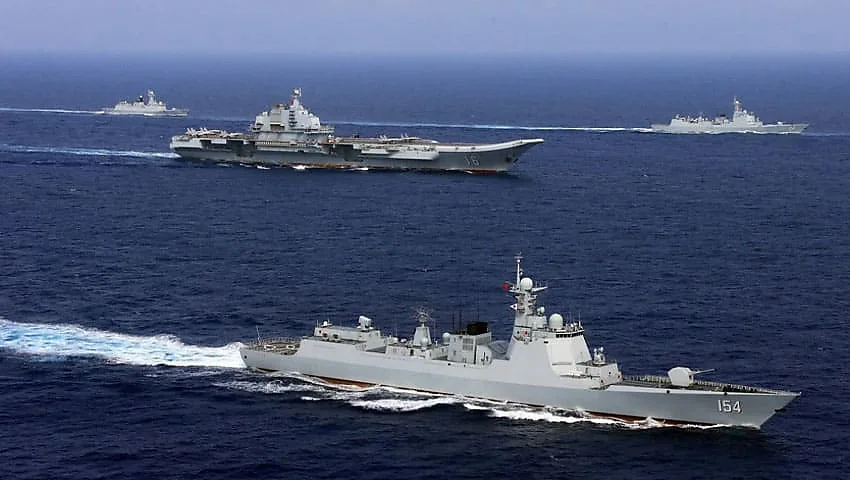
NEW: The PLA Navy announced that the Liaoning carrier strike group has deployed to the Western Pacific for what it described as a routine far-seas training exercise.
According to the statement, training activities will include tactical flight operations, live-fire drills, support and cover operations, and integrated search and rescue exercises aimed at improving “realistic combat training capabilities.”
New: President Lai Ching-te responded to recent comments made by President Donald Trump earlier today, arguing the following points:
• The Republic of China (Taiwan) is a defender of the status quo and will not abandon its sovereignty and dignity under pressure.
• The PRC is the source of instability in cross-Strait relations and is responsible for attempting to alter the status quo.
• There is no issue of “Taiwan independence” because the Republic of China (Taiwan) is already a sovereign and independent nation. Neither side of the Taiwan Strait should be subordinate to the other.
• Taiwan–U.S. cooperation, especially through U.S. arms sales, is critical to regional stability.
• Taiwan is central to global interests, and peace in the Taiwan Strait should be a shared international consensus.
As renewed debate over US arms sales to Taiwan dominates headlines, much of the discussion focuses on Washington and Beijing.
Everyone talks about what the US should do. Far fewer ask what America’s allies would think.
But the future of Taiwan is also a test of alliance politics.
How would Japan, South Korea, and Australia respond if deterrence failed in the Taiwan Strait? How do they privately think about the risks of conflict, alliance commitments, and America’s long-term credibility in the Indo-Pacific?
Drawing on more than 100 interviews with leading experts from Japan, South Korea, Australia, Taiwan, and the United States, "America’s Taiwan Dilemma" by @MichaelHunzeker and Mark A. Christopher offers one of the most nuanced and important examinations of allied thinking on Taiwan and regional stability.
A timely and essential read for anyone trying to understand the future of the Indo-Pacific and beyond https://t.co/NKLEwQ0Lpv
NEW: In a new interview with Fox News, President Trump appears to signal US policy will be to publicly oppose Taiwan's independence.
Baier: "Has the policy changed at all, US policy?"
Trump: "No nothing’s changed. I will say this, I’m not looking to have somebody go independent. And we’re supposed to go 9,500 miles to fight a war, I’m not looking for that. I want them (Taiwan) to cool down. I want China to cool down."
BREAKING: Today, the Legislative Yuan passed the "Special Act for Safeguarding National Security and Strengthening Asymmetric Capabilities Procurement," authorizing a total budget ceiling of NT$780 billion (US$24.89 billion) for U.S. arms procurement.
The authorized amount is divided into two batches. The first batch, worth NT$300 billion (US$9.57 billion), will fund arms sales notified in December, including Paladin self-propelled howitzers, HIMARS launchers, and Javelin / TOW-2B missiles. A second batch, with a ceiling of NT$480 billion (US$15.31 billion), will fund additional U.S. sales that have not yet been notified.
Per CNA reporting, this bill appears to be an authorization act, not an appropriations act, only setting topline budget ceilings and regulating the budget process. Per the bill, Lai administration officials must submit special reports within 30 days, then prepare budget proposals, which must receive LY approval. The budget will be implemented between passage and December 2033.
A few minutes ago, Taiwan's Ministry of National Defense announced that two PLA aircraft entered Taiwan’s Air Defense Identification Zone, breaking the pause in PLA aviation activity around Taiwan that lasted 7 days.
In our latest post for The Monitor, we break down and assess the leading explanations for the lull, alongside the markedly lower activity in February as a whole, including:
• PRC NPC “Two Sessions” dynamics
• Post-holiday training/operations cycles
• Why leadership purges are unlikely to be the driver
• Speculation about a pre–Trump–Xi “truce” on Taiwan
• Potential signaling tied to Taiwan’s defense budget fight
• Whether Middle East volatility and fuel considerations matter
• And more!
Read the full analysis here:
https://t.co/HHbbTVyhoK
Taiwan’s military hasn’t detected a single PLA airframe operating around the island in 7 days. Why? We have thoughts:
There is a lot of speculation about what has caused the recent pause, we will examine some of that speculation in this post.
• Like most things of this nature, it is unlikely to be one singular factor, and the simplest explanations are usually correct.
• The ongoing 7-day period is significant because of the lengths in which no aircraft were detected at all. Remember that ADIZ violations and number of aircraft detected around the ADIZ area are two distinct categories. The lack of any detected aircraft suggests coastal aviation activity in the Eastern Theater Command has likely dropped wholesale, not just around Taiwan.
• China’s NPC is meeting for its “Two Sessions” meetings this week. Historically, PLA activity around Taiwan has been low during these events, albeit not to this level or length of time. Also relevant, this period coincides with the end of the spring festival and beginning of the lantern festival in the PRC.
• Many have speculated that this is a “ceasefire” before the Trump-Xi meeting in April. While it’s true there will be an incentive by both sides to avoid miscommunications and actions that might jeopardize the meeting, evidenced by recent reported stalling of US arms sales to Taiwan, it seems unlikely to us Beijing would abandon their ADIZ campaign wholesale. Importantly, this would also only explain ADIZ violations, not the lack of aircraft around Taiwan writ large.
• Finally, many have linked this to ongoing conflicts in the Middle East, particularly in relation to potential fuel conservation measures by the PLA. While this is certainly possible, it’s important to note the PRC has spent years attempting to build large civilian and military reserves for this exact reason. Further, it is likely there would be an incentive in Beijing to show off their resilience, so as to not prove their reliance on energy imports for action around Taiwan.
So, why is this happening? In our opinion it’s a combination of these factors:
• Usual drop off in activity around the major holiday season and NPC meetings.
• An interest in staying out while observing the ongoing conflicts in the Middle East, potentially also slightly influenced by uncertainty over future fuel supply.
It is too soon, in our opinion, to suggest this represents a serious pivot in the PRC’s pressure strategy through the ADIZ. Notably, activity elsewhere such as the SCS and the Senkaku’s remain relatively normal.
Great map of the ADIZ by CIGeography/Louis Martin-Vezian.
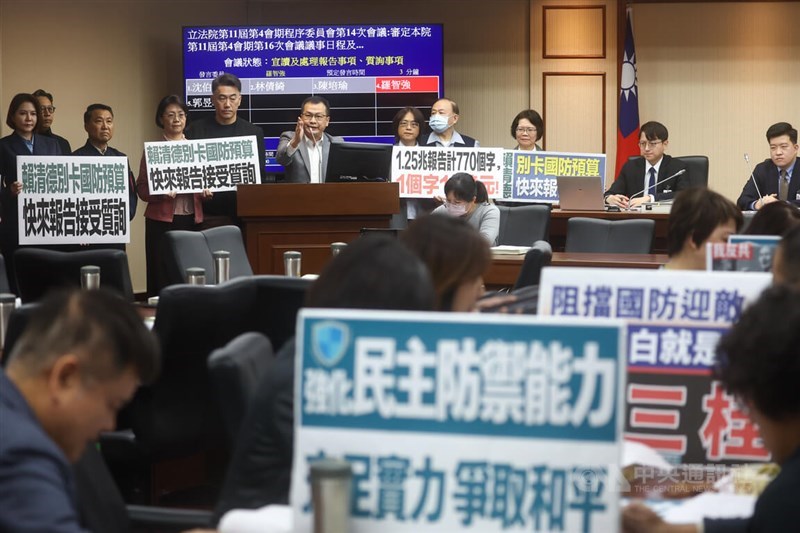
LATEST: The KMT (國民黨 ) has released it's version of a supplemental defense budget, worth about $12B.
In comparison, the DPP is asking for $40B and the TPP submitted a budget worth $12.7B.
Let's understand what's happening now 🧵 @TaiwanMonitor
New: The absence of any detected PLA aircraft operating near Taiwan’s Air Defense Identification Zone (ADIZ) has entered its 7th day.
This period represents the longest pause in PLA aerial activity around Taiwan in several years, per MND data.
Everything you could possibly want to know (and more!) about the defense budget debates currently taking place in Taiwan. Hats off to @sydv1307 and @joconnor04 for a great job in our latest in The Monitor:
BREAKING: Taiwan is not mentioned in the Pentagon's newly released National Defense Strategy. The document calls for expanded mil-to-mil channels with China to support stability, while building a defense along the First Island Chain to reinforce “deterrence by denial” and prevent China from dominating the U.S. or its allies through being “strong but not unnecessarily confrontational.”
The NDS elevates homeland defense as the department’s top priority, above the Indo-Pacific, and frames the Western Hemisphere as a “neglected” region in prior efforts. The previous iteration of the National Defense Strategy, released in 2022 under the Biden Administration, contained 7 references to Taiwan or the Taiwan Strait.
We are excited to announce that our PLAN Activity Tracker is now public on our website!
The PLAN Activity Tracker is a database of all publicly announced instances of PLAN vessels operating around Taiwan, sourced through AIS monitoring, statements from the PLA's Eastern Theater Command, and information releases by Taiwan's Ministry of National Defense. Check it out here: https://t.co/SOHOHUqDWQ
NEW: In a speech given today at the Taiwanese think tank INDSR, Raymond Greene, the Director of the American Institute in Taiwan, the United States' de-facto embassy in Taiwan, stated that Northrop Grumman has established a "medium-caliber ammunition test range" in Taiwan, allowing the MND to test ammunition to global standards.
Greene also reaffirmed U.S. support for the cross-Strait “status quo,” which he said is “favored by the overwhelming majority of the Taiwan public,” arguing that initiatives like this can bolster Taiwan’s confidence to engage in dialogue “at the appropriate time.”
If the U.S. ditches EMALS and goes “back to steam,” China wins the carrier learning curve. Our new piece for @CMS_Washington breaks down why that reversal would be expensive, slow, and strategically disastrous as Fujian comes online: https://t.co/fq6u1lqsn0
TSM Associate Director Jonathan Walberg (@jonathanwalberg) was published in @ForeignPolicy today discussing Taiwan’s new special defense budget!
Read it here: https://t.co/Z4TFk7n9Bk