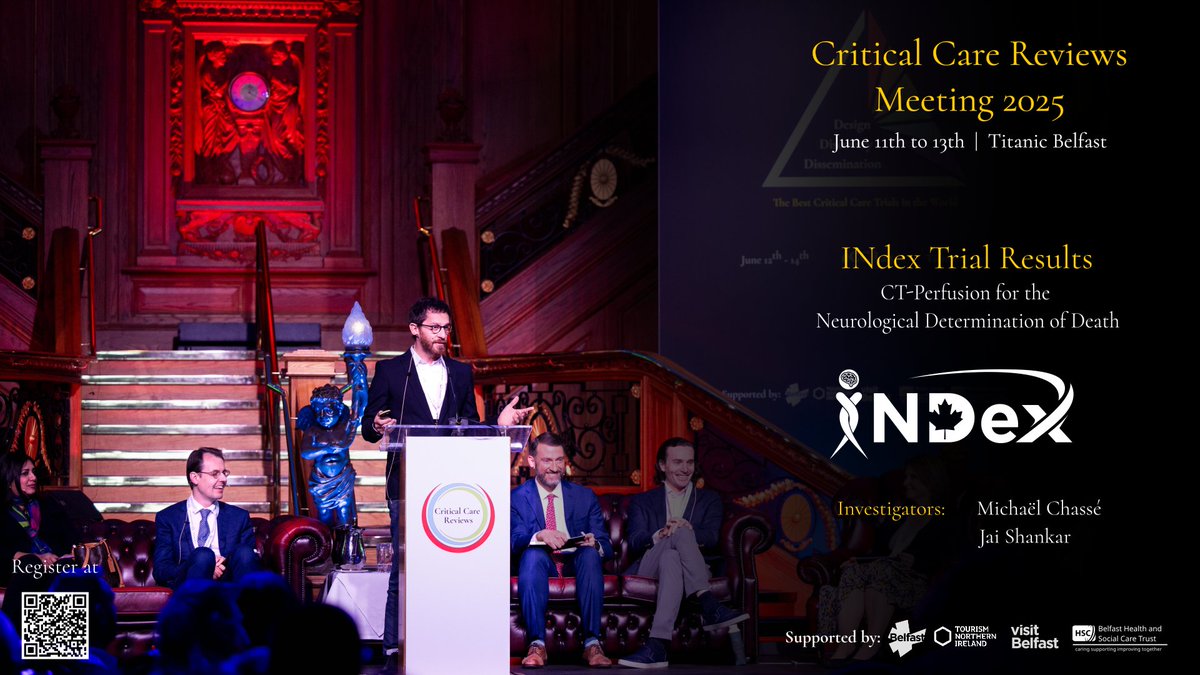
CT perfusion and CT angiography showed less than optimal accuracy for confirming death by neurologic criteria.
#CCR25@CritCareReviews
https://t.co/1yEsi7uik7
For the first time we have a large, prospective, multicenter, blinded, diagnostic test study conducted according to the highest methodological standards. This has not been done for any test currently in use. Although not perfect, this is high enough if applied in patients with a very high pretest-probability, but they can’t be used in replacement of a complete unconfounded bedside Death Determination by Neurological Criteria.
After 10 years, we provide updated evidence about the accuracy of CT-Perfusion and CT-Angiography for Death Declaration by Neurological Criteria, among other things.
CT perfusion and CT angiography showed less than optimal accuracy for confirming death by neurologic criteria.
#CCR25@CritCareReviews
https://t.co/1yEsi7uik7
CT perfusion and CT angiography showed less than optimal accuracy for confirming death by neurologic criteria.
#CCR25@CritCareReviews
https://t.co/1yEsi7uik7
The ninth trial result for #CCR25 in Titanic Belfast in June is the @CCCTG_ INdex Trial
CT-perfusion for the Neurological Determination of Death
Investigators - @Michael_Chasse & @shivajai1
Register at https://t.co/rPNRJVjT0r
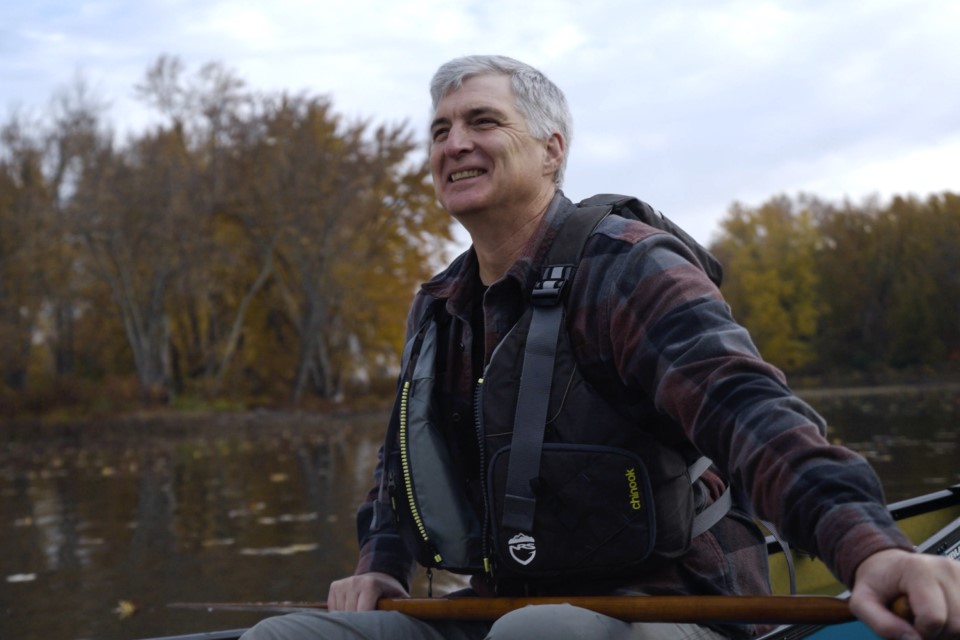
“Over my career I’ve dedicated myself to optimizing the #blood products that we give patients and ensuring that they’re safe and effective.”
Congratulations Dr. Dean Fergusson on receiving a Lifetime Achievement Award from Canadian Blood Services!
https://t.co/OD5eeKBGTP
Presented at CCR Down Under:
In the SAHARA trial involving patients with subarachnoid hemorrhage and anemia, liberal transfusion of red cells did not result in a lower risk of an unfavorable neurologic outcome than a more restrictive strategy. https://t.co/WVobu2djnC
The BMJ has launched a Commission on the Future of Academic Medicine, which aims to revive academic medicine and redefine its role for the rest of the century, write @MiguelORyan1@SoniaKSaxena and @baumfran
https://t.co/FRFM3BIFHA
When ppl ask me about my priorities as a Chief Health AI Officer, I share the Health AI Paradox.
Researched models aren't implemented. Implemented models aren't researched.
My priorities are simple. Help researched models get implemented, and implemented models get researched.
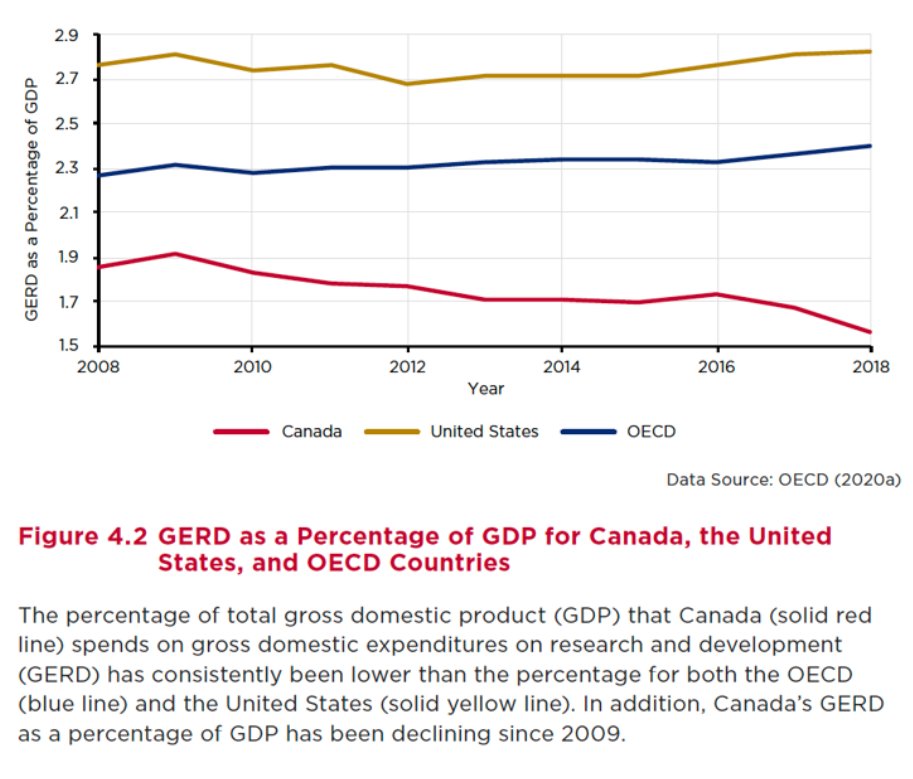
#FactFriday Did you know that Canada has the lowest spending on research and development among the #G7, with no increase in the last 20 years?
#Canada is falling behind in research and development and it's time we catch up 🕐
****New Death Determination Guideline****
Developed using comprehensive GRADE methodology.
Addressing controversial areas such as,
-definition of death
-death by circulatory or neurologic criteria
-apnea testing
-ancillary testing
-legal and ethics
https://t.co/1OND2wItWJ
@Vadeboncoeur_Al@LussiD@AvecAndreFortin@vmarissal @cdube_sante @joel_arseneau Comme vous voyez quand cela arrive les intensivistes sont très réticents à aller à l’encontre de ces familles extrêmement éprouvées. Imaginez la catastrophe. Une équipe médicale qui va à l’encontre des désirs d’une famille en deuil? Le consentement présumé n’est pas une panacée
Observational evidence is conflicting on whether the sex of blood donors affects recipient outcomes. New findings from a randomized trial are summarized in this short video. https://t.co/54GKPXSXES
Interesting research question, but the methods used is at least as interesting. We conducted this trial with no manual data collection using @OttawaHospital and @ICES clinical/admin data. @OttawaHospital @CRCHUM https://t.co/A5xZLVhKR8
@DrToddLee@MarcCarrier1@CIHR_ICRH@NEJM@OttMethodsCentr@OttawaHospital But if the question was not about that asymmetric distribution of the estimate but rather about the heterogeneity of treatment effect, well… this is a subgroup. Pre-specified and happens to be on our main exposure, but still a subgroup in a RCT.
@DrToddLee@MarcCarrier1@CIHR_ICRH@NEJM@OttMethodsCentr@OttawaHospital And for those who ask about this 60:40 randomization ratio: blood supply is not even between male and female donors. So if you run a large pragmatic trial and want to have enough blood of each group you need to match the ratio with the blood supply as much as you can.