I thanked Prime Minister Sanae Takaichi @takaichi_sanae during our meeting for Japan’s strong support throughout all these years of Russia’s war – energy support packages, sanctions decisions, and humanitarian projects. It was also very important to hear that this assistance will continue. We discussed areas where we can help each other. Of course, Ukraine is ready to share its experience and technologies on a mutually beneficial basis. Japan also has advanced technologies for protecting lives, particularly in air defense, that could help Ukraine get through next winter if Russia once again spurns negotiations. I invited the Prime Minister to visit Ukraine, including the Kyiv-Pechersk Lavra, which Japan helped restore after a brutal Russian drone strike. I’m grateful for Japan’s leadership in helping protect lives in Ukraine. Thank you, Japan!
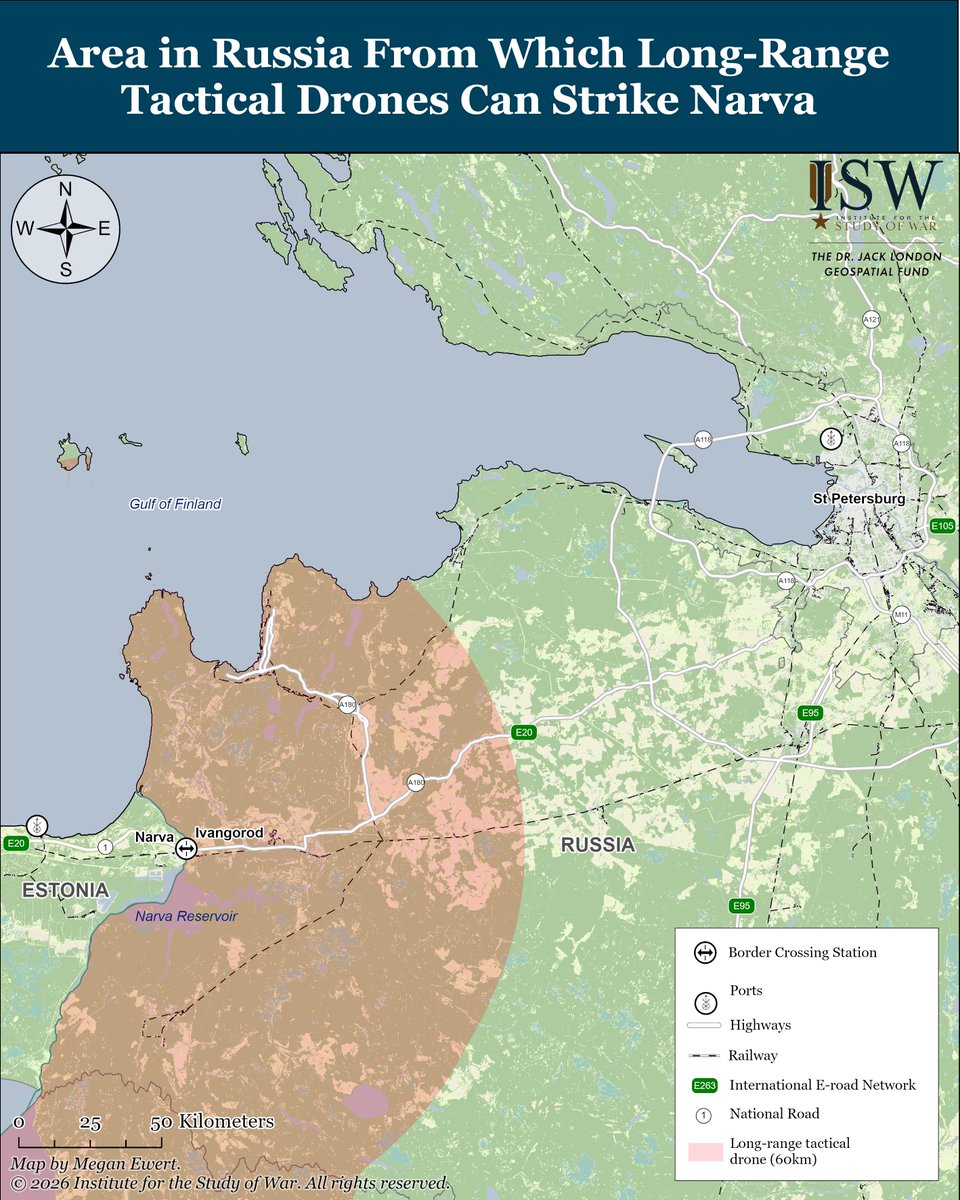
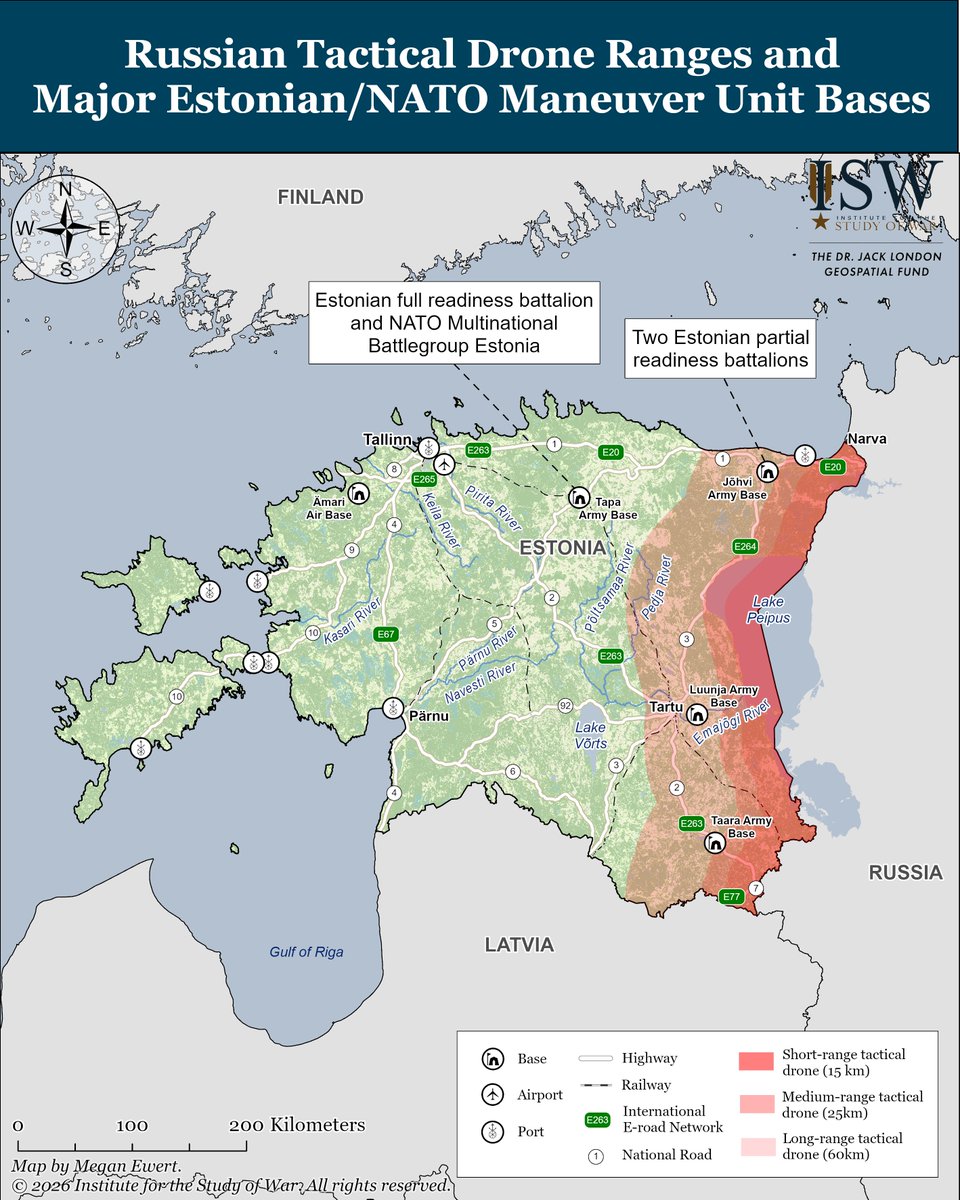
NEW | Special Report: What a Limited Russian Incursion Into Estonia Might Look Like: A Narva Scenario
A full-scale Russian invasion of a NATO state is extremely unlikely while Russia remains fully committed to war against Ukraine. But full-scale invasion is not Putin's only option to conventionally escalate against a NATO state. Russia could conduct limited ground operations leveraging drones against NATO states not to conquer them, but to break the alliance by causing it to fail to activate and act appropriately on its Article 5 commitments.
This scenario is notional — it is not an assessment or forecast that the Kremlin will conduct such an operation. The purpose of studying a Narva scenario is not to suggest that the Russians will conduct this specific operation, although they have set limited conditions to do so already, but rather to explore in detail what such an attack might look like, how the Kremlin might seek to use it to advance its own domestic objectives and to break the alliance, and how the alliance should act both to deter and to defeat any such attack, whether at Narva or elsewhere.
A number of NATO states will likely be very hesitant to invoke Article 5 over a limited incursion, fearing the consequences of appearing to launch the alliance into a full-scale war with Russia. NATO certainly has the ability to deter and, if necessary, defeat a Russian operation of this sort. It is not, at the moment, ready to do so at acceptable risk and cost.
The US should take every measure possible to demonstrate its commitment to its alliance obligations. Strategic ambiguity invites Russian adventurism and significantly increases the odds that Putin might gamble. NATO must deter and, if necessary, defeat a limited Russian incursion at both the political and the military levels. European states can help deter scenarios like this by developing indigenous counter-drone capabilities, interceptor drones, and skilled drone units of their own that can rapidly identify and strike Russian drone operator positions.