Airbnb stuck their entire customer journey up on their office walls.
Drawn by a Pixar animator, pinned where everyone walks past them daily.
30 frames.
15 for hosts.
15 for guests.
They call it "Snow White."
Chesky stole the idea from a Walt Disney biography in 2011.
Every new product idea has to answer:
→ "Which frame does this serve?"
If it fits a frame, that determines the owner, who prioritises it against their KPIs.
If it doesn’t fit a frame, it doesn’t serve the customer, and doesn’t get shipped.
there’s literally nothing stopping you from moving to SF, splitting a $12k apartment, joining a founder house, networking endlessly, and building the same ai tools as everyone else.
Linear’s CEO just described the biggest shift in product team structure since Agile.
For decades, product work meant: PM defines requirements → designers create specs → engineers translate to code. The middle step, translation, absorbed 70% of the time and created most of the friction.
Karri is saying that step is collapsing. AI agents don’t need handoff documents or sprint planning rituals. They need structured context about what matters, what constraints apply, and what success looks like.
This inverts the leverage points. The person who captures customer intent clearly now has more impact than the person who translates it into implementation. And the person reviewing agent output becomes the quality bottleneck.
Linear built their entire product around this bet: structured entities with clear ownership, context attached to work items, feedback connected directly to issues. It turns out the same system that helps humans coordinate also helps agents know what to do.
The teams figuring this out first will have a structural advantage. Everyone else will still be writing Jira tickets that read like riddles.
Over the last couple of weeks I've been checking the sites which are implementing "AI generated summaries" at top of pages. Like Canva is showing summaries to users but not Googlebot and in some cases summaries are long (like 10% of overall content on page is summary) which while crawling Googlebot isn't seeing.
Can't say its Cloaking cuz site isn't trying to manipulate search rankings? but still I guess if this kind of implementing summaries approach becomes popular probably Google will put out some guidelines or best practices around it.
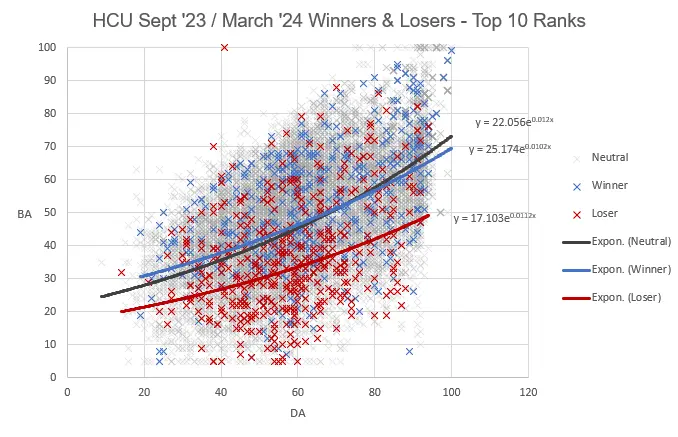
Awesome New SEO Data Study: @THCapper suggests that Brand Authority:Domain Authority ratio is one of the most telling factors in the Helpful Content Update:
In this study, Tom Capper analyzed 1.8M URLs to identify the winners and losers from two different Helpful Content updates (September 2023/March 2024). He defined the winners and losers as anyone that had a 50% change in terms of their top 10 rankings queries.
After analyzing his data, he found something super interesting. When calculating a Domain Authority:Brand Authority ratio, this was one of the factors most correlated with sites that saw losses.