ELON MUSK'S JAW-DROPPING PREDICTION:
"DON'T GO INTO MEDICAL SCHOOL."
ELON MUSK: "YES. POINTLESS."
IN 3 YEARS (2029), OPTIMUS ROBOTS WILL BE BETTER SURGEONS THAN ANY HUMAN ON EARTH — AT SCALE.
BY 4–5 YEARS? NOT EVEN CLOSE.
THE BEST MEDICINE IN THE WORLD WILL BE FREE — BETTER THAN WHAT THE PRESIDENT GETS TODAY.
THIS IS WILD.
A quiet revolution is happening in cancer treatment. 😀
Using live MRI imaging, doctors can now see tumors in exquisite detail while a patient lies comfortably in the scanner. Once the cancer is precisely mapped, they slide a needle thin probe straight into the heart of the tumor, often through just a tiny nick in the skin.
Then, in seconds, super-cold argon gas floods the probe tip, dropping the temperature inside the tumor to –100 °C or lower. An “ice ball” forms & engulfs the cancer, shattering malignant cells while healthy tissue just millimeters away stays unharmed. The entire process is watched in real time on the MRI screen, giving doctors millimeter perfect control.
No big incisions. No general anesthesia in most cases & many patients walk out the same day & are back to normal life within days instead of weeks.
This technique (MRI-guided cryoablation) is already saving kidneys, sparing men from the side effects of whole gland prostate treatment, shrinking liver tumors & helping patients who were previously told “surgery isn’t an option.”
Centers like Johns Hopkins, Mayo Clinic, Memorial Sloan Kettering & MD Anderson are expanding its use every year, with success rates now rivaling surgery for many small to medium tumors & complication rates often lower.
For the right patients, freezing #cancer to death under MRI guidance isn’t science fiction anymore; it’s becoming the new standard of care. ❤️
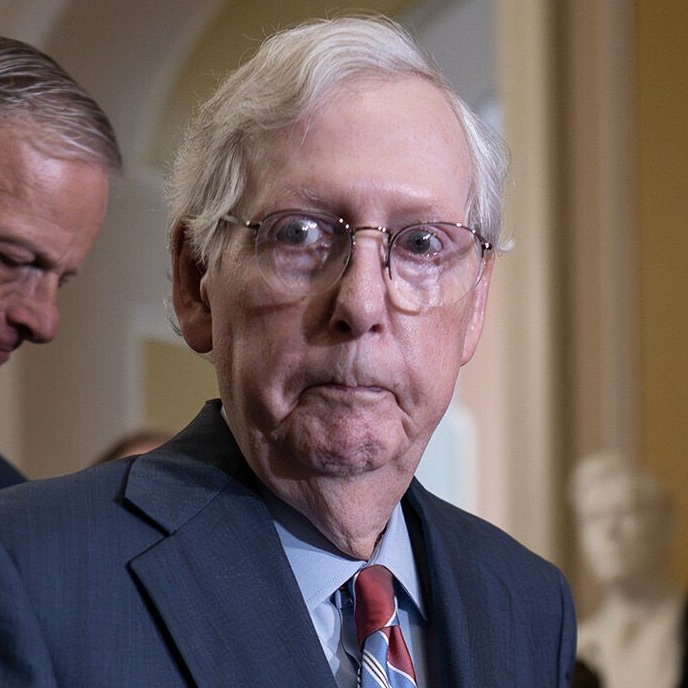
Remember how Republicans went totally batshit when Lloyd Austin took three days to notify the White House about his emergency hospitalization - but when it’s been 41 days & we’re still not sure if Mitch McConnell is alive - the silence is deafening.
Some nursing homes struggle to attract visitors. One retirement home in the Netherlands decided to do something different. Instead of asking people to visit more often, it invited young people to move in.
In the Dutch city of Deventer, Humanitas introduced a simple idea more than a decade ago. University students could live in the nursing home rent free. In return, they would spend at least 30 hours each month as good neighbours to the residents.
There was one important detail. The students were not hired as nurses or caregivers. They weren't expected to provide medical care. Their role was simply to be present.
That often meant eating meals together, sharing conversations over coffee, celebrating birthdays, helping residents use smartphones and computers, watching football, playing games, or sitting beside someone who didn't want to spend another quiet afternoon alone.
The idea came from Humanitas director Gea Sijpkes, who saw two problems at the same time. Older people were becoming increasingly isolated, while many university students were struggling to find affordable housing. Instead of treating them as separate issues, she brought the two generations under the same roof.
The results quickly became noticeable.
Residents had more opportunities to socialize and daily life became livelier. Students often discovered friendships they never expected. Many spent far more than the required 30 hours each month because the relationships no longer felt like an obligation. Some even stayed in touch with residents after graduating and moving away.
The program attracted international attention through PBS NewsHour and has since been highlighted by organizations such as AARP as an inspiring example of intergenerational living.
Humanitas didn't invent friendship. It simply created the space for it to happen.
For generations, families and communities naturally lived alongside grandparents, parents, and children. Modern life slowly separated those age groups into different places. Humanitas showed that bringing them back together can benefit everyone.
Sometimes the answer to loneliness isn't another program or another piece of technology.
Sometimes it's hearing laughter from the room next door, sharing dinner with someone from a different generation, or having a conversation that reminds both people they still have something valuable to give.
A home doesn't become warmer because of the building.
It becomes warmer because of the people inside it.
If Republicans do not demand full transparency from the Senate & our gov’t on the state of Senator McConnell’s health, then we are no better than when the democrats covered up Biden’s cognitive decline for years.
I mean this with the utmost respect & wish Senator McConnell well.
@ExxAlerts Interesting side note re anti-venom:
After the total ground-stop on 9/11, the only civilian plane flying was an emergency delivery of anti-venom, escorted the entire way by fighters.
🚨#BREAKING: A German soccer fan who flew to the USA but was fearful about coming because of news about criminals and people being mean...
...breaks down into TEARS, live on air saying he has FALLEN IN LOVE with America after a random man named "Bob" in Boston gave him a ride home after he was stuck at a game with no way back to his hotel
The German soccer fan's name is Sebastian, he said after meeting Bob, he extended his entire trip.
He said leaving America will hurt worse than watching Germany get knocked out of the World Cup.
"I fall in love with America. I'm sorry, it's just so emotional. Americans are not rude... if we are together, we can achieve great things."
THIS IS THE AMERICA I KNOW!!!!!! 🇺🇸🇺🇸🇺🇸
He didn't leave a note. He didn't say goodbye. On September 25, 2000, Kevin Hines boarded a bus to the Golden Gate Bridge with one thought in his mind: nobody would stop him, because nobody ever did.
Hundreds of people passed him that morning-tourists, joggers, commuters—but no one asked if he was okay. So he climbed over the railing and jumped.
The fall takes about four seconds.
In the first, Kevin felt the wind.
In the second, he saw the water rushing up.
In the third, his mind cracked open with devastating clarity: every problem he thought was impossible to fix was fixable-except this one.
He hit the water feet-first, shattering three vertebrae.
Paralyzed from the waist down, he fought to stay afloat. Then something moved beneath him, circling and nudging him upward. He thinks it was a sea lion. Whether real or imagined, it kept him alive until the Coast Guard arrived.
Recovery was grueling—multiple surgeries, months of rehabilitation.
Doctors doubted he would walk again. He did. And then he began speaking publicly, not just to process his trauma but to reach others in crisis. He told them about those four seconds, about the lie that pain is permanent, about the regret that comes the moment you let go.
His memoir “Cracked, Not Broken” and his speeches became lifelines for countless people who heard his story and chose to hold on.
Kevin also fought for something tangible: suicide prevention nets beneath the Golden Gate Bridge.
After decades of resistance, they were finally installed in 2023. The bridge that nearly claimed his life now catches others before they fall—a physical manifestation of hope.
Today, Kevin is in his forties, married, traveling, and alive with purpose. People write to him, saying his story stopped them in their darkest moments. He doesn't know how many lives he’s touched, but the number is not small.
Also “not small”The number of “Kevins” out there, wondering if they should jump today.
Be kind — you NEVER know what someone’s going through
@nicksortor Make an amendment to the amendment that citizenship is granted on the child's 18th birthday if they complete through the high school level in the United States. Student visa only until completion. 🤷🏻♂️
2026 KNICKS ARE THE MOST DOMINANT TEAM IN HISTORY!!
These unprecedented achievements melted the brains of the narrative cults, clickbaiters & rival fanbases.
Share liberally.
I'm not a Spurs or Knicks fan, but I can't remember seeing officiating this biased in a playoff series. One team appears to be getting favorable treatment, and Wemby has seemingly avoided two obvious flagrant calls. The refs are undermining the integrity of the game.
You either award Wemby a flagrant or you admit that you are rooting for a certain team.
We all look forward to your response @OfficialNBARefs!
(let’s try to win this damn game first)
The year is 1949.
The Nobel Prize in Medicine has just gone to the man who invented the lobotomy. Your doctor suggests one for your sister, who has not been herself since the baby came. It is the most celebrated advance in psychiatry of the age, and he is simply current. By the time the prize curdles into an embarrassment, close to twenty thousand Americans have had the operation, and proportionally more here in Britain.
The year is 1956.
Lay the baby down on his front, the doctor says. So does the most trusted childcare book ever written, the one on every new mother's shelf. On his back he might choke, the reasoning goes. Millions obey. The advice holds for nearly thirty years, long after the evidence has quietly turned, and a generation of cot deaths is counted before anyone thinks to roll the babies over.
The year is 1966.
A bestselling book informs your wife that menopause is a disease, that she is, in the author's word, a castrate, and that a small daily pill will keep her youthful and tolerable to live with. Her doctor agrees. The drug becomes one of the most prescribed in the country. Nobody mentions that the author sat on the payroll of the company that made it. That detail surfaces decades later, in the same year the landmark trial is halted early for raising rates of breast cancer, stroke and clots.
The year is 1979.
Your ulcer is caused by stress and sharp food, the doctor explains. Calm down, drink milk, take the antacid that happens to be the best-selling medicine on earth. Two Australians are about to prove that most ulcers are caused by a bacterium and cured by a fortnight of antibiotics. The profession laughs. One of them eventually drinks a beaker of the stuff to settle the matter. The establishment takes the better part of twenty years to stop laughing. The Nobel lands in 2005.
The year is 1985.
Butter is dangerous, the doctor says. Switch to margarine, it is modern, it is heart-healthy, the experts are united. The spread he nudges you toward is loaded with trans fats, which the next decade will identify as the genuinely dangerous one, and which will eventually be banned outright. The butter goes quietly back in the fridge. No correction is ever printed at the volume of the original warning.
The year is 1992.
There is a pyramid on the surgery wall, and the very same one in your grandchild's classroom. Bread, cereal, rice and pasta form the broad virtuous base, up to eleven servings a day. Fat is exiled to the tiny tip. The chart was reportedly held back a year while the relevant industries had their say. It is wrong at the bottom and wrong at the top.
Now it is today.
Your doctor has new guidelines, new studies, a fresh consensus, delivered with precisely the steady confidence of every guideline above. He believes it, and he has good reason to. So did every doctor in this thread. None of them were villains. Each was sincere, most were kind, and all were certain, reading from a map that somebody else had drawn and handed them. That is the part worth sitting with.
So when the man in the white coat tells you what to eat, what to fear, and what to swallow every morning for the rest of your life, you are allowed to ask. Who paid for the study. What the evidence says beneath the headline. What he was just as certain about thirty years ago, and where that advice sits now.
Then make up your own mind. Call it scepticism, or call it whatever your grandmother called it when she ignored the advert, kept the butter where it was, and lived to ninety-one.
It has outlasted every consensus on this list. It will outlast this one too.