A U.S. Navy Assistant Secretary published a statement declaring that the United States is worth defending, calling on people to join the fight to safeguard the homeland. 🪖🇺🇸
U.S. military service members from #SOUTHCOM and Panamanian security institutions deliver relief supplies to support people who were affected by the recent earthquake at Aeropuerto Internacional de Panamá Pacífico, Panama, Oct. 10, 2026.
In response to a request from the Panamanian government, the @DeptofWar is supporting @StateDept-led U.S. disaster assistance to the people of Panama in the aftermath of the Oct. 9, 2026, earthquake. The United States stands with the people of Panama.
@USEmbPAN@WHAAsstSecty@SecWar@USForeignAssist@USAenEspanol
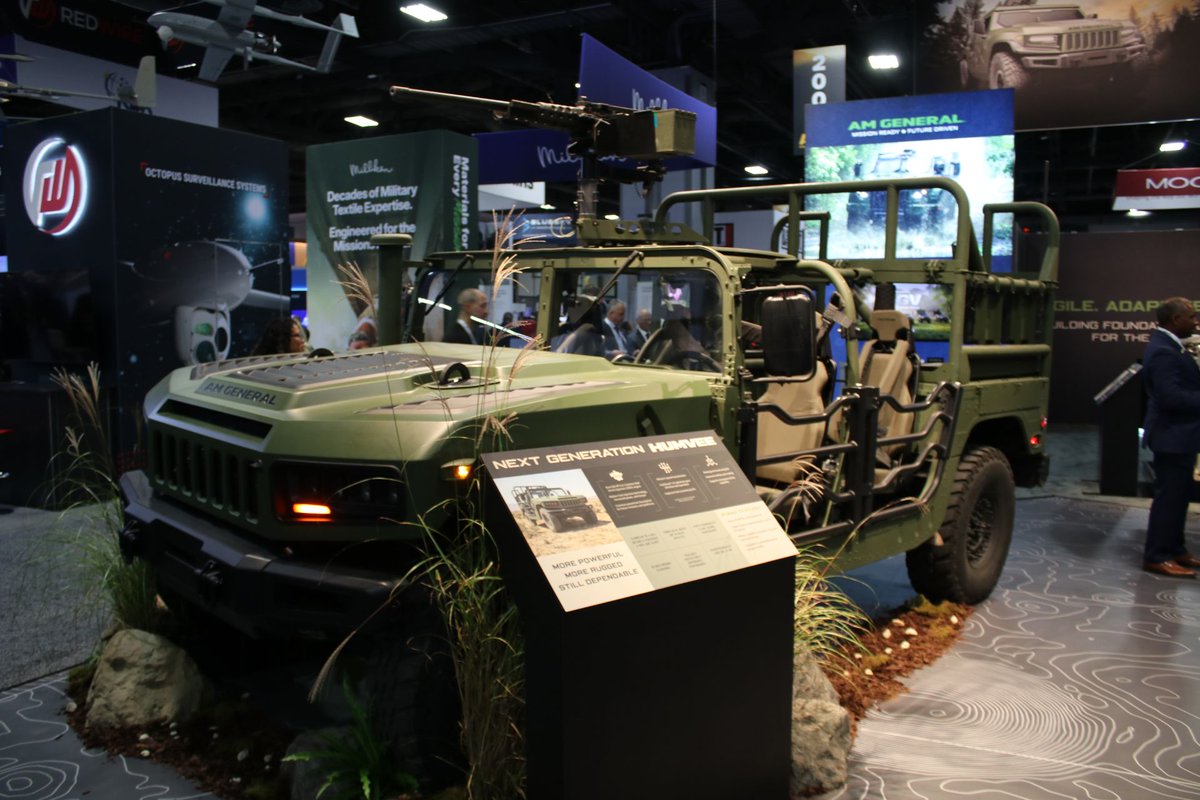
U.S. military Humvees are being retrofitted with AM General's new 250-horsepower engine and upgraded suspension to tackle even more demanding terrain. 🚗🪖
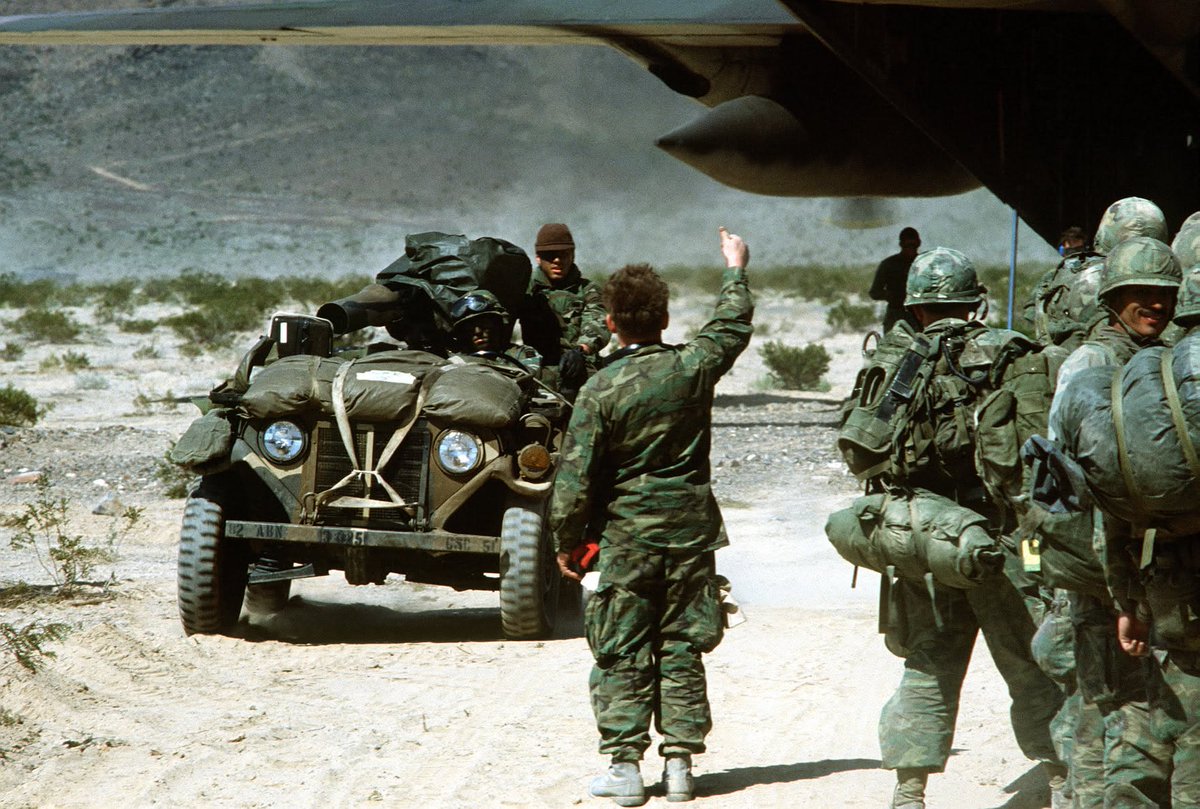
A group of U.S. Marines take cover behind sandbags during an incoming attack in Beirut, Lebanon in 1983. The Marines were deployed to Lebanon as part of a multinational peacekeeping force following confrontation between Israeli forces and the Palestine Liberation Organization (PLO).
October 12, 1967. The 4th Infantry Division and the 173rd Airborne Brigade launch Operation MacArthur in the Central Highlands of western II Corps.
It was supposed to be one more operation to keep North Vietnamese regiments away from the border camps and the highland towns.
It turned into one of the longest and bloodiest American operations of the entire war.
Within weeks, it led to the Battle of Dak To in November 1967, where paratroopers fought up Hill 875 against dug-in North Vietnamese troops in some of the worst fighting of the war.
MacArthur didn't end until January 31, 1969, more than 15 months later.
The final count: 5,731 North Vietnamese and Viet Cong killed. The United States lost 955 men.
Almost a thousand Americans killed in one operation, and most people have never heard its name.
🇺🇸 Leonardo DRS has announced the launch of its new cxMHR radar system at AUSA 2026. @LeonardoDRSnews@Leonardo_live
The cxMHR, short for C-Band Extended Multi-Mission Hemispheric Radar, is a fully digital, software-defined, C-band AESA system built for modern integrated air and missile defense (IAMD) operations. Four AESA radar panels, Identification Friendly or Foe (IFF), command-and-control and supporting peripherals are integrated into a single, ISO-containerized system that can be transported by air, land or sea and deployed on a single vehicle.
The cxMHR delivers continuous 360-degree hemispheric coverage and is designed to detect, track, and identify multiple aerial threats simultaneously, including tactical ballistic missiles (TBMs), cruise missiles, rockets, and unmanned aircraft systems (UAS). Detection ranges extend beyond 90 kilometers against UAS and loitering munitions and beyond 330 kilometers against transport aircraft, according to DRS.
The system combines AI-enabled tracking and classification to deliver fire-control-quality tracking, extended detection range and rapid target updates. It is built to MOSA standards for integration across IAMD architecture and supports interfaces including FAAD, Medusa, Sapient, Lattice, Asterix, MICAD and RAFT, among others.
Leonardo DRS has also announced that the company has begun the initial production of the radar system.
#LeonardoDRS #cxMHR #AUSA2026
Today is October 12, 2026
The United States Army Pacific is the dominant land force in the Pacific. We train hard, fight to win, and stand ready to defeat any enemies. Lethality, discipline, and warrior spirit define us.
America’s Army: STRONG. LETHAL. UNMATCHED.
10 years ago today: USS San Francisco (SSN 711) under the Golden Gate bridge after visiting her namesake, heading back home to Point Loma for the last time.
She now serves as S6G Moored training ship San Francisco (MTS 711) at Nuclear Power Training Unit (NPTU) South Carolina.
Taiwan is set to receive 500 Stinger missiles and 178 launchers from the U.S. by the end of 2026, the first batch of a two-stage acquisition totaling 2,621 missiles and 763 launchers, according to a defense official. The ROCA is slated to receive 2,235 missiles and 657 launchers for the defense of Taiwan proper and the outlying islands, while the Navy would get 295 missiles and 85 launchers for the Marine Corps and surface vessels lacking air defense. A further 91 missiles and 21 launchers would go to military police units defending the Taipei area.
Nguyen Quy An graduated from high school in Saigon in 1962 and became a helicopter pilot in the South Vietnamese Air Force. He trained in the United States at Fort Rucker and Fort Wolters, then flew combat missions for 11 years supporting American and South Vietnamese troops.
One day in 1969, he was flying a completely different mission when he came across an American helicopter that had been shot down. Four Americans were trapped.
It wasn't his job. He went in anyway, under fire, and got all four out.
The United States awarded him the Distinguished Flying Cross and the Silver Star.
On a later mission, his own helicopter was shot down. He survived, but he lost both of his arms.
When Saigon fell, he was sent to a communist re-education camp. He tried to escape Vietnam three times and was caught and imprisoned each time.
Then came a cruel twist. America had a special program for South Vietnamese who spent at least a year in re-education camps. But because he had no arms, the communists released Major An after only nine weeks. So he didn't qualify.
The four Americans he saved were alive because of him, but the paperwork said he wasn't eligible.
It took years and a special act of Congress. On October 31, 1996, the man who had given his arms fighting alongside Americans finally became one.
Decisive landpower is our ultimate deterrent; by maintaining highly lethal, forward-postured formations, the Army physically prevents adversaries from achieving their strategic objectives.
The Army actively strengthens regional partnerships and builds interoperability with allied land forces throughout the hemisphere, creating a united front against transnational threats.
"Thunder held in the palm—a display of destructive power and pinpoint precision within the span of a hand. Amidst the earthy scent of the jungle training ground, a soldier clad in classic four-color camouflage cradles two 40mm grenades in his palm; the dried-grass camouflage on
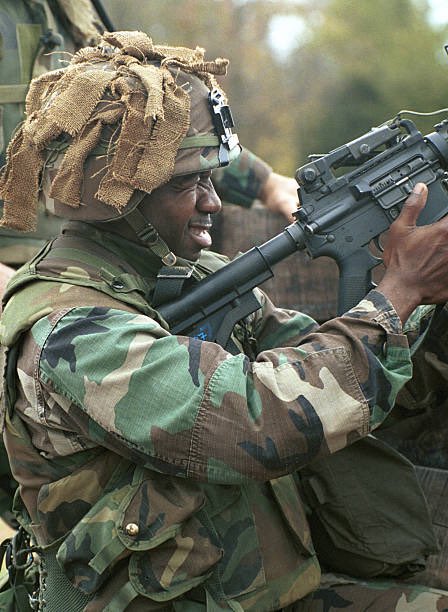
Soldiers of the U.S. Army’s 101st Airborne’s 187th Infantry Regiment train with grenade launchers at Ft. Campbell, Kentucky before deploying to an unknown destination to fight in the War on Terror.
Footage documenting the operation of the M142 HIMARS (High Mobility Artillery Rocket System) to execute fire strike missions during field exercises. The system utilizes a highly mobile 6×6 wheeled tactical truck chassis.
"Joining forces, they used their own bodies to take on a steel behemoth!" Under the scorching sun, the Marines faced an ultimate challenge that put their physical stamina and unit cohesion to the test confronting an MTVR tactical truck weighing several tons.