Васкрс у логору Дахау
На Васкрс, 1945. године, у бараку број 26 логорa Дахау ушло је осамнаест православних свештеника, један ђакон и неколико вјерника – сви они затвореници тог нацистичког пакла.У импровизованој бараци-капели није било скоро ничег: само мали сто и икона Пресвете Богородице. Није било свештеничких одежди, богослужбених књига, крстова, свијећа нити просфоре. Затвореници су од обичних пешкира сашили епитрахиље и на њих пришили болничке црвене крстове.У том мјесту крајње патње и смрти, једино што су имали била је чврста вјера и милост Божја која је посјетила и тај најстрашнији кутак земаљског пакла. Служили су по сјећању. Васкршњи канон и стихире пјевали су сви углас. Јеванђеље су такође читали из памћења.Млади светогорски монах је са сузама у очима изговарао Васкршње слово Светог Јована Златоустог. Плакали су и сви остали.У логору су се у то вријеме налазили и Свети владика Николај и патријарх српски Гаврило.Из самог срца смрти, из дубина тог земаљског пакла, узносиле су се ријечи пунe неуништиве наде: „Христос васкрсе!“
„Ваистину васкрсе!“
Многи су након тога примили вјеру православну.
“Siri, find me a textbook example of the perfect counter-attacking goal”
“Your search returned Darko Pancev, for Red Star vs Bayern, 35 years ago today...”
🔥☦️In 1981, the Peć Patriarchate a @UNESCO-listed site today classified as endangered was set on fire by Albanian extremists.
Today, the same heritage is being targeted again not with flames, but with historical revisionism, denying its Serbian Christian Orthodox identity and teaching such narratives to children.
Different methods. Same goal.
🚨URGENT/KOSOVO: Christian history cannot be rewritten to fit political agendas
❌An official arcehological museum in Priština is now promoting claims that the Peć Patriarchate is an “Albanian church,” allegedly transformed into Serbian Orthodox heritage and presenting this narrative to students.
☦️The Peć Patriarchate was built in the 13th and 14th centuries by Serbian archbishops and has served for centuries as the seat of the Christian Serbian Orthodox Church. It is inscribed on the @UNESCO World Heritage List as part of Serbia’s medieval heritage and is also listed as endangered a status reflecting its vulnerability, including past violence such as the arson attack carried out by Albanian extremists in 1981.
What we are witnessing is not merely a dispute over interpretation, but a systematic attempt to rename Serbian cultural heritage and redefine historical identity. The most concerning aspect is that these narratives are now being introduced into the education system, where they risk shaping long-term public perception.
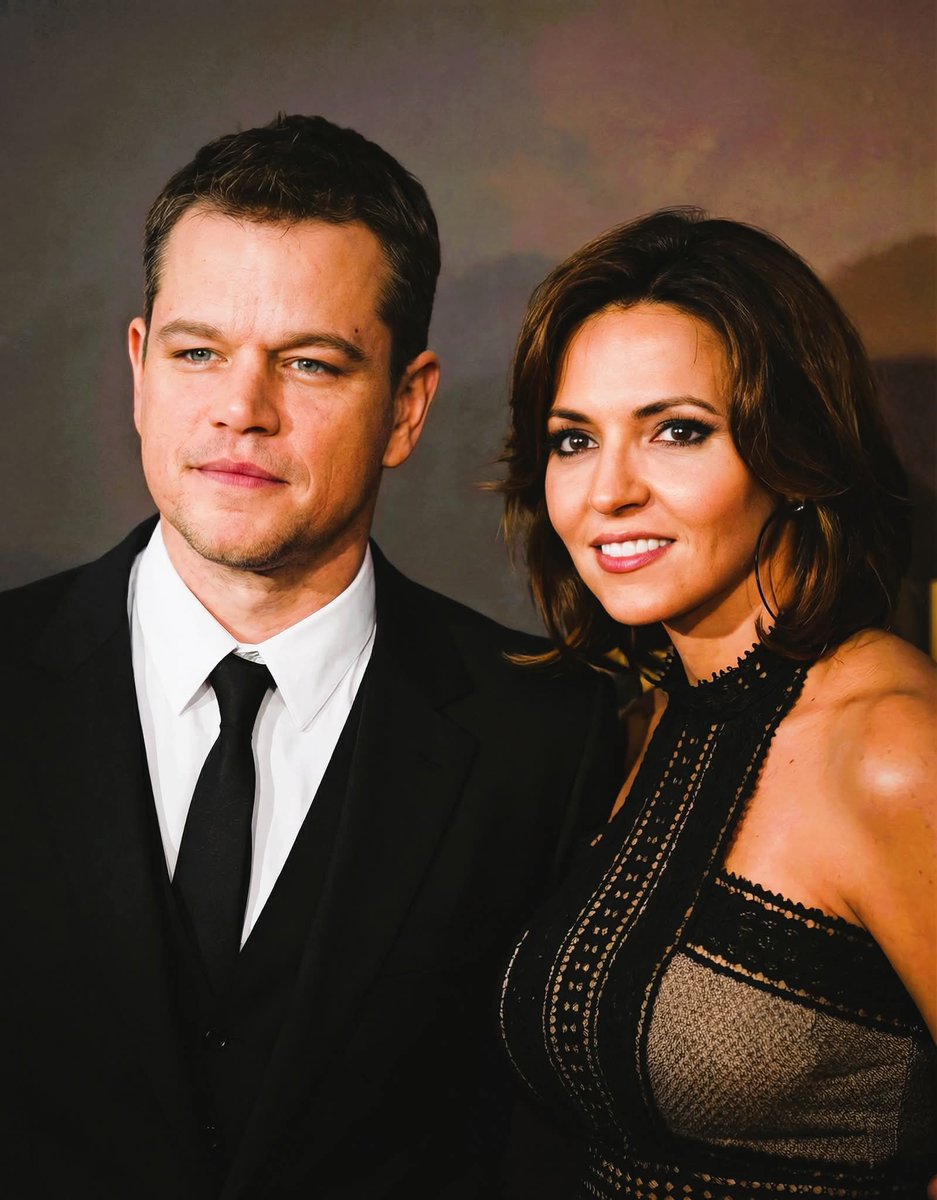
She was a 20-year-old Argentine waitress and single mother, working long hours in Miami after being abandoned by the father of her little girl.
She wasn’t chasing dreams. She was paying bills. Surviving.
One crowded night behind the bar, a man walked up and asked if he could “hide” for a while.
He said he was an actor. That people had started recognizing him. That he just needed a break from the cameras.
Luciana Barroso didn’t know—or care—who he was.
She smiled and said, “Sure. But only if you make yourself useful.”
So he did.
He rolled up his sleeves. Mixed drinks. Served customers. Washed glasses.
Between orders, they talked. Laughed. Felt something easy and unforced take shape.
When her shift ended, she finally asked his name.
“Matt Damon,” he said.
That ordinary night turned into something extraordinary.
They married in 2005. Nearly twenty years later, they’re still together—raising four daughters, with Matt having adopted Luciana’s eldest as his own.
No spotlight. No grand entrance.
Just two people meeting at the right moment.
Because sometimes the right person doesn’t sweep you off your feet.
He steps behind the bar—
and helps you wash the dishes.
MEDIA BIAS AND SERBIA’S ROLE IN THE GLOBAL POLITICAL STRUGGLE
On this midweek episode of ROGUE ROUNDUP, Lara Logan discusses with Producer/Co-Host Luke Coffee what she learned covering the wars in the Balkans and how deeply media framing shaped global perception.
While reporting during the Bosnian War and the conflict in Kosovo, the dominant narrative was clear and repeated endlessly: the Serbs were the bad guys and everyone else was portrayed as good.
Lara acknowledges the atrocities committed by Serbian forces, including Srebrenica. But she explains that when you dig deeper, you find documented crimes committed by Croat forces and Muslim factions as well. You also find extremist elements on the ground that received little to no serious coverage at the time.
The result was a one sided story presented to the world.
Now, revisiting Serbia decades later, Lara says she is learning even more about how closed the media system was and how certain facts were filtered out. She argues that Serbia today sits on the front line of a broader political struggle in Europe, involving what she describes as an emerging alliance between Marxist movements, political Islamists, and globalist institutions reshaping Western civilization.
@GoingRoguewLara@luke_coffee
EP. 63 | ROGUE ROUNDUP
Watch New Episode Below. ⬇️
#GoingRogue #LaraLogan #MediaBias #Serbia #Geopolitics
@RealTheoWold Well there is little difference. China is trying to recruit athletes of Chinese origin, wile US do not hesitate to recruit athletes of any origin. You have many examples in tennis, figure skating, or even basketball (Embiid).
Ove reči su bile pisane na stubu mramornom na Kosovu glasi naslov teksta koji se nalazi na mramornom stubu koji je postavio početkom XV veka despot Stefan Lazarević svome ocu i poginulim srpskim ratnicima u Kosovskom boju.
Pavle Šafarik je prvi skrenuo pažnju na ovaj tekst, koji se nalazio u jednoj rukopisnoj knjizi u Karlovačkoj biblioteci. Posle toga mnogi istraživači su mu posvećivali značajnu pažnju.
Ilarion Ruvarac je iz njega koristio podatke o vremenu Kosovske bitke. Ovaj jedini prepis teksta sa mramornog stuba sačuvan je do danas u Patrijaršijskoj biblioteci br. 167. za koji je Đorđe Sp. Radojičić utvrdio, prema vodenim znacima, da je nastao između 1573-1588. godine.
Većina istraživača smatra da je tekst sastavio Despot Stefan.
Čoveče,
ti koji Srpskim zemljama hodiš,
ma ko da si, ma šta da si, stranac ili ovdašnji,
kad dođeš na polje ovo, koje se Kosovo zove,
po njemu celom ugledaćeš puno kostiju mrtvih,
a među njima videćeš tada kameno biće,
mene krstolikog i osvećenog
kako nasred polja uspravno stojim.
O ljubljeni,
nemoj da prođeš, nemoj da previdiš
kao nešto bezvredno i tašto,
već te molim priđi, približi se meni
i razmotri reči koje ti prinosim,
pa ćeš razumeti tako, zašto i kako,
a i zbog čega ja ovde stojim,
jer istinu ti govorim,
ne gore od živog stvora.
Sve ću vas po istini izvestiti
o onome što se zbilo.
Ovde je nekada bio veliki samodržac,
čudo zemaljsko i vladar srpski,
po imenu Lazar, veliki knez,
pobožnosti nepokolebljivi stub,
beskraj bogopoznanja i mudrosti dubina,
ognjeni um, zaštitnik stranaca,
sirotinji pomoć, gladnima hranitelj,
tužnima milost i utešitelj,
onaj koji sve voli što Hristos hoće,
jer ka ovome stremi svojom voljom
i još sa svojim nebrojanim mnoštvom,
što je pod njegovom rukom:
junaci hrabri, junaci dobri,
junaci, vaistinu, na reči i na delu,
kao sjajne zvezde blistaju,
kao zemlja cvetićima prešarenim,
odeveni u zlato, kamenjem dragim ukrašeni,
i silni konji odabrani, zlatosedlani,
a na njima konjanici predivni i krasni,
najplemenitiji i slavni.
Kao dobri pastir i vožd,
mudro jaganjce slovesne privodi
da u Hristu okončaju slavno
i da budu stradanja venac
i učesnici u višnjoj slavi.
Zato složno i bezbrojno mnoštvo
zajedno s dobrim i velikim gospodinom,
hrabre duše i najtvrđi u veri,
kao na lepi dvorac i na opojni pir,
na neprijatelja se ustremiše
i pravog zmaja zgaziše,
ubiše divlju zver i protivnika velikog
i nezasiti ad koji proždire sve,
kažem vam, Murata i sina njegova,
porod aspide i guje,
štene vasiliska i lava,
a s njima drugih, ne malo.
O čudesa božjih sudbina!
O prijatelji,
hrabri stradalnik bezakonim agarjanskim rukama
uhvaćen bi i kraj mučeništva dostojno prima
i mučenik Hristov biva, Lazar veliki knez,
jer ne poseče ga niko drugi,
do sama ruka Muratovog sina, krvnika tog.
Sve ovo rečeno završi se 6897. godine,
dvanaestog indikta, petnaestog dana meseca juna
u utorak, bio je šesti ili sedmi čas.
Ne znam. Bog zna.
Пројекат Растко