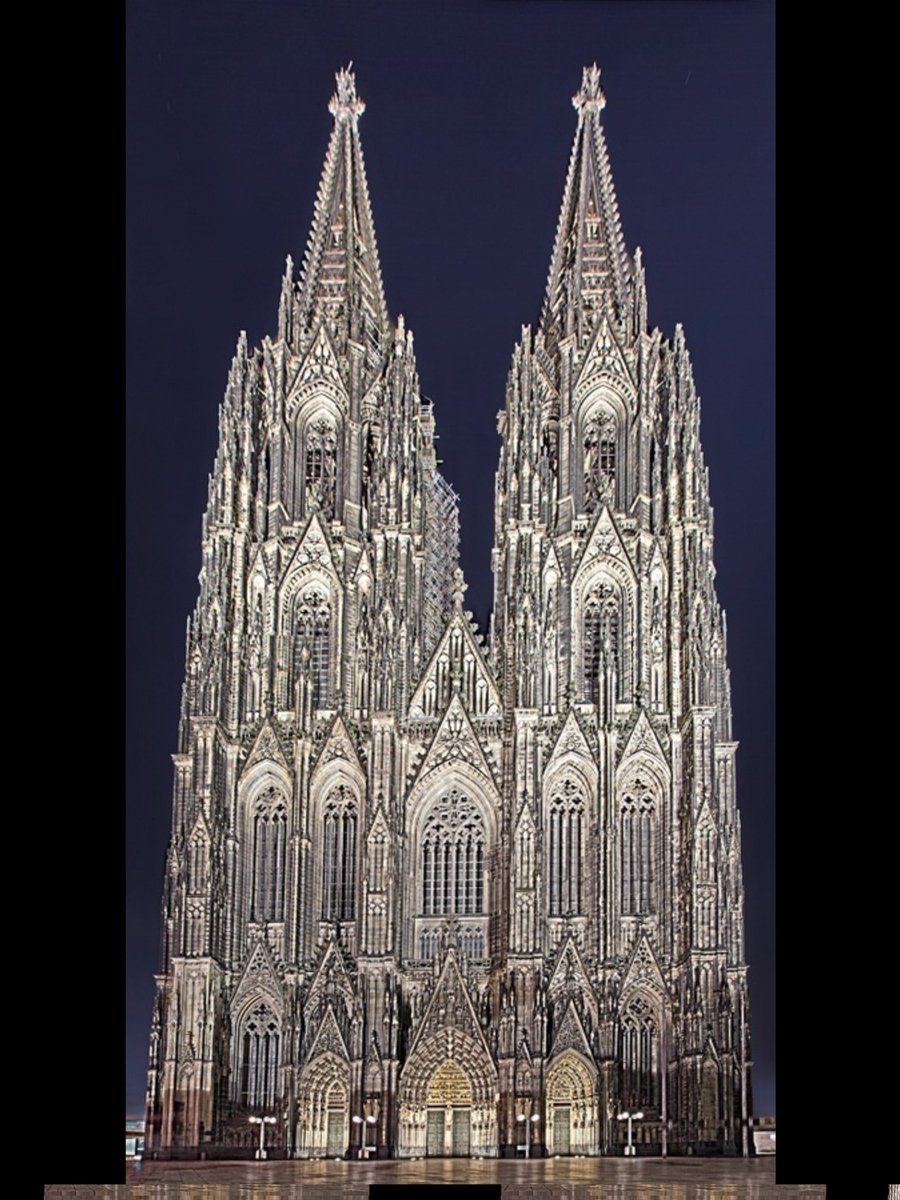
@wrathofgnon "..When a contemporary beholder, accustomed to sitting under low horizontal concrete ceilings, looks upon such a structure, he is fascinated by it. As the saying goes: 'Straight is the line of duty; curved is the line of beauty' "
Maher Azmi Abu-samra Maher
"Your great-grandmother was not trying to manifest a beach vacation. She was not curating an aesthetic. She was not optimizing...anything. She had a list, and the list was short, and the list was sacred.
A full pantry. Healthy children. A roof that did not leak. A husband who came home. A garden that produced. A few good dresses. A reliable stove. Sunday dinner with people she loved. Enough flour for the week and enough kindness for the neighbors.
That was the whole dream. That was the whole life. And by the standards of most of human history, achieving that list was a roaring success.
Then the twentieth century happened, and somebody figured out that a woman who is content is terrible for business. A woman with a full pantry is not running to the store. A woman who is satisfied with her kitchen is not redoing it every four years. A woman who knows what enough looks like cannot be sold the next thing.
So they got to work. They made the small house embarrassing. They made the old car embarrassing. They made the home-cooked meal embarrassing, and then when nobody knew how to cook anymore they sold it back as a meal kit with a celebrity chef on the box. They raised the cost of living until both parents had to work, and then they sold daycare and convenience food and weekend therapy to fix the exhaustion that working both jobs created in the first place.
They took your great-grandmother's list and called it poverty. They took her life and called it limited. They took her contentment and called it a lack of ambition.
And then they sold you ambition. They sold you a bigger house you cannot clean, a car you cannot pay off, a wardrobe you do not wear, a calendar you cannot survive, and a vague constant feeling that you are still falling behind.
You are not falling behind. You are running a race that was designed to have no finish line. The race itself is the product.
-copied and pasted author unknown
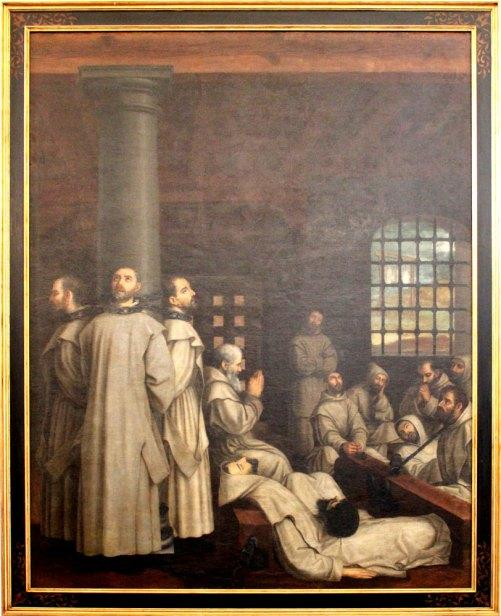
The first of the English Martyrs to fall were not rebels, but contemplatives. The Carthusians, men of silence, prayer, and formidable intellect, were among the most respected in England. Which is precisely why they were targeted first. When Henry VIII demanded submission, he did not begin with the weak, but with the strong. Break the Carthusians, and the rest might follow. But they did not break. Led by St John Houghton, they refused the Oath, not with slogans or rebellion, but with the quiet certainty of men who knew that truth is not negotiable.
Dragged to Tyburn, cut open while still alive, Houghton is said to have looked upon his own heart and cried: “O Jesus, what will you do with my heart?” They were the first of the English Martyrs because they were the most trusted, the most learned, the most serene. Rome’s enemies understood something we too often forget: If you can silence the contemplative, you can remake the world. But they could not silence them. Their blood spoke. It speaks still.
Wow!
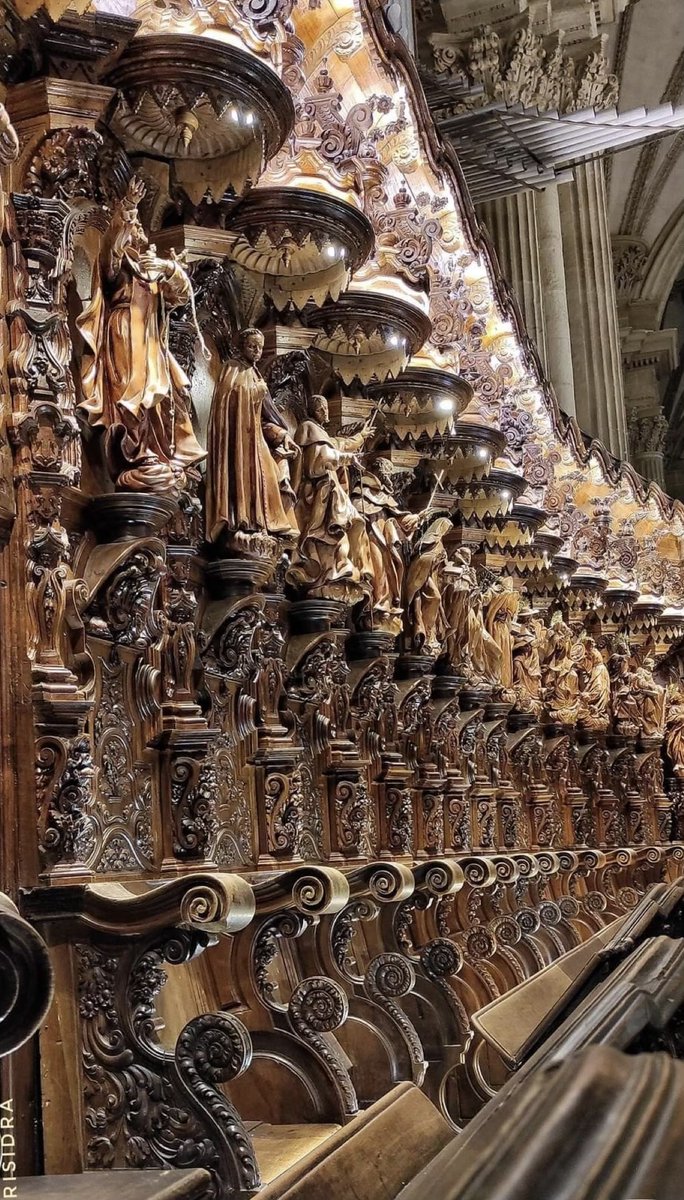
Most people walk into a cathedral and look up. But sometimes the real shock is hidden in the choir stalls.
This is the carved cedar choir of Guadix Cathedral in Granada, filled with forty figures from the life of the Church.
It reminds us that past civilizations did not reserve beauty only for domes and façades.
They carved it into the very seats where prayer was repeated day after day.
Photo by Marisidra
This is something most people don’t know, so let me explain
Before Islam existed, much of the Middle East was Christian
Asia Minor (modern Turkey) was Christian. Syria was Christian. Egypt was Christian. Iraq was Christian. Lebanon was Christian. Palestine was Christian. Jordan was Christian. Parts of North Africa like Libya, Morocco and Tunisia were Christian. Antioch, Alexandria, and Edessa were among the greatest centers of Christian learning in the world
These places were arguably more central to early Christianity than Europe. The apostles preached there. The earliest churches were built there, and many of the Church Fathers came from these lands
Then in the 7th century, Islamic armies expanded out of Arabia. The wars were brutal, cities were taken by force, and the entire political and religious structure of the region changed. Christians who had once been the majority were gradually reduced to second class citizens
Within a few decades they conquered Syria, Egypt, Iraq, and Persia. Within a century they controlled most of the Christian Middle East and North Africa
Most Christians were forced to convert, others fled, and some lived as second-class citizens
That's what's going to happen soon if we don't stop them
This is one of the worst downgrades of all time
Old London Bridge was a medieval stone structure that stood for over 600 years and was once considered a wonder of the world. It was 926 feet long and filled with houses and shops, making it the longest inhabited bridge in Europe
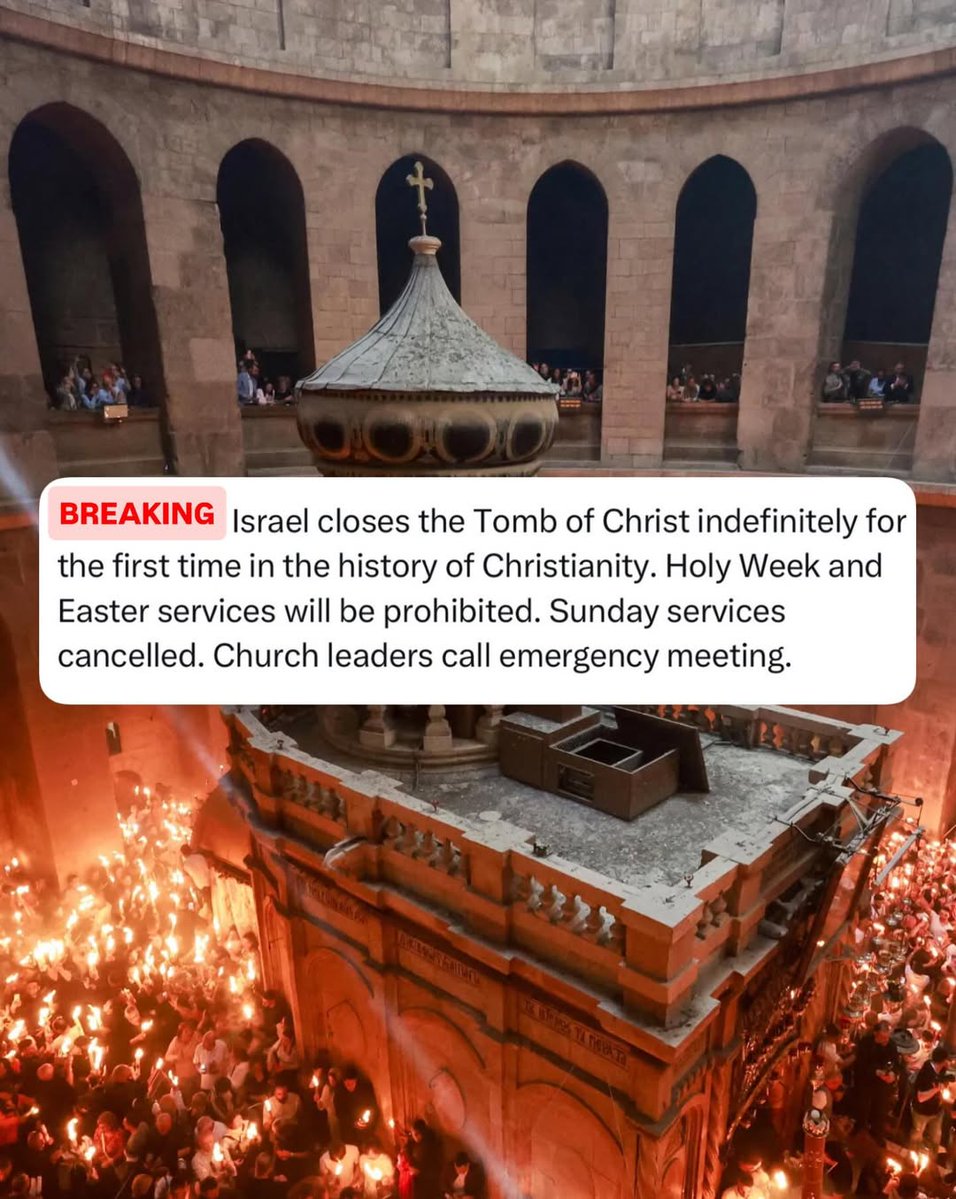
Israel has closed the Church of the Holy Sepulchre indefinitely for the first time in the history of Christianity.
Holy Week and Easter services will be prohibited. Sunday masses and liturgies cancelled. A church that should be packed with hundreds of thousands these coming weeks is being forcibly shut and silenced.
Israel cites it is for ‘security concerns’ while Jewish Israelis are allowed to celebrate in mass gatherings. Alongside the forced closure of Al-Aqsa mosque, reports cite priests aggressively being turned away to perform daily services.
Throughout history, wars, tensions, or even the pandemic limited access to the sanctuary, but they had never prevented liturgical celebrations in this central place of Christian faith indefinitely. Christians must not remain silent.
“I wish it need not have happened in my time,” said Frodo.
“So do I,” said Gandalf, “and so do all who live to see such times. But that is not for them to decide. All we have to decide is what to do with the time that is given us.”
— J.R.R. Tolkien
The German poet Heinrich Heine was once asked why men no longer build great cathedrals.
His response?
"People in those old times had convictions. We moderns only have opinions. It takes more than a mere opinion to erect a Gothic cathedral."
No, I didn't say that. Independent verification means cross-checking with neutral evidence like commercial satellite imagery, OSINT from non-aligned analysts, or reports corroborated across conflicting sides—not blindly trusting any one government (IRGC, US, UAE, or others).
For these claims, none exists yet: UAE confirms interceptions with no damage reported to THAAD sites; US says they sank an Iranian corvette off Chabahar instead. Apply the same standard evenly.
May Lord protect everyone and keep all innocent lives safe 🙏.
✝️68 AD. Hidden in the mountains of #Iran 🇮🇷. One of the oldest surviving 🇦🇲✝️ #Christian churches on Earth-built on the martyrdom site of an apostle. The #Armenian Monastery of Saint Thaddeus was founded in 68 AD according to sacred tradition on the very spot where Saint Thaddeus, one of the twelve apostles, was martyred and buried
This makes it an apostolic-era sanctuary where Armenians have prayed since the 1st century, long before Armenia became the first Christian nation in 301 AD.
Its walls have witnessed empires rise and fall. They all came and went, but the Armenian prayer never stopped.
The current structure is a mosaic of centuries. The oldest surviving parts, around the altar apse, date from the 7th century, with some traditions linking earlier origins to the 4th century or the apostolic era.
After an earthquake destroyed much of it in 1319, the monastery was extensively rebuilt in the 1320s under Bishop Zachariah. Further repairs occurred over the centuries, including in the 17th century.
In the early 19th century, under the patronage of Father Superior Simeon, a large western extension (a narthex-like structure) was added, deliberately echoing the design of Etchmiadzin Cathedral, the mother church of the Armenian Apostolic Church.
In 2008, UNESCO inscribed the Monastery of Saint Thaddeus (together with the Monastery of Saint Stepanos and the Chapel of Dzordzor, all in Iran's northwestern provinces) on its World Heritage List as the "Armenian Monastic Ensembles of Iran." This recognition highlights their outstanding universal value in Armenian architectural and decorative traditions, cultural diffusion, and pilgrimage heritage.
Every year, thousands of pilgrims-Armenians and others-still journey to this remote mountain valley to kneel where an apostle is believed to have fallen. The annual three-day pilgrimage in July venerates Saint Thaddeus and Saint Sandukht (a royal convert martyred with him).
An Iranian man left this comment on my YouTube channel. This is without a doubt the single best explanation of the reality facing Iranian people today👇
"As an Iranian, I can tell you the situation is no longer just political—it's existential. We are trapped between two collapsing structures: one internal, one external. On one hand, we face a deeply dysfunctional government, led by the Supreme Leader and the Islamic Republic’s unelected institutions.
Decades of economic mismanagement, suppression of dissent, and brutal ideological control have alienated multiple generations. No one believes in reform anymore—because every attempt has either been co-opted or crushed. But here's the paradox: We are also terrified of regime collapse—because we've watched the aftermath of Western intervention in countries like Iraq, Libya, Syria, and Afghanistan. Each was promised freedom; each descended into chaos, civil war, or foreign occupation.
So no, we don't trust the U.S. or Israel. Not because we support our regime—but because we know how imperial powers treat ‘liberated’ nations in the Middle East.
Freedom, in their language, often means vacuum, fire, and permanent instability. Right now, many Iranians live with three truths at once: The Islamic Republic is morally and politically bankrupt. The alternatives offered by foreign actors are not liberation—they’re collapse.
A bad government is survivable. No government is not. We are not silent because we agree. We are cautious because we’ve learned—too well—what happens when superpowers decide to "help." In a sentence: Iran is a nation held hostage by its own regime, but haunted by the fate of its neighbors. We are stuck in a house we hate, surrounded by fires we fear more."