The creator of Linux just publicly called out the AI hype. Word for word.
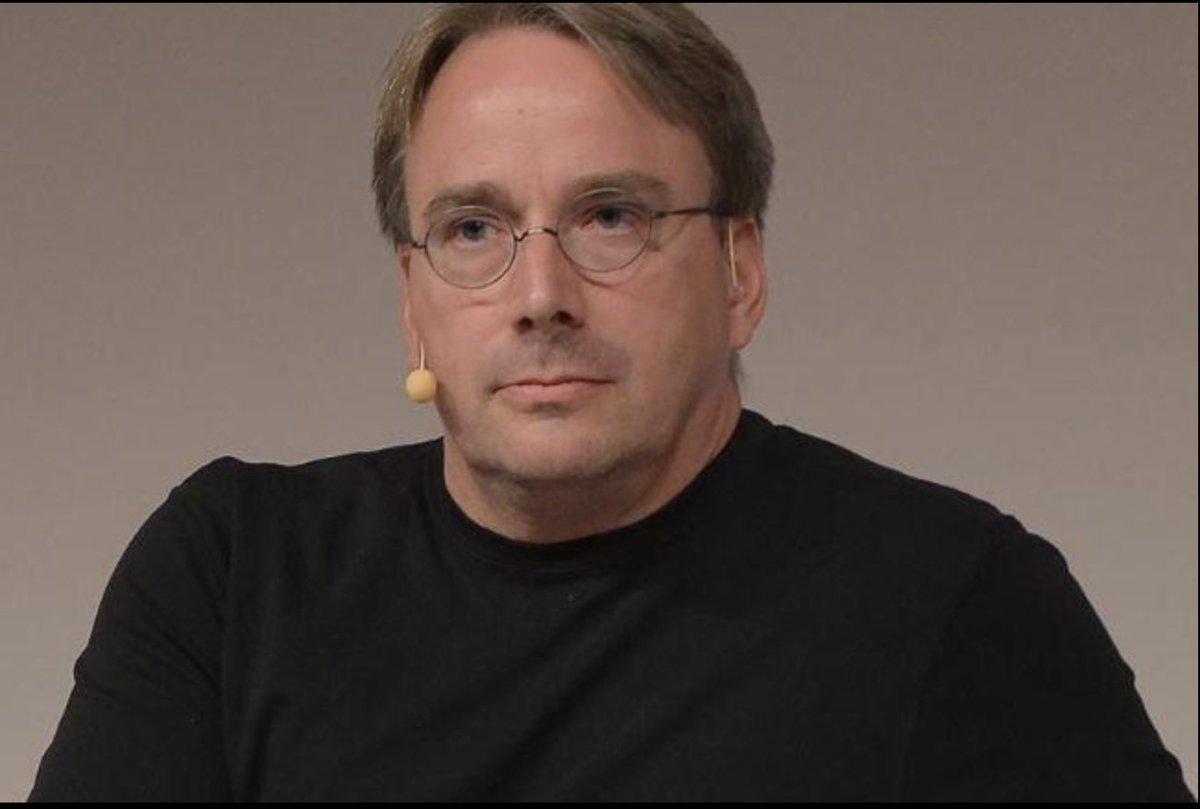
Linus Torvalds took the stage at Open Source Summit 2026 and said this:
"When I see people saying 99% of our code is written by AI, I literally get angry. Because those same people — I can pretty much guarantee — 100% of their code is written by compilers. But they never say that."
He is not anti AI. The Linux kernel saw a 20% jump in submissions this release because of AI tools. He uses it. He gets it.
His point is something most people are too afraid to say.
AI is a productivity tool exactly like compilers were. Compilers boosted programming by 1000x. AI adds another 10x on top. Enormous. But nobody says "the compiler wrote my code." So why are we saying AI wrote it?
He also flagged something nobody is talking about.
AI is flooding small open source projects with drive-by bug reports. Someone runs a prompt, files a report and disappears when asked for a patch. Maintainers with one or two people are drowning trying to keep up.
"Sometimes AI reports a bug and when you ask for more information the person has done that drive-by and does not even answer your question. That is the real burnout issue."
And his final warning was the sharpest of all.
"People who do not understand the complexity of systems will prompt systems and write processes that will fail."
The AI hype crowd is very loud right now.
Linus has been building real systems for 35 years. When he talks, engineers listen.
Full interview here:
https://t.co/LmXJtvKc4O
📚The ImpLib SDK turned 20! 🎉
What's new in v2.0.4:
• Tested for compatibility with Windows 11
• Added DLL name prefix to common symbols for disambiguation (e.g. DllInstall)
• More import libraries added (SHLWAPI, PROPSYS)
A study reveals that "after just 10 minutes of AI-assisted problem-solving, people who lost access to the AI performed worse and gave up more frequently than those who never used it".
@CelerSms Hurray! CelerXML is significantly faster than any other Java XML processor I'm aware of. I'm looking forward to see other CelerSMS components and libraries going open source!
CelerXML is now open source! It is a free lightweight implementation of the standard Java XML parsers: Simple API for XML (𝑆𝐴𝑋 and 𝑆𝐴𝑋2) and Streaming API for XML (𝑆𝑡𝐴𝑋)
Happy New Year! 🎄
@antoniosarosi@KamenarVladimir Sooner or later an experienced programmer realizes that every control structure, data structure, keyword or opcode are really necessary
@KamenarVladimir@antoniosarosi Saying that a data structure is useless is like saying that do-while is useless because most of the time we use for and while loops
@KamenarVladimir@popovicu94 The file descriptor in Linux is a handle pointing to the inode. It has nothing to do with memory mapping. Misunderstanding these fundamental concepts causes memory leaks.
Airplane mode doesn't power down all the RF circuitry.
Airplane mode blocks sending most RF signals, but not all. Certain low-level ping acks are allowed. Listening for incoming RF signals is also allowed.
@DoingFedTime Airplane mode prevents active RF operation (sending phone-initiated signals), but passive operation is allowed (receiving signals: GPS, BLE and even GSM network pings). The network knows where the device is, but it will not perform a complete registration to exchange calls/SMS.
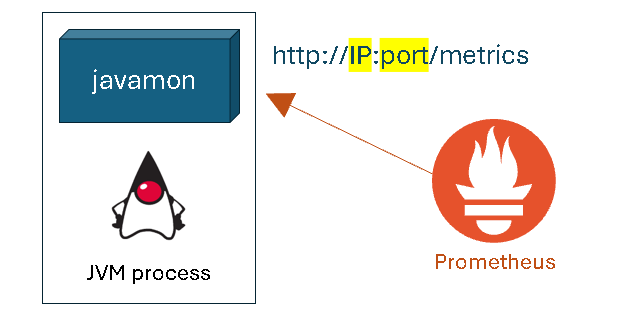
Javamon is a minimalistic open source #Java monitoring agent compatible with #Prometheus. The size is less than 4Kb. No dependencies. A single class file. No overhead in terms of GC activity. Compatible with Java 1.4 or later. Javamon can be used as a Java library or a wrapper.
@CelerSms@falconerd When allocating large blocks of memory, I prefer to use the lowest level API available (VirtualAlloc in Windows, mmap in Linux). It's the fastest way to allocate memory, if you want to implement your own alternatives to malloc/free.
@sudox7 When you program in C, the target is a native executable for a specific OS. It won't run on other OS, unless you use some kind of emulation. The ifdef are preprocessor directives. They are evaluated at compile time.
2000. Heretic II, one of the first games ported to Linux using #OpenAL (𝑂𝑝𝑒𝑛 𝐴𝑢𝑑𝑖𝑜 𝐿𝑖𝑏𝑟𝑎𝑟𝑦) for spatialized sound.
Aureal's A3D and Creative's EAX were supported.
Slow unoptimized software requires more system resources to run. The more often it is used, the more energy is wasted. For example, many mobile apps used on millions of devices are not energy efficient. On a global scale, too much energy is wasted because of that.
@CelerVictor The PureBasic OpenAL SDK v1.1.2 supports OpenAL64 with #PureBasic x64.
@Migue1Cano contributed a sine wave sample program and some optimizations for the OALF framework.🙏
The latest version is available on SourceForge and GitHub.