https://t.co/mjH5Sq3A3E
En este enlace aparece anunciado el curso universitario que impartiré para los mayores y jubilados, titulado *El tema del hombre: seguir pensándonos con Ortega y Julián Marías*, dentro del bloque de Humanidades (2 sesiones semanales por las tardes).
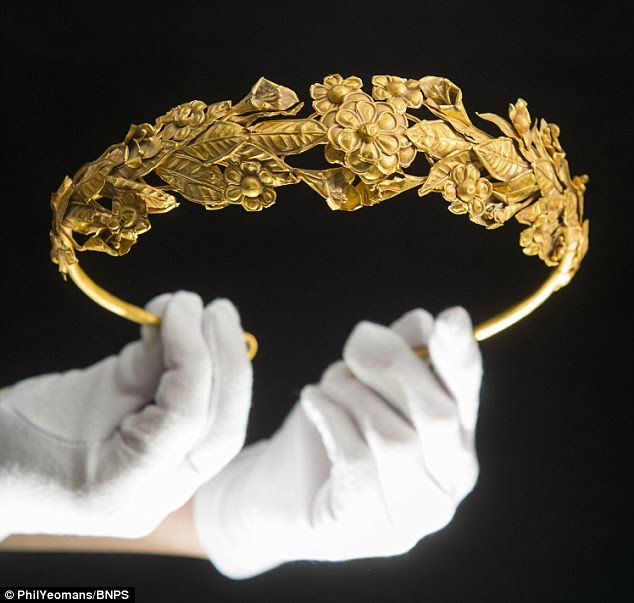
Incredibly rare, a 2300 year-old Ancient Greek Gold Crown (300 BC) could worth at least £100,000, was kept for decades in a tatty box of old newspapers under bed by owner who had no idea what it was ...
In 2016; the delicate Greek Myrtle Wreath (300 BC), was found in a cottage in Somerset under a bed. Artefact was discovered when elderly owner, who wants to remain anonymous, asked valuers from Duke's of Dorchester in Dorset to look at some items he had inherited from his grandfather. But Guy Schwinge from auctioneers was astonished when he pulled aside the newspaper inside a tatty box to reveal the precious ancient artefact.
Gold wreaths like this were meant to imitate the wreaths of real leaves that were worn in Ancient Greece in religious ceremonies and given as prizes in athletic and artistic contests. They usually depicted branches of laurel, myrtle, oak and olive trees, which were symbolic of concepts such as wisdom, triumph, fertility, peace and virtue. Due to their fragile nature, gold wreaths like this were only worn on very special occasions. Bits of dirt embedded on the wreath suggest this one was buried at some point.
Most date to the Hellenistic period (323-31 BC), which this one is also thought to date from, and show the exceptional skill of goldsmiths at that time. Some were made during earlier periods but the wreaths became more frequent after Alexander the Great's Eastern conquests, when gold was more available in Greece.
Current owner's grandfather was a great collector who was fascinated by archaeology and the ancient world. Although his family do not know how he acquired it, it is likely he bought it sometime in the 1940s when he travelled extensively.
He said : "I knew my grandfather travelled extensively in the 1940s and 50s and he spent time in the north west frontier area, where Alexander the Great was, so it's possible he got it while he was there. But he never told me anything about this wreath.
"I inherited quite a lot of things from him and I just put this to one side for almost a decade and didn't really think anything of it. Recently I decided I needed to sort through things and called in Duke's to have look at some of the items he'd passed on to me. The wreath is a beautiful piece but I never expected it to be so valuable. It was a mixture of excitement and just disbelief when they told me what it was."
Mr Schwinge from Duke’s said : "When the owner pulled the gold wreath from a tatty cardboard box filled with paper, my heart missed a beat. When I went to the cottage the last thing I expected to see was a piece of gold from antiquity. It is notoriously difficult to date gold wreaths of this type.
Stylistically it belongs to a rarefied group of wreaths dateable to the Hellenistic period and the form may indicate that it was made in Northern Greece. It is eight inches across and weighs about 100 grams. It's pure gold and handmade, it would have been hammered out by a goldsmith. The wreath is in very nice condition for something that's 2300 years old. It's a very rare antiquity to find, they don't turn up often. I've never seen one in my career before."
#archaeohistories
"And you [Constantinople] see Hagia Sophia
In the hands of the Hagarene.
You (City) see Mahomet,
To sit in the throne of the Greeks,
To feed Rhomaiopoula (young Greeks)
With the milk of slavery.
Europe, what have I done to you
And you are enjoying seeing,
A beast in my throne,
That is always thirsty of blood?"
It was 1675 when around 700 mostly Maniates (Μανιάτες) agreed with the Genoese to be relocated to Corsica due to the unbearable pressure by the Ottoman forces in Moreas and the local feuds. Their leader was the Stephanopoulos family, from Vitylo (Homeric Voitylon) in Mani and their story deserves much more than some posts here. Fast forward, more than 200 years later the descendants of the first Stephanopouloi, Dimo and Nicolo Stephanopoli under instructions by the Napoleonic authorities will go back to their fatherland, and their patriotic sentiments would be expressed as if they have never left the rocks of Laconia.
The brothers, among plentiful exciting information and scenes they record, in their Voyage de Dimo et Nicolo Stephanopoli en Grece 1797-98 (publ.1800), a gathering in the tower of Tzanetos Grigorakis in Marathonesi (Gytheio), with Greeks from Athens, Macedonia, Epiros and Crete hearing a Maniot singing the below Lament, twenty three years before the Revolution.
The Lament is in a form of dialogue between a Stranger and Roumeli (continental Greece), and as Stephanopoli brothers narrate after they finished singing and asked for just 6000 French soldier in Corfu to ignite the Revolution all over Greece, they all shouted Freedom or Death (La liberté ou la mort !):
"THE STRANGER TO RUMELIA.
All the world is in sweet joy;
All are in a cheerful mood,
Only Rumelia and the vast Archipelago
Remain plunged in sadness!
Rumelia! ah! why this eternal silence?
RUMELIA TO THE STRANGER.
You see me in slavery,
with the chains of the Turk,
How can you tell me to be joyful
How can your heart allows you so?
Are you a stranger and you’ve just arrived,
And still you do not know,
What is happening in Rumelia,
And what in Konstantinoupolis?
Are you a friend of the Greeks,
And wish to know about,
About what I feel and why I am not joyful,
Why I am sad?
Whoever you are, open,
The book of histories, and see
What Greece was once,
And listen what is now.
Now that the tyrant has devastated
the race of the Rhomaioi (Greeks)?
Where is my Athens,
Where is that Athens,
That the world admired,
And still respects?
There it was that first appeared,
The Freedom in the world,
There it was where Solon set
The Atheneans’ law,
There it was that the nations of Europe,
Were running to get enlightened,
And from the edges of the world,
All were coming to Athens,
The children of the kings
Of the continent and the seas,
Some of them to see the hand made pieces of art,
Of the celebrated artists,
Other to mingle with the wise,
And learn the sciences,
To hear examples by the philosophers,
That Athens that you know
That got such a fame,
Now is eaten by slavery,
Now there is no more.
Now the travelers that pass by,
The strangers that travel there,
They don’t find anyone else there,
They don’t see anyone else,
But only a petty village,
In the spot that Athens was
And a money lover “Aga”(Turkish lord)
In the same spot of Areios Pagos,
And who will disembark to Moreas,
And will not get tearful?
Whoever has seen it in the time of Hellenes,
Before it was enslaved,
He should have believed
That it was made by Gods,
As ornament to the World,
And now it is wild and deserted,
And hosts wild beasts,
Wherever I look,
Wherever I turn my head, I see
Slavery, widows and orphans,
Turk blood-suckers.
In Rumelia every pasha
In the territory he rules,
Being all powerful,
Does whatever he desires.
Strip and destroys families,
And he doesn’t have enough,
Till he sees all reayas
Naked and hungry.
And if there is any rich,
Oh black/bad fate to him!
He will lose wealth and life,
And every moment he’s in danger.
And the poor islands,
They never stop to worry,
They never stop to have there,
Thieves of the sea,
Turks, Franks and Berbers (from Libya/Barbaria),
All are against them.
And who will see Egripos (Euboia)
And his heart will not ache?
(Who will see) Rhodos and not get sad,
(Who will see) Crete and not start crying,
And the rest of the islands
Not to breath deeply?
My Constantinople, where are your beauties,
City in despair,
My City, light that you brought light,
In East and West!
And now you are the adobe
Of a barbarian race
And you see Hagia Sophia
In the hands of the Hagarene.
You (City) see Mahomet,
To sit in the throne of the Greeks,
To feed Rhomaiopoula (young Greeks)
With the milk of slavery.
Europe, what have I done to you
And you are enjoying seeing,
A beast in my throne,
That is always thirsty of blood?
[...]
Such a rough slavery,
Has not existed elsewhere in the world,
And I don’t have hope coming from any side,
In order to get free.
And you are saying me to be joyful
And be cheerful,
Where else, apart from my tears,
Will I find comfort.
“Ο ξένος της Ρούμελης:
-Όλος ο κόσμος χαίρεται
Όλοι βαρούν παιγνίδια
Η Ρούμελη και τα νησιά
Στέκουνε πικραμμένα.
Ρούμελη, για δε χαίρεσαι,
Για δεν βαρείς παιγνίδια;
Η Ρούμελη του ξένου:
-Εις την σκλαβιάν που με θωρείς,
Στα σίδηρα του Τούρκου,
Μπρε να μου’πης να χαιρεθώ
Πως σε βαστά η καρδιά σου;
Μην είσαι ξένος και έφθασες,
Και ακόμη δεν ηξεύρεις
Τι γίνεται στην Ρούμελη,
Και τι περνά εις την Πόλιν;
Μην είσαι φίλος των Γραικών,
Και απεθυμάς να μάθης
Το τι έχω και δεν χαίρομαι,
Διατί είμαι λυπημένη;
Όποιος και αν είσαι, άνοιξε
Την ιστορίαν, και ίδε
Τ’ήτον η Γραίκια μια φορά,
Και άκουσε τ’είναι τώρα.
Που το τύρρανος μου ερήμαξε
Το γένος των Ρωμαίων;
Που είναι η Αθήνα μου,
Που είναι κείνη η Αθήνα,
Που ο κόσμος εθαμάστηκε,
Και σέβεται ακόμη;
Εκεί επρωτοφάνηκε
Η ελευθερία εις τον κόσμον
Εκεί διαλάλησε ο Σόλων,
Των Αθηναίων τους νόμους,
Εκεί έτρεχαν να φωτισθούν
Της Ευρώπης τα έθνη,
Και, από τα πέρατα της γής,
Έρχουντον στην Αθήνα
Των βασιλέων τα παιδιά
Στερηάς και του πελάγου,
Άλλα να ιδούν τα εργόχειρα
Των θαυμαστών τεχνήτων
Άλλα να σμίξουν τους σοφούς,
Να μάθουν επιστήμαις
Ν’ακούσουν παραδείγματα
Από τους φιλοσόφους.
Εκείνη η Αθήνα που αγροικάς
Που έλαβε τόσης φήμην,
Τώρα η σκλαβιά την έφαγε,
Τώρα δεν είναι πλέον.
Τώρα οι διαβάταις που περνούν,
Οι ξένοι που διαβαίνουν
Άλλον εκεί δεν βρίσκουνε,
Άλλον εκεί δεν βλέπουν
Παρά ένα έρημον χωριόν
Κει που ήτον η Αθήνα
Και έναν φιλάργυρον Αγάν
Στον τόπο του Αρεοπάγου.
Και ποιος ν’αράξη στο Μωρηά,
Και δάκρυα να μην χύση;
Και όποιος είχε τον ιδεί
Στον καιρόν των Ελλήνων,
Πρι του παρά να σκλαβωθή,
Έπρεπεν να πιστεύση
Τον είχαν κτίσει οι θεοί
Δια μιαν στολήν του κόσμου,
Και τώρα είναι άγριος και έρημος,
Και άγρια θερία θρέφει.
Όπου ρίξω το βλέμμα μου,
Όπου γυρίσω, βλέπω
Σκλαβιά, χηράδες, και αρφανά,
Και Τούρκους ματολαύταις.
Στην Ρούμελην κάθε πασάς,
Στον τόπον όπου ορίζει
Έστοντας εφταξούσιος,
Ό,τι του ορμήση κάμνει.
Γδύνει, αχανίζει φαμελιαίς,
Και χόρτασιν δεν έχει,
Όσον που να ιδή τον ραγιά
Γυμνόν και πεινασμένον
Και αν είν’κανένας πλούσιος,
Μαύρη, κακή του μοίρα!
Να χάση πλούτη και ζωήν
Κάθε ώρα κινδυνεύει.
Και τα καΰμένα τα νησιά
Ανάπαυσιν δεν έχουν,
Ποτέ δεν λείπουνε απ’εκεί
Οι κλέπτες της θαλάσσης,
Τούρκοι, Φράγκοι, και Βάρβαροι,
Όλοι τα κατατρέχουν
Και ποιος να ιδή την Έγριπον
Να μην κακοκαρδίση;
Την Ρόδο να μην λυπηθή,
Την Κρήτην να μην κλάψη;
Και τα επίλοιπα νησιά
Να μην αναστενάξη;
[...]
Πόλι μου , που είν’τα κάλλη σου;
Πόλι δυστυχισμένη,
Πόλι μου, φως που εφώτιζες
Ανατολή και Δύσι!
Και τώρα είσαι η κατοικιά
Βαρβαρωτάτου γένους
Και βλέπεις την Άγιαν Σοφιά
Στου Αγαρηνού τα χέρια
Να κάθεται και ο Μάωμεθ
Εις των Γραικών τον θρόνον,
Να θρέφη τα Ρωμαιόπουλα
Με της σκλαβιάς το γάλα.
Ευρώπη, και τι σου έκαμα,
Και χαίρεσαι να βλέπης
Ένα θεριό στον θρόνον μου,
Που δεν χορταίνει αίμα;
[...]
Σκλαβία τόσο σκληρή
Στον κόσμο δεν εφάνη,
Και ελπίδα από καμμιά μεριά
Να λυτρωθώ δεν έχω.
Και συ μου λέγεις να χαρώ
Παιγνίδια να βαρέσω,
Που αλλού, παρά στα δάκρυα μου,
Παρηγοριά δεν βρίσκω.”





![Alyunan00's tweet photo. "And you [Constantinople] see Hagia Sophia
In the hands of the Hagarene.
You (City) see Mahomet,
To sit in the throne of the Greeks,
To feed Rhomaiopoula (young Greeks)
With the milk of slavery.
Europe, what have I done to you
And you are enjoying seeing,
A beast in my throne,
That is always thirsty of blood?"
It was 1675 when around 700 mostly Maniates (Μανιάτες) agreed with the Genoese to be relocated to Corsica due to the unbearable pressure by the Ottoman forces in Moreas and the local feuds. Their leader was the Stephanopoulos family, from Vitylo (Homeric Voitylon) in Mani and their story deserves much more than some posts here. Fast forward, more than 200 years later the descendants of the first Stephanopouloi, Dimo and Nicolo Stephanopoli under instructions by the Napoleonic authorities will go back to their fatherland, and their patriotic sentiments would be expressed as if they have never left the rocks of Laconia.
The brothers, among plentiful exciting information and scenes they record, in their Voyage de Dimo et Nicolo Stephanopoli en Grece 1797-98 (publ.1800), a gathering in the tower of Tzanetos Grigorakis in Marathonesi (Gytheio), with Greeks from Athens, Macedonia, Epiros and Crete hearing a Maniot singing the below Lament, twenty three years before the Revolution.
The Lament is in a form of dialogue between a Stranger and Roumeli (continental Greece), and as Stephanopoli brothers narrate after they finished singing and asked for just 6000 French soldier in Corfu to ignite the Revolution all over Greece, they all shouted Freedom or Death (La liberté ou la mort !):
"THE STRANGER TO RUMELIA.
All the world is in sweet joy;
All are in a cheerful mood,
Only Rumelia and the vast Archipelago
Remain plunged in sadness!
Rumelia! ah! why this eternal silence?
RUMELIA TO THE STRANGER.
You see me in slavery,
with the chains of the Turk,
How can you tell me to be joyful
How can your heart allows you so?
Are you a stranger and you’ve just arrived,
And still you do not know,
What is happening in Rumelia,
And what in Konstantinoupolis?
Are you a friend of the Greeks,
And wish to know about,
About what I feel and why I am not joyful,
Why I am sad?
Whoever you are, open,
The book of histories, and see
What Greece was once,
And listen what is now.
Now that the tyrant has devastated
the race of the Rhomaioi (Greeks)?
Where is my Athens,
Where is that Athens,
That the world admired,
And still respects?
There it was that first appeared,
The Freedom in the world,
There it was where Solon set
The Atheneans’ law,
There it was that the nations of Europe,
Were running to get enlightened,
And from the edges of the world,
All were coming to Athens,
The children of the kings
Of the continent and the seas,
Some of them to see the hand made pieces of art,
Of the celebrated artists,
Other to mingle with the wise,
And learn the sciences,
To hear examples by the philosophers,
That Athens that you know
That got such a fame,
Now is eaten by slavery,
Now there is no more.
Now the travelers that pass by,
The strangers that travel there,
They don’t find anyone else there,
They don’t see anyone else,
But only a petty village,
In the spot that Athens was
And a money lover “Aga”(Turkish lord)
In the same spot of Areios Pagos,
And who will disembark to Moreas,
And will not get tearful?
Whoever has seen it in the time of Hellenes,
Before it was enslaved,
He should have believed
That it was made by Gods,
As ornament to the World,
And now it is wild and deserted,
And hosts wild beasts,
Wherever I look,
Wherever I turn my head, I see
Slavery, widows and orphans,
Turk blood-suckers.
In Rumelia every pasha
In the territory he rules,
Being all powerful,
Does whatever he desires.
Strip and destroys families,
And he doesn’t have enough,
Till he sees all reayas
Naked and hungry.
And if there is any rich,
Oh black/bad fate to him!
He will lose wealth and life,
And every moment he’s in danger.
And the poor islands,
They never stop to worry,
They never stop to have there,
Thieves of the sea,
Turks, Franks and Berbers (from Libya/Barbaria),
All are against them.
And who will see Egripos (Euboia)
And his heart will not ache?
(Who will see) Rhodos and not get sad,
(Who will see) Crete and not start crying,
And the rest of the islands
Not to breath deeply?
My Constantinople, where are your beauties,
City in despair,
My City, light that you brought light,
In East and West!
And now you are the adobe
Of a barbarian race
And you see Hagia Sophia
In the hands of the Hagarene.
You (City) see Mahomet,
To sit in the throne of the Greeks,
To feed Rhomaiopoula (young Greeks)
With the milk of slavery.
Europe, what have I done to you
And you are enjoying seeing,
A beast in my throne,
That is always thirsty of blood?
[...]
Such a rough slavery,
Has not existed elsewhere in the world,
And I don’t have hope coming from any side,
In order to get free.
And you are saying me to be joyful
And be cheerful,
Where else, apart from my tears,
Will I find comfort.
“Ο ξένος της Ρούμελης:
-Όλος ο κόσμος χαίρεται
Όλοι βαρούν παιγνίδια
Η Ρούμελη και τα νησιά
Στέκουνε πικραμμένα.
Ρούμελη, για δε χαίρεσαι,
Για δεν βαρείς παιγνίδια;
Η Ρούμελη του ξένου:
-Εις την σκλαβιάν που με θωρείς,
Στα σίδηρα του Τούρκου,
Μπρε να μου’πης να χαιρεθώ
Πως σε βαστά η καρδιά σου;
Μην είσαι ξένος και έφθασες,
Και ακόμη δεν ηξεύρεις
Τι γίνεται στην Ρούμελη,
Και τι περνά εις την Πόλιν;
Μην είσαι φίλος των Γραικών,
Και απεθυμάς να μάθης
Το τι έχω και δεν χαίρομαι,
Διατί είμαι λυπημένη;
Όποιος και αν είσαι, άνοιξε
Την ιστορίαν, και ίδε
Τ’ήτον η Γραίκια μια φορά,
Και άκουσε τ’είναι τώρα.
Που το τύρρανος μου ερήμαξε
Το γένος των Ρωμαίων;
Που είναι η Αθήνα μου,
Που είναι κείνη η Αθήνα,
Που ο κόσμος εθαμάστηκε,
Και σέβεται ακόμη;
Εκεί επρωτοφάνηκε
Η ελευθερία εις τον κόσμον
Εκεί διαλάλησε ο Σόλων,
Των Αθηναίων τους νόμους,
Εκεί έτρεχαν να φωτισθούν
Της Ευρώπης τα έθνη,
Και, από τα πέρατα της γής,
Έρχουντον στην Αθήνα
Των βασιλέων τα παιδιά
Στερηάς και του πελάγου,
Άλλα να ιδούν τα εργόχειρα
Των θαυμαστών τεχνήτων
Άλλα να σμίξουν τους σοφούς,
Να μάθουν επιστήμαις
Ν’ακούσουν παραδείγματα
Από τους φιλοσόφους.
Εκείνη η Αθήνα που αγροικάς
Που έλαβε τόσης φήμην,
Τώρα η σκλαβιά την έφαγε,
Τώρα δεν είναι πλέον.
Τώρα οι διαβάταις που περνούν,
Οι ξένοι που διαβαίνουν
Άλλον εκεί δεν βρίσκουνε,
Άλλον εκεί δεν βλέπουν
Παρά ένα έρημον χωριόν
Κει που ήτον η Αθήνα
Και έναν φιλάργυρον Αγάν
Στον τόπο του Αρεοπάγου.
Και ποιος ν’αράξη στο Μωρηά,
Και δάκρυα να μην χύση;
Και όποιος είχε τον ιδεί
Στον καιρόν των Ελλήνων,
Πρι του παρά να σκλαβωθή,
Έπρεπεν να πιστεύση
Τον είχαν κτίσει οι θεοί
Δια μιαν στολήν του κόσμου,
Και τώρα είναι άγριος και έρημος,
Και άγρια θερία θρέφει.
Όπου ρίξω το βλέμμα μου,
Όπου γυρίσω, βλέπω
Σκλαβιά, χηράδες, και αρφανά,
Και Τούρκους ματολαύταις.
Στην Ρούμελην κάθε πασάς,
Στον τόπον όπου ορίζει
Έστοντας εφταξούσιος,
Ό,τι του ορμήση κάμνει.
Γδύνει, αχανίζει φαμελιαίς,
Και χόρτασιν δεν έχει,
Όσον που να ιδή τον ραγιά
Γυμνόν και πεινασμένον
Και αν είν’κανένας πλούσιος,
Μαύρη, κακή του μοίρα!
Να χάση πλούτη και ζωήν
Κάθε ώρα κινδυνεύει.
Και τα καΰμένα τα νησιά
Ανάπαυσιν δεν έχουν,
Ποτέ δεν λείπουνε απ’εκεί
Οι κλέπτες της θαλάσσης,
Τούρκοι, Φράγκοι, και Βάρβαροι,
Όλοι τα κατατρέχουν
Και ποιος να ιδή την Έγριπον
Να μην κακοκαρδίση;
Την Ρόδο να μην λυπηθή,
Την Κρήτην να μην κλάψη;
Και τα επίλοιπα νησιά
Να μην αναστενάξη;
[...]
Πόλι μου , που είν’τα κάλλη σου;
Πόλι δυστυχισμένη,
Πόλι μου, φως που εφώτιζες
Ανατολή και Δύσι!
Και τώρα είσαι η κατοικιά
Βαρβαρωτάτου γένους
Και βλέπεις την Άγιαν Σοφιά
Στου Αγαρηνού τα χέρια
Να κάθεται και ο Μάωμεθ
Εις των Γραικών τον θρόνον,
Να θρέφη τα Ρωμαιόπουλα
Με της σκλαβιάς το γάλα.
Ευρώπη, και τι σου έκαμα,
Και χαίρεσαι να βλέπης
Ένα θεριό στον θρόνον μου,
Που δεν χορταίνει αίμα;
[...]
Σκλαβία τόσο σκληρή
Στον κόσμο δεν εφάνη,
Και ελπίδα από καμμιά μεριά
Να λυτρωθώ δεν έχω.
Και συ μου λέγεις να χαρώ
Παιγνίδια να βαρέσω,
Που αλλού, παρά στα δάκρυα μου,
Παρηγοριά δεν βρίσκω.”](https://pbs.twimg.com/media/GJND21mWYAAIs3n.jpg)


