Initial focus for our partnership with Motorola is a regular non-folding device. Current generation Motorola Signature (2026), Razr Fold (2026) and Razr Ultra (2026) are very close to meeting our requirements but lack MTE, adequate secure element integration and other features being added for 2027.
Flagship Snapdragon provides much better CPU and GPU performance and provide more of what's needed via isolated components on the SoC. That includes better cellular, Wi-Fi/Bluetooth and GNSS radios with solid security including good isolation. Snapdragon Pixels worked well for us and it will again.
Tensor was a sidegrade or downgrade from Snapdragon in many ways. Tensor is paired with the fantastic Titan M2/M3 which was a huge security advantage. It also brought hardware memory tagging (MTE) with the Pixel 8. Snapdragon 8 Elite Gen 5 finally shipped MTE but it's broken on the non-Elite SoC.
Next generation Snapdragon will have more mature support for MTE and greatly improved secure element support. It's still likely going to be a lot of work to get MTE fully deployed for the kernel and OS. We need all our hardware-based features including our USB-C port protection ported to it too.
These devices will meet or exceed of our official requirements including 7 years of proper updates, starting out with the Linux 6.18 LTS which can be upgraded to a new branch eventually, reset attack protection for firmware boot modes and everything else. There wasn't time to do it all for 2026.
It's very realistic to provide better security than Pixels against remote attacks. It's far harder to provide a secure element as good as the Titan M2/M3. There will definitely be a decent secure element providing the current generation features including the Android 16 QPR2+ rate limiting design.
Pixels have become much harder to support. AOSP 16 removed support for Pixels and they became harder to properly support than many other devices rather than easier. It's crucial to keep up with the major OS updates to provide all the security patches and we do but it's much harder for us now.
Motorola is doing a large portion of the work of porting GrapheneOS to their devices. They'll provide us with what we need for firmware/drivers in the form we need it and it will be far easier than Pixels. We'll be able to get issues in the firmware and drivers fixed through Motorola and Qualcomm.
People are actively using Github to spread AI-generated malware and advertising them using Reddit Ads. I reported it and within 35 minutes it was taken down.
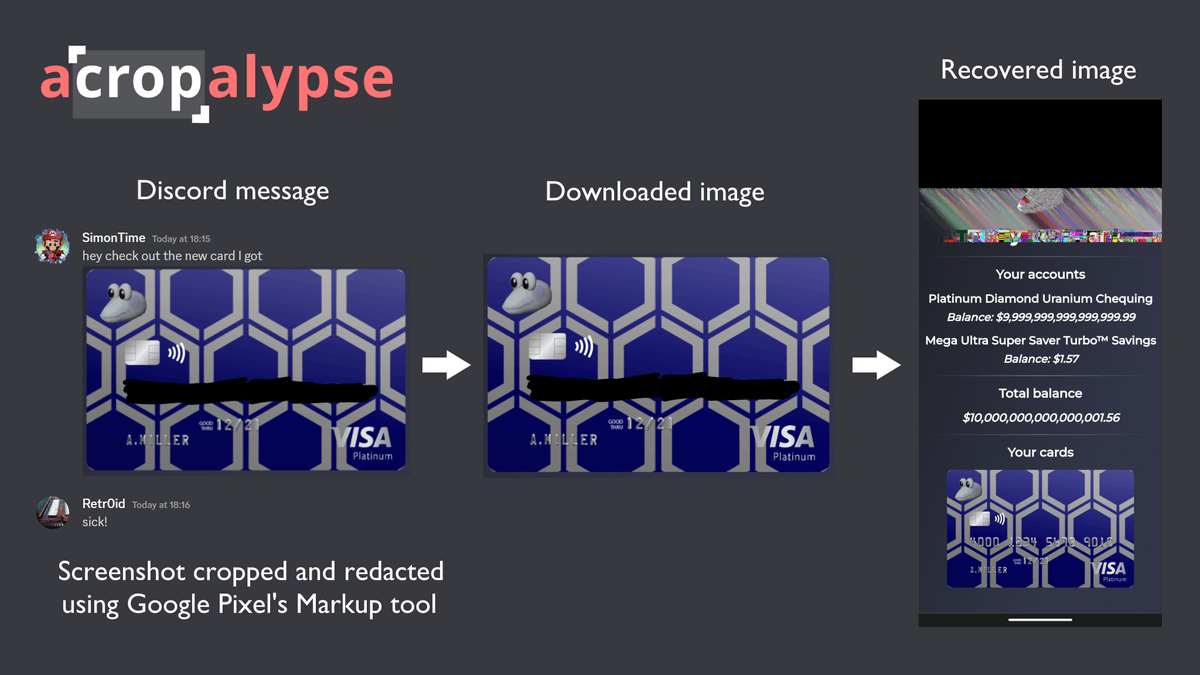
Introducing acropalypse: a serious privacy vulnerability in the Google Pixel's inbuilt screenshot editing tool, Markup, enabling partial recovery of the original, unedited image data of a cropped and/or redacted screenshot. Huge thanks to @David3141593 for his help throughout!
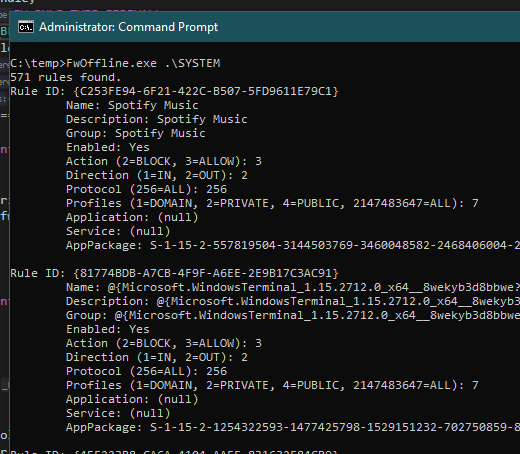
A new tool has arrived: offline firewall policy parser. Relies on undocumented fwpolicyiomgr.dll and somewhat documented data structures. Can be useful in some #DFIR investigations. Enjoy the C source code and the compiled EXE, as usual: https://t.co/IB7oG5PBdQ
⚠️ Confirmed: Real-time network data show a major disruption to #Ukraine's internet backbone provider GigaTrans, which supplies connectivity to many other networks. The incident comes as heavy fighting is reported in #Vasylkiv and #Kyiv 📉
📰 Background: https://t.co/S0qJQ7CbNv
@sweetdreamsh1 If EA cared for their product, they would have taken action ages ago to ensure games at high tier can be played without external interference such as DDoS! To late!
Nettnøytralitet er sikret ved lov i Norge, selv om det er noen gråsoner som nulltaksering. Hva vil det bety om USA dropper nettnøytralitet?
https://t.co/V7Ad0zMvQi