“We launched the refinery in 2013, and for five years we had issues with the land. Everything was being blocked by the oil mafia. We had to build our own port because no port in the country could handle the heavy equipment. We also had to build a harbour, roads, and a water system with a capacity of 440 million litres. Our water facility alone covers more than 30 hectares.”
— Aliko Dangote
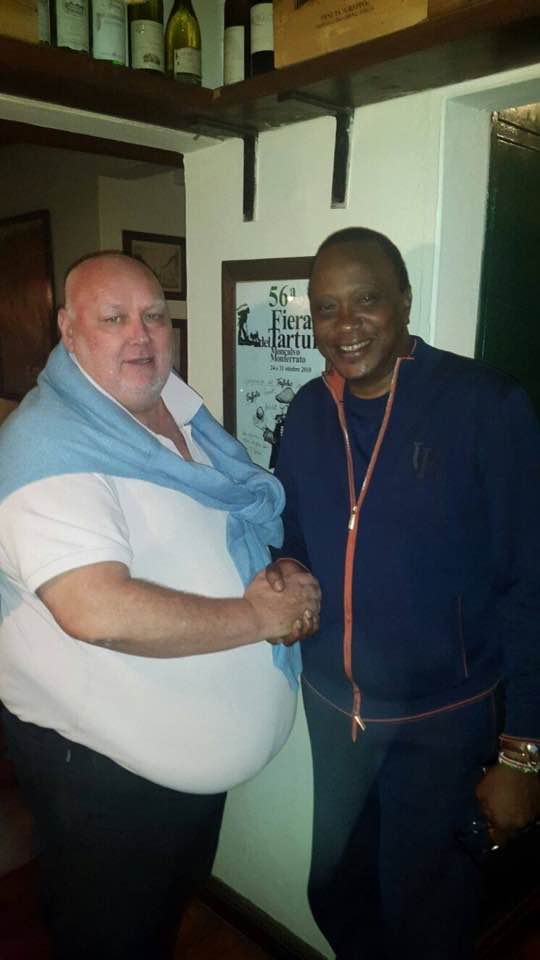
The Rise and Fall of Maurizio Corti: An Italian Dream in Nairobi That Faded into Shadows
In the early 2000s, an ambitious Italian entrepreneur from Varese arrived in Nairobi with big dreams and a vision rooted in his family’s heritage. Maurizio Corti, inspired by his grandmother’s humble osteria.. a traditional Milanese tavern captured in a cherished 1946 photograph.. set out to transplant that warm, convivial Italian spirit into Kenya’s bustling capital. What began as a single restaurant would grow into a hospitality empire, only to crumble under the weight of a global pandemic, leaving Corti himself broken in health and finances.
Corti’s first major ventures in Nairobi weren’t restaurants but nightlife hotspots. He operated the Acapulco club and, in June 2004, opened Club Casablanca, a discotheque right next door to what would become his flagship eatery on Lenana Road. Casablanca quickly became a lively fixture in the city’s after-dark scene, drawing crowds for music, dancing, and the kind of vibrant energy that defined Nairobi’s expat and local party circuit at the time. The nightclub sat on the very site where Corti soon launched Osteria del Chianti, his pioneering Italian restaurant. The location was no accident: Corti wanted to create a space where fine food, exotic wines (still rare in Kenya then), and genuine Italian ambience met the city’s fast-growing appetite for quality dining. The osteria’s warm lighting, hearty pastas, risottos, pizzas, and osso buco drew expats, tourists, and well-heeled Kenyans alike. It wasn’t just a meal.. it was an experience, a slice of la dolce vita in East Africa.
Success came swiftly. Corti expanded under the Osteria Group, opening multiple outlets: three in Nairobi, two in Malindi, and others in Mombasa, Narok (gateway to Maasai Mara), Nanyuki, and Diani. He added the affordable Pizza O takeaway chain in high-traffic spots like Mombasa Road, Narok, and coastal towns, making quality Italian fare accessible to office workers, locals, and travelers. In 2016, the group even won a government tender to manage Buffalo Camp, a safari lodge outside Tsavo East National Park. By the late 2010s, Corti was a fixture in Kenya’s hospitality world.. a “big man” with big ideas, known for his welcoming presence, attention to detail, and relationships that kept the venues buzzing. Media profiles painted him as a success story in a notoriously tough industry, where good food alone wasn’t enough; you needed the right atmosphere, the right connections, and relentless drive.
Then came COVID-19. The pandemic devastated Kenya’s tourism and dining sectors with lockdowns, curfews, and travel bans. Osteria Group’s restaurants were hammered. On 4 January 2021, the board passed a resolution to cease operations amid “unfavourable business environment and cash-flow challenges.” One by one, the outlets shuttered. What had been a thriving empire of nine restaurants, takeaways, and a lodge collapsed almost overnight. Former employees filed suits in Nairobi’s Employment and Labour Relations Court, claiming unpaid salaries, unfair termination, and in some cases, verbal abuse or profanities from director Corti himself. Judgments piled up, including one for roughly KSh 1.7 million in favour of claimant Benson Charo Kiboko.
By the early 2020s, the company was insolvent. Assets- cookers, fridges, utensils, furniture.. were seized by creditors. In 2025, Osteria Group (Kenya) Limited formally notified the Registrar of Companies of its cessation of business (dated back to the COVID closures), applied to have its name struck from the register, and faced a liquidation petition in Malindi’s High Court (Insolvency Petition No. E001 of 2025). Courts grew frustrated with unpaid decrees; in a December 2025 ruling, the judge ordered Corti (then described as a former director) to appear for examination under oath about the company’s remaining assets and books. Allegations swirled of fraudulent asset transfers to dodge creditors, though Corti denied wrongdoing, insisting the collapse was purely economic.
Today, in 2026, Maurizio Corti’s story has reached a quiet, painful coda. The once-prosperous restaurateur fell gravely ill shortly after the restaurants closed. He spent nearly three years bedridden during the height of the crisis and its aftermath, exhausting his personal savings on medical care. Now confined to a wheelchair with no income, savings, or assets left, he survives on a small and irregular stipend from his twin sister. The Italian dream he built in Kenya.. from the pulsing nights at Casablanca to the bustling Osteria empire.. has faded. What remains is a cautionary tale of ambition, boom, and bust in one of Africa’s most unforgiving hospitality markets. Corti’s legacy lingers in the memories of those who dined and danced under his roofs, but the man himself lives in the shadow of what was.
A man spends 50 years teaching at MIT.
He knows his time is running out.
So he records one last lecture — everything he knows, distilled into a single hour.
He died 5 months later.
This is that lecture.
The most important hour you'll watch this week. 👇
Bookmark it for later
I was really fond of Kuria Muchiru. He showed up for me unannounced when I truly needed him, during a very difficult season, and helped me think through some of the toughest decisions I have had to make. That kind of presence is rare.
Over the past two to three weeks, he had gone quiet. I tried reaching him several times. The last time we spoke, he mentioned he was in hospital and would reconnect, but I never managed to get through to him again.
Looking back, he must have been going through a lot.
Kuria Muchiru was one of those rare individuals who could sit with you in complexity and bring clarity without noise. I will truly miss his counsel and the steadiness he brought when it mattered most.
May he rest in peace.
The headline says AI intensifies work. What the study actually found is more interesting than that.
Berkeley researchers tracked 200 employees for 8 months. AI made every single one of them more capable. They wrote code they couldn’t write before. They took on tasks they used to outsource. They moved faster on work that would have sat in a backlog for months.
And then they burned out. Because the company changed nothing else.
The org handed people a tool that 10x’d their ability to start new work, then kept the org chart, meeting cadence, review processes, and scope boundaries completely identical. Zero workflow redesign.
This is like giving everyone a car and keeping the speed limit signs from the horse-and-buggy era. People drove faster because they could, crashed because nobody updated the roads.
The self-reinforcing cycle the researchers found is worth sitting with: AI accelerated tasks → raised speed expectations → workers leaned harder on AI → scope expanded → wider scope created more work → more work demanded more AI. That loop has no natural stopping point. The company never installed one.
Meanwhile, a separate NBER study across thousands of workplaces found productivity gains of just 3%. And an Upwork survey found 77% of employees say AI tools actually decreased their productivity. The pattern across all of this research is identical: individual capability goes up, organizational design stays frozen, and the gap between the two creates burnout.
The study literally recommends companies build an “AI practice” with structured reflection intervals and scope limits. The researchers aren’t saying AI failed. They’re saying management failed to adapt to AI.
Every CEO reading this headline as validation for slowing AI adoption is making exactly the wrong bet. The companies that win will be the ones that redesign the operating system around the intensity, not the ones that avoid it.
I need to say this honestly. AI hasn’t made my work lighter. It’s made my mind faster and pushing my the balance of my emotional intelligence . I’ll have already tested ideas, run scenarios, challenged assumptions before I even walk into the room… then we start from scratch. And I feel the gap. Not in intelligence ,just in tempo. The hardest part isn’t the work. It’s managing my own frustration. Slowing down. Translating. Staying patient. Some days it genuinely feels like I’m operating a few years ahead and trying not to lose my emotional balance in the process.
The leverage is powerful, but being early can feel lonely.
🌌 Don't miss tomorrow night, February 28th!
Tomorrow evening, just after sunset, six planets will line up in the sky in a rare celestial parade.
Visible planets include:
Mercury, Venus, Jupiter, Saturn, Uranus & Neptune.
Best Viewing Time:
About 30–60 minutes after sunset.
Look toward the western to southwestern horizon.
Mercury and Venus will glow low near the horizon, while Jupiter and Saturn will shine brighter higher up.
Uranus and Neptune may require binoculars or a small telescope.
Don’t miss this beautiful reminder of how perfectly timed and connected our solar system is.
Step outside, grab a telescope or even just your eyes.
This cosmic show is not to be missed!
🌌 Don't miss tomorrow night, February 28th!
Tomorrow evening, just after sunset, six planets will line up in the sky in a rare celestial parade.
Visible planets include:
Mercury, Venus, Jupiter, Saturn, Uranus & Neptune.
Best Viewing Time:
About 30–60 minutes after sunset.
Look toward the western to southwestern horizon.
Mercury and Venus will glow low near the horizon, while Jupiter and Saturn will shine brighter higher up.
Uranus and Neptune may require binoculars or a small telescope.
Don’t miss this beautiful reminder of how perfectly timed and connected our solar system is.
Step outside, grab a telescope or even just your eyes.
This cosmic show is not to be missed!
After 144 years of construction, the Sagrada Família in Barcelona has reached its full height with the placement of the final piece atop its central tower.
📹davidcantor
Navy SEALS use box breathing to stay calm & intensely focused during stressful situations.
3 times per day for 5 minutes each will exponentially reduce your cortisol / stress levels.
Come back to this tweet to practice daily
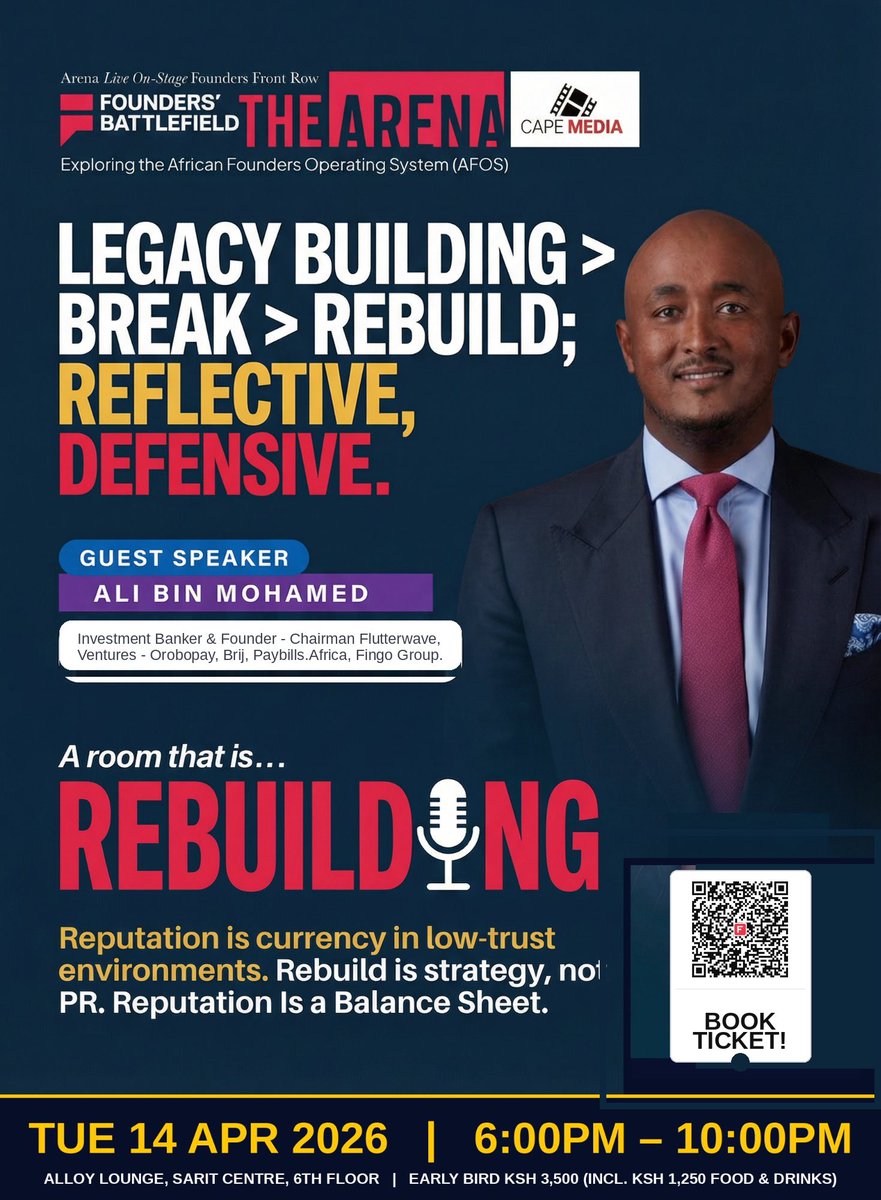
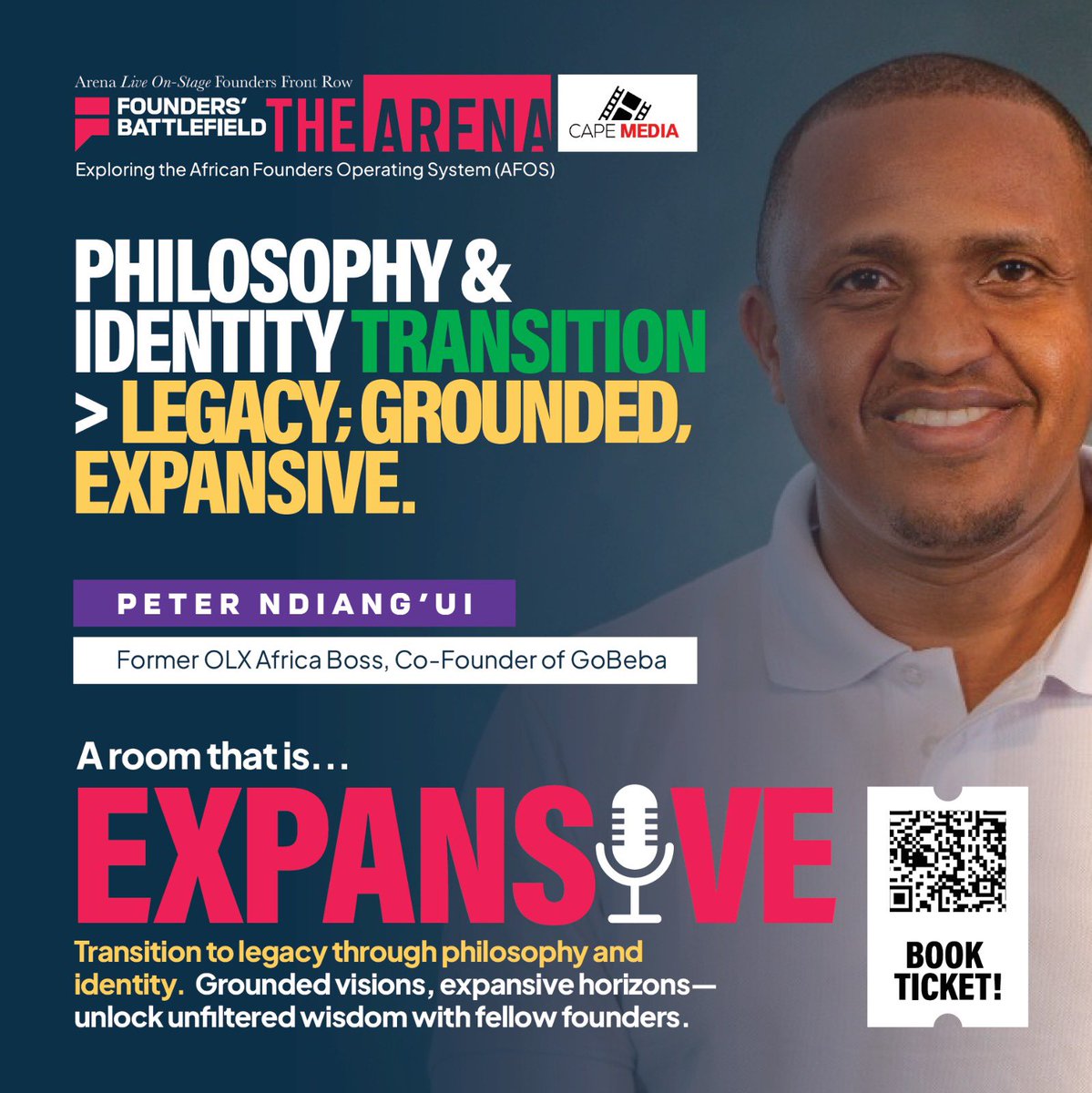
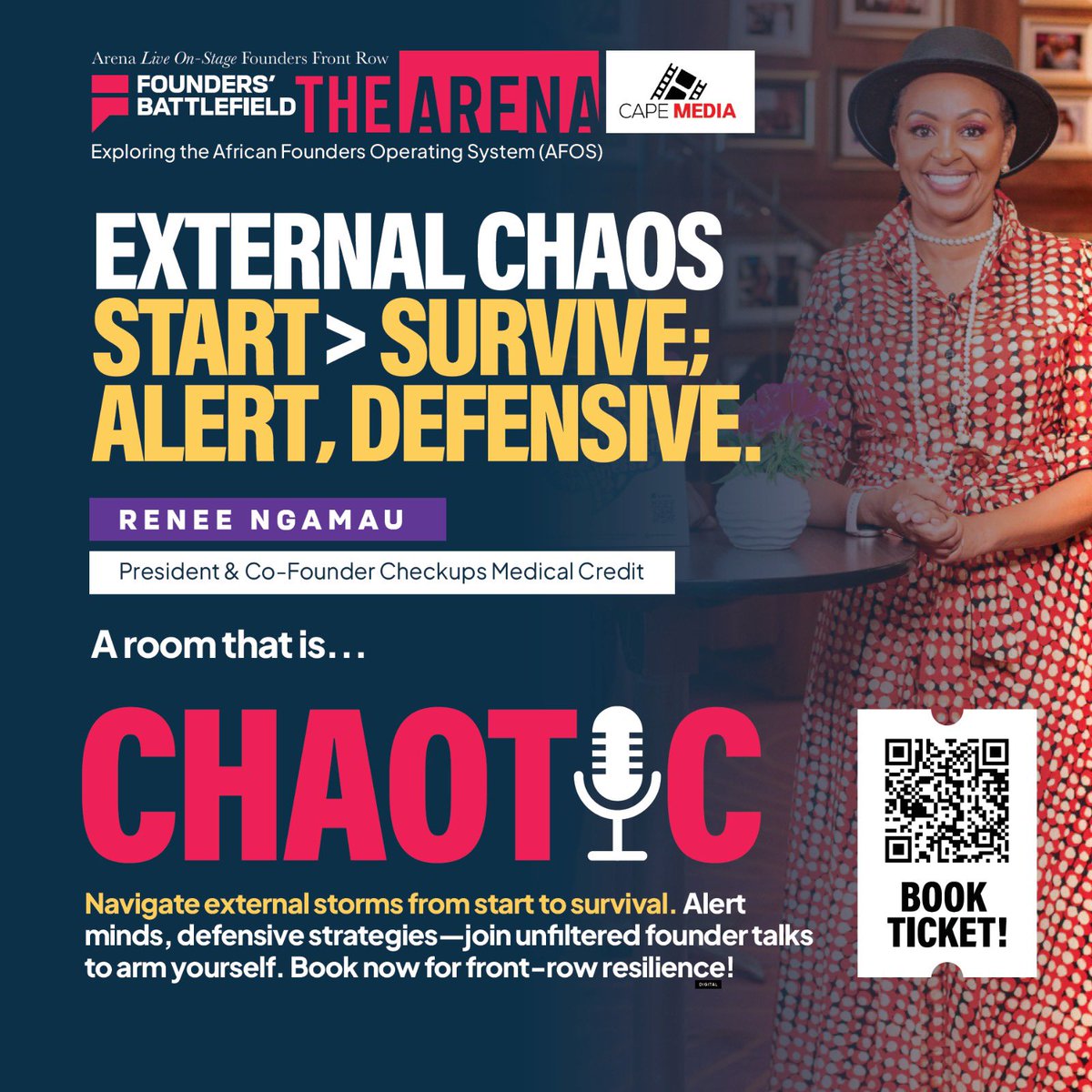
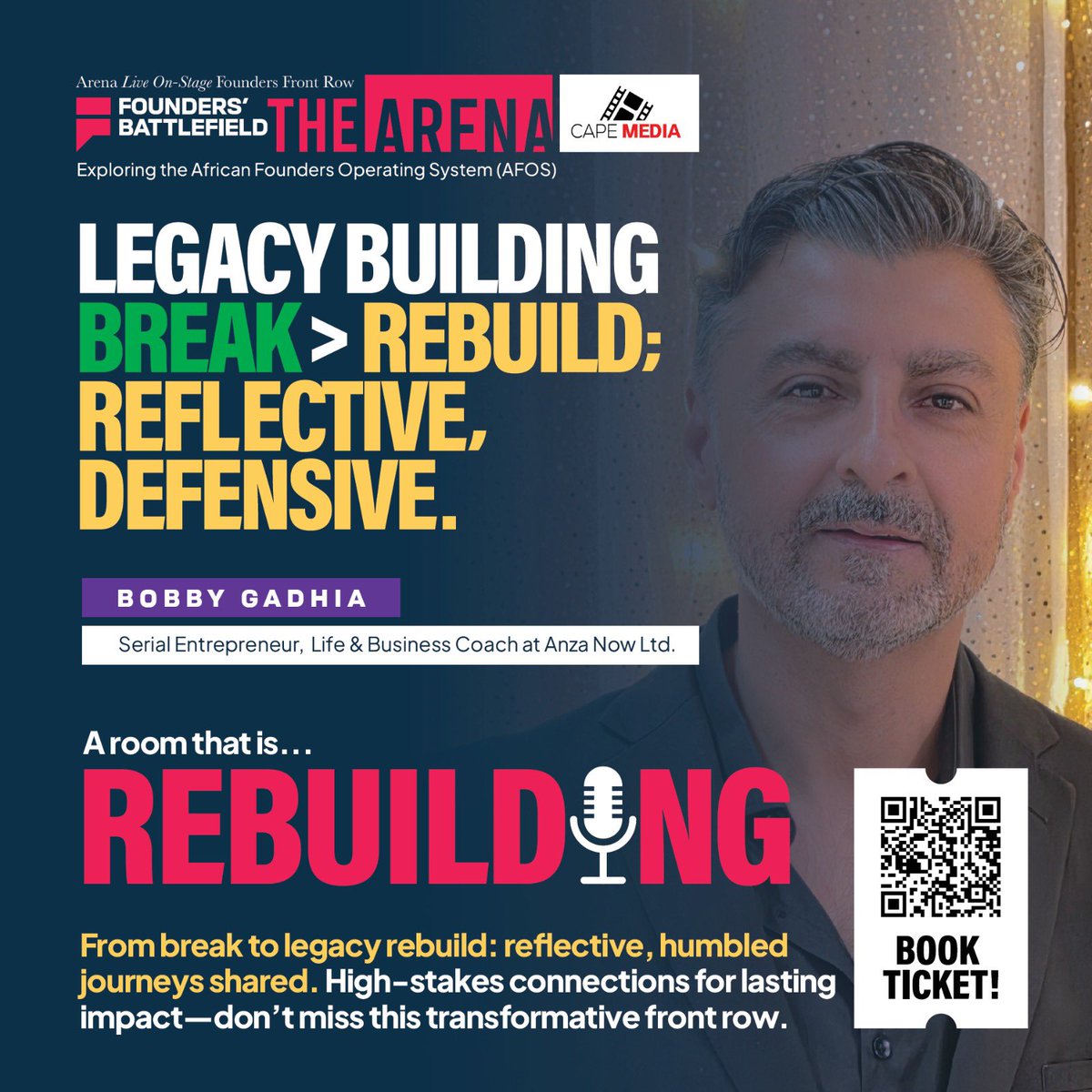
“The Arena Live “ Event set for 24th Feb 2026 ,6pm Alloy Sarit Center .
We cycle through chaos:
Start → Survive → Scale → Break → Rebuild → Transition → Legacy