Stop wasting hours trying to learn AI. 📘📚
I have already done it for you.
With one list. Zero confusion. And no fluff
📹 Videos:
1. LLM Introduction: https://t.co/YkuDFVmW9e
2. LLMs from Scratch: https://t.co/u3kSz5SGuJ
3. Agentic AI Overview (Stanford): https://t.co/W6rzVHGSgC
4. Building and Evaluating Agents: https://t.co/sEl8vVax3F
5. Building Effective Agents: https://t.co/c7fD4aWFYO
6. Building Agents with MCP: https://t.co/GlMdR6htgA
7. Building an Agent from Scratch: https://t.co/kUQ9jPuI0R
8. Philo Agents: https://t.co/8JHvqw0DKn
🗂️ Repos
1. GenAI Agents: https://t.co/cyHPvOAjlK
2. Microsoft's AI Agents for Beginners: https://t.co/zFJAN74JQe
3. Prompt Engineering Guide: https://t.co/liUshX2XsP
4. Hands-On Large Language Models: https://t.co/TXFhbiboZY
5. AI Agents for Beginners: https://t.co/zFJAN74JQe
6. GenAI Agentshttps://lnkd.in/dEt72MEy
7. Made with ML: https://t.co/lkXP6itwK0
8. Hands-On AI Engineering:https://t.co/zB8EEctE4Y
9. Awesome Generative AI Guide: https://t.co/lF7CuIQHRw
10. Designing Machine Learning Systems: https://t.co/XlYUZYOoVi
11. Machine Learning for Beginners from Microsoft: https://t.co/hF5UzZoMJB
12. LLM Course: https://t.co/4tLAwy8fOQ
🗺️ Guides
1. Google's Agent Whitepaper: https://t.co/0OEKVLgF34
2. Google's Agent Companion: https://t.co/r0Dxe4VvDO
3. Building Effective Agents by Anthropic: https://t.co/I0ZyuwiOS3.
4. Claude Code Best Agentic Coding practices: https://t.co/HIBC2TwwAP
5. OpenAI's Practical Guide to Building Agents: https://t.co/1I8n0wnjHQ
📚Books:
1. Understanding Deep Learning: https://t.co/XEzhyAcWbq
2. Building an LLM from Scratch: https://t.co/4sZmBnHPEg
3. The LLM Engineering Handbook: https://t.co/IkAYNFkVNI
4. AI Agents: The Definitive Guide - Nicole Koenigstein: https://t.co/KsFnET47hx
5. Building Applications with AI Agents - Michael Albada: https://t.co/lJhMLtsLql
6. AI Agents with MCP - Kyle Stratis: https://t.co/C2lhD8uTDL
7. AI Engineering: https://t.co/34EyUiIVMv
📜 Papers
1. ReAct: https://t.co/kfQ8tWysne
2. Generative Agents: https://t.co/wbfqXq8KZK.
3. Toolformer: https://t.co/OQ7m49YWls
4. Chain-of-Thought Prompting: https://t.co/XeNgLQdTIL.
🧑🏫 Courses:
1. HuggingFace's Agent Course: https://t.co/tUZyPEGhni
2. MCP with Anthropic: https://t.co/wx1DAIWis0
3. Building Vector Databases with Pinecone: https://t.co/8XsQzDstTB
4. Vector Databases from Embeddings to Apps: https://t.co/9n6DvZGTMN
5. Agent Memory: https://t.co/OxFAaM0fp7
Repost for your network ♻️
This 2 hour Stanford lecture shows exactly how Stanford trains it's engineers to build AI systems. It's more practical than every Claude tutorial & prompting threads you've seen.
Bookmark & give it 2 hours, no matter what. It'll be the most productive thing you do this weekend.
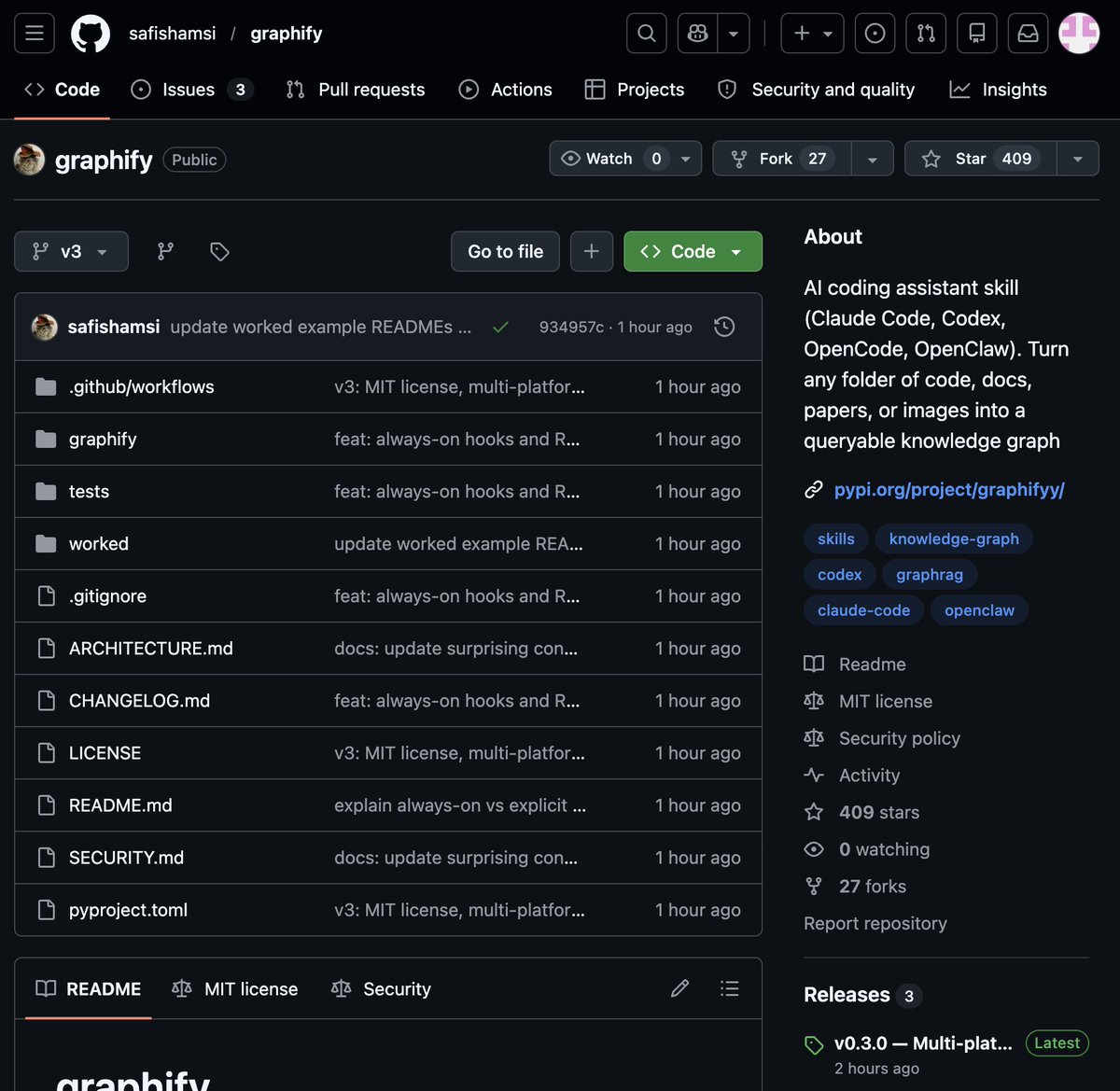
🚨 BREAKING: Someone just built the exact tool Andrej Karpathy said someone should build.
48 hours after Karpathy posted his LLM Knowledge Bases workflow, this showed up on GitHub.
It's called Graphify. One command. Any folder. Full knowledge graph.
Point it at any folder. Run /graphify inside Claude Code. Walk away.
Here is what comes out the other side:
-> A navigable knowledge graph of everything in that folder
-> An Obsidian vault with backlinked articles
-> A wiki that starts at index. md and maps every concept cluster
-> Plain English Q&A over your entire codebase or research folder
You can ask it things like:
"What calls this function?"
"What connects these two concepts?"
"What are the most important nodes in this project?"
No vector database. No setup. No config files.
The token efficiency number is what got me:
71.5x fewer tokens per query compared to reading raw files.
That is not a small improvement. That is a completely different paradigm for how AI agents reason over large codebases.
What it supports:
-> Code in 13 programming languages
-> PDFs
-> Images via Claude Vision
-> Markdown files
Install in one line:
pip install graphify && graphify install
Then type /graphify in Claude Code and point it at anything.
Karpathy asked. Someone delivered in 48 hours.
That is the pace of 2026.
Open Source. Free.
This 2 hour Stanford lecture on AI careers will teach you more about winning in the AI race than every piece of AI content you have scrolled past this year.
Bookmark this & give it 2 hours, no matter what. It'll be the most productive thing you could do this weekend.
🚨 Screen Studio charges $89 for this. Someone open sourced the entire thing for free.
It's called OpenScreen. 8,400+ GitHub stars.
You record your screen. It automatically transforms it into a polished, professional demo video.
Auto-zoom into clicks. Smooth cursor animations. Motion blur. Custom backgrounds with wallpapers, gradients, and shadows. Webcam overlays. Annotations. Timeline editing. Export in any aspect ratio.
The exact workflow that Screen Studio sells for $89 and Loom sells as a subscription. Free. No watermarks. No accounts. No subscriptions.
Here's what you get out of the box:
→ Full screen or window capture with system audio and mic
→ Automatic zoom that follows your cursor and clicks
→ Manual zoom with customizable depth and timing
→ Smooth motion blur on pan and zoom transitions
→ Animated cursor rendering with motion effects
→ Webcam bubble overlay with drag-and-drop positioning
→ Wallpapers, solid colors, gradients, or custom backgrounds
→ Text and arrow annotations layered over recordings
→ Timeline trimming and variable speed segments
→ Crop, resize, and export in any resolution or aspect ratio
→ Save and reopen projects anytime
Here's the wildest part:
A developer forked it and built an even more advanced version called Recordly. Full cursor animation pipeline. Native macOS and Windows recording. Zoom behavior that mirrors Screen Studio frame-for-frame. Audio tracks. Webcam overlays with zoom-reactive scaling.
Both are free. Both are MIT licensed. Both work on Windows, macOS, and Linux.
Download. Record. Export. Done.
100% Open Source. MIT License.
(Link in the comments)
My dear front-end developers (and anyone who’s interested in the future of interfaces):
I have crawled through depths of hell to bring you, for the foreseeable years, one of the more important foundational pieces of UI engineering (if not in implementation then certainly at least in concept):
Fast, accurate and comprehensive userland text measurement algorithm in pure TypeScript, usable for laying out entire web pages without CSS, bypassing DOM measurements and reflow
I’ve quantized the new Qwen 3.5 27B (distilled from Claude 4.6 Opus) into 4-bit MLX. @Alibaba_Qwen
🧠 Deep thinking with <think> tags ⚡️ 16 tok/s on M4 Pro 📉 55GB ➡️ 14GB (Fits on 24GB RAM!)
https://t.co/4XtIQbdGd6
#MLX#AppleSilicon#LocalLLM#Claude46#Qwen35
I'm Boris and I created Claude Code. I wanted to quickly share a few tips for using Claude Code, sourced directly from the Claude Code team. The way the team uses Claude is different than how I use it. Remember: there is no one right way to use Claude Code -- everyones' setup is different. You should experiment to see what works for you!
5 AI projects that will get you hired in 2026:
save & retweet it.❤️
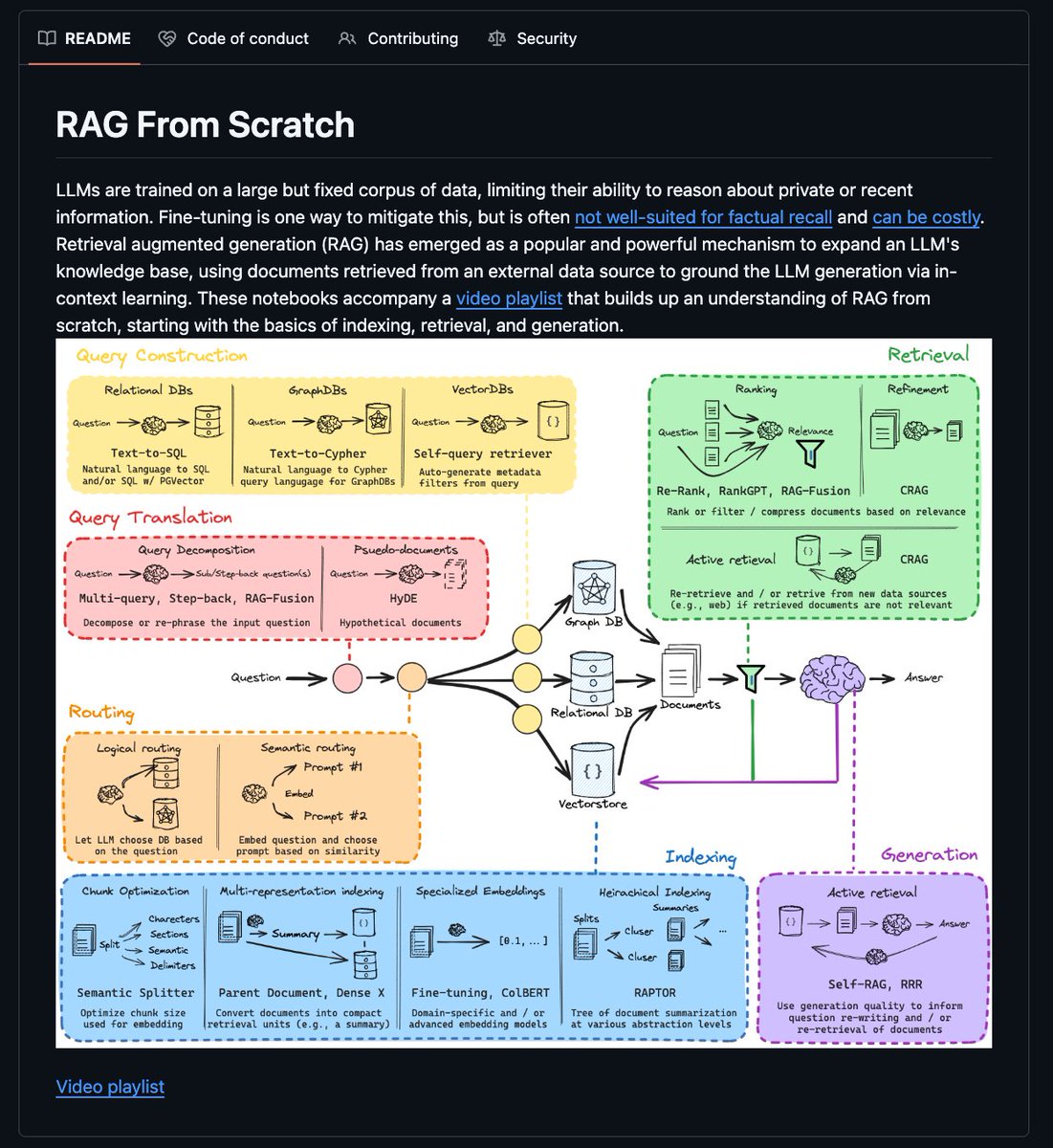
1. RAG from Scratch
GitHub: https://t.co/11KsgR4k35
2. Al Social Media Agent
GitHub: https://t.co/GYHcOclzV8
3. Medical Image Analysis
GitHub: https://t.co/XkWsS6NbBk
4. MCP Tool-Calling Agents
Notebook: https://t.co/MUjZUE5Qll
5. Al Assistant with Memory
GitHub: https://t.co/TPuGq8IOIF
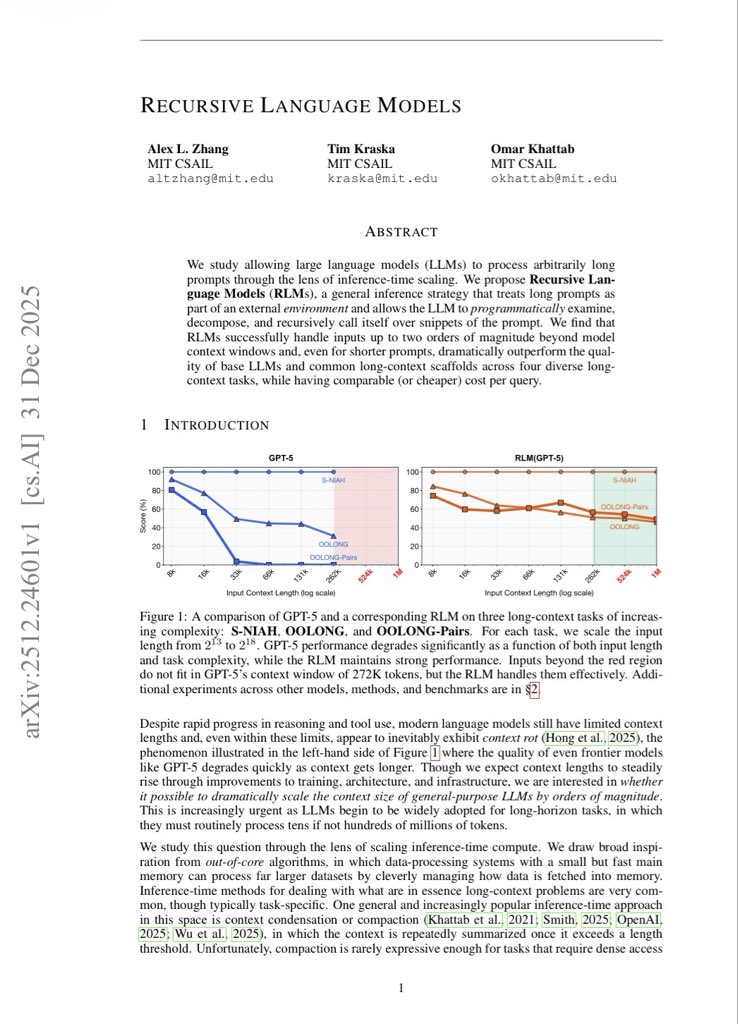
R.I.P. basic prompting.
MIT just dropped a technique that makes ChatGPT reason like a team of experts instead of one overconfident intern.
It’s called “Recursive Meta-Cognition” and it outperforms standard prompts by 110%.
Here’s the prompt (and why this changes everything) 👇