@DollyParton It also has a legacy in science: the famous sheep Dolly, the first mammal cloned from an adult cell, bore that name in homage to the singer. She helped fund the research for the COVID-19 vaccine.
@DollyParton También tiene un legado en la ciencia, la famosa oveja Dolly, el primer mamífero clonado a partir de una célula adulta, llevó ese nombre en homenaje a la cantante. Ayudó a financiar la investigación de la vacuna contra el covid-19.
Dolly Parton no tenía que hacer mucho más por el mundo que dejarnos su música. Pero ella quiso hacer más. Sólo echen un vistazo a los créditos de financiamiento de este informe publicado en los inicios del desarrollo de las vacunas vs covid en 2020
https://t.co/izcm7yx39Q
¿Tres premios Nobel de medicina para los anticuerpos monoclonales?
Hoy tocó repasar la historia de los anticuerpos monoclonales. Aquí te platico cómo se crearon los hibridomas en 1975, la evolución desde los anticuerpos murinos hasta los humanizados y las técnicas modernas, como el phage display.
Te cuento de los premios Nobel relacionados, las empresas que llevaron estos descubrimientos a la clínica (como Genentech), el sistema de nombres (–mab y las nuevas terminaciones rarísimas😅)
Los anticuerpos monoclonales han logrado grandes avances en el tratamiento del cáncer, enfermedades autoinmunes, migraña, colesterol, alergias, osteoporosis, etc.
Y no podemos dejar fuera las limitaciones y los retos, como la inmunogenicidad inicial, los efectos adversos, el alto costo y el acceso limitado.
Los anticuerpos monoclonales son uno de los grandes logros de la inmunología moderna. Son de las terapias que más han cambiado los resultados en los pacientes.
Pásale 😀
https://t.co/JJgbrBpCAH
Las personas que hablan 2 idiomas tienden a tener cerebros 6 años más jóvenes de lo que correspondería a su edad; las que hablan 3 idiomas, cerebros 7 años más jóvenes; y las que hablan 4 idiomas, cerebros 13 años más jóvenes.
El efecto protector del multilingüismo parece ser dosis-dependiente: cuantos más idiomas se hablan, mayores serían los beneficios. Este efecto se ha relacionado con varias vías, como una mayor estimulación cognitiva general, el aumento de la plasticidad cerebral al aprender estructuras lingüísticas diferentes, y factores sociales y culturales asociados al uso de varios idiomas.
Además, una de las vías principales sería que, cuando una persona maneja varias lenguas, todas permanecen activas en el cerebro al mismo tiempo, aunque en ese momento solo esté usando una. El cerebro tiene que mantenerlas “encendidas” y, al mismo tiempo, inhibirlas continuamente para no mezclarlas. Ese control constante genera una carga cognitiva extra que, sostenida a lo largo de los años, se asocia con un refuerzo de la reserva cognitiva.
El uso prolongado de varios idiomas fortalecería las redes cerebrales de control ejecutivo, atención y memoria a través de un desafío cognitivo continuo. Justamente estas mismas redes son las más vulnerables al declive de la edad, al deterioro cognitivo leve y a la demencia, lo que sitúa al multilingüismo como un posible factor de protección de la salud cerebral a lo largo de la vida.
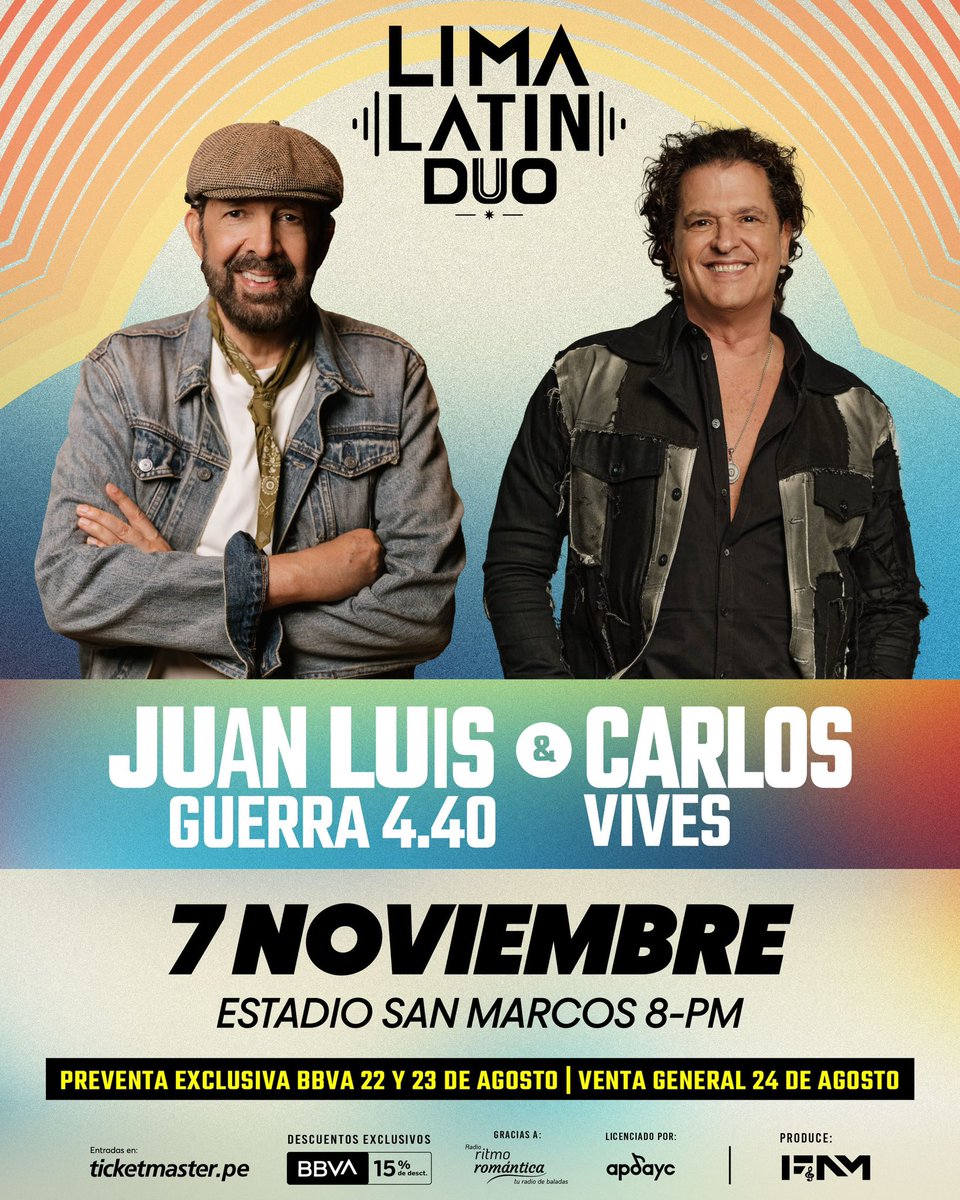
Oficial: Juan Luis Guerra y Carlos Vives llegan con el Lima Latín Dúo
📆 7 de noviembre
📍 Estadio San Marcos
💳 Preventa exclusiva BBVA con 15% de dscto este 22 y 23 de agosto
🎫 Venta general disponible el 24 de agosto
This is great news, though not a surprise to me & only the beginning. BioNTech has advanced mRNA trials for several cancers including lung & pancreas. Once we educate the immune system to recognize cancer cells, while more difficult than pathogens, they can eliminate the threat.
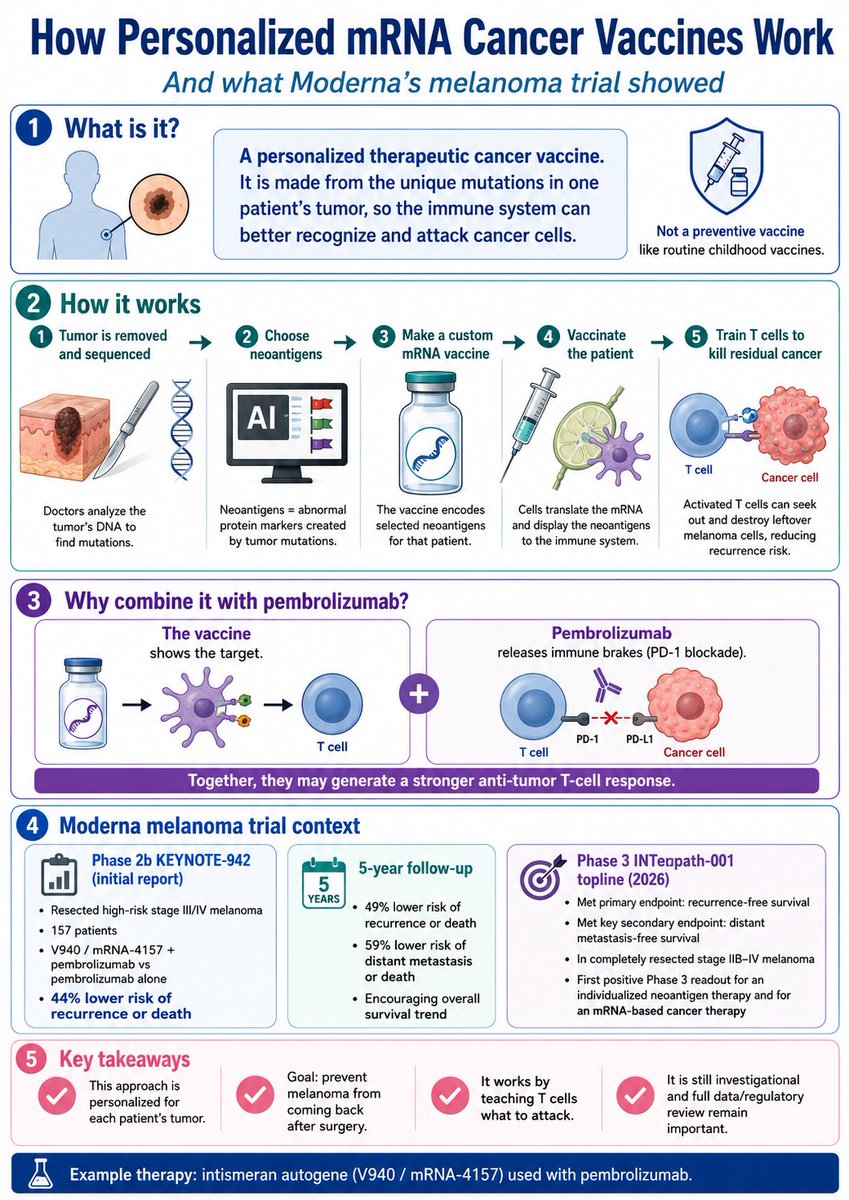
🧬 HOW DOES A PERSONALIZED mRNA CANCER VACCINE ACTUALLY WORK?
As an oncologist, and also as a university professor, I strongly believe that understanding how a new treatment works is often the best way to understand why it may eventually change our clinical practice.
So, what exactly is a personalized mRNA cancer vaccine?
The concept is both sophisticated and surprisingly intuitive.
1️⃣ Start with the patient's own tumor 🧬
Every cancer is genetically different.
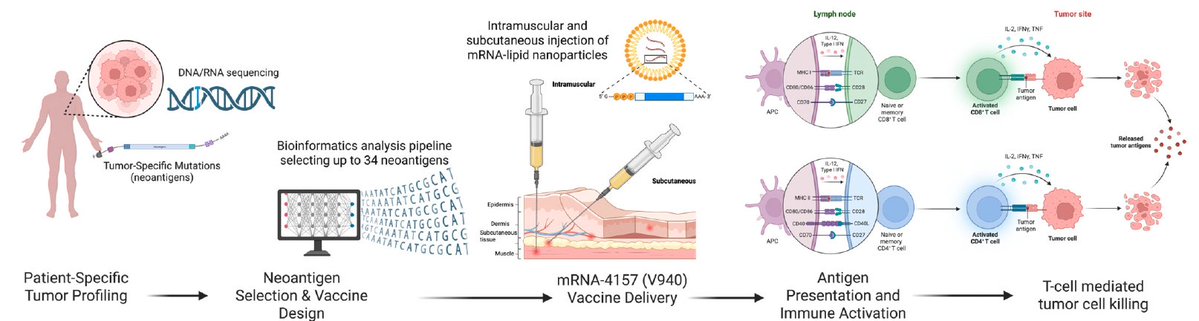
By sequencing tumor DNA and RNA, and comparing this information with normal tissue , we can identify tumor-specific mutations.
Some of these mutations generate abnormal proteins that are not present in healthy cells.
These are called neoantigens.
And importantly, they can become molecular "flags" allowing the immune system to distinguish cancer cells from normal cells.
2️⃣ Select the best targets 🎯
Not every mutation will generate an effective immune response.
Bioinformatic algorithms therefore analyze the patient's tumor and predict which neoantigens are most likely to be recognized by their immune system.
In the case of intismeran autogene, up to 34 patient-specific neoantigens can be selected.
3️⃣ Build an individualized mRNA therapy 💉
Here comes the fascinating part.
A synthetic mRNA sequence encoding those selected neoantigens is manufactured specifically for that individual patient.
Think about what this means.
We are no longer simply choosing the best available drug for a patient.
We are manufacturing a treatment based on the molecular identity of that patient's own cancer.
4️⃣ Teach the immune system what to recognize 🛡️
After administration, the mRNA enters cells and provides the instructions to produce the selected neoantigens.
These neoantigens are processed and presented to the immune system, activating tumor-specific CD4+ and CD8+ T cells.
The objective is to generate an immune response capable of recognizing cells carrying those same neoantigens.
5️⃣ Let T cells search for the cancer 🔎
Those activated T cells can then recognize tumor cells displaying the corresponding antigens and potentially destroy them.
This is why combining personalized vaccination with PD-1 blockade such as pembrolizumab makes so much biological sense:
🎯 The vaccine may teach the immune system WHAT to attack.
🔓 Checkpoint inhibition may help the immune system KEEP attacking it.
And this is where, in my view, the concept becomes much bigger than one drug or one tumor type.
For many years, we have defined precision oncology as:
“the right treatment for the right patient.”
Personalized mRNA vaccines introduce an even more ambitious paradigm:
“a treatment designed and manufactured specifically from the molecular characteristics of one patient's cancer.”
@OncoAlert@_SEOM@moderna_tx@GEPAC_
Figure adapted from: doi:10.3390/cancers17091408.
Moderna y Merck anuncian el éxito de la primera vacuna personalizada contra el melanoma y sus acciones se disparan en Bolsa https://t.co/YPBDj8dTyK via @elpais_america
Se anuncia el éxito de una vacuna de ARNm e inmunoterapia frente al melanoma en un ensayo aleatorizado fase 3. Falta conocer cuánto se ha incrementado la supervivencia y cuánto se han reducido las posibilidades de recaída para determinar el hito logrado. https://t.co/eHzmJ5ym89
🚨 Scientists engineered bacteria to behave like artificial organelles inside tumors, restoring two of cancer’s most important tumor-suppressor pathways.
Published in Nature Communications, researchers modified attenuated Salmonella to enter tumors and continuously produce PTEN. A quorum-sensing circuit makes the bacteria periodically self-lyse, releasing PTEN while controlling their population. Nanoparticles attached to the bacteria simultaneously deliver an MDM2 inhibitor, boosting p53 activity.
In mice, the platform achieved 94.9% tumor inhibition in melanoma. In a separate breast-cancer model, combining it with anti-PD-1 produced 100% survival beyond 80 days.
The bigger shift: engineered microbes could become programmable intracellular “organelles” that manufacture therapeutics directly inside tumors.
Caveat: these results are entirely preclinical and were demonstrated in mouse tumor models, not humans.