This pathway depends on BRCA1 and BRCA2 , supporting a model for RAD51-mediated daughter‑strand gap protection and/or repair occurring far behind replication forks.
Our paper is out! https://t.co/1bivaOJFnd
We identified a role for BRCA2 in nascent strand maturation during DNA replication in the presence of PARP inhibitor.
In this work, we show how wild‑type human cells overcome the PARP‑inhibitor–induced impediment to nascent strand maturation through a process that acts on large nascent DNA fragments and repairs thousands of olaparib‑induced single‑strand breaks/gaps per genome.
Excited to share our latest research “DNA2 enables growth by restricting recombination-restarted replication” in @Nature defining DNA2’s essential function and elucidating links to primordial dwarfism and cancer. Thanks to the team and all collaborators! https://t.co/ngh0fabG1T
Wrapping up an insightful conference on DNA Replication Gaps, Cancer, and Disease in Daejeon, South Korea! 🎉 Congrats to our Future of Science Fund winners, Larissa Milano and Isabelle Seppa! Your achievements inspire us. 🌟 #KSDNARep25@CantorLab@CicciaAlberto
📢 For all DNA fiber enthusiasts! 🟥🟩 We are thrilled to announce the release of our long-awaited AI-based workflow for the automated and quantitative analysis of DNA fibers. It's an exciting step forward—check it out on bioRxiv! https://t.co/N643U0oS1M
Thrilled to see our work out in @naturemethods today! We applied prime editing to multiplexed dropout screens and benchmarked the tool’s ability to induce phenotypes when installing premature stop codons in essential genes.
🚨 We are looking for a new cryoEM 🔬 facility manager @SussexUni This is fantastic opportunity to work with leading researchers (like us @GDSC_Sussex) who want to observe the molecules of life and better understand human disease.
https://t.co/WG1pLoWaEO
New Paper from the lab is now published on Mol Cell! https://t.co/rLWkPKr84w
The paper showed that inactive PARP2 dose-dependently blocks DNA replications of erythroblasts and causes lethal anemia. Congratulations to the first author, Xiaohui Lin! He is on the job market.
Beyond excited to share that my first-author paper on Saturation Genome Editing of RAD51C is now published in @CellCellPress! Immensely proud of this enormous team effort, led by Andrew Waters and @David_J_Adams 1/8
https://t.co/m62qZjLKl9
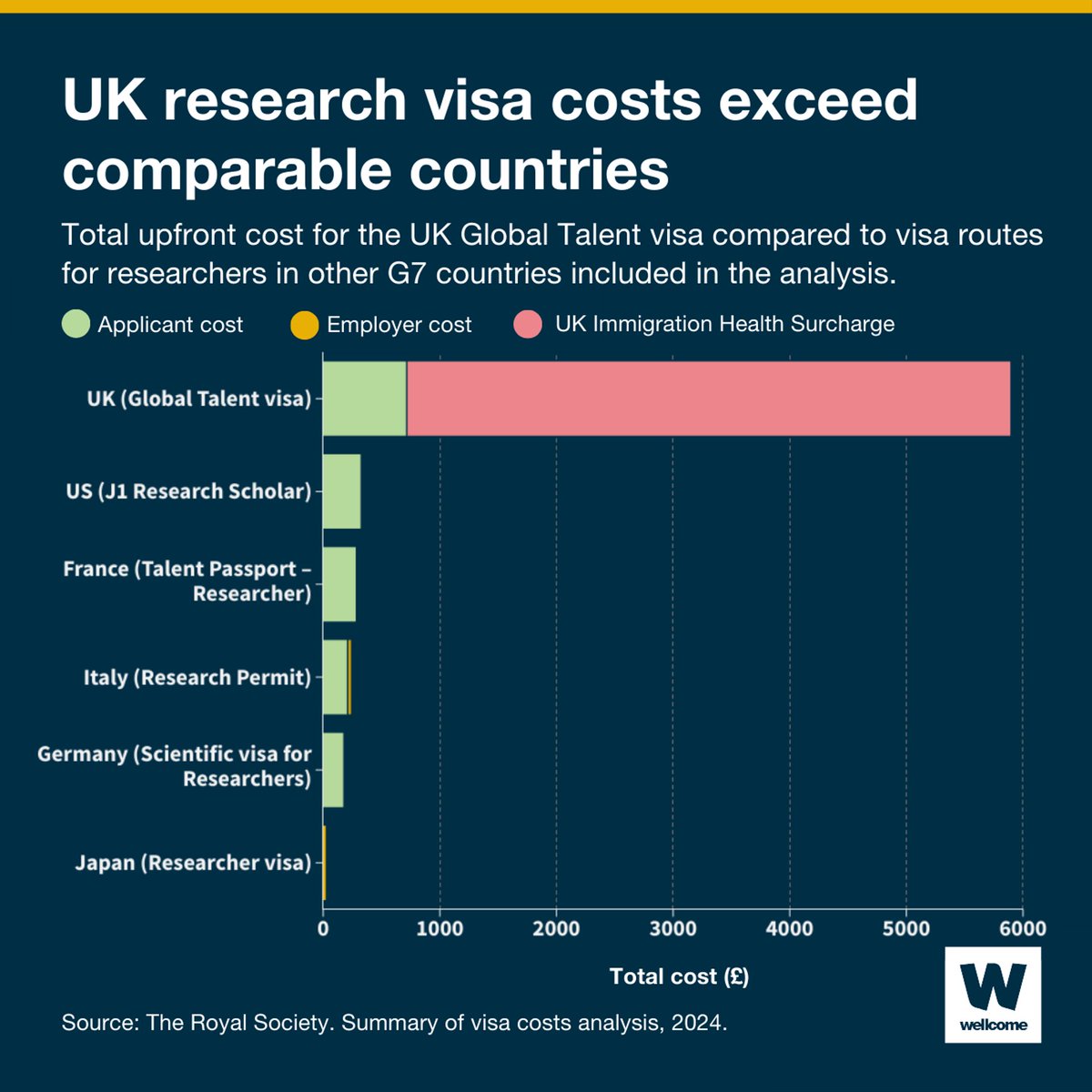
The cost of visas for scientists at our research institutes is set to rise by 44% in a year. This will discourage scientists from coming to work in the UK and take vital funds away from our life-saving research. We’re calling on the new government to make its #First100Days a #TurningPointForCancer, including by reviewing visa fees for scientists.
Find out more 👉 https://t.co/pojIZltJWL
It’s finally out! 🥳 Today @cellcellpress we report non-mineral fossils of ancient chromosomes in skin from a woolly mammoth that died in Siberia, 52,000 years ago.
🦣💨
Don’t miss our thread below! 🧵👇🏽
New analysis from the @royalsociety shows just how high UK visa costs for researchers are compared to upfront costs for similar visa routes in 13 other countries.
Here, we take a look at how the UK compares to countries in the G7 included in the analysis 🔍⤵️ 1/5
Dear all, here is a new paper describing some of Sophie’s lovely PhD work on KU80-binding motifs (KBMs) and replication stress. It’s very interesting (he said, totally unbiased)!
https://t.co/HIw8Up6870
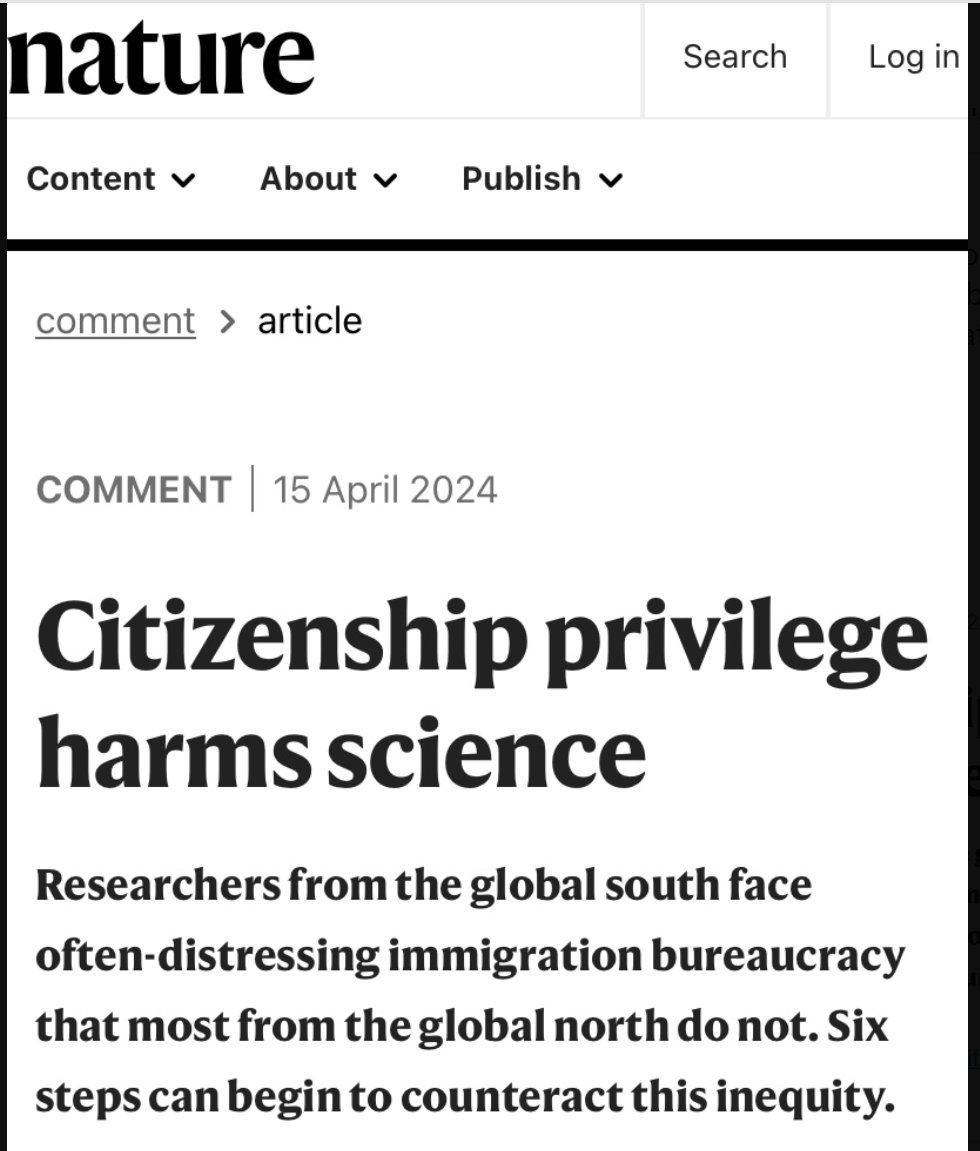
Many people have no idea how these things work.
For example, right now, as a Brazilian, I can't accept invitations to speak at conferences in Europe because my visa to work in the U.S. has expired.
I am not illegal; I have a work contract with the University of California until 2027. Still, I must travel outside the U.S. and get a visa stamp on my passport to allow me to move freely to talk about science.
I have to do this every single year I stay in the U.S. The costs of the visa, traveling, time lost, etc, are all on me. Not every international scientist can handle this.
A true curiosity-driven journey, fulfilling one of my childhood dreams! The tail loss marks a pivotal evolutionary step towards humans and apes. But how did it happen? https://t.co/jTcOAH0Fcs @ItaiYanai@JefBoeke