ok something very fishy going on with $PRL
price is down >30% over the past week
hashrate is up >20%
imo this points to a likelihood of lower cost miners flooding the system.
additionally, block time has been consistently below target - another sign that optimised miners could be adding significant throughput.
it seems to me like this is happening in public and through mining pools too, for example Goldenpool’s H100 benchmark is >600Th/s, whereas the average hashrate on Alphapool over all pools and workers is around 120Th/s.
someone seems to be gaming the system to corner a bunch of the supply early into the inflation cycle. the token not being too liquid is probably preventing a lot of adversarial price action - but price is still down >60% from ATH
Les sujets politiques ne sont pas ceux que je préfère, vous le savez si vous me suivez depuis un moment. Mais parfois ne rien dire revient à accepter l'inacceptable. En 2023, c'était une loi sur les influenceurs et medias qui revenait à "interdire toute communication sur les cryptomonnaies en France". On s'était mobilisés, on avait fait corriger le tir en commission mixte paritaire. Aujourd'hui c'est un autre texte, un autre détail perdu dans une loi massive et le même réflexe qui me pousse à écrire cet article. Mais cette fois-ci, ça peut être encore plus grave:
Le 7 avril 2026 l'@AssembleeNat a voté un projet de loi de lutte contre la fraude sociale et fiscale. Ce texte, pris dans sa globalité, a du sens. Mais une de ses dispositions pose un vrai problème.
L'article 1649 bis du Code général des impôts, alinéa 3, crée une nouvelle obligation : si vous détenez plus de 5 000 € en cryptomonnaies sur un portefeuille que vous gérez vous-même (ce qu'on appelle un portefeuille non-custodial, ou en self-custody), vous devez le déclarer au fisc. Dans la blockchain, partager sa clé publique c’est aussi révéler ce que l’on possède, l’évolution de son solde, sa composition, son historique et le détail, jour après jour, de ses dépenses on-chain.
On ne parle pas ici de vos comptes Coinbase, Binance ou toute autre plateforme d'échange. Ceux-là sont déjà déclarés et communiquent directement avec l'administration fiscale. On parle de vos clés personnelles. Votre MetaMask, votre Phantom, votre Ledger. Des actifs que vous conservez chez vous, sans intermédiaire, dont personne n'a connaissance.
Concrètement : en déclarant ces adresses, vous donnez au fisc la capacité de consulter l'intégralité de vos transactions, de connaître la valeur de ce que vous détenez et de suivre chacun de vos mouvements sur la blockchain. Tout ça, même si vous n'avez jamais revendu quoi que ce soit. Même si vous n'avez fait aucune plus-value. Même si vous ne devez rien au centre des finances publiques.
Pour rappel, en France les cryptomonnaies ne sont imposées que quand vous les convertissez en euros ou en monnaie fiat. Pas avant. Ce qu'on vous demande ici, c'est de fournir des informations sur un actif qui ne génère aucun impôt tant que vous le gardez. C'est de la collecte de données sur de la détention. Rien d'autre.
1/ Ce n'est cohérent avec aucun autre actif.
On ne demande à personne de peser les bijoux de la famille pour informer les impôts de la quantité d'or détenue à la maison. On ne le fait pas pour les montres. Vous n'avez pas à mettre une caméra dans votre coffre privée, chez vous, pour que les finances publiques puissent évaluer sa valeur quand bon lui semble. On ne le fait pour rien d'autre... Pour aucune classe d'actifs au monde, on ne vous demande de rendre des comptes à l'administration fiscale quand il n'y a rien à taxer.
Les cryptomonnaies deviendraient le tout premier actif soumis à une obligation de déclaration alors qu'il n'y a aucun impôt à prélever. Du jamais vu.
Ça poserait problème pour n'importe quoi et ça en pose encore plus pour un actif qui fait l'objet d'enlèvements et d'extorsions chaque semaine dans ce pays.
2/ C'est techniquement irréalisable et facilement contournable.
La sanction prévue ? 750 € par portefeuille non déclaré. Le même montant, que vous ayez 600 € ou un quart de million dessus. Si les personnes qui choisiront de répartir leurs fonds sur dix adresses différentes pour passer sous le seuil ? Personne n'y a pensé ? Générer une nouvelle adresse sur une blockchain, ça prend quelques secondes.
Les services publics n'ont pas les outils pour traiter ce type de données. C'est un fait. Aux Pays-Bas, un dispositif similaire a été mis en place : les déclarations ont plus que triplé. Le résultat ? Les autorités néerlandaises ont elles-mêmes reconnu que les données collectées étaient inexploitables.
Avec quel outil on les traite ? Quelle méthode ? Dans quel but concret ? Aucune de ces questions n'est posée dans le texte. Collecter des données sans savoir qu'en faire ce n'est pas lutter contre la fraude: c’est accumuler du pouvoir de contrôle et normaliser la surveillance.
3/ La France est le pays le plus dangereux au monde pour les détenteurs de cryptomonnaie.
Depuis le 1er janvier 2026, on compte en France une agression ciblant un détenteur de crypto tous les six jours. Enlèvements, séquestrations, torture physique, extorsion sous la contrainte. Plus de 40 cas identifiés depuis le d��but de l'année. Près de la moitié ne sont même pas passés dans la presse.
Rapporté au nombre d'habitants, c'est un score comparable à celui des États-Unis, un pays sept fois plus peuplé. Une agression sur trois dans le monde visant un détenteur de crypto a lieu en France.
Et c'est maintenant qu'on propose de rassembler dans un fichier les noms, prénoms, adresses et montants détenus par chacun de ces détenteurs ? C'est créer un annuaire pour les criminels.
Mention spéciale pour ANTS, dernier en date.
4/ Les données des Français ne sont pas en sécurité. Et ça, tout le monde le sait.
La France vit l'une de ses pires périodes en matière de cybersécurité. France Travail s'est fait voler les données de plus de 43 millions de Français, avant de subir une seconde brèche quelques mois plus tard sur 400 000 comptes supplémentaires. Viamedis et Almerys ont laissé fuiter 33 millions de dossiers médicaux. Free, Boulanger, Cultura : les incidents ne s'arrêtent plus. Et côté crypto, Ledger a subi une fuite de données clients il y a quelques années. Ces données circulent encore aujourd'hui et sont activement utilisées par des criminels pour cibler les détenteurs.
Et il y a pire. En juin 2025, une agente des services des impôts a été interpellée. Elle utilisait les logiciels internes de l'administration, le logiciel Mira notamment pour repérer des contribuables, récupérer des informations sur leur patrimoine et leur localisation et revendre le tout à des criminels et des détenus. Parmi les cibles : un gardien de prison, des personnalités publiques, des détenteurs de crypto à fort patrimoine. L'enquête est toujours en cours pour déterminer si d'autres agents étaient impliqués.
C'est dans cette période, après tous ces incidents, que l'Assemblée nationale vote un texte qui centralise encore plus de données sensibles sur les détenteurs de cryptomonnaies. Qui peut regarder cette situation en face et trouver ça raisonnable ?
5/ C'est en contradiction avec ce que le gouvernement fait depuis un an.
Le décret du 22 août 2025 a permis aux entrepreneurs et aux personnes exposées dans le secteur crypto de demander la suppression de leur adresse sur les publications officielles d'entreprise. Depuis, plus de 40 000 demandes ont été dépos��es. Ce décret existe parce que le gouvernement a reconnu un fait simple : exposer les données personnelles de ces personnes met leur vie en danger.
C'est par une publication de ce type que la personne qui s'en est prise à moi il y a quelques années avait trouvé l'adresse de mon domicile, avant de se présenter pour réclamer de la cryptomonnaie. Je salue d'ailleurs le travail de l'@adan_asso qui s'est battue pour que ce décret voie le jour.
Mais comment justifier qu'on permette d'un côté aux entrepreneurs de masquer leur adresse parce que c'est dangereux, et que de l'autre on oblige les détenteurs à centraliser des informations encore plus sensibles dans un fichier de l'administration ? La situation s'est aggravée depuis que ces mesures de protection ont été prises. C'est contradictoire.
Un peu de nuance...
Il faut comprendre comment on en est arrivé là. Et pourquoi je pense qu'il y a un malentendu.
Ce texte est massif. Travail dissimulé, TVA, fraude fiscale, fraude sociale : des dizaines d'articles. La crypto n'y représente qu'une ligne. Un alinéa. Le texte a été porté à l'origine par un groupe communiste, voté par le Sénat en décembre 2025, puis par l'Assemblée nationale le 7 avril avec plus de 363 voix pour.
Je refuse de croire que nos sénateurs et nos députés sont tous en accord avec cette disposition. Beaucoup ont voté pour un texte global, sans avoir mesuré les implications de cette ligne en particulier. C'est souvent comme ça que le diable se cache dans les détails. On ne vote pas article par article, alinéa par alinéa. On vote un ensemble. Et dans cet ensemble, cette mesure est passée sans bruit.
La bonne nouvelle : le texte n'est pas encore définitif. Il doit encore passer en commission mixte paritaire, prévue en mai. C'est le même stade où on s'était mobilisés avec un groupe d'entrepreneurs pour la loi sur les influenceurs en 2023. Un texte globalement pertinent qui, dans son volet crypto, revenait à interdire toute communication sur notre secteur. On avait fait corriger ça. Je crois que c'est de la même nature aujourd'hui.
L'ADAN est déjà sur le sujet et a bien saisi la gravité de la situation. Mais il faut que ce signal remonte le plus largement possible avant mai.
On peut lutter contre la fraude sans créer un fichier centralisé contenant le nom, le prénom, l'adresse et la liste des actifs de chaque détenteur de cryptomonnaies en France. Surtout quand cet actif est celui qui justifie le plus d'enlèvements et d'extorsions cette année.
Si cette loi passe en l'état, la réflexion de beaucoup de Français ne portera pas sur un impôt à payer. Ce sera pour ou contre un risque. Et le résultat sera simple : des départs.
Mon but est de faire remonter ce sujet aux personnes capables de l'entendre de le comprendre et de revenir en mai avec les bonnes corrections. J'invite les parties prenantes à consulter la position que l'ADAN publiera et à porter cette réflexion auprès de leurs élus et des membres de la commission mixte paritaire.
Si vous êtes concerné, partagez cette publication. Pas dans la colère, pas dans l'invective. Avec du bon sens, des arguments et de la bienveillance.
De nombreuses évolutions devraient avoir lieu d'ici la commission mixte paritaire de mai. Naturellement, je vous en tiendrai informés.
After a certain age, your parents slowly become your children. They ask simple questions, repeat stories, and depend on your patience the way you once depended on theirs. Very few understand this role reversal.What looks like innocence or inconvenience is really time coming full circle. Don't correct them harshly. Don't rush them. Care for them the way they once protected you. This is not a burden. It is repayment.
After seeing that Discord plans to make KYC mandatory, we want to be clear on where we stand. KYC for messaging is a complete non starter for us.
Quorum Messenger does not ask for your personal details and it never will. No identity checks, no sign ups tied to who you are, and nothing happening behind the scenes.
Quorum is decentralized by design, and both DMs and group chats are fully end to end encrypted. That means only the people in the conversation can read the messages, not us, not a third party, not anyone else.
Your conversations are yours. You own them, you control them, and that is how it is designed to stay. Privacy is not an add on or a talking point for Quilibrium, it is the whole point.
So if you are looking for a safe haven messenger that will not turn its back on you, come try Quorum Messenger 👇
https://t.co/6wBiVQ1QzF
The date is set!
The mainnet cutover to version 2.1 will happen at frame 244,200, approximately April 14, 12:00am UTC.
Let's jump in to the details of what this unlocks, and answer some questions.
FAQs
How was the cutoff date determined?
We have one final integration test run to complete on testnet, all components have either been individually tested and verified or verified in integration already. We set the cutoff time far out enough so that after this integration run is complete, we can release the build, and node operators will have time to upgrade to prepare.
What do I as a node operator need to do to upgrade?
The existing release flow will still be maintained, but there are a few important impacts that will require configuration changes for some operators, especially those running clusters. The upgrade guide accompanying the publication of the 2.1 release will provide instructions to support these changes.
If the cutoff is April 14, when will 2.1 be published?
Roughly a week before, some time between April 7-9.
Why is there a week between release and cutoff?
Every time a release has occurred that introduced operational changes, we have had to spend a significant amount of time supporting node operators with configuration steps. Given the substantial nature of this change, and how it relates to worker management, port configuration, and resource allocation differences between workers and master node instances operators will deploy, providing this buffer is incredibly important to ensure people have time to work out any changes they may need to make with their deployments.
What exactly happens at frame 244,200?
When the cutoff frame is reached, the existing path for 2.0 network behaviors halts, the beacon will undergo a massive conversion step of mainnet data (to do this process quickly, this step requires terabytes of RAM and many thousands of cores, which is why the beacon will do this) into the encrypted hypergraph store. Once this is completed, the 2.1 structural proofs (global proof and individual shard proofs) will be announced across the network, the network will switch to 2.1 behaviors, and the beacon will shut down.
UPDATE 🚨
The whole story on Hyperliquid & $JELLY 👇
background context
> hyperliquid (HL): decentralized perp exchange
> HLP: internal liquidity vault of hyperliquid
> jelly token: small market cap (~$10-20M initially)
what happened
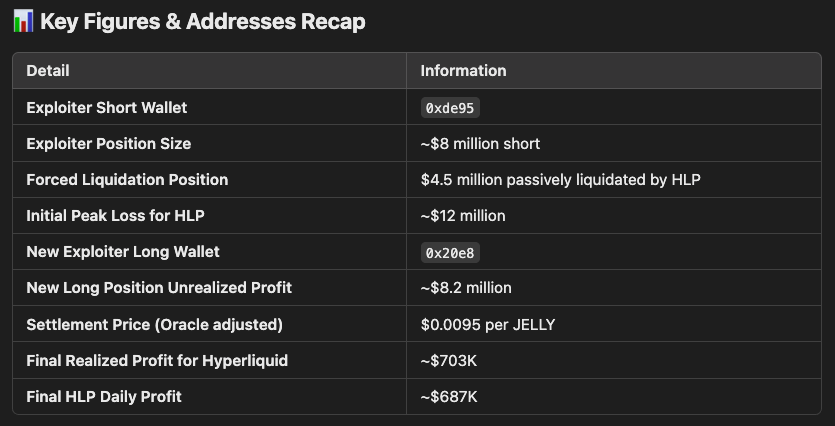
> trader wallet (0xde95) opened huge ~$8M short on jelly
> trader purposely removed margin, forcing hlp to inherit and auto-liquidate the massive position
> simultaneously pumped jelly price on-chain, squeezing shorts hard
> jelly pumped from ~$10M to over $50M market cap in under an hour
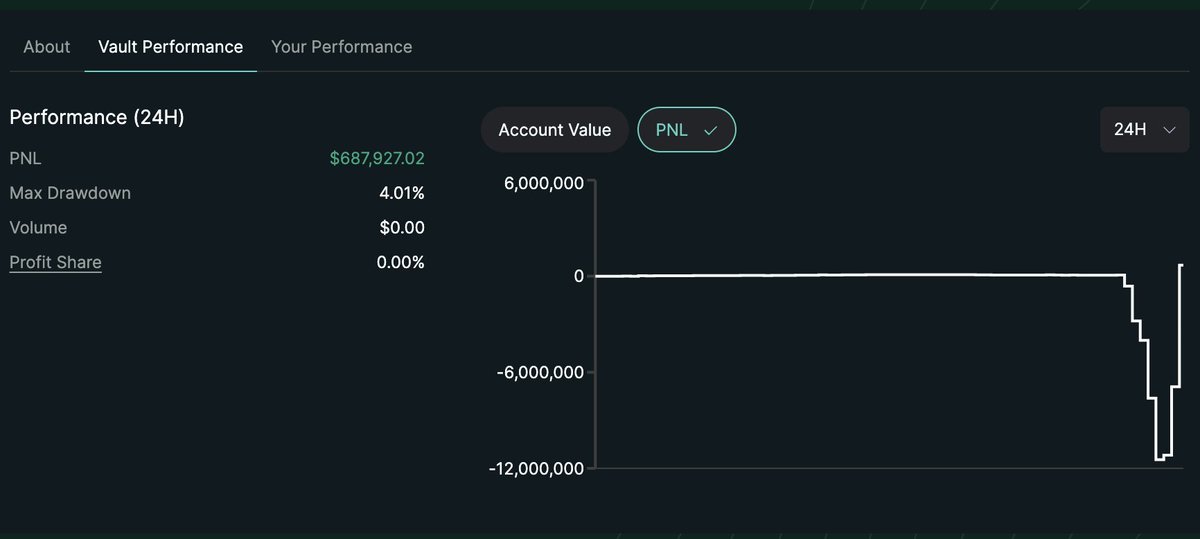
> hlp initially suffered huge unrealized loss (~$12M)
second exploitation
> amid chaos, new wallet (0x20e8) opened big long, quickly profiting ~$8.2M on hyperliquid
> exchanges like binance and okx noticed volatility and quickly listed jelly perps, amplifying activity
hyperliquid's response
> validators rapidly decided to delist jelly perps
> adjusted oracle price significantly down to $0.0095 per jelly, closing all open positions
> publicly communicated quick actions transparently
> normal users (excluding flagged wallets) automatically compensated, no action needed
financial outcomes
> hl turned potential multimillion-dollar loss into ~$703K realized profit after adjustment
> hlp depositors fully protected and even profited (~$687K daily profit), despite initial scare
market perception
> positive: praised for swift, decisive actions protecting depositors
> criticism: controversy around forced oracle adjustments and decentralized governance transparency
why this matters
highlights big vulnerabilities in decentralized perp exchanges (oracle pricing, liquidity vaults, forced liquidation)
emphasizes need for fast, transparent governance and intervention mechanisms
shows controversial tradeoffs protocols might need to make to protect depositors during exploits
important lessons here for anyone participating or building in defi and perpetual markets
QStorage
While 100% S3 compatibility makes things incredibly easy to get started with existing tooling, our interface on QConsole lets you drag and drop your files to buckets created on demand.
Our free tier is comparable to existing offerings, with up to 5GB of storage.
🔑 The Future of Key Management: Why Quilibrium KMS is a Game Changer
If you've been around the crypto space long enough, you know one thing for sure: security is everything. And yet, time and time again, we see major exchanges, projects, and individuals losing millions (or even billions) due to weak key management.
The latest Bybit hack, where over $1.4 billion in crypto was stolen by North Korea’s Lazarus Group, is just one example of how outdated security practices are failing us.
🔥 Why Current Key Management is a Disaster Waiting to Happen
Most companies today rely on hot wallets, multisigs, and custodial solutions that, while appearing secure, have serious flaws:
1️⃣ Hot Wallets Are Constantly at Risk
- If a private key touches an internet-connected device, it’s no longer safe.
- Hackers use phishing, malware, and social engineering to compromise them.
2️⃣ Multisig Wallets Like Gnosis Safe Are NOT Cold Storage
- Exchanges often use Gnosis Safe as "cold storage", but it’s still a smart contract wallet with on-chain interactions.
- Attackers can trick signers into approving malicious transactions, which is exactly what happened in the Bybit hack.
3️⃣ Shamir’s Secret Sharing and Traditional Cold Storage Are Cumbersome
- High-security setups require physically splitting keys, storing them in vaults, and manually reconstructing them.
- This is slow, expensive, and still vulnerable to insider threats.
💡 Enter Quilibrium KMS: The Most Secure Key Management System Ever Designed
Quilibrium has completely redefined how private keys are stored, used, and protected.
🔐 How It Works
1️⃣ Keys Are Split at the Source
- Instead of storing a full private key anywhere, it is split into multiple encrypted pieces using advanced cryptographic techniques.
- No single entity (not even Quilibrium Inc.) ever holds the full key.
2️⃣ Decentralized Computation (MPC) Prevents Exposure
- When a key is needed (for signing transactions), the pieces are never recombined in a single place.
- Instead, Quilibrium uses secure multiparty computation (MPC), where each fragment contributes to the signature without revealing itself.
3️⃣ Keys Are Purpose-Bound
- Unlike normal private keys that can sign anything, Quilibrium’s system binds each key shard to a specific function.
- Even if an attacker somehow got access, they couldn’t misuse the key for unauthorized actions.
4️⃣ No Single Point of Failure
- Traditional custodians or TEE-based solutions have been hacked many times.
- Quilibrium KMS ensures that no single breach can ever compromise the system.
🚀 Why This is a Revolutionary Leap in Security
🔸 Extremely difficult to Steal a Full Key – Since no complete key ever exists in one place, it cannot be leaked, hacked, or stolen.
🔸 Minimized Human Error – Quilibrium KMS drastically reduces the risk of employees exposing keys by decentralizing key handling and removing the need for manual key recombination.
🔸 Ultra-Secure Cold Storage Without the Hassle – Businesses can finally have the security of true cold storage with the flexibility of a hot wallet.
🔸 Regulatory Compliance and Future-Proofing – As crypto regulations tighten, Quilibrium KMS offers the safest way to manage assets, and it's designed to align with modern security and compliance needs.
💭 Final Thoughts
For years, we’ve been stuck with mediocre security solutions that require a trade-off between convenience and protection. Quilibrium KMS changes the game completely.
With its zero-trust, MPC-based key management, this is hands-down the most advanced security system in the crypto world today.
If you're serious about protecting your assets, this is the future.
To watch the livestream part dedicated to this topic 👉 https://t.co/JT7r1NICcv
$QUIL $wQUIL
✅ 2.1 major release around the corner - enables third party apps on Q mainnet
✅ Quorum Messenger continues to gain traction
✅ Q Inc fundraising round coming to a close
✅ Two-way QUIL/wQUIL bridge coming with 2.1 - enables native QUIL on exchanges
✅ AI on CPUs with comparable speed? Q's MPC makes this possible
The CA is fucking 0x8143182a775C54578c8B7b3Ef77982498866945D
$wQUIL $QUIL
$WQUIL update:
MA200 H4 and daily Kijun reclaimed for the first time since 6 weeks.
We're not out of the woods yet as we need a daily confirmation and a clear break out (at least 2 daily candles) above 0.05 to hope to reintegrate the next channel (until 0.076).
So far, bottom confirmed though (calling for 1 cts? not gonna happen, at least for some time).
Lateralization phase was again a great buy zone (0.03/0.05).
Now, add on top of that Cassie announcing she might have found a way to efficiently train IA with CPUs instead of GPUs, 2.1 around the corner, emission reduced...
Patience will reward the good ppl involved, actually sustaining tech and not vaporware.
Cheers 🤙
#Quilibirum $QUIL
sorry to say that but
most likely y‘all will be disappointed again, this is not something that will eventually catapult it to its northstar both tech + valuations.
all recent catalysts have been nothing but disappointing for PA.
If i was Cassie, i‘d focus on phrasing the urgency of this technology in SV to investors who have the same belief set. Not sure how the first equity raise will play out (i have no stake in it), but if Quilibrium succeeds — it succeeds. There‘s no second QUIL; there‘s no Nillion narrative. There‘s this possibility — even if it might seem like a reinvention of a wheel — it‘s necessary to be the hedge against the dystopia we‘re heading towards.
Quilibrium in its design is the endgame. This is a multi-decade race for freedom. What happens after Trump?
Think about these timeframes and not about weeks.
If you‘re in crypto you need to own a stake of this network, because this is what crypto really is and what will propel once the noise settles.
It's been a busy past couple weeks at Quilibrium!
Quorum
Since the release of spaces on Quorum, we have reached over 400 communities, and handled over a million E2EE messages. Sync is now faster and smarter, allowing users to catch up on messages missed while away or when newly joining faster than ever.
v2.0
The 2.0 release series has come to an end, with v2.0.6-p3 supporting hardware intrinsics for the VDF and proactive proving to improve performance of nodes.
v2.1 and Milestones
Milestone 3 is on testnet, with huge performance gains from ongoing testing, enabling 100ms proof times of data on the network. We are continuing to iterate updates of milestone 3 as we confirm things are working as expected. To compress our timelines and deliver v2.1 on mainnet in the first half of Q1, we are combining milestones 4 and 5 for the next major update on testnet.
Developer SDKs
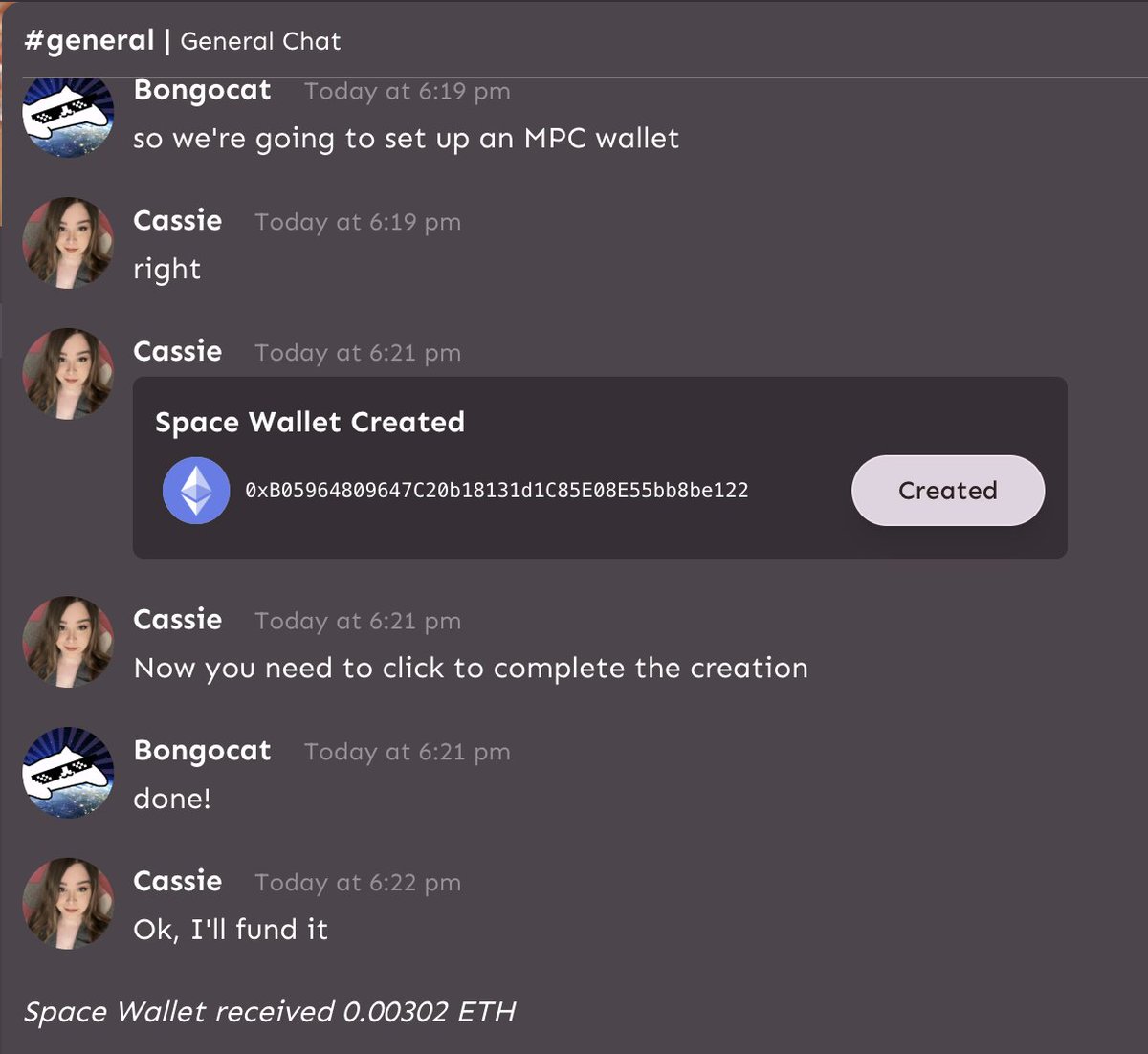
Once milestone 3's iterative updates are done, we will also enable public developer access to the S3 compatible and KMS compatible APIs, which we are also going to be supercharging Quorum with to support large file transfers and MPC wallets for private spaces to jointly control (great for DAOs!)
The next two weeks are going to be a defining moment for the future of crypto.
with tornado cash sanctions overturned and silk road founder ross ulbricht pardoned this week, the privacy narrative is suddenly back on the table and more relevant than ever.
@QuilibriumInc $quil is at the forefront of that narrative tech-wise, offering private, secure, decentralised internet through mpc (multi-party computation). its closest competition is @nillion $nil, set to launch with a valuation in the billions, while quilibrium currently sits at an mc of just $41m.
if the chart looks scary, that's because of a giant miner unlock that happened after the upgrade to v2.0 - but the good news is that this was the last unlock of its kind and emissions have decreased significantly since launch. price could always continue to dip, of course, but i'd be surprised if it goes much lower as it's already extremely undervalued at its current mc.
founder @cass_on_mars (followed by none other than @VitalikButerin ) left her coinbase dev salary of over $1m/year to dedicate herself full-time to this project that she has had in the works for several years now.
if you want to read more, here is an interview with cassie:
https://t.co/zZZumY4qlC
What is the biggest risk to Quilibrium's success, and how are we addressing it?
More clips from the last Q&A with Quilibrium founder
@cass_on_mars are on YouTube: https://t.co/UycLT1Mw8A
$QUIL $wQUIL