Google will soon remove all of the old Google sites where there're lots of historical/old stuff material (Reverse Engineering, Cyber Security). We need to backup the old valuable stuff to GitHub, GitLab/Bitbucket,... before they disappear.
cc @thegrugq@Ivanlef0u@adesnos
When it comes to complex systems + problem-solving––
––useful to know + study “TRIZ”*
(*a soviet-era ‘theory of the resolution of invention-related tasks’)
Here are 40 of the principles that may help get you unstuck
Powered with a novel search algorithm, AlphaGeometry 2 can now solve 83% of all historical problems from the past 25 years - compared to the 53% rate by its predecessor.
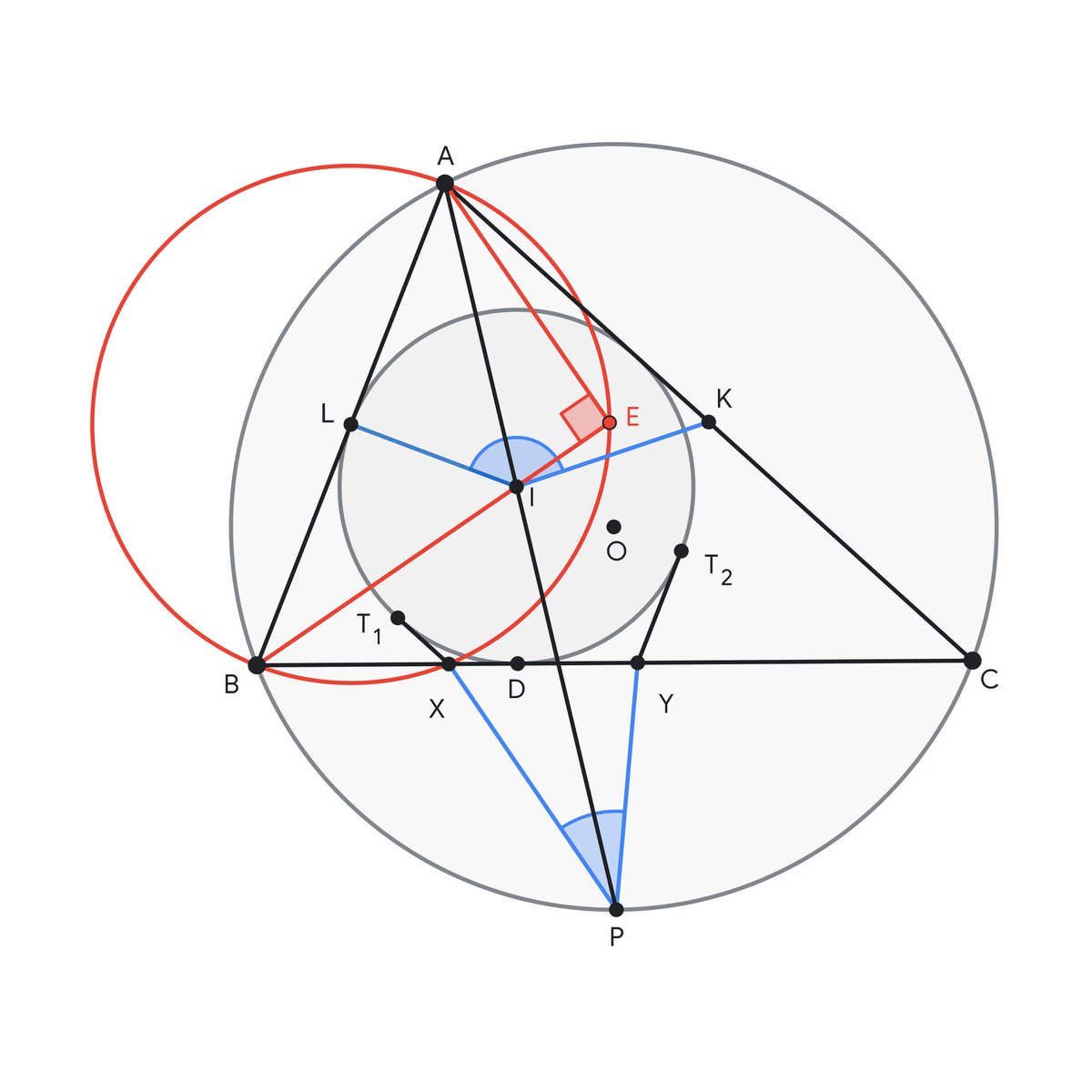
It solved this year’s IMO Problem 4 within 19 seconds. 🚀
Here’s an illustration showing its solution ↓
With geometry, it deploys AlphaGeometry 2: a neuro-symbolic hybrid system.
Its Gemini-based language model was trained on increased synthetic data, enabling it to tackle more types of problems - such as looking at movements of objects. 📐
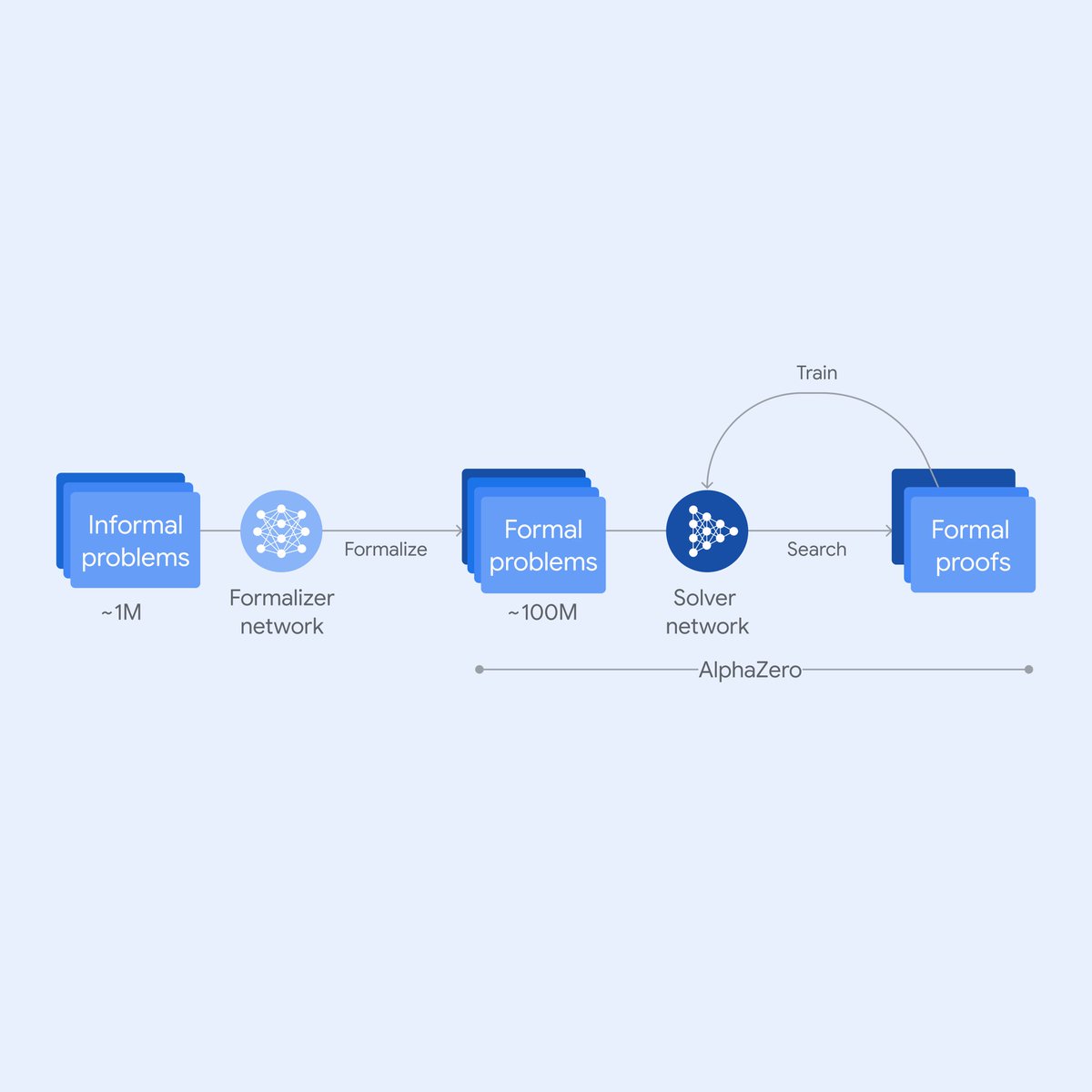
When presented with a problem, AlphaProof attempts to prove or disprove it by searching over possible steps in Lean. 🔍
Each success is then used to reinforce its neural network, making it better at tackling subsequent, harder problems. → https://t.co/U0OFXBia8n
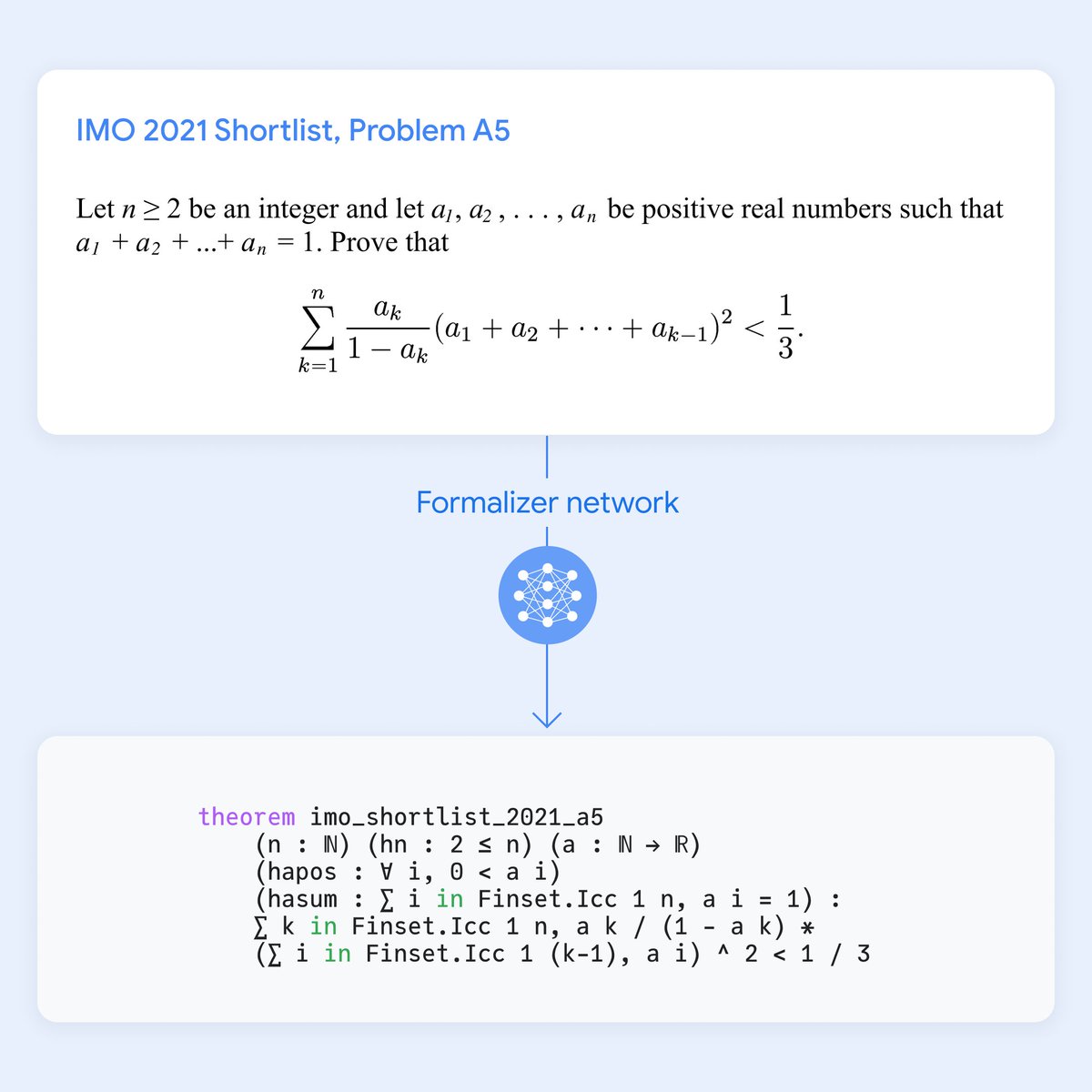
Math programming languages like Lean allow answers to be formally verified. But their use has been limited by a lack of human-written data available. 💡
So we fine-tuned a Gemini model to translate natural language problems into a set of formal ones for training AlphaProof.
For non-geometry, it uses AlphaProof, which can create proofs in Lean. 🧮
It couples a pre-trained language model with the AlphaZero reinforcement learning algorithm, which previously taught itself to master games like chess, shogi and Go. https://t.co/SYaLPSbIyj
Our system had to solve this year's six IMO problems, involving algebra, combinatorics, geometry & number theory. We then invited mathematicians @wtgowers and Dr Joseph K Myers to oversee scoring.
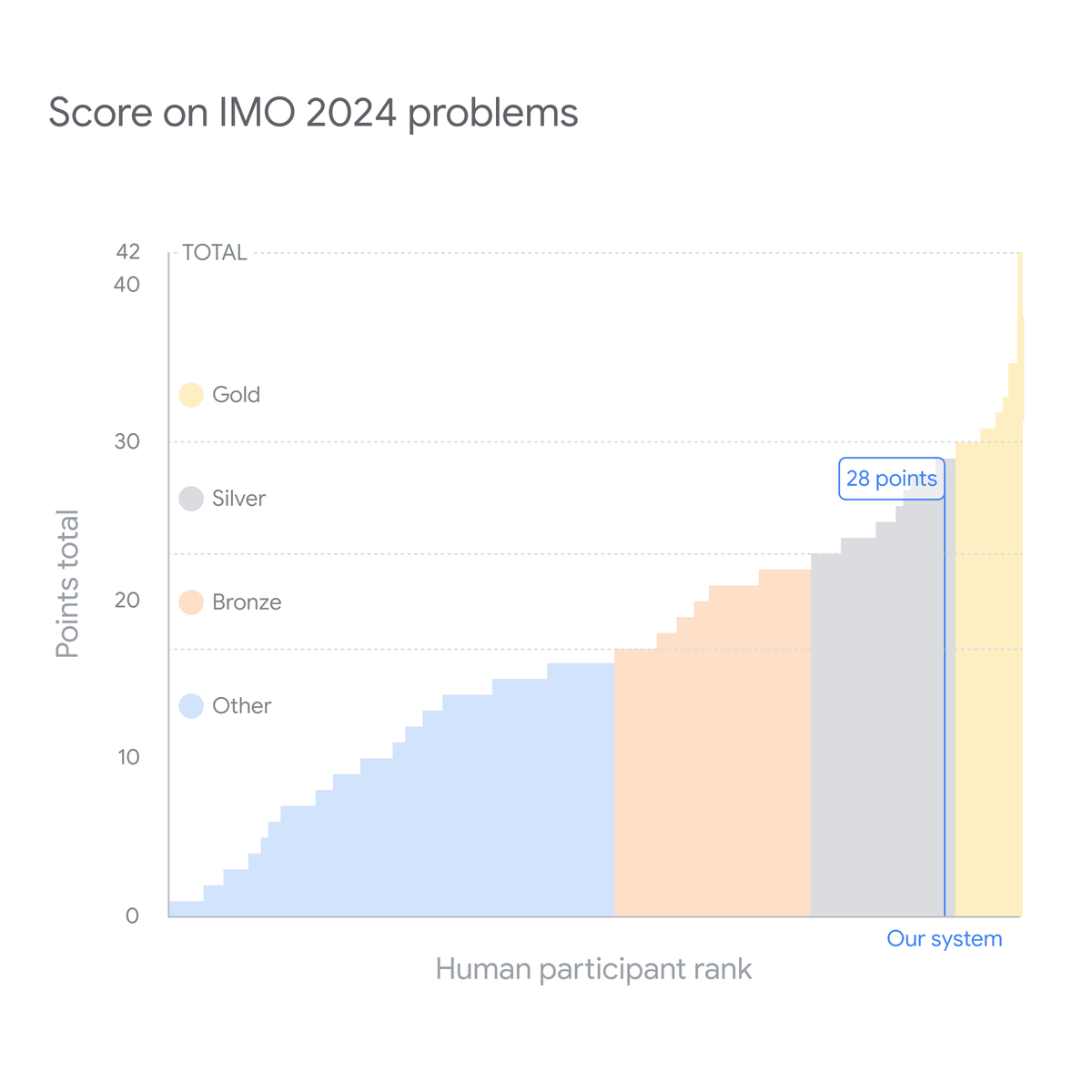
It solved 4️⃣ problems to gain 28 points - equivalent to earning a silver medal. ↓
We’re presenting the first AI to solve International Mathematical Olympiad problems at a silver medalist level.🥈
It combines AlphaProof, a new breakthrough model for formal reasoning, and AlphaGeometry 2, an improved version of our previous system. 🧵 https://t.co/SYaLPSbIyj
Euclidean geometry problems have been my favorite math puzzles since middle school. The most intriguing part of it is the creation of auxiliary lines, which opens a space for imagination and the freedom to explore various diagrams. Once a proof is found, these auxiliary lines almost seem magic!
In AlphaGeometry, we've devised a way to synthesize data that trains transformers to predict auxiliary lines. The main idea is straightforward:
1. Sample a random diagram.
2. Deduce all the facts about this diagram using a symbolic algorithm.
3. For each fact, we identify the minimal diagram in which the fact remains true.
4. This leads us to a trajectory from the minimal diagram to the full diagram for learning auxiliary line construction.
5. Sample a lot of random diagrams and gather a lot of data to train a big transformer.
Even though this idea seems straightforward, the underlying details are insanely hard to get right.
1. What's the action space to sample a diagram? We need an action space that allows us to sample interesting diagrams easily.
2. What's the symbolic algorithm to deduce all the facts? We built on prior works e.g. Chou et. al. from 2 decades ago, but also greatly empower their algorithm.
3. What's the algorithm to reduce the diagram to its minimal form? Super non-trivial - but Trieu solved it!!
It took Trieu (@thtrieu_) 4 years (almost his entire PhD) to work out these details. I was very fortunate to meet Trieu back in 2022, when we found we were working on exactly the same idea. During our collaboration, there are multiple times Trieu rewrote the entire project from scratch in order to tackle a new technical problem. It took an insane amount of determination and perseverance that eventually led to today's result.
People ask me how general this technique is, and what the implication is for MATHAI. I think it's clear now that solving math boils down to synthesizing high quality data. Geometry happens to have a nice action space to sample interesting problems. But for general math domains, randomly sampling likely is not the way to go. Instead, figuring out how to bootstrap from existing human data and learn the distribution of interesting problems is much more promising.
The other aspect of this work is that we utilize symbolic tools / formal algorithms to verify the correctness of the data. I think that is also fundamental to math, and how to utilize these formal tools to verify the data is one of the major future challenges. Our recent work accepted to ICLR2024, led by Jin Zhou (@jpzhou), took a small step towards this direction for general math domains: https://t.co/2w5FZWSmNt, but there are still many interesting problems yet to be solved.
Lastly, the way we synthesize those 'magic' steps can be seen as some form of reconstruction, and I believe there are ways to do such reconstruction for other kinds of mathematics to learn these "magic" steps.
Thank you Trieu @thtrieu_ and the rest of the AlphaGeometry team (@lmthang, @quocleix, @hhexiy) for this amazing collaboration. We're one step closer to solving math. LFG!!!
Last month, I showed #AlphaGeometry solution to my Olympiad math teacher, Dr Le Ba Khanh Trinh, who was quite legendary in Vietnam as he ranked #1 at IMO 1979 with a special prize given for solving a geometry problem that year so elegantly. Dr. Le was quite impressed as the solution only uses basic rules, yet, he found it quite mechanic. To him, a beautiful solution needs to have a soul; everything needs to connect; you need to see the big picture!
Thanks to @sioroberts and @nytimes for capturing the story. When I was a student, my teacher was younger than me now. Fast forward 20 years later, Dr. Le's love for geometry is unwavering & he still passionately discusses Euler circle, homothety, inversion, the beauty of geometry, the solutions from God.
NYT: https://t.co/xGHjkSkICy
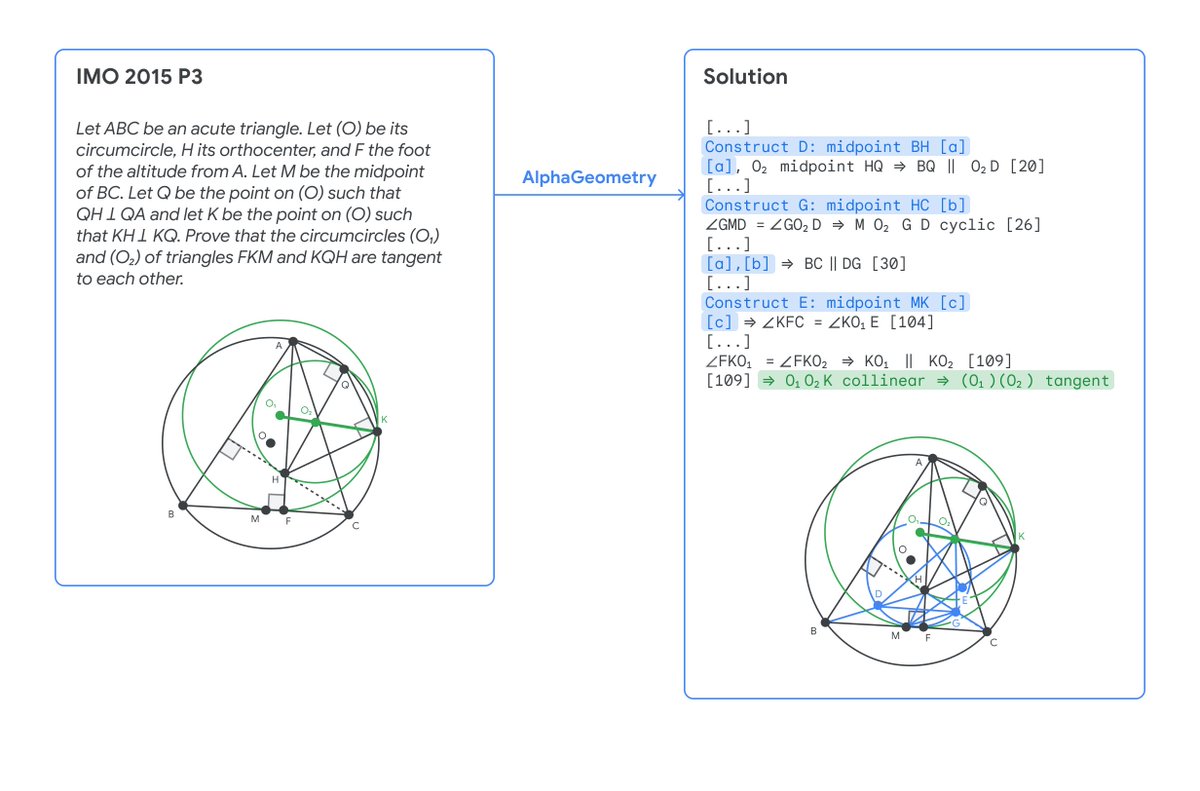
In case you wonder how an #AlphaGeometry solution looks like, check out the full solution (109 step!) here. In this IMO 2015, problem #3, the symbolic component asked for help from the neural language models 3 times (the auxiliary constructions in blue) before succeeding :)
https://t.co/eH3LGXQqwk
On a test set of 30 IMO geometry problems from the years 2000-2022, #AlphaGeometry can solve 25 problems. This is approaching that of the average human gold medalists with 25.9 and surpasses the previous state-of-the-art system, which can only solve 10, by a large margin! (Note also not all IMO geometry problems can be encoded in AlphaGeometry language).
Here is a closer look at our synthetic data ordered by proof lengths. We can see that trivial and well-known theorems, such as the Euler circle, were re-discovered. Out of 100M examples, there are 9M with auxiliary constructions or the "insights". Some examples have very long proof steps (247!); we also found new problems that are challenging at the national level, as judged by humans!
These are examples of the random diagrams that we start off with for our synthetic data generation. We use 100K CPU workers to generate one billion random diagrams, then run symbolic deduction and traceback for 3-4 days. After deduplication and filtering by "interestingness", we obtain 100M examples of theorems and proofs for training, all synthetic!
The lack of training data for maths, especially those at the Olympiad level, motivated us to generate everything synthetically. Key to this process is the idea of "symbolic deduction and traceback". We start from random diagrams, try to find all properties through forward deduction, then going back to derive "interesting lines and points" that are important for proofs, but don't have to be in the problems. Those are the "insights" that we teach the neural networks to be very good at!