I invested in @Minima_Global because the thesis is architectural, not speculative.
The EU AI Act becomes enforceable for high-risk systems on August 2, 2026. Every autonomous machine operating in Europe (drones, industrial robots, medical devices, embedded AI) will need tamper-proof audit trails that regulators can independently verify.
The compliance infrastructure the market has built so far assumes a cloud server and a persistent internet connection. Most of the machines that need it most have neither.
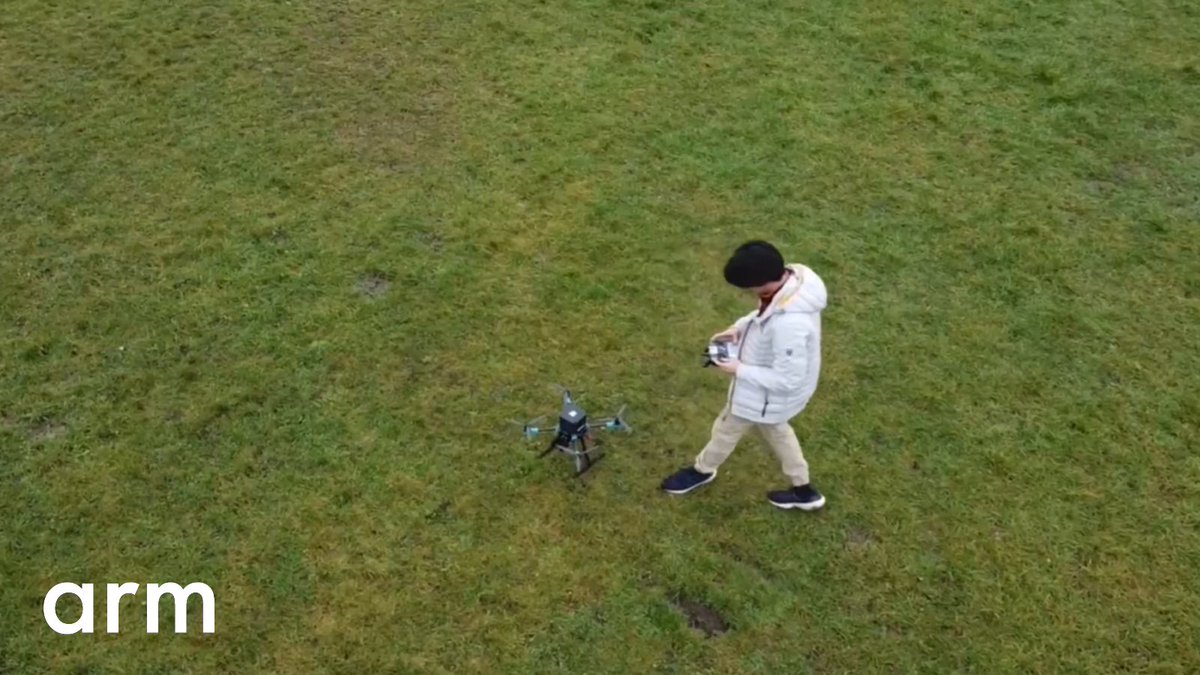
Minima runs a full blockchain node in 300 megabytes, on a microprocessor, on the device itself. No gas fees. Quantum-resistant cryptography. The partnerships are not slideware. @Arm contributed security-rich IP to build the first blockchain-on-chip. @Siemens is distributing through automotive, robotics, energy and healthcare channels. @Fetch_ai has integrated the compliance layer into Agentverse for autonomous agents. @unisouthampton validated the architecture in live drone flight with a 500x performance gain.
The Minima market cap sits around 3.7 million dollars. A single enterprise AI compliance implementation costs more than that. I have looked at this from the regulatory side, the technical architecture, the partnership validation, and the market pricing. The asymmetry between what has been built and what has been priced in is the largest I have found in the infrastructure layer. This is not financial advice, but I am a buyer.
Minima is listed on @MEXC and @BitMartExchange and @XTexchange
Tether Launches tether.wallet, the People’s Wallet, Extending its Global Financial Infrastructure Directly to Billions of Users Left Behind by the Traditional Financial System
Learn more: https://t.co/NygApfyAbB
🚨 New Episode w Paddy @Spartacuswrecks from @Minima_Global "Fix the money, Fix the world"
In this episode, Ankit sits down with Paddy from Minima, the embedded PoW L1 blockchain Empowering edge devices with full decentralization.
@Spartacuswrecks makes a bold, unapologetic case that 99% of the crypto industry was always garbage — and that what's left after the hype dies matters more than ever.
@Minima_Global 's answer to the question "what is a blockchain actually for?" is razor sharp: censorship resistance. That's it. And censorship resistance only means something if you're genuinely decentralized.
What makes @Minima_Global different? No Coinbase transaction. No mining rewards. No stakers. No validators. Every single user runs a full node and mines the network cooperatively to protect their own coins, not to win a competition. The bigger gets, the more decentralized it becomes.
The conversation goes deep on the engineering breakthroughs that make this possible proof databases, Merkle branches and why that matters for a world where billions of people only have a phone.
00:00 Intro
01:02 What Is Minima? The Case for True Decentralization
06:00 The Only Real Value of a Blockchain: Censorship Resistance
08:10 Crypto Is Dead — And That's a Good Thing 12:00 Why Proof of Stake Always Centralizes (Including Ethereum & Cardano)
16:00 Fix the Money, Fix the World — The Deeper Philosophy
22:00 Byzantine Generals, Difficulty Adjustment & Satoshi's Genius
26:10 How Minima Achieves Ultra Decentralization on a Mobile Phone
29:00 The Proof Database: Storing the Whole Chain in 10 Megabytes
35:00 Layer 2, Lightning, & How Minima Scales
44:00 Real World Use Cases: EVs, IoT, the Machine Economy & AI Agents
------------------------
DISCLAIMER This video is for educational and informational purposes only and is NOT financial or investment advice. We do not recommend you to buy or sell any assets. Opinions of guests are their own and do not constitute endorsements. Cryptocurrency and blockchain investments are highly risky and can result in total loss of capital. Do your own research and consult licensed professionals. The channel and its hosts are not liable for any investment decisions or losses.
Asking the right question:
Can blockchain run on a chip?
@Arm's Semiconductor Education Alliance's latest post shows it can: with a full Minima node on embedded hardware.
This isn’t a feature. It’s a shift.
Blockchain is moving to the edge.
Trust is moving into the machine.
Our take: https://t.co/aXqMopkSGt
for years, blockchain has lived in one place:
servers.
data centers.
validator farms.
cloud infrastructure.
but what if that was never the final form?
what if blockchain didn’t live somewhere… but everywhere?
@Minima_Global just took a step in that direction.
not with a roadmap. with hardware.
in collaboration with arm, university of southampton, and siemens…
they ran a full blockchain node on embedded hardware.
a chip. not a lightweight client. not a partial node.
a full node. on silicon.
this required rethinking everything.
java → c++ transition to make minima run closer to the hardware layer
then pushing performance further:
hardware-accelerated sha3
cryptography handled directly in silicon.
not software.
and it wasn’t just computation.
they validated drone telemetry on-chain.
real-world machine data → verified at the chip level.
this is what “blockchain-on-chip” actually means.
not theory. execution.
because the future isn’t just users verifying transactions.
it’s machines proving what they’ve done.
drones. robots. vehicles.
devices writing truth to the chain in real time.
blockchain is leaving the cloud. and moving into the hardware itself.
@Minima_Global isn’t scaling bigger. it’s embedding deeper.