A journal of my own pains & ruminating tweets. A place to express my pain & anger which has nowhere to go. Trying to make sense of this invisible pain. #CPTSD
Burnout isn't weakness. It's what happens when these things disappear:
1. Seasonal rhythms that forced rest
2. Work that stayed at work when you left
3. Communities that shared the load
4. Rituals that marked the end of a day
5. Lives where rest wasn't something you had to earn
6. Clear boundaries between when you were on and when you were off
7. Work tied to tangible outcomes you could see and feel proud of
8. Time that belonged to you without justification
9. Play that had no productivity attached to it
10. Relationships built on presence, not scheduling
11. The ability to be unreachable without it costing you something
12. A pace of life that matched what the body was built for
13. Enough silence to hear what you actually needed
14. Work that felt like contribution, not just output
15. The sense that your effort had a natural stopping point
@DrDoyleSays Pressuring ourselves to do anything when we're trying to heal is never going to work. We must create the conditions of safety for our nervous system to begin to heal. This is a slow process.
A physical body that has been violated by abuse or assault isn't going to relax all at once-- & pressuring it to try is going to simultaneously shut it down & activate every sympathetic nervous system alarm it has.
Learning to relax has to happen .01% at a time for survivors.
Today I learned a term called
"Parentification Debt": When a child is forced to emotionally parent their own parent, they develop advanced skills in reading others but fall behind in understanding themselves. The debt comes due in adulthood when they realize they can manage everyone's feelings except their own.
🚨: Brain scans have revealed children living with unstable families (excessive, arguing, abusive and neglectful) have brain changes similar to combat soldiers after active duty
One of my favourite things I've ever read is about a woman who said that whenever she had a negative thought about herself, she would shout "GUARDS!" and imagine old knights entering and carrying the thought away.
Winston Churchill fought his depression with bricks. He'd lay them for hours at his country home in Kent. He joined the bricklayers' union. And in 1921 he wrote about why it worked. It took psychology another 75 years to catch up.
He called his depression the "Black Dog." It followed him for decades. His method for fighting it back was as basic as it sounds: laying brick after brick, hour after hour.
Churchill spelled out his theory in a long essay for The Strand Magazine. People who think for a living, he wrote, can't fix a tired brain just by resting it. They have to use a different part of themselves. The part that moves the eyes and the hands. Woodworking, chemistry, bookbinding, bricklaying, painting. Anything that drags the body into a problem the mind can't solve by itself.
Modern psychology now calls this behavioral activation. It's one of the most-studied depression treatments out there. Depression sets a behavior trap. You feel bad, so you stop doing things, and doing less means less to feel good about. Feeling worse makes you do even less. The loop tightens until you can't breathe inside it.
Behavioral activation breaks the loop from the action side. You schedule the activity first, even when every part of you doesn't want to. Doing it produces small rewards: a wall gets straighter, a painting fills in, a messy room gets clean. Those small rewards slowly rewire the brain. Action comes first, and the feeling follows.
Researchers at the University of Washington put this to the test in 2006. They studied 241 adults with major depression and compared three treatments: behavioral activation, regular talk therapy, and antidepressants. For the people who were most severely depressed, behavioral activation matched the drugs. It beat the talk therapy. A 2014 review of more than 1,500 patients across 26 trials backed up the result.
Physical work like bricklaying does something extra on top of this. It crowds out rumination, the looping bad thoughts that grind people down during the worst stretches of depression. Bricklaying needs both hands and gives feedback brick by brick: each one is straight or crooked. After an hour you can see exactly how much wall you built. No room left for the mental chewing.
The line George Mack used in his post, "depression hates a moving target," is good poetry. The science behind it is sharper. Depression hates a brain that has somewhere else to be.
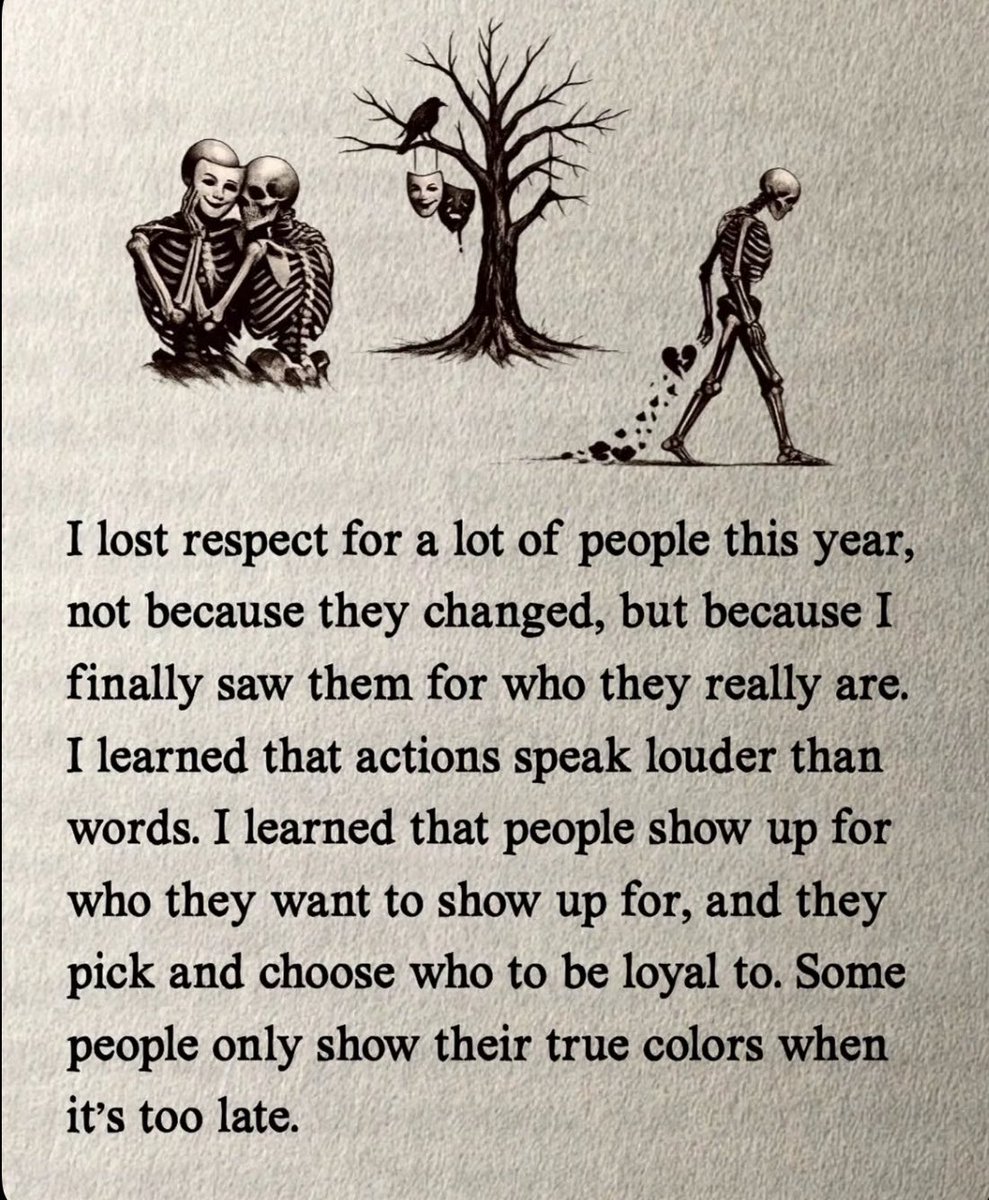
Growth has a quiet way of changing your vision before it changes your world. What once felt normal begins to feel misaligned, not because people suddenly became different, but because your awareness finally caught up with reality. You start noticing the gaps between what is said and what is done. You begin to feel the weight of inconsistency, the silence behind empty promises, and the truth hidden in repeated patterns.
Respect is not lost in a moment, it fades through realization. It fades when effort is one sided, when presence is conditional, and when loyalty becomes selective. You see who stands beside you without convenience, who chooses you without hesitation, and who only appears when it serves them. That clarity is not bitterness, it is maturity.
There is a certain heartbreak in understanding people more deeply, especially when that understanding comes too late. But there is also power in it. Because once you see clearly, you cannot unsee. And from that point, you begin to choose differently. You protect your energy, your time, and your peace with a quiet strength.
Not everyone is meant to stay in your life forever. Some people are only meant to reveal lessons, not build a future with you. And that realization, as heavy as it feels, is also what sets you free.
The Psychological Hangover After Spending Time With Certain People:
1. You leave a conversation feeling completely drained even though nothing obviously bad was said. That is not a coincidence. Your nervous system just went through something.
2. Some people speak in a way that constantly pulls you into their emotional chaos without ever directly asking for anything. Your brain works overtime just to keep up.
3. This feeling has a name in psychology. It is called emotional exhaustion and it is a real physiological response, not just a mood.
4. Highly empathetic people experience this more intensely because their brain literally mirrors the emotional state of whoever they are with. Sitting with an anxious or negative person is almost like borrowing their anxiety.
5. The hangover can last hours or even days. You feel foggy, irritable, low on energy, and unable to explain why to anyone around you.
6. In many cases the person causing it has no idea they are doing it. They are not always toxic or malicious. Some are simply unregulated emotionally and your nervous system absorbs what they cannot contain.
7. Your body keeps a record of which people drain you even when your mind makes excuses for them. Repeated exhaustion after seeing someone is your biology telling you something your loyalty refuses to hear.
8. The recovery looks like silence, solitude, sleep, or doing something completely mindless. You are not being antisocial. You are refilling something that got emptied without your consent.
9. Over time, if you keep exposing yourself to the same draining people, the hangovers get longer and the recovery gets harder. What starts as tiredness can eventually become chronic anxiety or emotional numbness.
10. Protecting your energy is not selfishness. It is the most honest thing you can do for yourself and for the people who actually deserve your full presence.
Everyone is slowly dying inside :(
- Some stopped taking photos.
- Some lost interest in new clothes.
- Some hate love now.
- Some got used to loneliness.
- Some stopped meeting friends.
- Some stopped comparing.
Some just accepted what they couldn’t achieve.
The same people who once dreamed big are now just pushing through days.
Check on your people. Not everyone is okay.
Some people really have this talent for forgetting everything you ever did for them. You stood by them, helped them, gave them your time, energy, and care and when it's their turn to show up, they suddenly develop selective memory. It's wild how people can be so emotionless, like empathy just skipped them completely.
You could be drowning, and they'd still find a way to make it about themselves. But that's the thing, the ones who never appreciate are the ones who were never capable of giving back in the first place.
I’ve had women, including my own patients, tell me the only time they’ve ever truly rested was when they were too sick to function, injured, or hospitalized.
Because that’s the only time the world stops demanding things from them or the only time they feel empowered to say no.
If the only way a woman is “allowed” to rest is by being unwell…what kind of world are we living in?