@chartpo3c@KvasirsMead@ChaosTV That’s fine. Cameraman video is still a perversion, boo hoo clickbait, creepy and unmanly. I guess he was researching fraud?🤭
U.S. Olympic gold medalist and devout Catholic Britta Curl-Salemme is facing criticism from leftists on social media after being signed by Detroit's PWHL franchise. The backlash stems from a video in which she tagged FIERCE Athlete, an organization that advocates keeping transgender athletes out of women's sports, while describing her weekly routine
Steven Tyler still sometimes misses getting high, but he won’t touch it.
On Joe Rogan, the Aerosmith legend admitted: “If I do, I’ll wind up doing too much. I can’t control it.” He’s lost marriages, his kids stopped talking to him, and he got kicked out of his own band. Today in 2026, he’s still sober, calls his sponsors when the urge hits, and keeps showing up to meetings.
Rock bottom doesn’t have to be the end of the story. Even after decades of fame and multiple relapses, Tyler proves it’s never too late to choose yourself every single day. Sobriety isn’t about never feeling the pull, it’s about refusing to answer it.
That kind of quiet strength is more powerful than any stage performance.
Father Ignatius Maternowski, a Conventual Franciscan priest and U.S. Army chaplain, is remembered as the only American military chaplain killed on D-Day, June 6, 1944, during the Allied invasion of Normandy.
Born on March 28, 1912, in Holyoke, Massachusetts, to Polish-American parents, Maternowski grew up in a devout Catholic family. After graduating from Mater Dolorosa Parochial School in 1927 and St. Francis High School in Athol Springs, New York, in 1931, he joined the Franciscan Friars Conventual, professing his vows in 1932. He was ordained a priest in 1938 by Bishop Thomas O’Leary in Granby, Massachusetts, and served as a parish priest and preacher before enlisting in the U.S. Army in 1942, motivated by a desire to minister to soldiers during World War II.
Assigned to the 508th Parachute Infantry Regiment of the 82nd Airborne Division, Maternowski volunteered as a paratrooper chaplain, earning the rank of captain. Known for his strength, faith, and intolerance for disrespect toward the Church, he was respected by his fellow soldiers. On the eve of D-Day, he celebrated Mass and offered general absolution to the paratroopers before parachuting into German-occupied Gueutteville, near Picauville, Normandy, in the early hours of June 6, 1944. Amid the chaos of a scattered drop and heavy fighting, Maternowski tended to wounded soldiers and glider crash victims, organizing a makeshift aid station in a local café-grocery store owned by the Thouroude family.
Recognizing the dire need for a protected medical facility, Maternowski undertook a courageous and risky mission. Unarmed, wearing his chaplain’s insignia and a Red Cross armband, he crossed enemy lines to negotiate with a German medical officer, seeking to establish the aid station as a noncombatant facility under the 1929 Geneva Convention. He successfully brought the officer to inspect the wounded, aiming to protect both soldiers and civilians. Tragically, as he returned to the American side, he was shot in the back by a German sniper and killed at age 32. His body lay on the road for three days until Allied forces recovered it. Maternowski was initially buried near Utah Beach, but in 1948, his remains were returned to Holyoke and laid to rest in Mater Dolorosa Cemetery in South Hadley, Massachusetts, with a gravestone inscribed, “There Is No Greater Love” (John 15:13).
Maternowski’s heroism is commemorated through a memorial in Gueutteville, a stained-glass window in La Petite Chapelle de Cauquigny, dedicated in 2021, and other tributes in Holyoke, Arlington National Cemetery, and London. His actions exemplified self-sacrifice, as he sought to protect the wounded and uphold human dignity in the face of war. The Franciscan Friars Conventual, in collaboration with the World War II Chaplains Memorial Foundation, have initiated early steps toward his canonization, recognizing his martyrdom and devotion.
In 1985 I made the USA World Championships Gymnastics Team. I placed 3rd at the Trials, my highest placement to date as a young gymnast.
At Worlds, on my 8th and final event I fell. It was a devastating fall. I missed a release move and tumbled to the ground. My right foot was stuck while my body spun around the knee. I knew it was bad. I screamed, or thought I did. No one came. It felt like forever on the raised platform, no coach, no trainer, no doctor while I writhed.
Eventually my coach realized I wasn't getting back up. They rushed to me. The trainer thought my knee was dislocated and he attempted to push it back in place. It wasn't dislocated though. My femur was broken - we didn't know that yet - and he was pushing bone against bone.
My dad joined me in the ambulance. I remember sobbing -- "What am I going to do now? I don't know how to do anything else. This is all I want to do."
He cried too. We assumed my career was over. He said: "You can do anything you want to do. You're smart and you can be anything you want to be. You're just getting started." He was right in so many ways.
But all I wanted then was to be a gymnast.
I was taken to the nearest hospital and rushed into surgery. It was a French speaking hospital and we didn't fully understand what anyone was telling us.
When I came out of surgery a doctor who spoke English told us "It was a broken femur. Not her knee." We cheered. We were all so happy. My coaches, my parents, me. Bones often heal better than joints.
I left Canada on crutches with a full leg cast. When I got home to Pennsylvania, my doctor changed the cast to a lighter one, with a hinge at the knee. And I went back to the gym. I started training right away.
8 months later, in June 1986, I walked into the arena in Indianapolis for USA Championships. No one thought I'd be there. Everyone thought I was done. Forever.
I knew I wasn't done. Not yet.
I won. I became the National Champion less than a year after breaking my femur on the world's stage.
Never give up. Never.
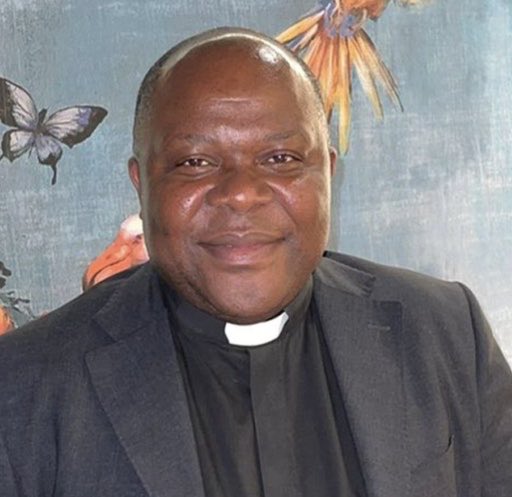
Catholic Bishop Osório Citora Afonso of the Diocese of Quelimane in Mozambique, was shot and killed at his residence today. He was 54 years old.
Info: Aid to the Church in Need