“Learn the rules like a pro, so you can break them like an artist.”
- Pablo Picasso
Pablo Picasso (1881–1973) was a Spanish painter, sculptor, printmaker, and one of the most influential artists of the 20th century. He is best known as a co-founder of Cubism, a revolutionary movement that broke traditional forms into geometric shapes and presented subjects from multiple perspectives at once.
Picasso’s art went through several distinct periods, including his Blue Period, known for its melancholic subjects and dominant shades of blue, and his Rose Period, which introduced warmer colors and often depicted circus performers. Among his most famous works are Guernica, Les Demoiselles d’Avignon, and The Weeping Woman. Throughout his career, he constantly experimented with new styles and techniques, challenging conventional ideas about what art could be.
His influence reached far beyond painting. Picasso showed that art did not have to simply reproduce reality—it could reinterpret, distort, question, and reinvent it. His life and work continue to represent artistic freedom, experimentation, and the courage to see the world from a different perspective.
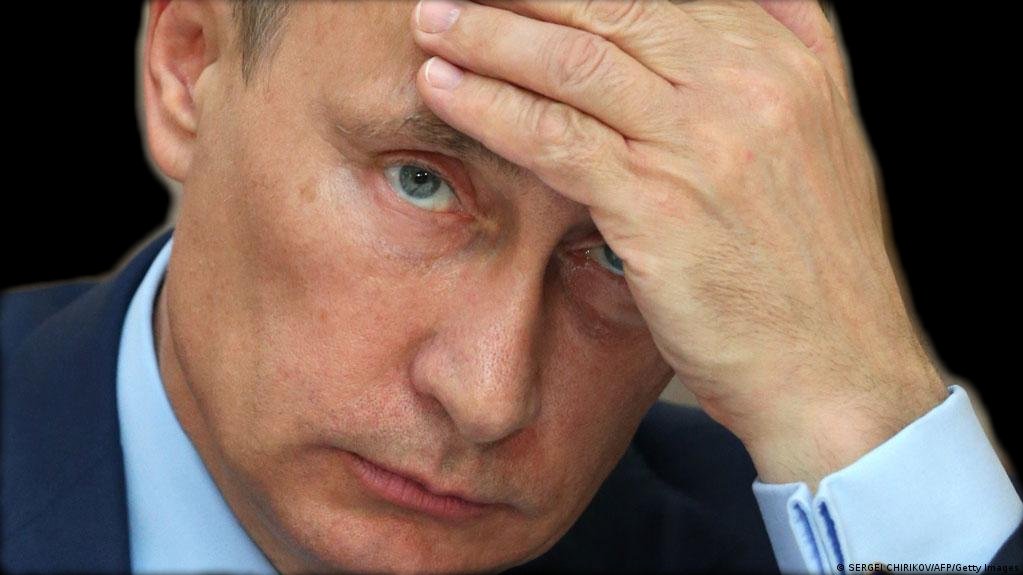
For Putin, the war in Ukraine has evolved from a delusional dream of empire into a desperate struggle for biological and political survival. By cannibalizing Russia’s economy and hemorrhaging its future for negligible territorial gains, he has crossed the point of no return.
Taking the Donbas would be a pyrrhic victory at best, incapable of masking the systemic collapse he has triggered. For Putin, a ceasefire is not a path to peace—it is a signed death warrant. He is trapped in a cycle of perpetual conflict because the moment the cannons fall silent, the internal reckoning begins.
The West must finally grasp this grim reality: Putin is incompatible with peace. He has anchored his existence to a war he cannot win and an occupation he cannot sustain. This is no longer a war of strategy; it is a war of ego, and it will only end when his grip on power does. Period.
If you have a Gmail account, you need to read this.
Google's AI now scans your emails and attachments, bank statements, tax files, medical letters, all of it. It turned on by default, and there's a class-action lawsuit over how.
Here are 5 moves to shut it off, the switch is hidden in two places:
1. The Main Switch
This is the main setting Google shows you, but it's not the only one.
Gmail (Desktop):
⚙️ Settings → See all settings → Smart features and personalization → Uncheck "Turn on smart features in Gmail, Chat, and Meet" → Save Changes.
2. The Hidden Switch
Turning off the first setting isn't enough. Most people stop there.
On the same settings page: Google Workspace smart features → Manage Workspace smart feature settings → Turn off both checkboxes → Save.
Both settings need to be turned off.
3. Your Phone
The settings don't always sync between devices, so check the Gmail app separately.
Gmail app → Menu (☰) → Settings → Select your account → Turn off "Smart features and personalization" → Confirm.
4. Delete Gemini History
If you've used Gemini before, your chats may be saved, and some could be reviewed by humans.
Go to https://t.co/L7GOsTS1wM
→ Turn off Gemini Apps Activity → Delete Activity → All Time.
This removes your past Gemini chat history and stops future conversations from being saved.
5. Move Sensitive Emails
Turning off Gmail's smart features helps, but for truly private emails, consider using a separate service.
For medical, legal, or financial emails, use a free Tuta Mail account. It offers end-to-end encryption and doesn't use AI to scan your emails.
Keep Gmail for newsletters, promotions, and less sensitive messages - if you must.
More: https://t.co/WypCappyfa
The opening scene of a concert as seen from the ceiling of Teatro San Carlo in Naples, which was built in the first half of the XVIII century and is the world's oldest active opera house.
[📹 Alfredo Sicardi]
The Hitler–Stalin Pact: The Deal That Cleared the Way for War
Eighty-seven years ago today, Nazi Germany and the Soviet Union signed an agreement that cleared the way for the Second World War. Yet the Hitler–Stalin Pact still occupies surprisingly little space in Europe’s collective memory. It remains a stark symbol of the destructive power of totalitarian rule and offers an important lesson for the present: despite their ideological differences, totalitarian regimes tend to co-operate against free societies and sovereign states.
On August 23rd 1939 Joachim von Ribbentrop, Hitler’s foreign minister, and Vyacheslav Molotov, his Soviet counterpart, signed a non-aggression pact in Moscow, under Stalin’s watchful eye. Its bland public language concealed a secret protocol dividing much of central and eastern Europe into German and Soviet spheres of influence. For Poland, it amounted to a fourth partition.
The pact cleared the way for Hitler’s invasion of Poland from the west on September 1st. On September 17th the Soviet Union invaded from the east. This was no mere neutrality agreement, as Russian propaganda still likes to claim, but the political framework for the destruction and occupation of a sovereign state.
German–Soviet co-operation continued until Hitler turned on Stalin on June 22nd 1941. Soviet grain, oil and metals helped Germany withstand the British blockade and sustain its early military campaigns; deliveries continued until shortly before the invasion of the Soviet Union. In return, Germany supplied machinery, industrial technology and military equipment.
The relationship extended beyond diplomacy and trade. German and Soviet security officials met to discuss prisoner exchanges, population transfers and the suppression of Polish resistance. On September 22nd 1939 German and Soviet commanders appeared together at a military ceremony in Brest-Litovsk. The footage accompanying this post offers a stark image of the partnership: the Wehrmacht and the Red Army standing side by side after the defeat of Poland.
The published pact was barely 300 words long. For ten years, the two powers promised to refrain from “any act of violence, any aggressive action, and any attack on each other”. The real substance lay in its secret protocol. Poland was divided between them; Finland, the Baltic states and Bessarabia were assigned to their respective spheres of influence.
The arrangement was revised after Poland’s defeat in the German–Soviet Boundary and Friendship Treaty of September 28th 1939. Germany gained additional territory in central Poland, while Lithuania was transferred to the Soviet sphere. The Soviet occupation and eventual annexation of the Baltic states followed, as did the attack on Finland and the seizure of Bessarabia.
A policy of sweeping repression was quickly imposed in the occupied territories. Deportations, arbitrary arrests and mass executions were among its instruments. The Nazi German occupiers committed grave crimes against the Polish population, particularly Jews and members of the country’s social elites. In the spring of 1940 the Soviet NKVD murdered thousands of Polish officers and members of those elites; Katyn became the best-known site of this crime. These atrocities laid bare the brutality of both occupying powers.
The partnership also required some abrupt adjustments to historical truth. “Who controls the past controls the future,” George Orwell later wrote. A Bavarian schoolteacher reportedly captured the absurdity of the new German line: “Now one has to be rather careful at school. Suddenly you read something aloud from Hitler’s book Mein Kampf, and then you end up in Dachau for disparaging the present government.”
After Germany invaded the Soviet Union, Moscow performed its own reversal. References to the preceding co-operation disappeared from Soviet books, newspapers and encyclopaedias. The Soviet authorities denied the existence of the secret protocol until 1989.
The pact still occupies a curiously modest place in western Europe’s historical memory, particularly in Germany. German remembrance rightly centres on responsibility for National Socialism and the Holocaust. But this has sometimes fostered the suspicion that greater attention to Soviet crimes and German–Soviet co-operation might dilute that responsibility. It does not. The experience of central and eastern Europe cannot be understood without both.
In 2009 the European Parliament designated August 23rd as the European Day of Remembrance for Victims of Stalinism and Nazism. This was an important step. But the pact and its consequences still need to become more firmly embedded in Europe’s collective memory.
Roger Moorhouse, a British historian, found an apt name for the arrangement: "The Devils’ Alliance" is the title of his important book.
Clearing your browsing history does nothing.
Google keeps its own copy against your account, on a page most people have never opened once.
Here is how to wipe all of it:
If you use Gmail, don’t skip this.
Google’s AI is now combing through your inbox and attachments bank statements, tax documents, medical notes, everything. It’s enabled by default, and it’s already sparked a class-action lawsuit over the rollout.
Here are five steps to turn it off the controls are buried in two different spots:
Nobody warns you about kidney disease until stage 4... by then, it's often too late.
Here's Good Foods for Kidneys:
1. Berries
2. Leafy green vegetables
3. Bell papers
4. Garlic
5. Olive oil
Healthy tips:
1. Drink 3-4 liter water.
2. Replace normal salt with sea salt.
3. Limit your salt intake.
4. 45 minutes of resistance training
5. Weekly check your BP.
POV:
Visualise to hear the Efferent Message of your Kidneys. You'll build your real protection.
Must watch: Prosecutors requested a 12-year sentence for politician Lev Shlosberg for "discrediting the Russian army."
He had no lawyers — they simply didn't show up, citing "personal reasons."