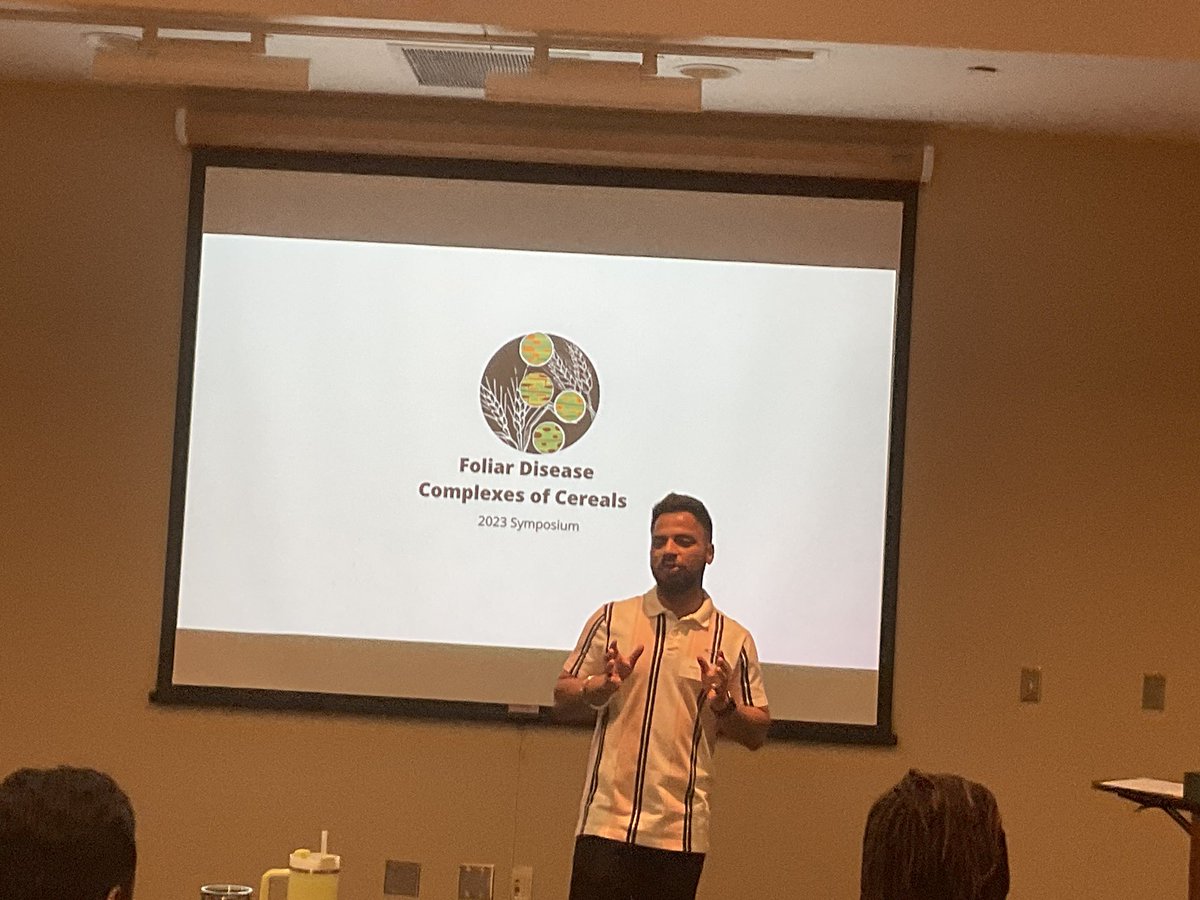
Incredible two days at the #fdcc symposium! A big thank you to all participants, brilliant presenters, and hardworking moderators. Here's to the collaboration and connections we made. Can't wait to see what next year brings! @AC_Nelson23 @FarisGenLab@T_L_Friesen
Getting things started at our first annual Symposium on Foliar Disease Complexes of Cereals, a student led symposium @AC_Nelson23 @Gurmnder_Singh on foliar diseases of wheat and barley. #fdcc
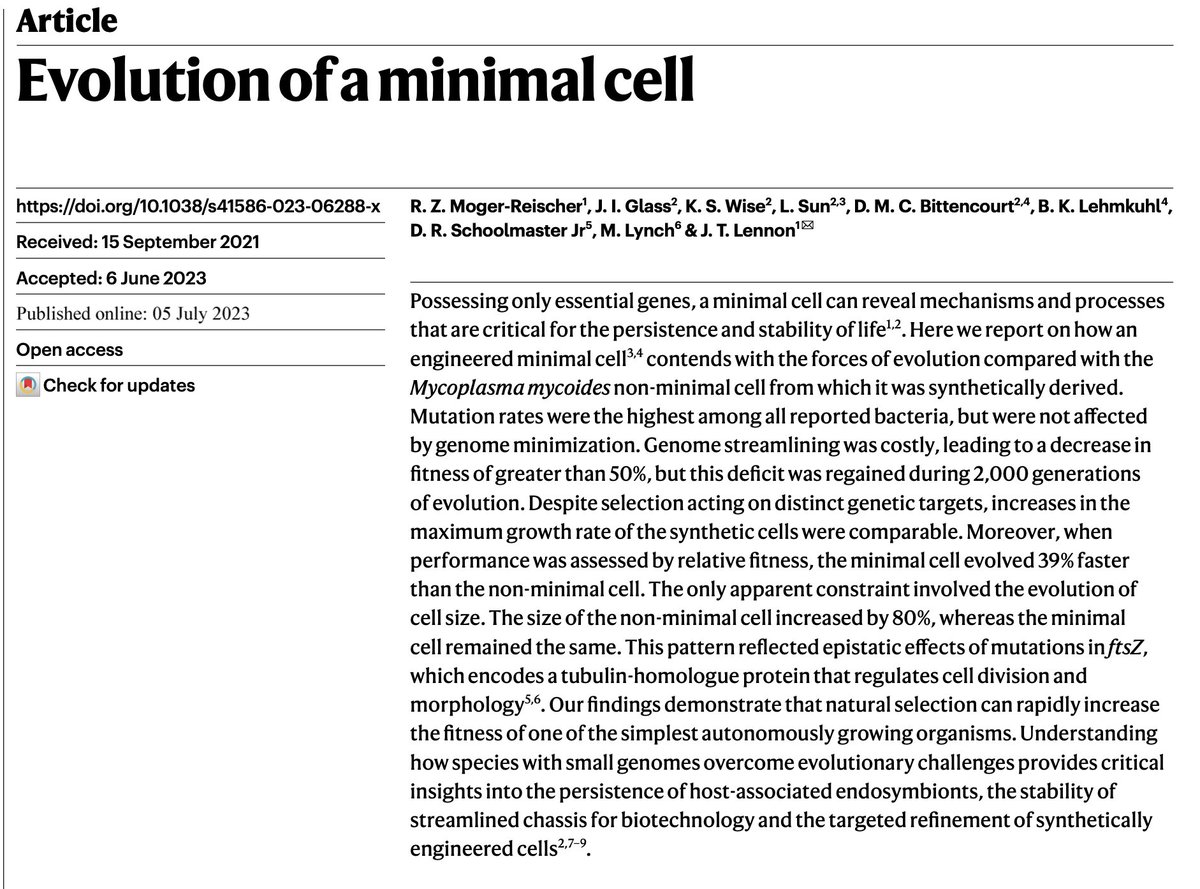
A mind-blowing paper has come out today in @Nature
In 2016, JC Venter Institute scientists trimmed a bacterial genome to its barest minimum required for life to synthesize what they called a "minimal genome" (https://t.co/Rk8oZJ0bUj).
Today, a group of scientists from Indiana University reports how that minimal genome evolved over 2000 generations in comparison to the non-minimal genome.
The authors found that even when you reduce a bacterial genome to its absolute minimum where every nucleotide matters, the genome undergoes mutational events generation after generation as much as the non-minimal genome. One simply cannot stop the evolution.
Just over 300 days of evolution (equivalent to 40,000 years in humans) the minimal cell has gained everything it lacked in fitness on day one in comparison to the non-minimal cell.
When comparing the evolved traits between the minimal and non-minimal cells, the scientists found something striking. The evolutionary process increased the cell size of non-minimal cells but not that of the minimal cell. But that is not the striking part.
The scientists were able to identify the key mutation that resulted in cell size evolution. And it turned out that the mutation that helped the non-minimal cells to grow bigger is the same that helped the minimal cells to stay smaller. Growing bigger had a survival advantage for non-minimal cells and not growing bigger had a survival advantage for minimal cells. So, the mutation had a context-dependent effect. This just demonstrates that the evolutionary effects on traits have no absolute direction. All that matter is what is beneficial for the organism's survival.
The conclusion of the paper is metaphorically a quote from the Jurassic Park movie:
“Listen, if there’s one thing the history of evolution has taught us is that life will not be contained. Life breaks free. It expands to new territories, and it crashes through barriers painfully, maybe even dangerously, but . . . life finds a way". (https://t.co/UlxRlb86CT)
https://t.co/zA9OAqSoAu
Please RT Episode 401 so a guacamole lover might find hope.
Green Venus has generated a gene edited #avocado that greatly slows the browning process. Great for limiting food waste! @ColabraHQ#GMO https://t.co/HoXFsN0Q9l
Happy to share my first publication as a lead author from my MS work! We explored resistance in wheat to Pratylenchus neglectus, uncovering promising lines with potential for future breeding programs. https://t.co/dvp7nDzBoZ
@NDSUPlantPath@plantdisease
Our research published in @TheorApplGenet Genetic and physical localization of a major susceptibility gene to Pyrenophora teres f. maculata in barley. Shengming Yang @T_L_Friesen@BarleyPathology@BrueggemanLab Jason Fiedler, Raja Nandety, and Ryan Skiba.
https://t.co/ZPXKlO6q3U
For those of you who care about global food security, nutrition, and being a steward of the environment. Anti-science policies such as those held by @Greenpeace limit the impacts of good science done for the common good. We as scientists need to stand up for our work and mission.
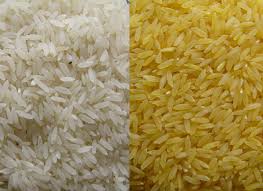
Outraged today? @greenpeace and an anti- #GMO movement celebrate a ruling to stop nutrition from reaching the food insecure. After years of trials and regulatory approval, a court maneuver stalls Golden Rice from reaching poor Filipinos. https://t.co/veef2hVEl4
Greenpeace is intentionally removing a lifesaving crop from poor farmers. Children will go blind and DIE thanks to Greenpeace. NEVER contribute to them again. https://t.co/x6i8utZQV3
@stuartsmyth66 Please stop all donations to Greenpeace. Their latest activity targets poor children. Blindness and death thanks to this despicable eNGO.
#donotdonatetoGreenpeace
Dr. Rex Bernardo will lead a plant breeding seminar and professional skills workshop at a collaborative event between the Gulf Coast Student and Post-doc Association and @UFPlants on April 19th!
Join us in person at GCREC or virtually by registering below. Open to the public!
@NoahDDeWitt Very possible- BLS has been associated with hail damage, and Mizrak (1985) reported that all of their X. translucens isolates were active ice nucleators