Passionate about Climate Change, Adaptation, Migration, Resilience, NbS, and Capacity-building. Global Climate Hub Network Coordinator at Plan International
Reflecting on #APMCDRR2024 (Oct 13-18), where @PlanAsia, @APCSS & partners amplified youth voices for resilient, inclusive communities. A powerful collaboration for school safety & youth-led DRR. #PlanatAPMCDRR2024
Wrapping up #AMPCDRR2024, we celebrate the collaboration of children and Youth stakeholders Group and the Asia Pacific Coalition on School Safety (APCSS) with colleagues representing Plan International, MGCY, World Vision, Save the Children, and UNICEF.
#PlanatAPMCDRR2024
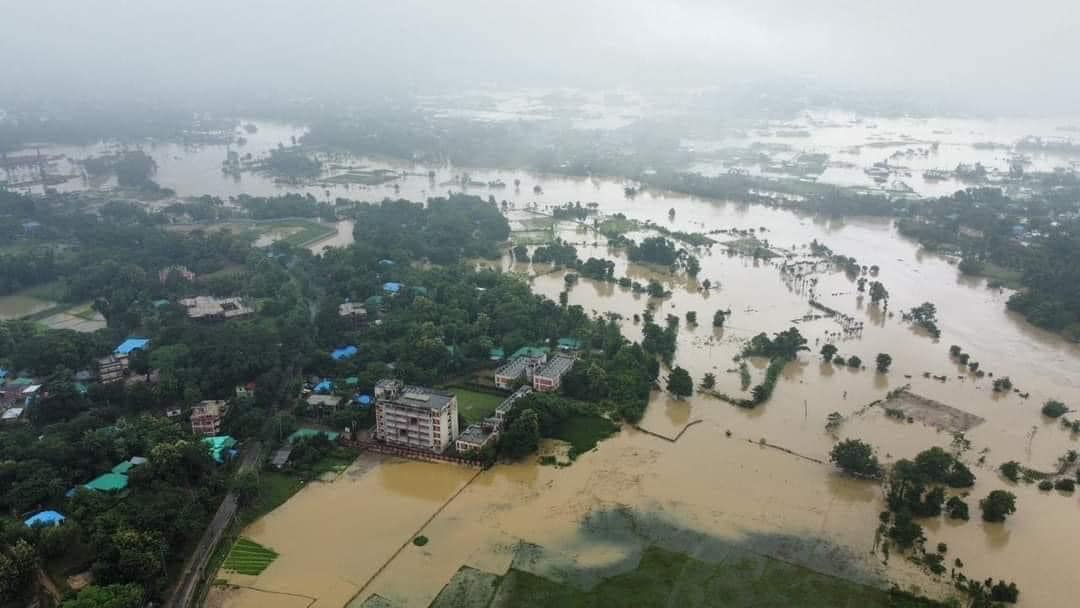
#Bangladesh: India's Reckless Actions Are Worsening the Flood Crisis in Southeast Bangladesh
For the first time in generations, Bangladesh's entire southeastern region is facing its worst flooding in history affecting millions of people. The cause? Indian authorities opened the gates of the Dumbur Reservoir in Tripura for the first time in three decades, releasing massive volumes of water into an already rain-soaked region.
(Read: https://t.co/Cnp1TjrTxE}
Could there have been flooding without India opening the Dumbur Reservoir gates? Perhaps yes, but on a significantly smaller scale. The sudden release of water from the dam has inundated the region to an extent it hasn't experienced in generations.
International law obliges India to notify Bangladesh of any actions that could cause significant harm downstream. Yet, India's failure to notify Bangladesh before opening the gates has caused significant distress and damage.
Unfortunately, the Dumbur Reservoir is just one of many dams India has built on the rivers that flow into Bangladesh. Of the 54 transboundary rivers shared between the two countries, India has constructed dams on at least 30 of them, with the Farakka Dam being the most infamous for its catastrophic impact on northern Bangladesh.
India's unilateral construction of dams and its arbitrary control of water flows have become a constant threat to Bangladesh, causing either drought or flooding downstream. This reckless behavior has devastated millions of lives and wreaked havoc on the environment. For example, over 80% of Bangladesh's 20 million small farmers depend on water flowing through these transboundary rivers to grow rice. (Source: https://t.co/t0Fo6jP5bP)
By inflicting such widespread damage, India is effectively breaching international law on a regular basis. Here are some of the key obligations that India is failing to uphold:
1) Under Articles 5 and 6 of the UN Convention on the Law of the Non-Navigational Uses of International Watercourses (1997), upstream and downstream countries have the right to equitably and reasonably utilize shared waters.
2) Article 7 of the 1997 Convention, along with customary international law, obliges upstream countries, like India, to prevent significant harm to downstream nations, such as Bangladesh.
3) The Espoo Convention (1991) and customary international law mandate that upstream countries notify and consult with downstream states before undertaking any activities that could significantly affect shared waters.
Yet, India has consistently ignored these obligations and has never acknowledged the rights of Bangladesh and its people under international law.
Despite these hostile actions, Indian officials continue to claim that they are friendly neighbors—yet they wonder why Bangladeshis hold such deep resentment against them.
Is India truly a friendly neighbor to Bangladesh? Their actions speak louder than their words.
In Noakhali, the floodwaters from India are raging with such force that no speedboats can reach the people trapped in their homes. The water keeps rising, and now many are huddled on their rooftops, desperate for help. There's no other way to save them but by helicopter. I beg all nations, except India, to send helicopters immediately. Women, children, entire families are waiting—time is slipping away. Please, help us before it's too late. We can't do this alone.
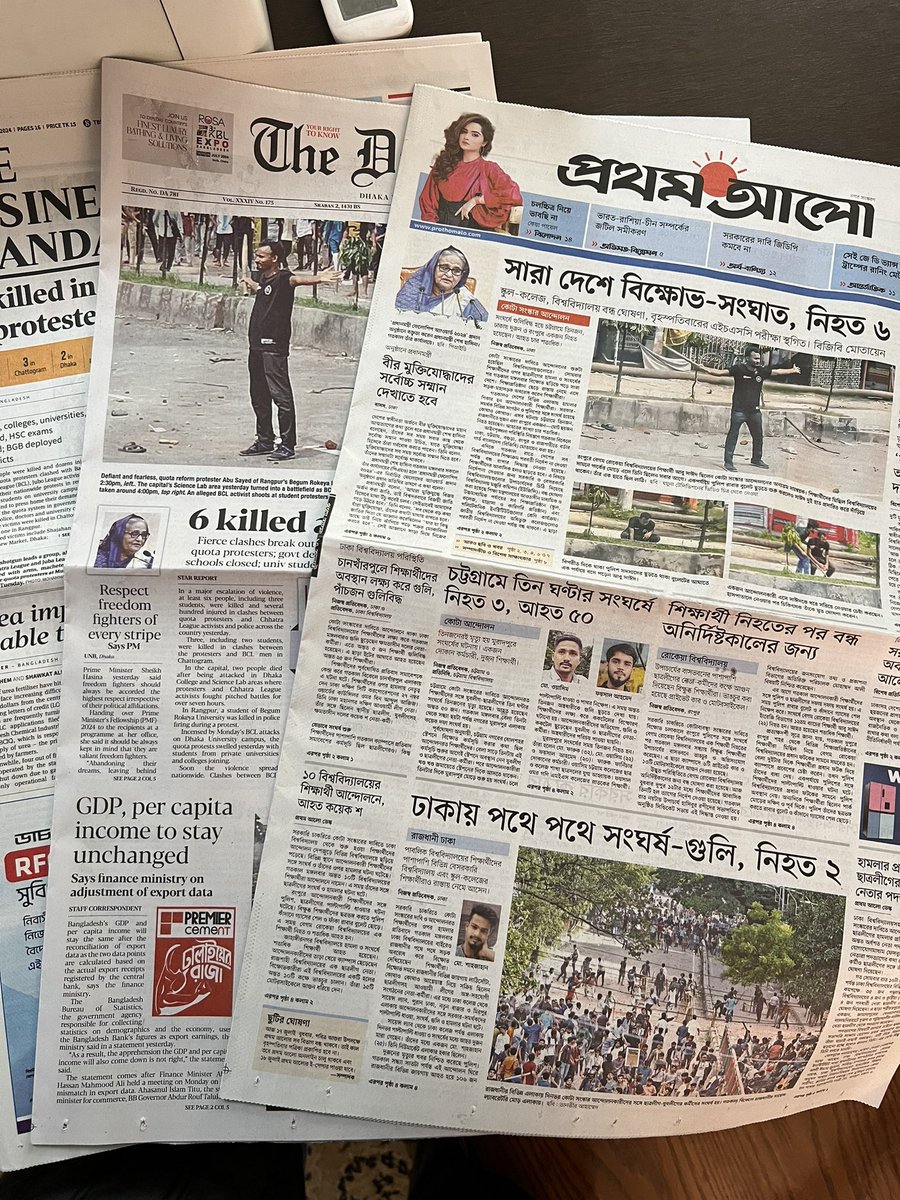
This is how the Bangladesh Police shot and killed student protestor Abu Saeed in the Rangpur district of Bangladesh. Saeed was one of the convenors of the anti-quota system. The police literally shot the unarmed young man at point-blank range.
#Bangladesh: @volker_turk urges authorities to engage w/ student protesters. All acts of violence & use of force, esp. resulting in loss of life, must be investigated & perpetrators held to account. Freedom of expression & peaceful assembly are fundamental human rights
The top newspapers today have used martyr Abu Sayeed's defiant and fearless photo as the lead one...I, believe it will stand the test of time and eventually will become one of the most significant photos in the country's history.
#Quota_Reform_Movement
The country that gained independence through student rebellion is now killing its students for demanding equality in government jobs.
What a twist of fate! 🇧🇩
#Quota_Reform_Movement#QuotaProtest#Bangladesh
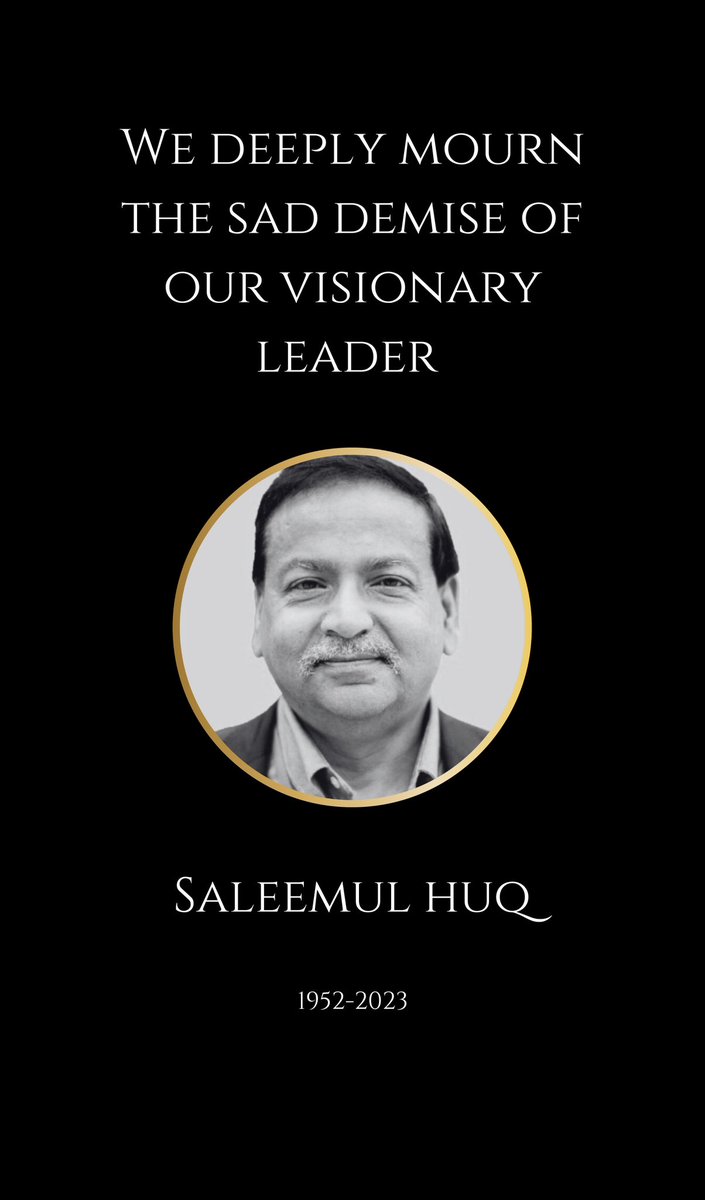
I still can't believe this news. I wish it were a bad dream, and everything could return to normal as before. Why it is too hard to accept the reality! Rest in peace, Dr. Huq. You will be deeply missed.
It is with heavy hearts that we inform you about the passing away of our director, Prof. Saleemul Huq, on 29 October, 2023.
His unmatched legacy will remain as a shining example for years and generations to come.
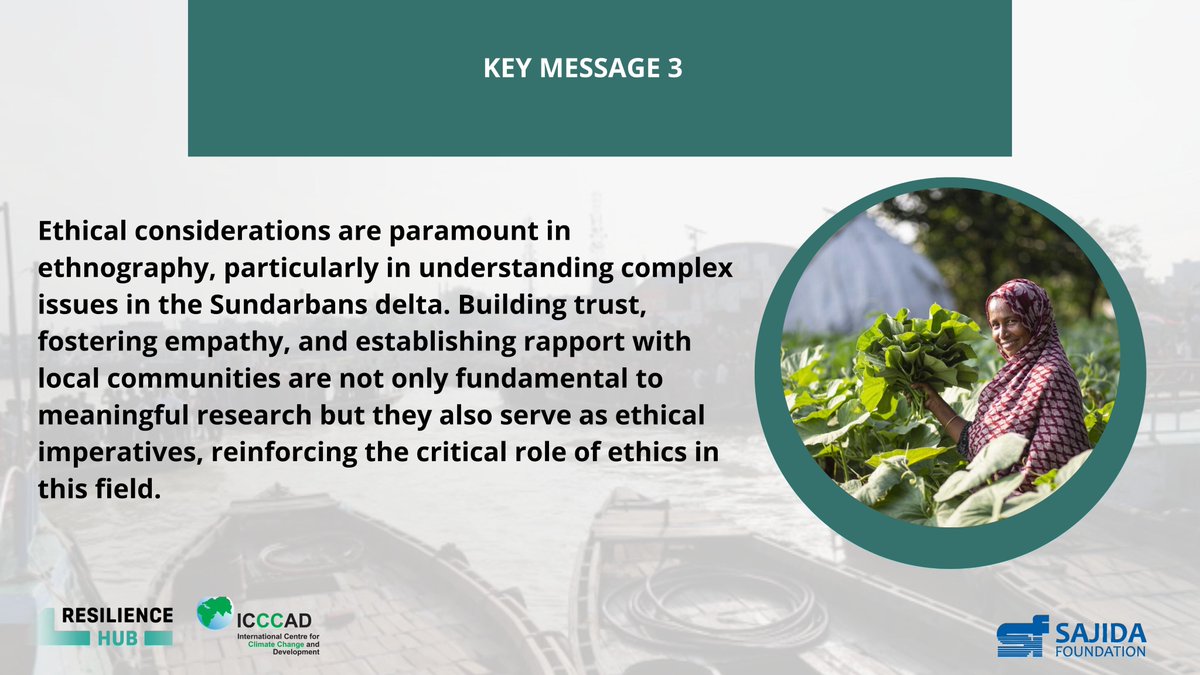
Intriguing insights on #SocialResilience in the Sundarbans delta at the @SouthAsiaResilienceHub. We explored ethnographic research's role in understanding complex challenges amidst the triple planetary crisis. Let's unite for resilient communities and sustainable development
"Heatwaves and Women: An Unseen Health Crisis"
Read this insightful article from the Financial Express, highlighting the impact of heatwaves on women's health. Their vulnerability is an important concern amidst our changing climate.
https://t.co/5rjJ8UB0WY
We are going to present their work on "Adapting to climate change: sustainable livelihood initiative in coastal region of Bangladesh" at the 5th International Symposium on the ECCWO. Our study shows the effectiveness of NbS and LLA in building resilience to climate change impacts
Join us to a session on “A value-based approach to understanding Non-economic Loss and Damage (NELD)” at GGC3. Local communities, researchers & NGO representatives will be there to share their experience on NELD.
Registration link: https://t.co/p9OTWHlQOs
#GGC3#Gobeshona