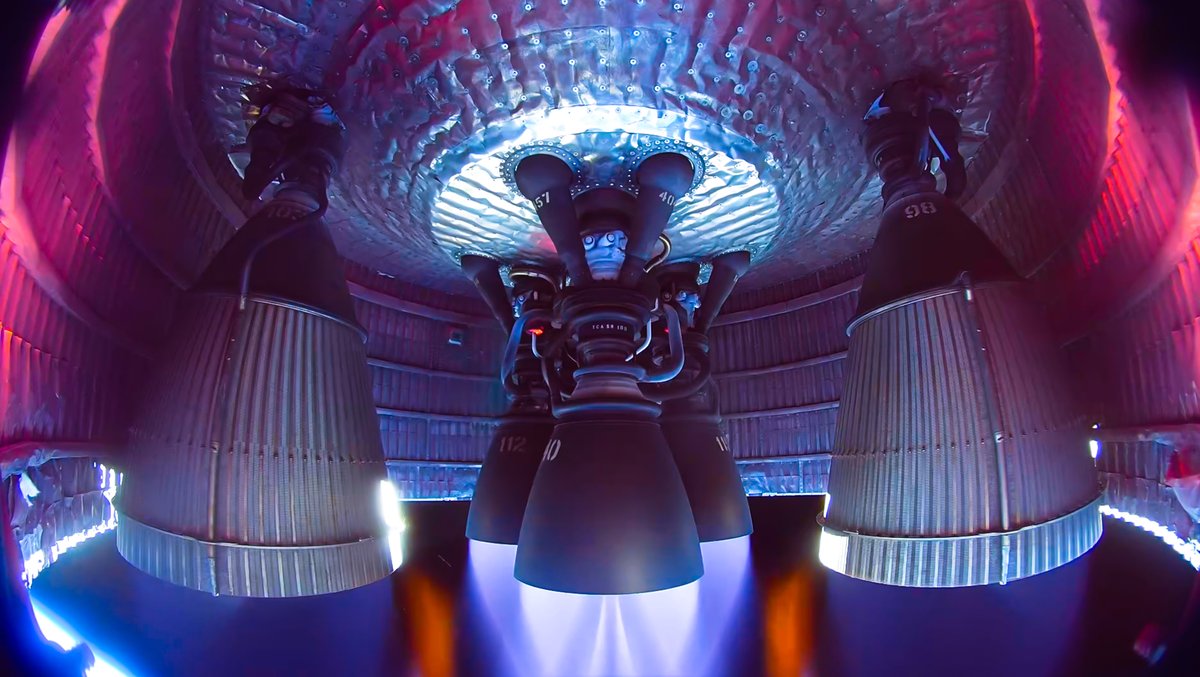
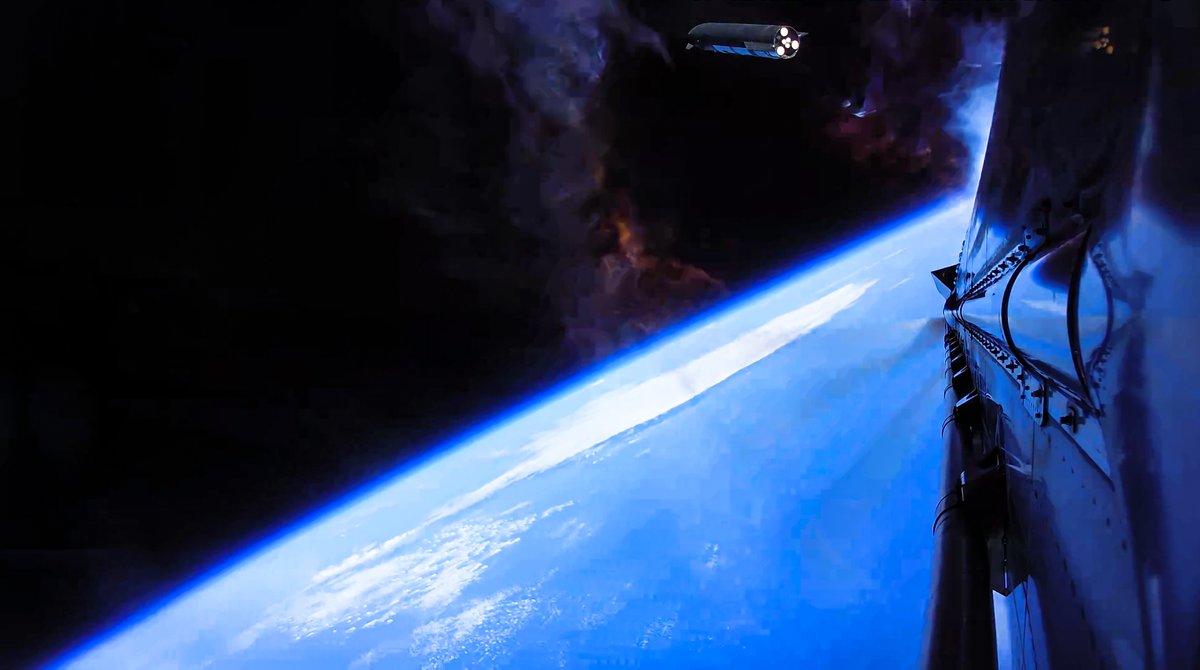
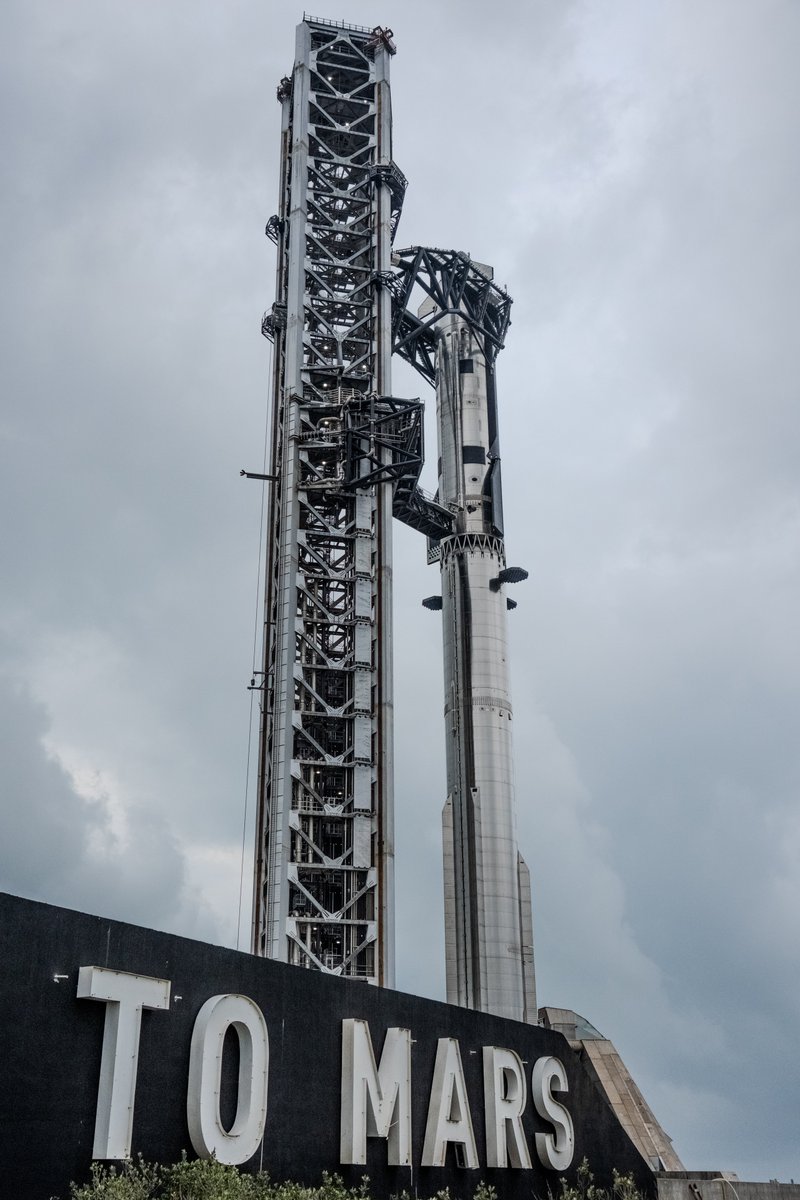
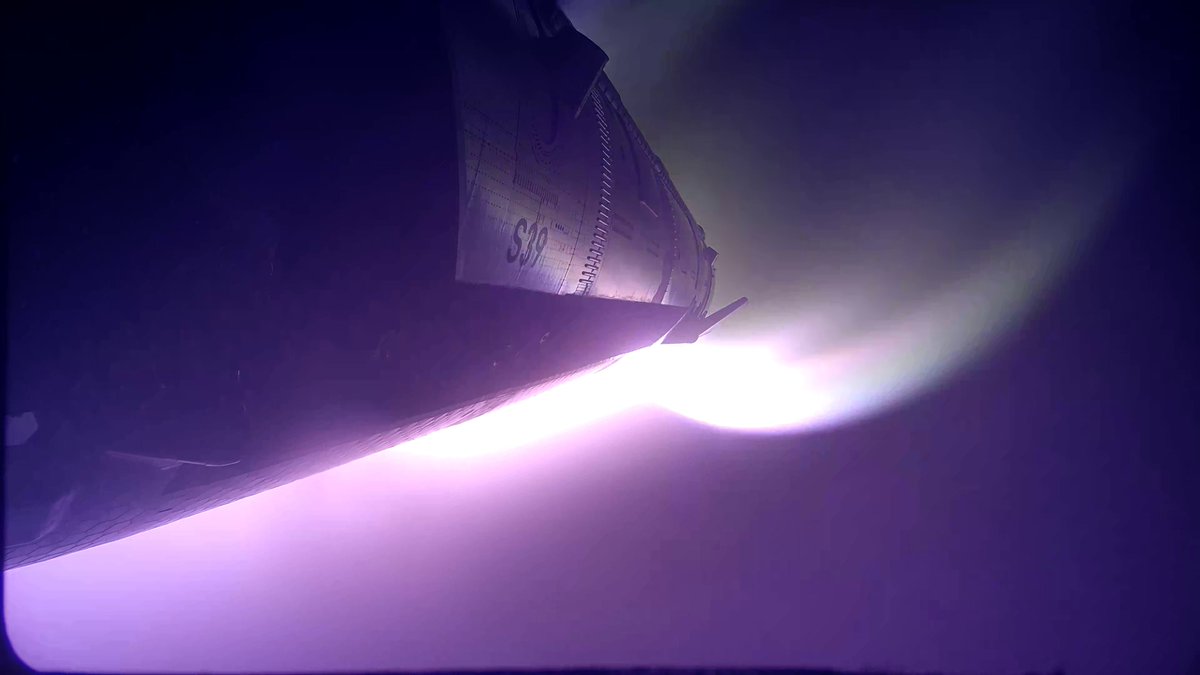
Onboard views from Starship and Super Heavy V3, which are equipped with upgraded cameras capable of streaming 4K video through every phase of flight via @Starlink
🚀What a week!
We have a new perspective on Starship flying in orbit — from a satellite it deployed through the "Pez Dispenser." The satellite has cameras and bright flashlights facing back toward Starship for full-body inspection in space.
Three years since the first flight of Starship, the next generation is here. New ship. New booster. New engines. New pad and new test site. SpaceX engineers are working to solve one of the most difficult engineering challenges in history: developing a fully, rapidly reusable rocket
Purdue announces SpaceX team as inaugural recipients of the Neil Armstrong Space Prize.
Lars Blackmore, senior principal Mars landing engineer.
Shana Diez, senior director, Starship reliability.
Jon Edwards, senior vice president of Falcon and Dragon projects.
Yoshi Kuwata, principal guidance, navigation and control engineer.
Eduardo Velazquez, director, Crew Starship engineering.
https://t.co/IZfbrFI2Dt
For the first time in our existence, we possess the means, technology, and, for the moment, the will to establish a permanent human presence beyond Earth. Starship is designed to make this future a reality → https://t.co/dGAZiB4rr3
Dragon and its new “boost trunk” performed a 15 minute burn yesterday, providing 1.62 m/s of delta-v to the ISS for station-keeping (a job typically performed by Roscosmos via the Zvezda Service Module or visiting Progress vehicles).
Great photo by American (and Crew-11) astronaut Zena Cardman @zenanaut!
California will keep fighting on behalf of all our people including in the courts.
If some of us can be snatched off the streets without a warrant, based only on suspicion or skin color, then none of us are safe.
Authoritarian regimes begin by targeting people who are least able to defend themselves. But they do not stop there. Trump and his loyalists thrive on division because it allows them to take more power and exert even more control.
Don (@astro_Pettit) and I decided to demo how spaceships could transfer rocket fuel (AKA propellant) in space using water bottles, water, and Alka-Seltzer . . . what could go wrong?
We’re proud to advance lunar science with two cutting-edge technologies flying on Firefly Aerospace’s exciting Blue Ghost Mission 1 as part of NASA’s Commercial Lunar Payload Services program. The Lunar Instrumentation for Subsurface Thermal Exploration with Rapidity, or LISTER, probes up to 3 meters deep to measure the Moon’s heat flow. Our Lunar PlanetVac uses compressed gas to collect and transport lunar soil in seconds.
Photos courtesy Firefly Aerospace