Soon, radiology residents will replace radiology AI models.
Pedrini et al (2026) looked at 3 months' worth of CT scans (2,153) interpreted by an on-call resident. 15.4% of them had intracranial hemorrhage (ICH).
The residents had a sensitivity of 96.4% and specificity of 99.6%. The same studies were given to directly to a commercial AI software, which generated heatmaps. The results and heatmaps were separately evaluated as part of the research protocol (aka not available at interpretation time) with sensitivity of 84% and specificity of 94.4%. Performance by AI improved with multiple hemorrhagic types or sites, but did not outperform the resident.
Of 12 FN reports by residents, 6 would have been caught by the model; the attending that overread the preliminary report obviously found all 12.
AI mislabeled 101 cases as FP for ICH. If these were autonomously read, this would have likely led to increased length of stay, follow-up imaging, or inappropriate treatment changes, including discontinuation or non-administration of thrombolytic therapy in patients with ischemia.
The study authors note that the AI FP "typically would not cause confusion with ICH for radiologists interpreting CT scans, as they are easily recognized as various hyperdense intracranial abnormalities not related to ICH."
Take-home points: 1) Clinical deployment studies are increasingly important for medical AI. The commercial model used here was good and well-validated. 2) Perhaps you should hire a Swiss radiology resident to read all your ICH cases, they seem pretty good.
https://t.co/GBxJhGcPdi
Ahmed is a real-life hero. Last night, his incredible bravery no doubt saved countless lives when he disarmed a terrorist at enormous personal risk.
It was an honour to spend time with him just now and to pass on the thanks of people across NSW.
We’ve installed a new PET/MR scanner at the Center for Clinical Imaging Research – the first of its kind in the U.S.! What does this mean for patients?
✅ Dual-modality imaging for comprehensive exams
✅ Enhanced anatomic detail
✅ Less time in the scanner
https://t.co/ramqwifrFS
Take care in introducing AI tools. These are the results after deployment of one of most common AI CAD nodules in our institution!! We need tolls like this to real time assessment! Thanks to @nuance for this effort! OBS: they sold as a minimum 95% accuracy!!!
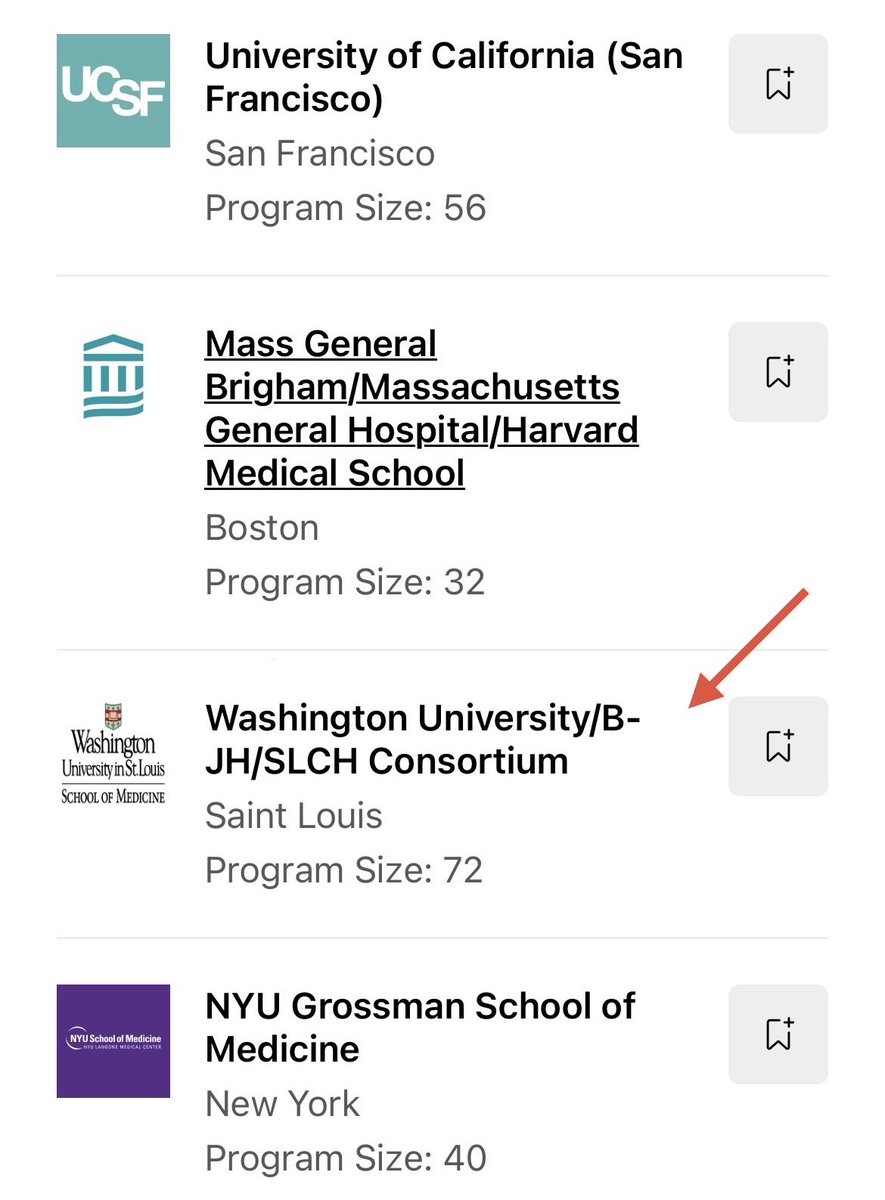
Once again @MIRimaging ranks #3 on Doximity for Diagnostic Radiology Residency Program! But I am biased - we have the *best* radiology residents, faculty, PD, APDs, and Pgrm Coordinators! (We are also the largest program - LOL) Congrats to all! #RadRes
BREAKING: Explosive new paper from MIT/Harvard/UChicago.
Things just got worse — a lot worse — for LLM’s and the myth that they can understand and reason.
The paper documents a pattern they called Potemkins, a kind of reasoning inconsistency (see figure below). They show that LLMs - even models like o3 — make these errors frequently.
You can’t possibly create AGI based on machines that cannot keep consistent with their own assertions. You just can’t.
“success on benchmarks only demonstrates potemkin understanding: the illusion of understanding driven by answers irreconcilable with how any human would interpret
a concept … these failures reflect not just incorrect understanding, but deeper internal incoherence in concept representations”
Game over for any hopes of building AGI on a pure LLM substrate. cc @geoffreyhinton, checkmate.
Our fellows have successfully completed highly sought-after and extraordinarily competitive training programs, where they honed their subspecialty skills.
This Earth Day, we’re proud to share that MIR has recycled 220+ liters of iodinated contrast across 6 sites — keeping 61 containers of waste out of landfills and helping build a healthier future for patients and the planet. https://t.co/7ahiPueEdY