BREAKING NEWS 🚨: Claude can now fix your slow Wi-Fi like a $150 per hour network engineer.
One user pointed it at his network this week and it found three fixes: a better channel, a faster DNS and a separate 5GHz network.
Open the Claude desktop app and use these 7 prompts:
JUST IN - Footage shows a person playing GTA 6 using Elon Musk’s Neuralink brain chip, controlling the game with their thoughts instead of a traditional controller.
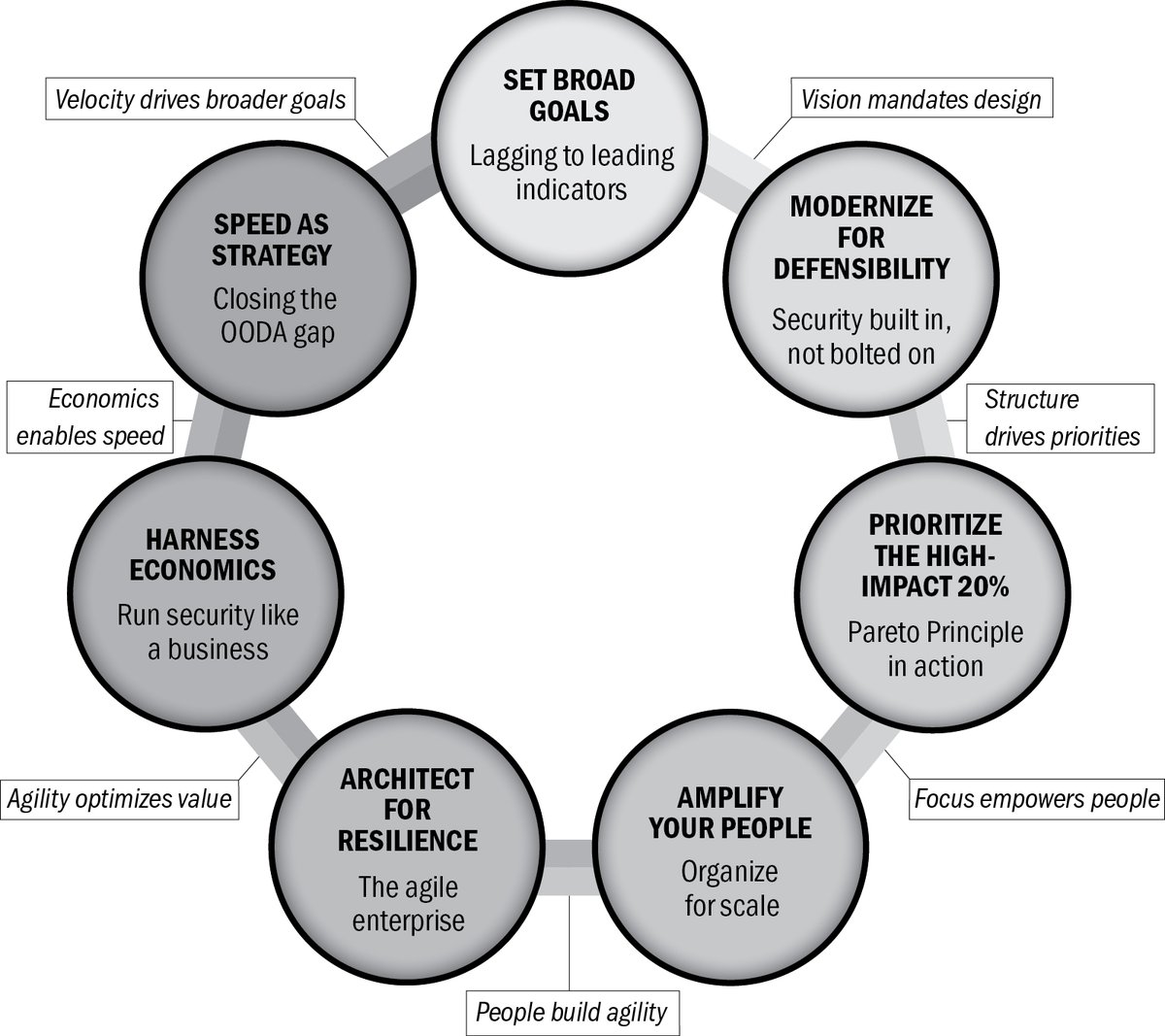
Scaling Security: The 7 Pillars of Elite Cybersecurity teams is a management “operating system” for established CISOs, rising executives, CIOs, CEOs and Board members.
https://t.co/76pSZgLmgs
Chinese-nexus actors ran ARTEX AI agents against hundreds of targets. Stolen LLM API keys paid for the agents' own inference. Every technique was old: default creds, exposed secrets, SSRF to metadata. Caught via MadPot decoy LLM APIs.
https://t.co/QMDZQ4AGhW
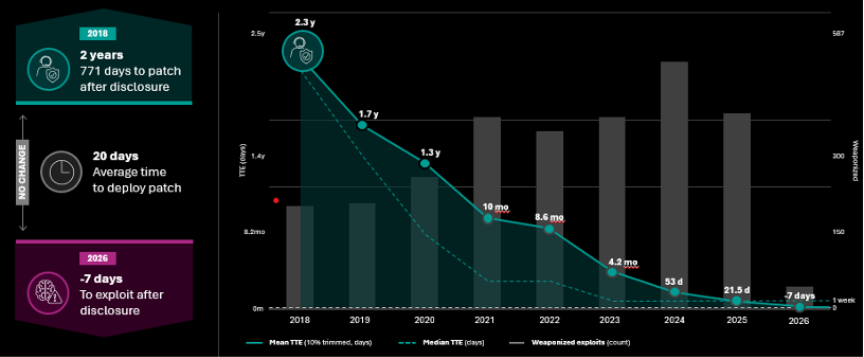
⚠️ Attackers are exploiting vulnerabilities before they're publicly disclosed.
Mandiant reports a median 7-day lead over disclosure. Enterprises take 20 days on average to deploy patches.
That's a 27-day gap traditional patching can't close.
How runtime defenses help ↓ https://t.co/cvDDvDHh5Y
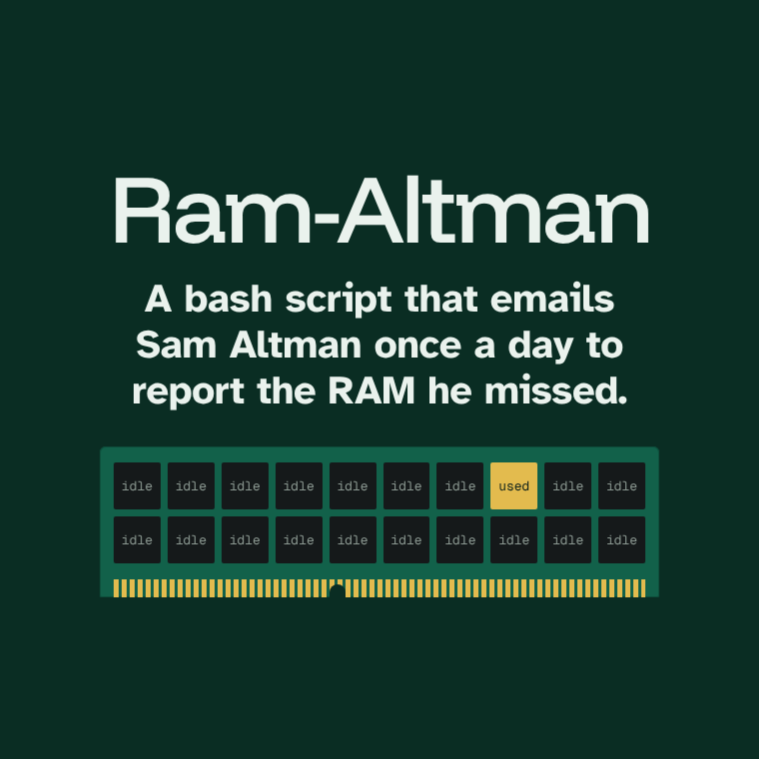
❗ Someone built a script that emails Sam Altman to let him know when their RAM sits idle.
Sam Altman said the RAM belongs in datacenters, that the RAM in people's PCs is used "maybe 5% of the time", and called it "quite terrible".
Ram-Altman logs a Linux PC's memory every five minutes and, once a day, reports in if more than 10% of it is unused.
Some of the biggest openings in security have nothing to do with patching
How breaches began, per a 2026 report:
- 31% exploited a vulnerability
- 35% used phishing, stolen logins or impersonation scams
And nearly half now involve a vendor or partner, up 3x since 2024
Full piece from a16z's Asaf Ezra and Steph Zhang on six cybersecurity companies worth building: https://t.co/y6LXgU1fbi
if you’re working for a company in cybersecurity, you should be evaluating your options to abstract your companies services from the internet
what i mean is: why allow an unauthenticated anonymous agent of an attacker to interact with your systems?
consider your architectural levers now, you’re going to need them
Google just upgraded Flashcards 📚
→ Flashcards now include images
→ Optional stopwatch to test your recall
→ Study reminders on mobile, so you actually show up
Visual memory, timed practice, and a nudge to stay consistent.
No more excuses before exams @Gemini_Notebook
NEVER SIGN IN WITH GOOGLE
NEVER SIGN IN WITH GOOGLE
NEVER SIGN IN WITH GOOGLE
NEVER SIGN IN WITH GOOGLE
NEVER SIGN IN WITH GOOGLE
NEVER SIGN IN WITH GOOGLE
NEVER SIGN IN WITH GOOGLE
As Veterans Day approaches, take a moment to honor those who have served our country. One way to celebrate their service is by helping them discover the places and stories that make our nation's public lands special.
U.S. military veterans and Gold Star Families are eligible for a free America the Beautiful Military Lifetime Pass, providing free access to federal recreation lands where entrance or standard amenity fees are charged.
From the quiet beauty of a mountain trail to the stories preserved at historic sites, our public lands offer opportunities to explore, reflect, learn, and connect with the places that help tell America's story.
Learn how to get your pass and start planning your next adventure: https://t.co/q0WaKb94pP
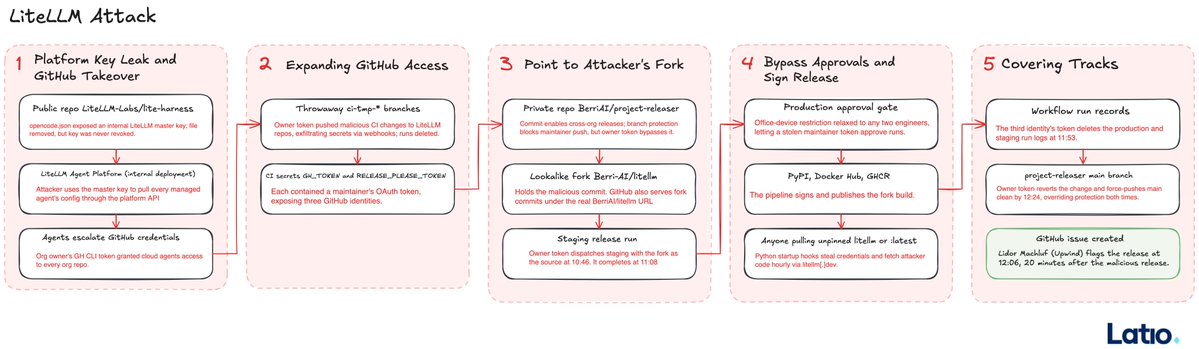
The Litellm supply chain malware attack provides several actionable items for defenders to implement today, here’s what happened:
1. An attacker gained initial access to an internal platform from a publicly committed secret that was deleted from source code but never rotated.
2. They used over-permissioned GitHub OAuth credentials to slowly take over the environment and collect keys, ultimately pointing the release at their malicious fork
3. They attempted to cover their tracks by deleting workflow logs and force pushing over malicious commits.
Here’s what teams can do about these kinds of attacks:
1. Have a defined secret remediation process. Combine pre-commit secret scanning with documented key rotation and revocation procedures. Deleting a leaked secret isn't enough.
2. Monitor GitHub platform audit logs. Alert on sensitive actions such as branch protection overrides, unexpected force pushes, and deleted workflow runs.
3. Monitor CI/CD runners. Log runner activity and, where possible, implement runtime network egress monitoring to detect suspicious outbound connections.
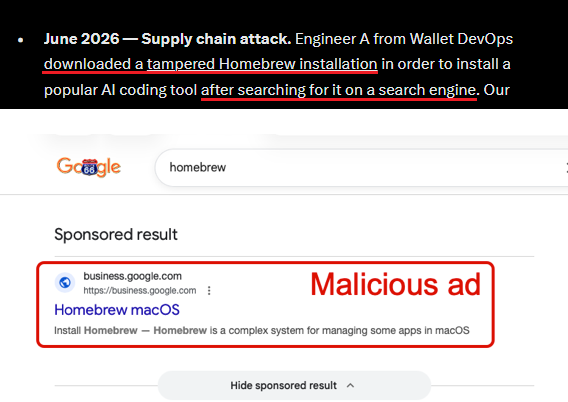
The domino that caused the Binance $6 Billion hack was a malicious Google ad.
1) Google has been getting away with profiting from ads for literal malware and phishing sites for far too long
2) Engineer A is retarded