Pilot/AvGeek passionate about aviation sharing news about the Aviation World 2200 hrs TT multi/instr ratings, Longhaul MM on DL & AA, AMS/EHAM most visited
On January 8, 2005, the 6,000-ton nuclear attack submarine USS San Francisco slammed head-on into an uncharted undersea mountain at 35 miles per hour, 525 feet beneath the Pacific Ocean.
Cruising at flank speed 360 nautical miles southeast of Guam, the Los Angeles-class boat struck a solid rock wall that did not exist on the navigation chart on the table.
In a fraction of a second, 360 feet of steel decelerated so violently that sailors were flung 20 feet through the air from one end of a compartment to the other.
98 crewmen suffered broken bones, lacerations, and head trauma, and Machinist's Mate Second Class Joseph Ashley tragically lost his life despite heroic efforts by shipmates to save him.
Outside, the entire fiberglass sonar dome and outer forward ballast tanks were crushed back like an accordion.
At 525 feet down, a lesser submarine hull would have cracked open and imploded in milliseconds.
Built after the 1963 loss of USS Thresher under strict Navy SUBSAFE engineering standards, San Francisco's inner HY-80 steel pressure hull and nuclear reactor held without a single breach.
Bleeding, concussed sailors crawled to the emergency air manifolds, blew high-pressure air into the surviving tanks, wrestled the crippled submarine to the surface, and steamed 360 miles back to Guam under her own power.
Navy shipwrights later welded the bow of retiring sister sub USS Honolulu onto San Francisco, returning the submarine to sea for another decade.
American Airlines passengers were horrified when dozens of suitcases arrived in Atlanta covered in a mysterious brown substance that many feared was human waste.
Flight AA2609 had arrived from Miami on Monday, November 16, but passengers reportedly waited around two hours before their luggage appeared.
When the bags finally emerged, several were smeared with thick brown liquid, prompting shocked reactions and a viral TikTok video.
American Airlines investigated and confirmed the substance wasn't what passengers feared.
It was peanut butter.
According to the airline, a food item had leaked from someone's checked luggage during the flight, spreading onto other bags.
One passenger wasn't entirely convinced, asking how much peanut butter somebody would need to pack to cover that many suitcases.
Affected travellers were seen cleaning their luggage with tissues and disinfectant wipes.
American Airlines apologised and said it would work with affected customers to make things right.
#AmericanAirlines #AviationNews #TravelDrama
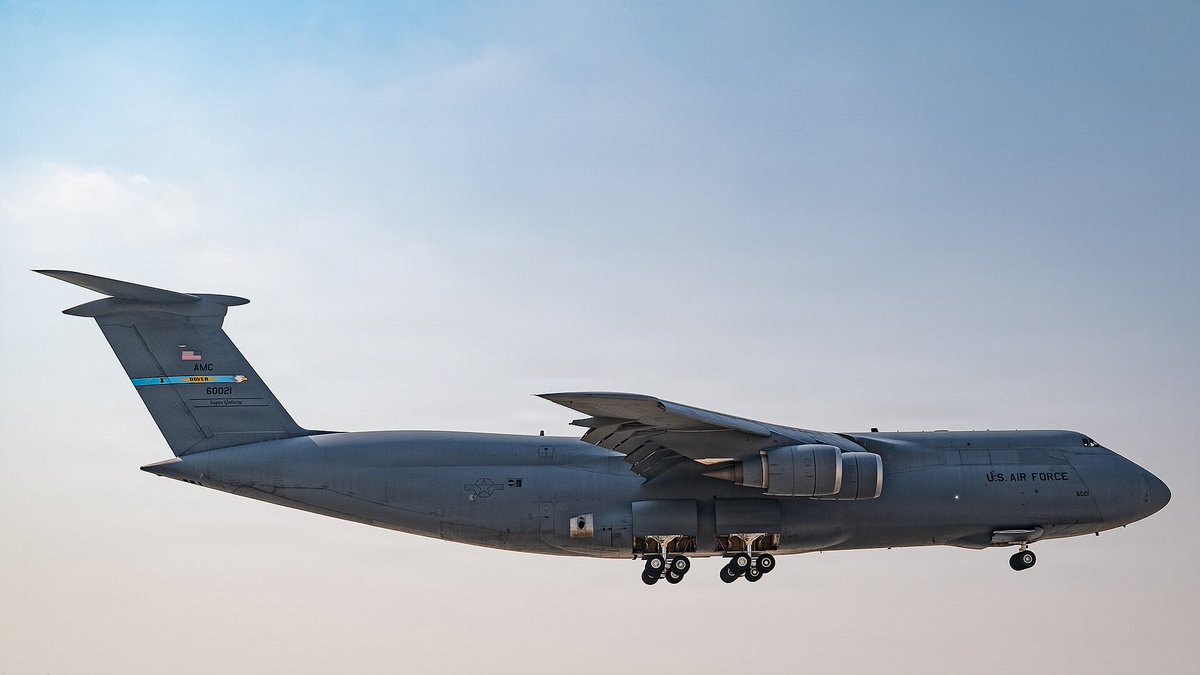
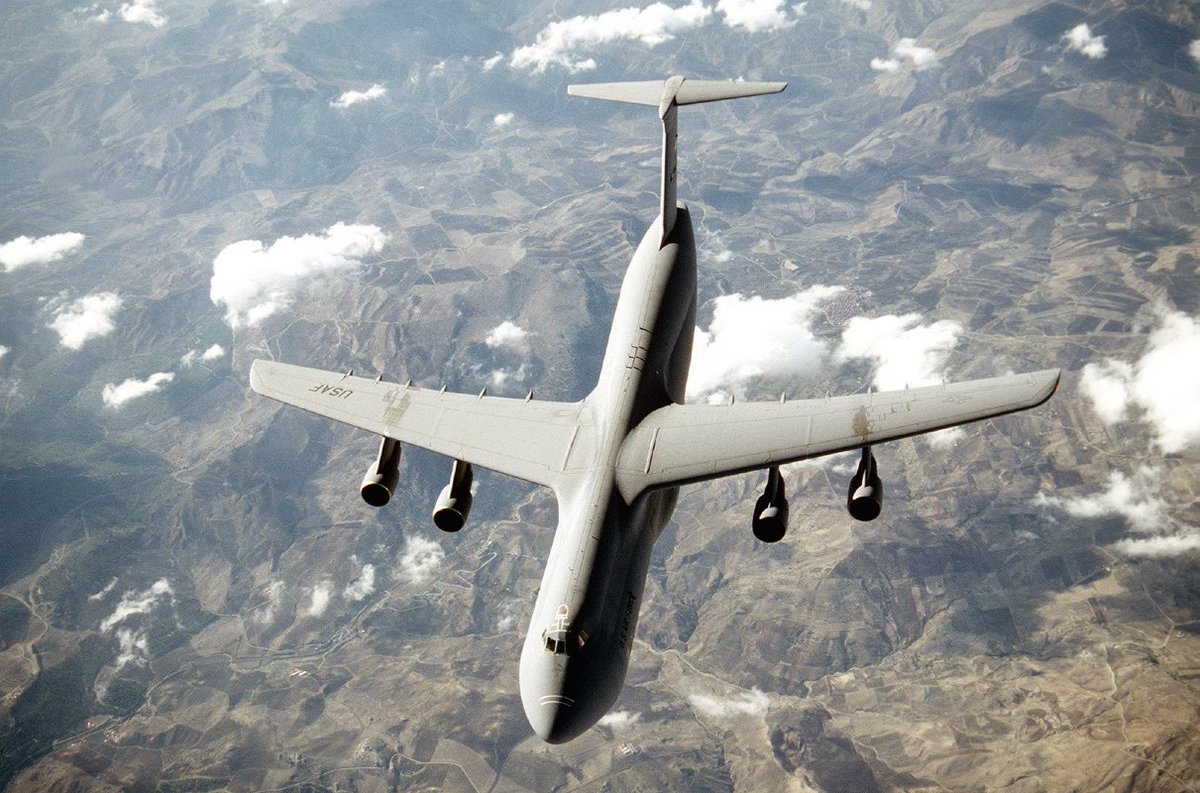
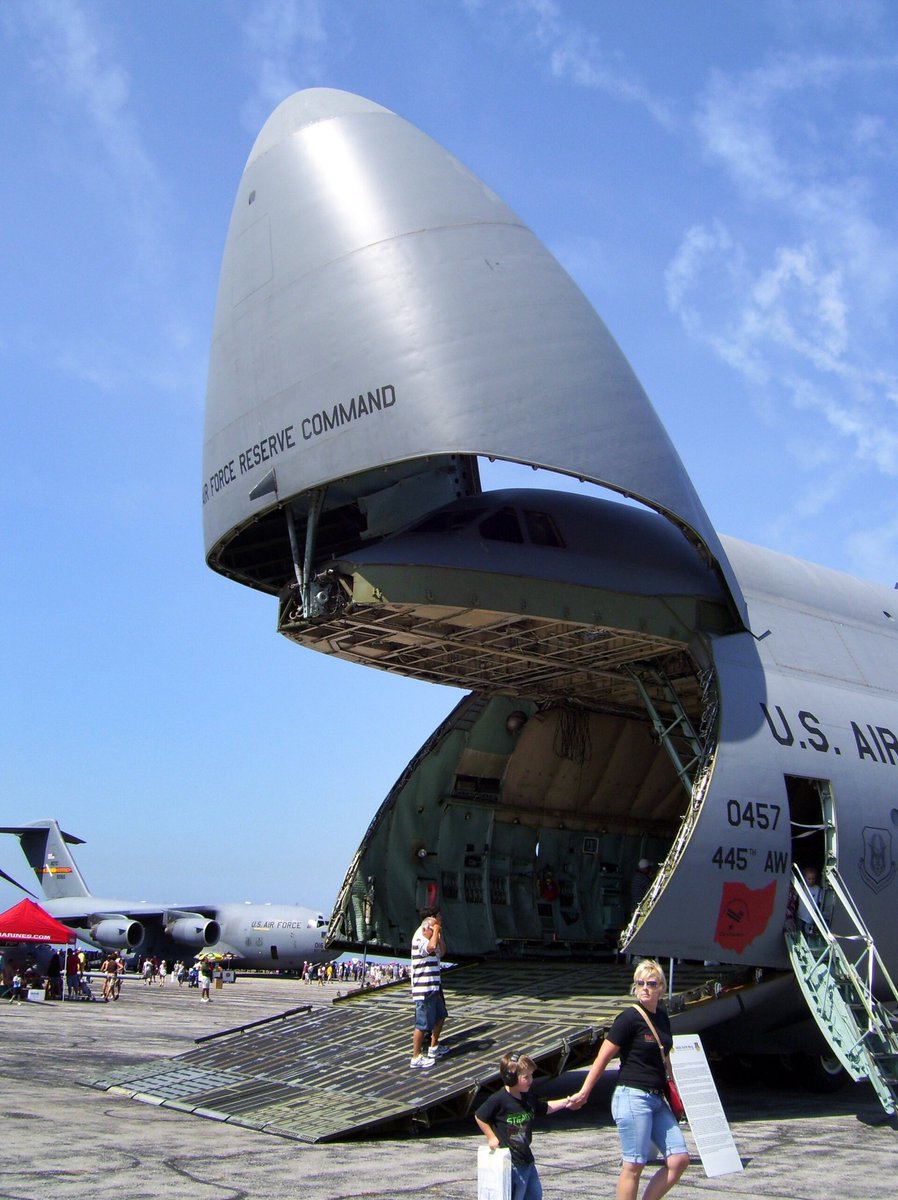
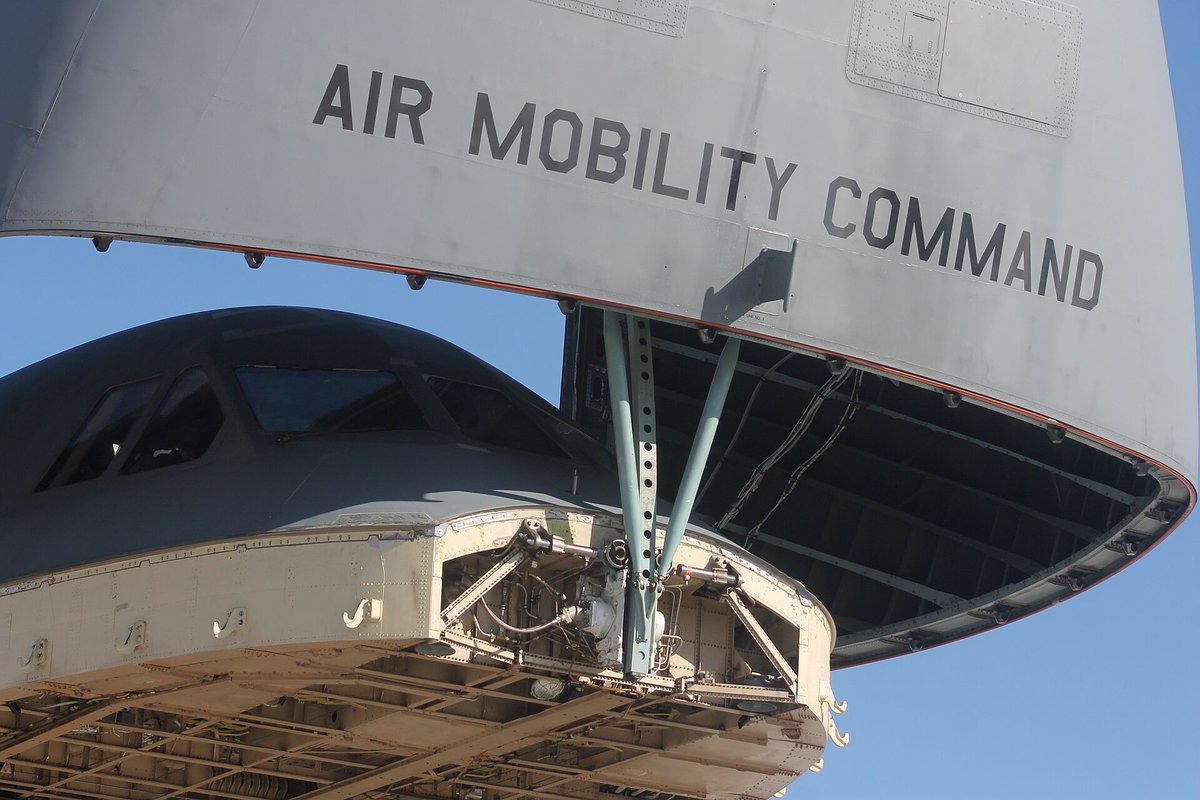
Tom flew the C-5 Galaxy in the Air Force Reserve, the biggest airplane in the USAF inventory. ✈️
Now picture squeezing it into an airshow airfield where a windsock nearly cost an aircraft commander their qualifications. 😬
Ever seen a C-5 up close? Drop your story 👇
#AvGeek #C5Galaxy
🎧 Watch the full episode in the comments 👇
Impacts Of Latest Neptune Missile Strike On Kerch Bridge Seen In Satellite Imagery
The rail span is proving to be a harder nut for Ukraine to crack than the roadway one.
https://t.co/umrxlZCtbc
1/ Russia's military is said to be failing to provide feedback to Russian weapons manufacturers, resulting in "systems which are now so severely disconnected from the developers and manufacturers that they're completely unaware of their effectiveness." ⬇️
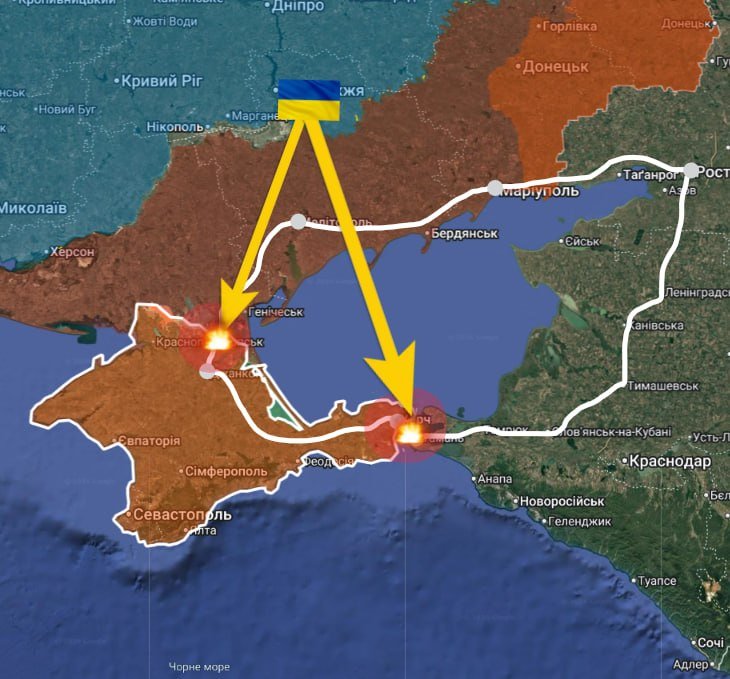
Russian trains are unable to continue their journey. According to the Ministry of Defense, Ukrainian "Neptune" missiles struck the railway section of the Kerch Bridge during the night of November 19.
Impacts were recorded in the area of the bridge arch and the railway tracks. Train traffic has been suspended; the extent of the damage is currently being assessed.
The Ministry of Defense notes that the bridge serves as a vital supply route for ammunition and military equipment destined for Russian forces in southern Ukraine. This marks the third attack on the bridge within a single week.
It moves in shadow of AF1 everywhere it goes overseas, usually lands at another airport nearby. This is standard procedure going back decades. We see it every single overseas trip. Beyond it's strategic and COG function it acts as a refuge/escape if something really bad happens for POTUS
⚡🇺🇸 Imagine an Ohio-class submarine deployed to the Middle East.
If you were the commanding officer of one of these submarines, you would be responsible for one of the most destructive weapons platforms in the U.S. Navy.
An Ohio-class ballistic missile submarine can carry up to 20 Trident II D5 nuclear missiles, each capable of carrying multiple nuclear warheads, alongside torpedoes.
There is a reason submarine commanders are often regarded as among the most powerful military officers in the world.
Just imagine the responsibility of commanding that kind of firepower.
Bell Completes First MV-75 Fuselage
Bell has completed the first fuselage for the MV-75 Cheyenne II, which will soon be mated with the already completed wing structure and nacelles.
Story: https://t.co/m71Rt2xySd
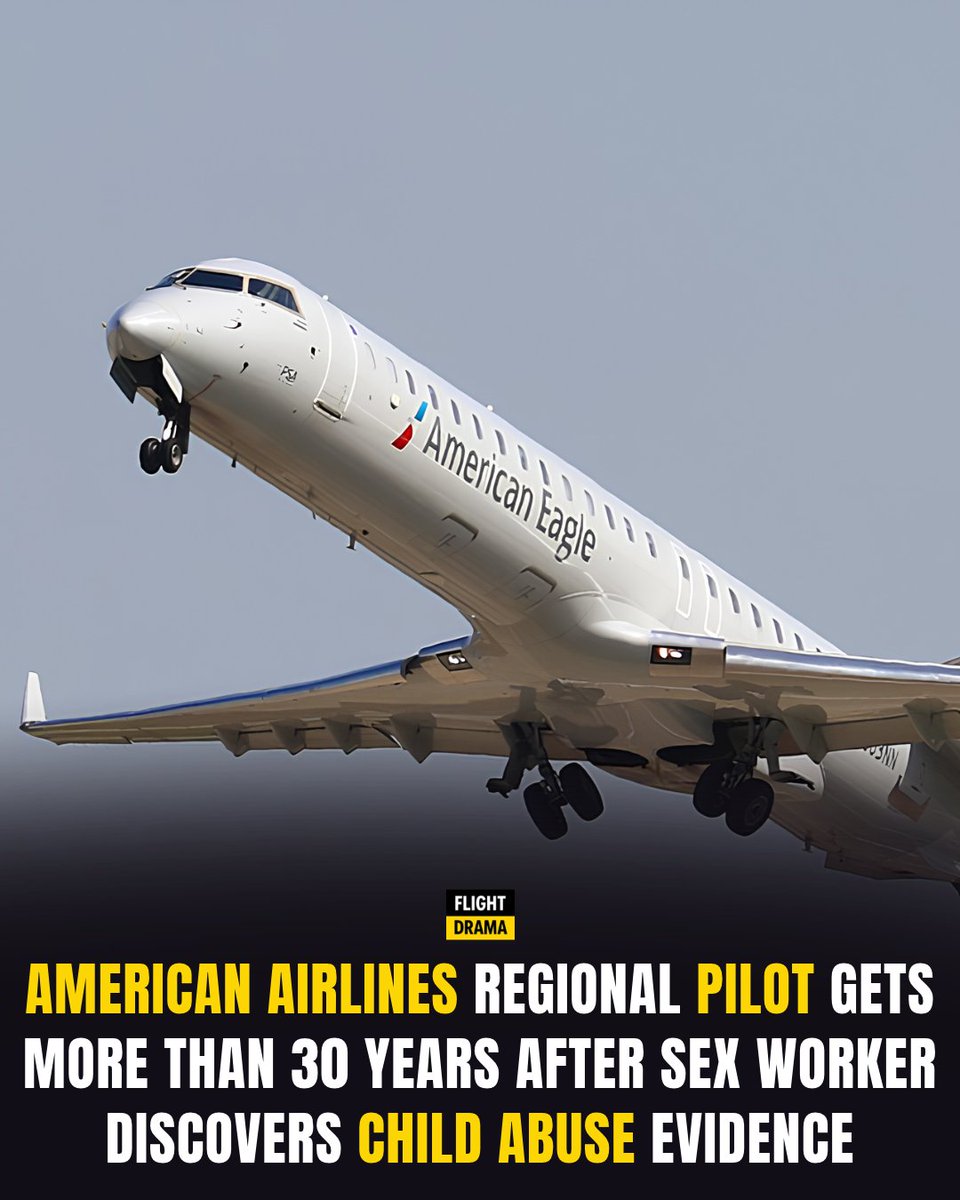
A former American Airlines regional pilot has been sentenced to more than 30 years in federal prison for child sexual abuse crimes after a sex worker exposed him to police.
Stephen Dale Homer, 58, was working as a first officer for PSA Airlines when he was arrested in April 2025.
The investigation began after a sex worker encountered Homer at a Tulsa hotel and discovered disturbing child sexual abuse material on his electronic devices.
She handed the devices to police, prompting an investigation by the FBI and Tulsa Police Department.
Investigators uncovered hundreds of images and videos, including recordings of abuse Homer had committed more than 14 years earlier while living in Saudi Arabia.
He also attempted to have a family member delete evidence following his arrest.
On November 13, 2026, Homer was sentenced to 365 months in prison, followed by 15 years of supervised release.
Federal prosecutors said the recordings documented the abuse of a child known to Homer, whose victimisation continued long after the original crimes.
#AmericanAirlines #AviationNews #CrimeNews
Not quite the landing they were looking for! An Airbus A321 uses up too much runway and elects to go around at LAX! You never know what you’ll see next at LAX, and we caught it all LIVE on the 24/7 Airline Videos Live cameras on November 18th, 2026!
Radar hunter or ship killer - why not both? A RuAF Su-35S hauling four Kh-31 missiles during testing. The "Krypton" is one of the heaviest and fastest missiles in the Russian inventory. Powered by an integral solid-rocket booster that transitions into a four-intake kerosene ramjet, the Kh-31 screams toward enemy radar emitters or surface combatants at over Mach 3, leaving air defense crews just seconds to react before impact. It's a deadly piece of kit.
IMPORTANT 🇺🇦🇷🇺 UKRAINE DOESN’T NEED TO DESTROY EVERY RUSSIAN SUPPLY ROUTE TO MAKE CRIMEA A LOGISTICAL NIGHTMARE.
Russia can replace a damaged bridge section. It can redirect trucks, repair railway tracks and move supplies along alternative roads.
What it cannot do is make those alternatives immune to Ukrainian attacks.
That is the larger significance of Ukraine’s campaign against Russian logistics in occupied Crimea and southern Ukraine.
For years, the Kerch Bridge served as a major transport connection between Russia and the peninsula. But repeated Ukrainian strikes have forced Moscow to develop alternative supply routes and rethink how it moves military equipment, ammunition and fuel.
The bridge was first attacked in October 2022, suffered another major strike in July 2023 and was targeted again in June 2025.
Each incident demonstrated that even heavily protected infrastructure could remain vulnerable.
Russia’s alternative is the occupied land corridor running through southern Ukraine, including the route through Mariupol and Melitopol.
But shifting supplies onto that corridor creates its own problems.
Trucks require fuel, drivers and maintenance. Railways depend on functioning tracks, bridges, signalling systems and unloading facilities. Longer journeys can increase transport demands and complicate delivery schedules.
And concentrating traffic along fewer usable routes can make disruptions more consequential.
There is also an important distinction between destroying supplies and delaying them.
A shipment of ammunition that arrives too late to support an operation can still affect the battlefield, even if the ammunition itself remains intact.
The same applies to fuel, spare parts and replacement equipment.
This is why military logistics is about much more than the number of roads available on a map.
It is about whether supplies can reach the right units, in sufficient quantities, at the moment they are needed.
Ukraine’s campaign seeks to make that process increasingly difficult for Russian forces.
However, the Kerch Bridge should not be treated as completely unusable without confirmation of its current condition. Russia has demonstrated an ability to repair damaged infrastructure and adapt its transport network.
Nor does disrupting one route automatically isolate Crimea.
The peninsula remains connected to occupied southern Ukraine, and Moscow can continue distributing supplies across different transport systems.
But every additional diversion, repair requirement and security measure imposes demands on Russian resources.
And those demands accumulate.
The strategic objective is not simply to damage a bridge. It is to force Russia to spend more time, equipment and manpower sustaining an occupation that Ukraine continues to contest.
Moscow can rebuild infrastructure.
It cannot eliminate the underlying problem: Crimea remains internationally recognised as Ukrainian territory, and Russia’s military presence there continues to depend on supply lines that Ukraine is determined to disrupt.
Crimea is Ukraine. 🇺🇦
30 years ago, 14 perished in the Quincy airport tragedy in Illinois
On the evening of November 19, 1996, United Express 5925 [a Beech 1900] was on approach to Quincy.
Two aircraft (a Beechcraft King Air and a Piper Cherokee) were ready for departure while Flight 5925 was on approach.
Quincy was an uncontrolled (non-towered) airport where pilots coordinated their movements over a Common Traffic Advisory Frequency (CTAF). So, Flight 5925's captain enquired if the King Air would hold short of the runway or depart before their arrival.
Due to a transmission overlap, the United Express crew wrongly concluded that both airplanes were holding short of the runway and proceeded with the landing.
The King Air crew, who failed to monitor approaching traffic, taxied onto the runway and began its takeoff roll as Flight 5925 had touched down, resulting in a collision at an intersection.
Although the impact itself was largely survivable, deformation of the fuselage jammed the forward air-stair door shut. With no professional fire-rescue team on site, the occupants trapped inside were overcome by smoke and fire before rescuers could break them out.
None of the 14 aboard both planes survived.
Video – “Fatal Transmission” (Mayday S15)
Who needs a tow tug when you’ve got a Land Cruiser, a long rope and a whole village? A small L-410 turboprop ended up stuck on a muddy grass airstrip, so the locals got behind it and pushed while the 4x4 pulled. Inch by inch, shove by shove, it started rolling again. No hangar, no heavy equipment, just teamwork and a lot of determination.
Mid-flight explainer from @JenniferJJacobs on what happened with the press pool's phones on AF1 while flying back from China:
"For cyber security, an AF1 aide collected White House staffers' burner cellphones for disposal or data wiping as we left Shenzhen and asked that journalists place the phones they'd used in China in a signal-blocking Faraday bag until we landed in the US, saying those phones would be returned then.
Not collected were all the devices that journalists had left in Faraday bags on AF1 before we landed in China on Wednesday.
Many (but not all) reporters and photographers had placed their regular work phones, personal phones, laptops and smart watches in metal-lined bags to prevent potential spyware, surveillance or data collection and are able to use them on the flight to the US.
Those who hadn't opted for burners were left with no cellphone."