Making sure everyone on my team listens to this. So much wisdom and priceless mental models for growth investing. Spoiler alert: a priceless homage to his legendary father. https://t.co/0tC7Xc9gc6
Atreides' @gavinsbaker says that once Starship is reusable, the economics of orbital compute crush the economics of terrestrial compute.
He lays out the math:
"Once $SPCX can reuse Starship, the math for orbital compute becomes pretty compelling."
"It's $60B to bring on a GW terrestrially. $25B is power and cooling — you don't need that in space. And so the right comp for that $35B in IT equipment — GPU, CPU, switches, memory, storage — is that $25B [in power and cooling] vs. the cost of launch."
"And once Starship is reusable, I think the cost to launch is $5B. So that means you can put a GW into space for [$40B]. The GW on earth is $60B."
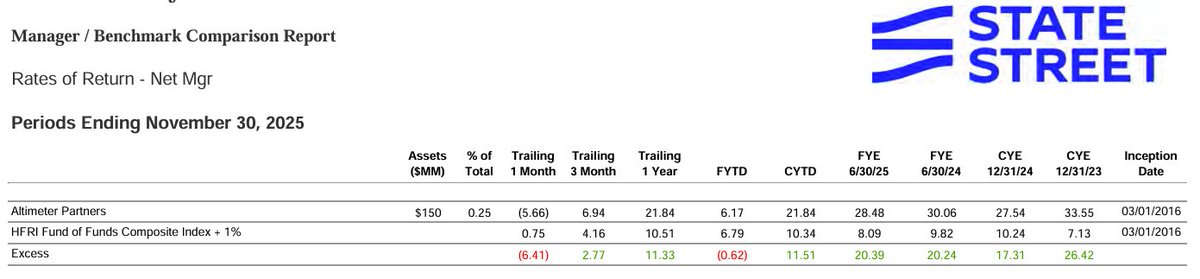
Brad Gerstner started Altimeter in 2008 with $3M from friends and family, in the depths of the GFC, when everyone thought he was crazy.
Since 2011, his fund has generated 25%+ returns per year.
Here's how a travel-search guy built one of the best investing track records:
My favorite @elonmusk quote that I often send friends:
Do not fear losing. “You will lose,” Musk says. “It will hurt the first fifty times. When you get used to losing, you will play each game with less emotion.” You will be more fearless, take more risks.
For anyone wondering what this means:
- Anthropic (and potentially future OpenAI, Google, xAI) models that cost billions to develop will make 0 revenue outside the US
- a big double digit percentage of Anthropic (and potentially OpenAI, Google, xAI) workforce can no longer work there, because they are foreigners and are not allowed to use those models
So Trump just made frontier model development effectively unprofitable and tremendously slowed down Anthropic (and potentially others in the future)
He's handing China the win on a gold platter.
*potentially: if the same restrictions are imposed on other frontier labs and models
*SITUATIONAL AWARENESS'S ASSETS HAVE JUMPED TO ABOUT $20B, SOURCES SAY -- WSJ
*SITUATIONAL AWARENESS GAINED ABOUT 270% THIS YEAR THROUGH MAY, SOURCE SAYS -- WSJ
*ANTHROPIC INVESTMENT NOW ABOUT 20% OF SITUATIONAL'S ASSETS, SOURCE SAYS -- WSJ
Jane Street's invested in Situational Awareness, which has now seen AUM increase to over $20B. Leopold's investment in Anthropic also accounts for about 20% of their assets.
"Situational Awareness has gained about 270% after fees this year through May and is up more than 1,000% after fees since inception, one of the people said. One of the fund's most successful bets is a stake in Anthropic that today accounts for about one-fifth of its assets, the person said.
Its investors now include Jane Street, the savvy quant-trading firm that ranks among Wall Street's most profitable, some of the people said. Jane Street's investment in Situational Awareness is particularly notable because the firm rarely allocates capital to outside money managers."
Red Lobster CEO Damola Adamolekun says he wants the restaurant to be the most AI-forward company to exist as he reveals all the ways Red Lobster plans to use AI, which includes forecasting sales, ordering food, and more.
(🎥 The Black Money Tree/YouTube)
They spend their 20s waiting for permission, and then one day they wake up at 47 sitting in a conference room eating a turkey sandwich thinking "how did this happen?"
Don't meander your way through life.
@altcap at USC Iovine & Young Academy's commencement 2026
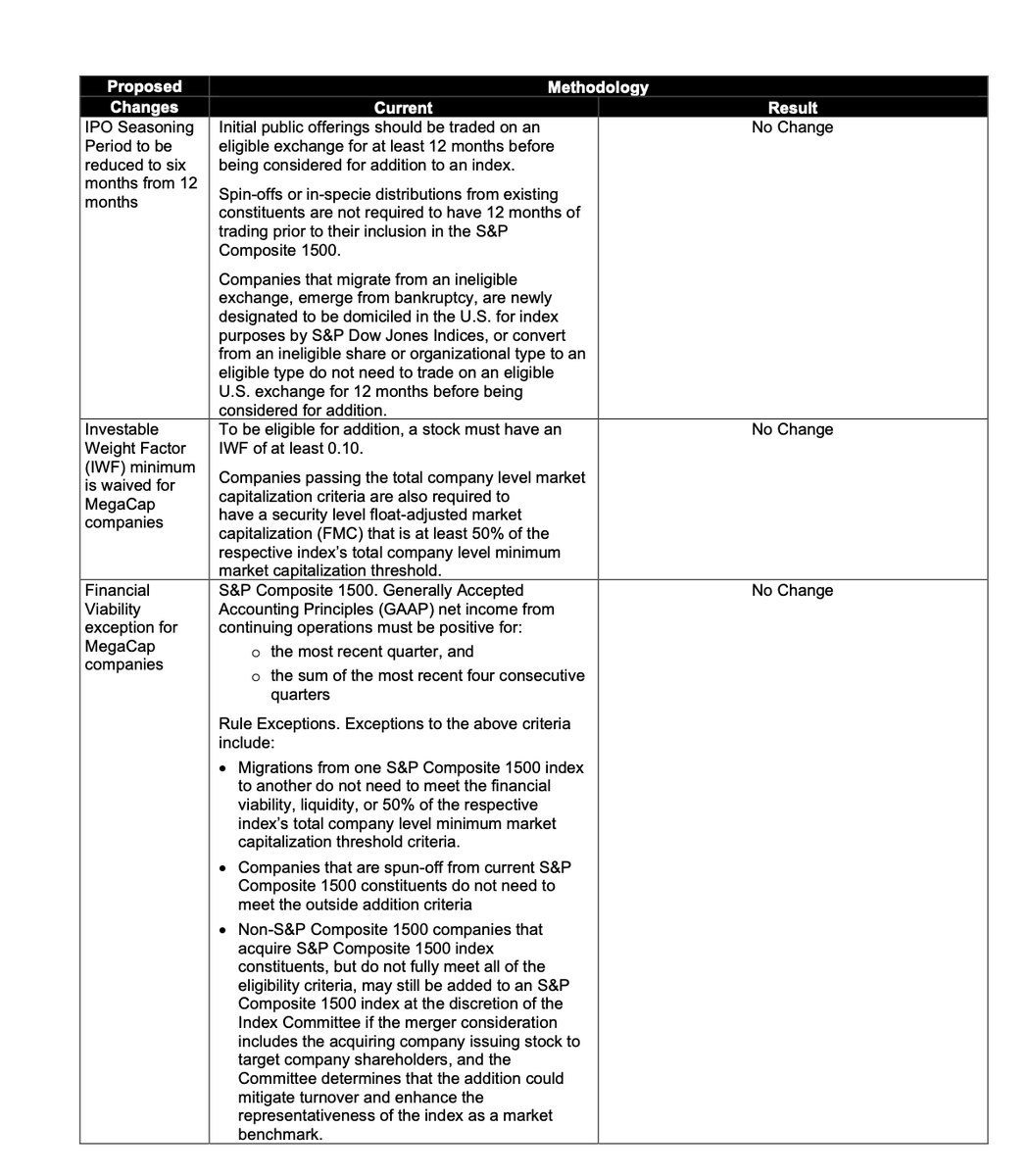
Wow, the S&P Dow Jones Indices has just officially announced that they will NOT be changing their inclusion rules to make it easier for “MegaCap” companies (such as @SpaceX) to be fast-tracked into the S&P 500.
Their reasoning:
"S&P DJI determined that exceptions to the financial viability, seasoning, and IWF requirements should not be granted solely based on market capitalization. The decision not to adopt the proposed exceptions preserves core index principles by maintaining consistent application of these key requirements. Although there may be trade-offs between strict adherence to these eligibility requirements and broad representativeness, the current methodology provides substantial market coverage and sector balance. As a result, the indices can continue to meet their stated objectives while preserving their role as representative and investable benchmarks for the U.S. equity market.
No changes will be made to the eligibility criteria including financial viability screens, seasoning period, or minimum IWF, for the S&P 500, S&P MidCap 400, or S&P SmallCap 600 as a result of the S&P Dow Jones Indices consultation on the treatment of MegaCap companies. Accordingly, there will be no changes to existing methodology for this index family."
This means that the earliest @SpaceX could be eligible to be added to the S&P 500 would now be June 2027.
The requirements that will now remain in place are:
• No changes to S&P 500 eligibility rules for mega-cap companies.
• Mega-cap companies will still need to wait 12 months after their IPO before being considered for S&P 500 inclusion.
• S&P will not waive profitability requirements for mega-cap companies. The company must have positive GAAP net income in the most recent quarter, and the sum of the most recent four consecutive quarters.
• S&P will not waive minimum public float requirements for mega-cap companies. At least 10% of a company's shares must be publicly tradable ("free float").
The S&P rejected proposals that would have:
• Reduced the IPO seasoning period from 12 months to 6 months
• Waived profitability requirements
• Waived minimum public float requirements