🇮🇳 Article 371: One Constitution, Different Constitutional Arrangements
Why does India have Article 371A to 371J for different States? And what could the proposed Article 371K mean for Ladakh?
📌 A quick UPSC-ready revision on Differentiated Federalism: • Nagaland — 371A
• Assam — 371B
• Manipur — 371C
• Andhra Pradesh & Telangana — 371D
• Sikkim — 371F
• Mizoram — 371G
• Arunachal Pradesh — 371H
• Goa — 371I
• Karnataka — 371J
• Ladakh — proposed 371K
🎯 Prelims: Remember the Article–State mapping.
📝 Mains: Link it with federalism, regional aspirations, constitutional accommodation and national integration.
Join our telegram @pragati_mentorship
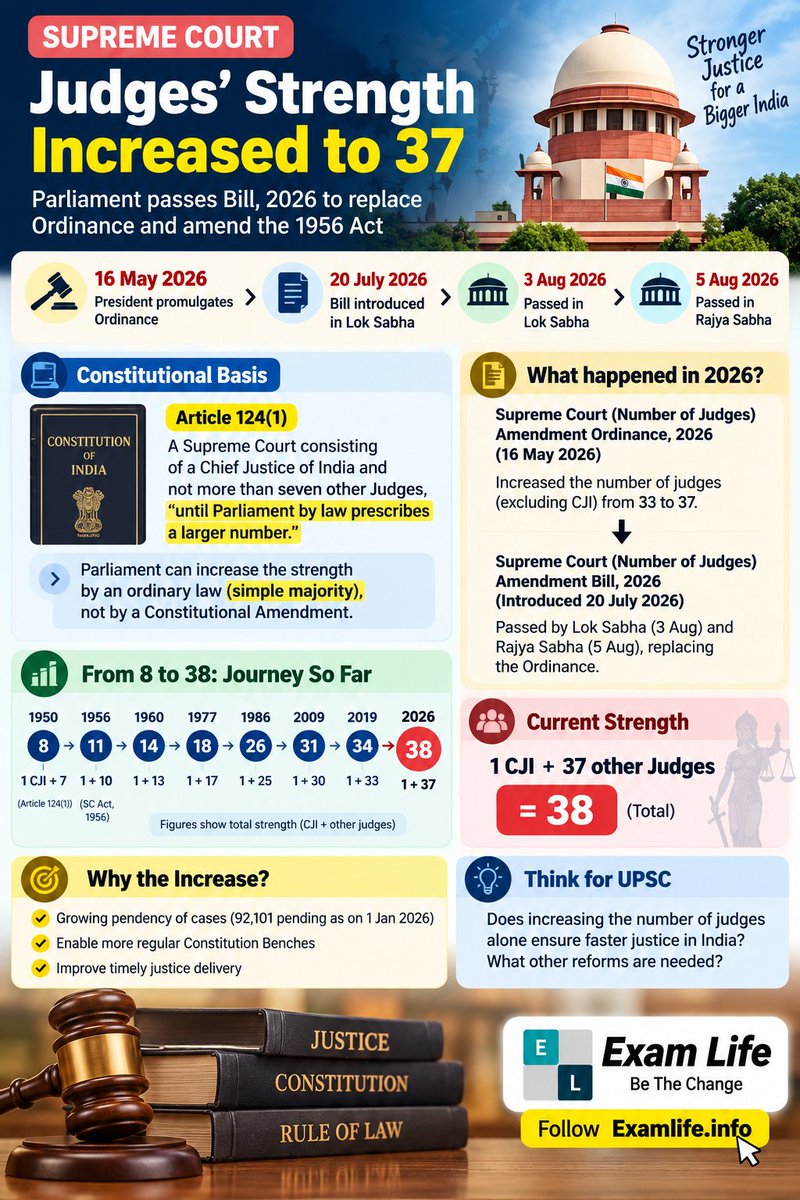
⚖️ Supreme Court Judges’ Strength: 2026 Update
India’s Supreme Court has seen a significant expansion in its sanctioned judicial strength, building on the framework of Article 124(1) and the Supreme Court (Number of Judges) Act, 1956.
📌 UPSC Focus: Remember the constitutional basis, legislative route, and the historical expansion of the Court’s strength.
💭 Question to Think for UPSC Mains:
“Does merely increasing the number of judges ensure faster delivery of justice? What other institutional and procedural reforms are necessary to reduce judicial pendency?”
👇 Read the complete concept in the post and think beyond the facts.
#UPSC #UPSCMains #UPSC2026 #CurrentAffairs #IndianPolity #IndianJudiciary #SupremeCourt #ConstitutionOfIndia #JudicialReforms #UPSCPreparation #ExamLife #ExamLifeInfo
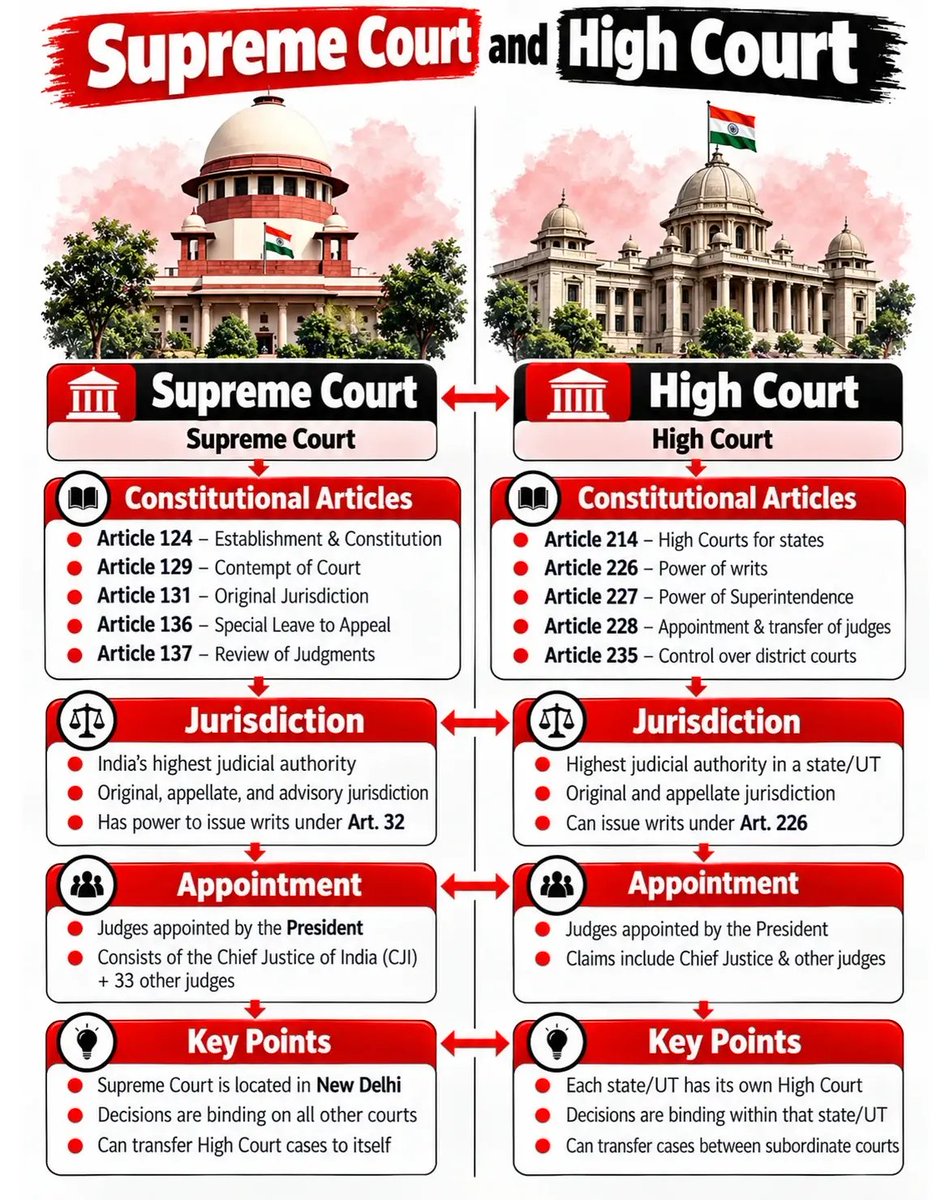
Direct questions can be framed in Prelims, Judiciary, PCS, and GS-II Mains from these cases.
Read it. Revise it. Bookmark it.
This is constitutional law in one glance.
#WordOfTheDay is VAGARY {N}
👉 Pronunciation: https://t.co/Q48ZSJHuSo
👉 Meaning: an unexpected and inexplicable change in something
👉 Usage: The vagary of the weather ruined our picnic plans.