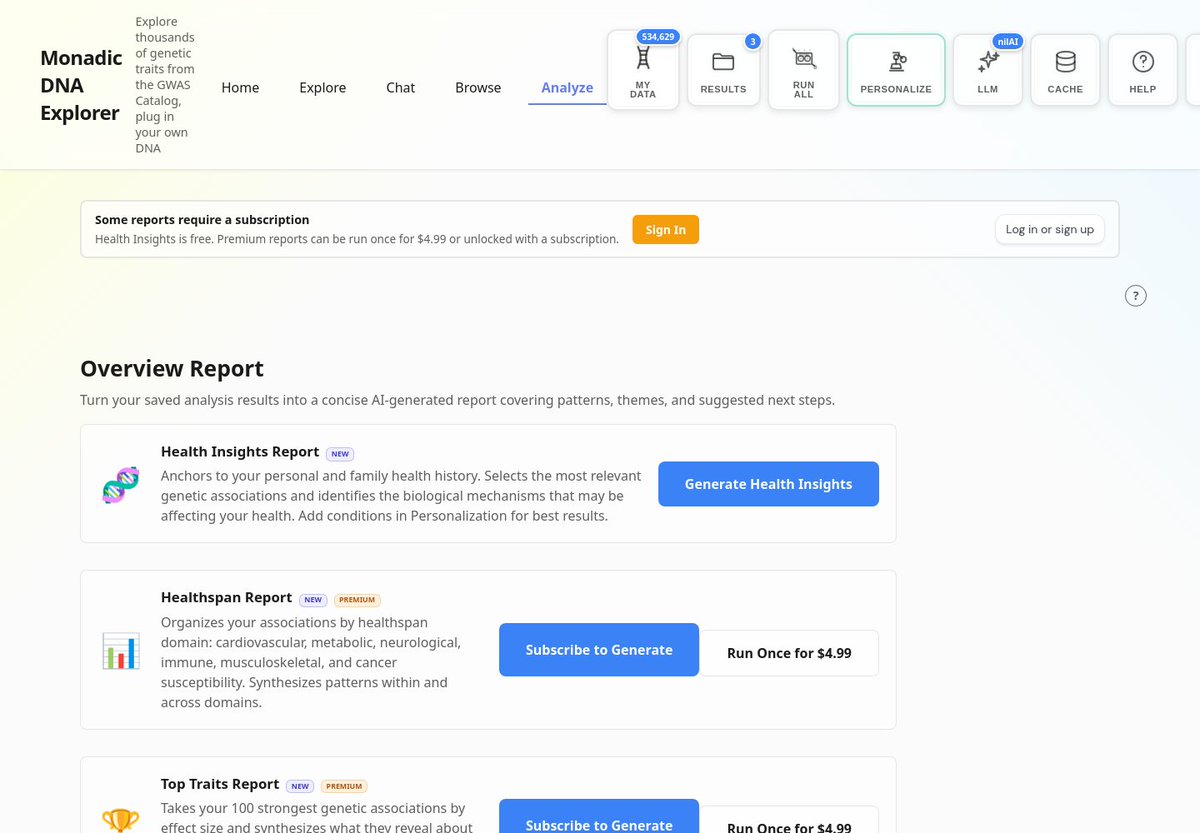
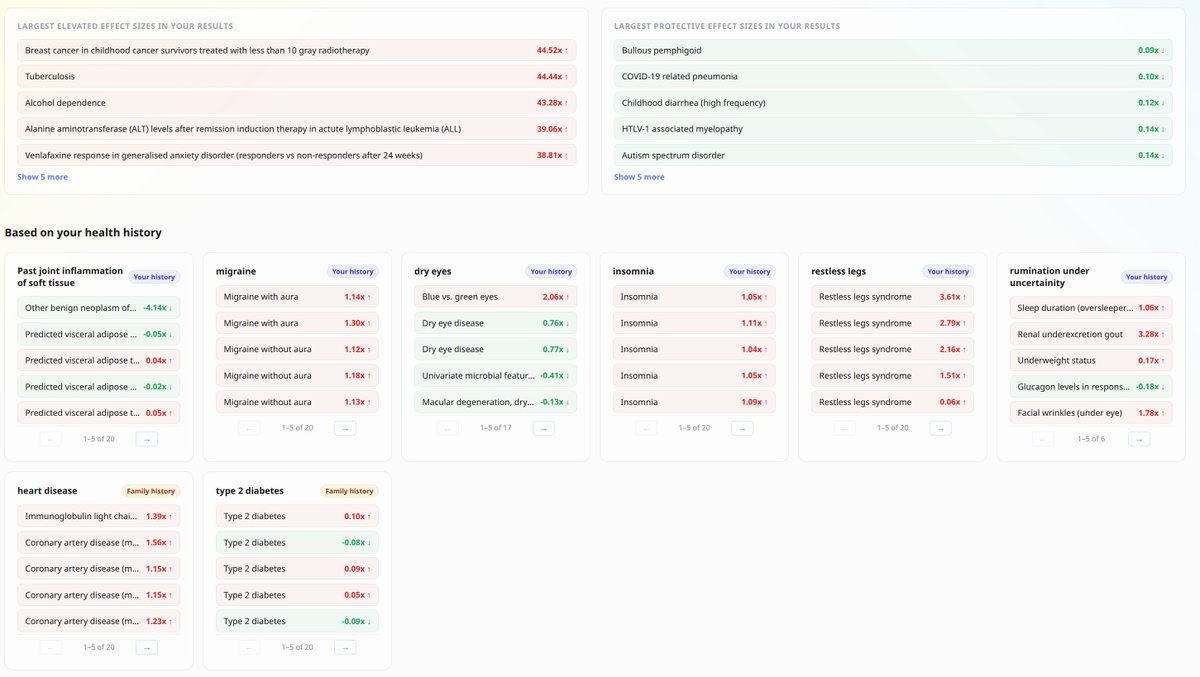
A flat list of genetic findings tells you very little.
The same findings grouped by heart, metabolism, brain, and immune system start to look like a picture.
That is what the new Healthspan Report in Monadic DNA Explorer does, and it runs in your browser.
https://t.co/ctmoVDSHfK
When you ask what your DNA says about your metabolism, there are at least ten separate questions hiding inside that one.
Research mode in Monadic DNA Explorer pulls them apart, checks each one against your results, and puts the answer back together.
https://t.co/yCJfO2Nfhz
A raw DNA file has around half a million variants and maybe a few dozen of them are worth your attention.
Monadic DNA Explorer puts your strongest results at the top the moment you load the file, so the interesting part takes seconds instead of an afternoon.
https://t.co/ctmoVDS9qc
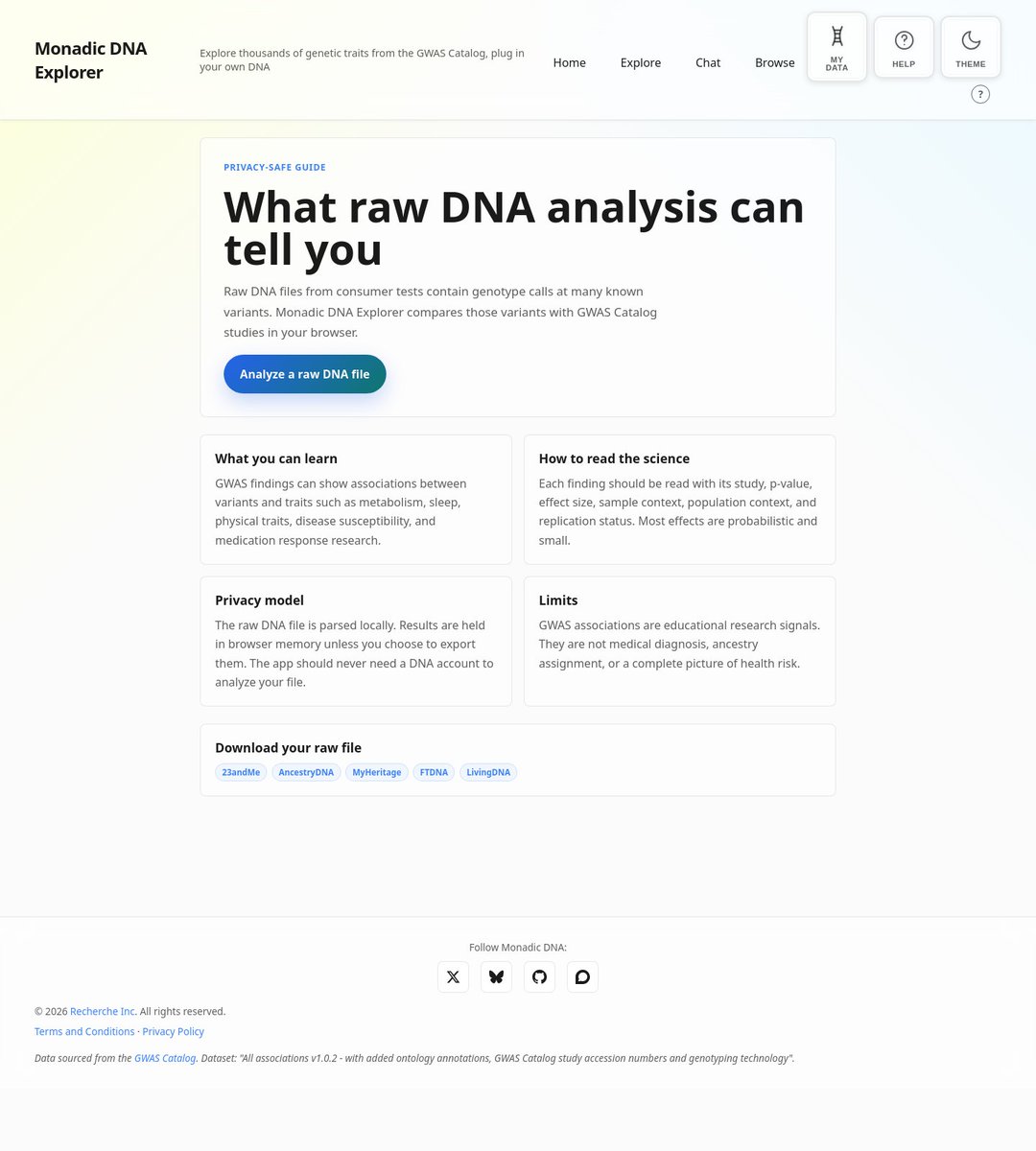
Most people who did 23andMe or AncestryDNA never downloaded the raw file. It is a plain text file, it is yours, and it holds far more than the report they showed you. We wrote up how to get it and what it can and cannot tell you.
https://t.co/PZEQxkpevs
A recap of what shipped in Monadic DNA Explorer this year. A rebuilt multi page app, a Research mode in DNA Chat, a new Healthspan Report, and better ways to browse and discover your results. Still fully local and still private!
https://t.co/FeewJIUxtn
First siting of @StoffelMPC in the wild on the 4th week anniversary of our launch
"Where are the use cases for MPC?" They said
Well, here's one that isn't bullshit.
Great work @vishakh@MonadicDNA
And so many regular people are now entering their confidential medical information, including DNA and lab reports, into public AI tools and irrevocably hurting their future employability and insurability.
Use Monadic DNA Explorer instead.
We use Nillion's confidential LLMs and storage so nobody snoops on your data!
57% of enterprise employees admit to entering confidential company data into public AI tools.
That includes internal documents and business information.
AI is already being used in sensitive environments.
Following on from Kitchen table genomes/liquid biopsy. There are two forces at work, a centralization one and a decentralization one. Large companies are trying to trap everything in central data centers with proprietary data streams, giving them a moat and control, others are pushing to run AI and other things locally empowering individual users. Same is happening to bio/medical data including sequencing.
At-home sequencing is the future!
However, until it becomes cheap, easy and reliable, people will still turn to services which compromise their anonymity and privacy.
Our upcoming Batcher app provides an anonymous mixing service using reliable lab partners for your DNA exploration needs!
Human genome sequencing:
2003:
$3,000,000,000
global effort
years of research
2026:
your kitchen table
a few hundred $
Hard not to be excited for the future.
https://t.co/0U5bXsHwt6
https://t.co/0U5bXsHwt6
The Vercel breach put the problem in plain sight.
Too many systems still keep sensitive logic and data stored in one place.
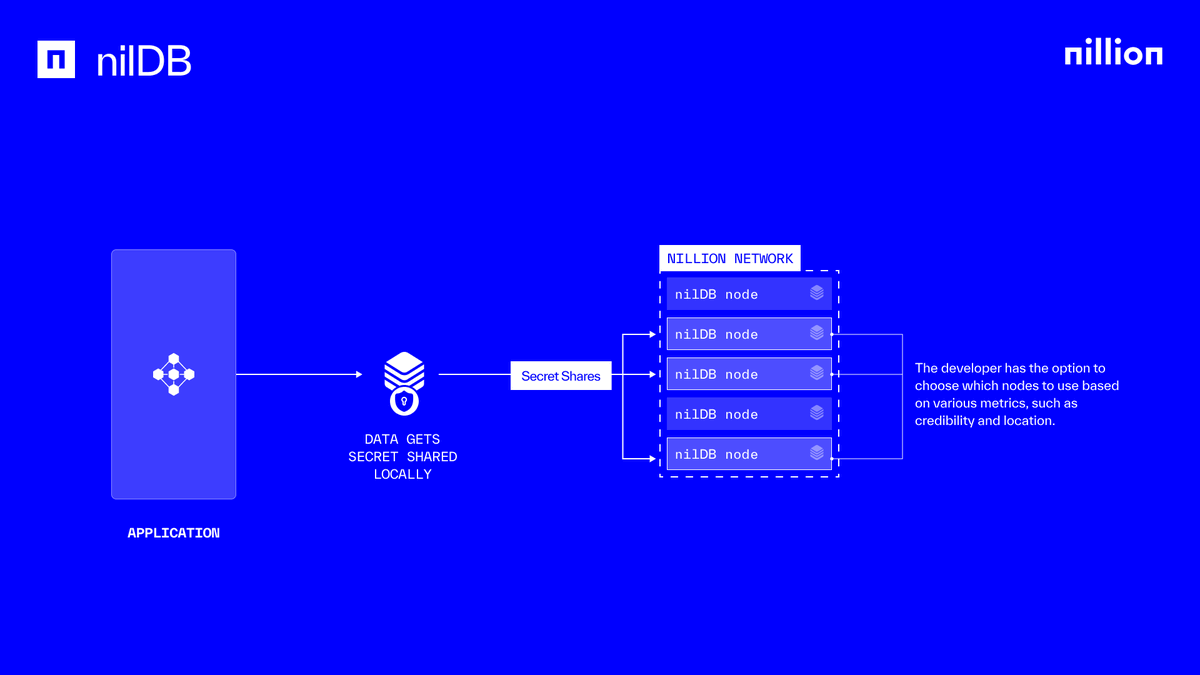
nilDB exists to break that pattern.
- Sensitive data is split before it is stored
- It is distributed across multiple nilDB nodes
- No single node holds the complete secret
- No single breach reveals the whole dataset
That’s why Nillion matters: it gives builders a privacy layer for sensitive data.