Fun fact: Frederick North (1766-1827), the first British colonial administrator in Sri Lanka, was an Orthodox Christian.
During his stay in Corfu, Greece in 1791, he was baptised (not chrismated) in the church of Panagia Mandrakina. His baptismal sponsor and Orthodox catechist, Georgios Prosalentis, was the Greco-Venetian Syndic (Governor) of Corfu at the time and wrote in his diary about the ceremony. Frederick (son of the former Prime Minister of Britain & 5th Earl of Guilford) had confided to Georgios that he was investigating into the differences of the "branches" of Christianity and came to the conclusion that Orthodoxy is the true faith. Frederick also became fluent in Greek during his stay in Corfu. He remained a lifelong Orthodox Christian until his death in 1827 when he received his final communion by a Greek priest serving in the Russian Orthodox chapel attached to the Russian embassy in London.
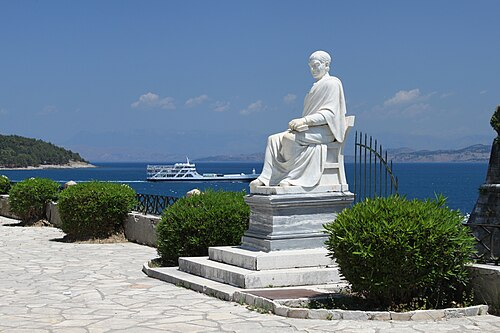
In 1824, Frederick also helped to establish the Ionian Academy (University) in Corfu, and up until this day there is a statue of him there that commemorates his philhellenism.
Catholic converts take glee in telling people their pets won't go to heaven. Calvinists take glee in telling people their dead babies won't go to heaven (Catholics also believe dead babies won't go to heaven but we're ashamed of it and invented Hell-lite to cope)
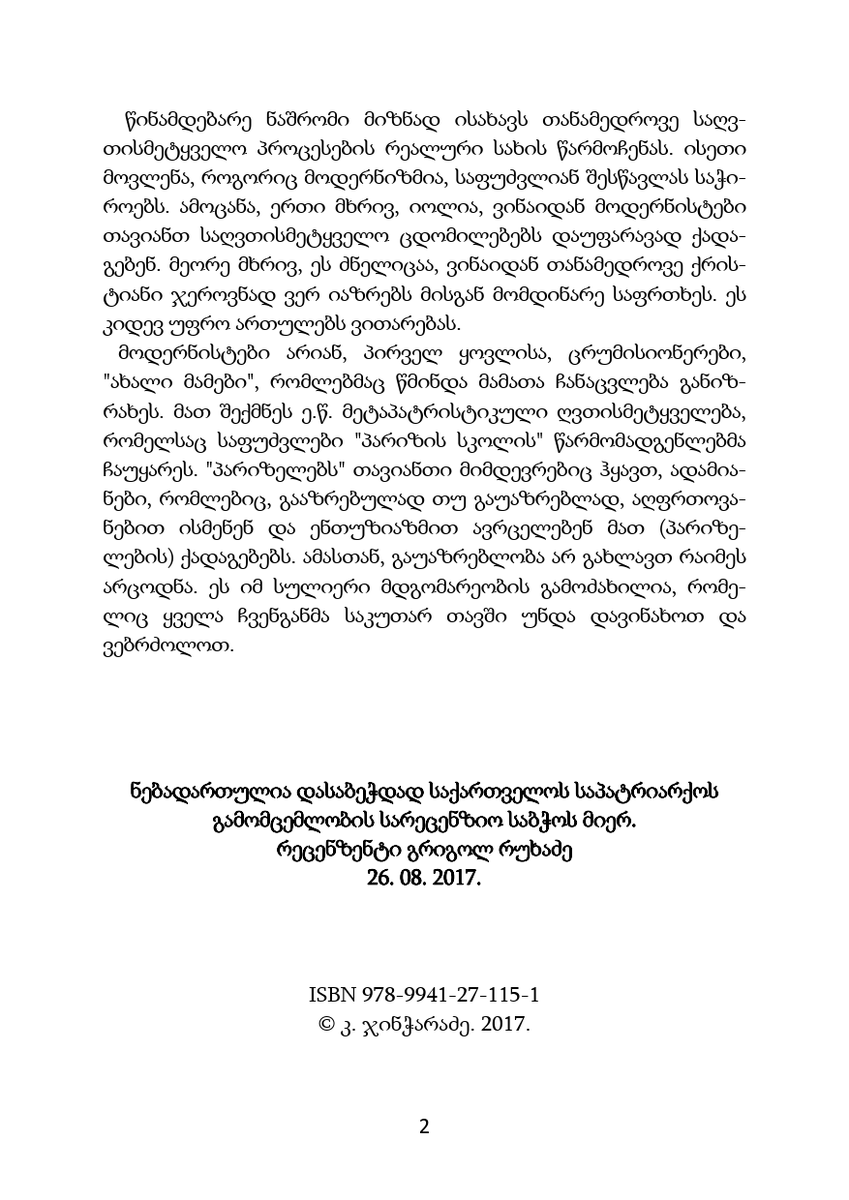
Archpr. Constantine Jincharadze’s refutation of Abp. Basil Krivoshein on the Creedal books of the Orthodox Church in “Trace of the Paris School in Modern Theology”, approved by the Georgian Patriarchate’s Dpt. of Theology in 2017:
‘The Orthodox Church has its own infallible criteria, which are obligatory for every Orthodox Christian believer. These infallible criteria are: the books of Holy Scripture (of the Old and New Testaments) and the determinations of the Ecumenical Councils (dogmatic definitions and canons).
In addition to the Ecumenical Councils, infallible also are certain local councils, as well as the canons composed by individual Fathers of the Church to which universal authority has been ascribed and which are mentioned in Canon 2 of the Sixth[-Seventh] Ecumenical Council.
It should be noted that the dogmatic definition of an Ecumenical or a local council is [recognised as such] when the decisions of that council are in agreement with the unified teaching of the entire Church. That is, when the matter concerns the Apostolic Canons, the Ecumenical Councils, the local councils, or the canons of the Holy Fathers that have been granted universal authority, these are binding for the whole Church.
As for the “Creedal books” and catechisms, their authority depends on the extent to which they express the conciliar decision of the Orthodox Church. Clearly, their definitions are not perfect (as are the dogmatic decrees—the horoi—of the Ecumenical Councils.)
At the same time, the form and structure of the Creedal books were saturated with the terminology characteristic of their own epochs; nevertheless, they represented a conciliar decision of the Church, which is confirmed by historical fact. In particular, not a single local Church has expressed an opinion against them. This means that they were not only signed by the patriarchs and bishops of the East, but also received by the whole Church.
Despite this, one of the prominent theologians of the “Paris School,” Abp. Basil Krivoshein, says: “All the books called ‘Creedal books,’ since they were not examined and approved by the plenitude of the Church at Ecumenical Councils, are deprived of authoritativeness and of conciliar recognition by the Church, since only an Ecumenical Council issues decisions that are infallible and authoritative.”
It is obvious that in the epoch of the Ecumenical Councils the Orthodox Church had less need of the existence of Creedal books, since at the Ecumenical Councils the definition of the faith was determined by the Holy Spirit. That is, the theological challenges of that period were addressed by the Holy Fathers through the convocation of Ecumenical Councils.
Yet theological challenges were also characteristic of later epochs. As a result, it became necessary for the Orthodox Church to give an adequate and competent response to the challenges arising from Western confessions. Thus the Creedal books, on the basis of the dogmatic consciousness of the Ecumenical Councils, had to formulate the teaching of the Orthodox Church. [...]
The first Moscow (Russian Local Church) edition of the “Orthodox Confession” [Peter Mogila’s original catechism] of 1640 contained mistakes and defects, which were thoroughly corrected at the Synod of Iasy in 1643, largely under the influence of the Greek Church. This fact is confirmed in the sigillion of Patriarch Nectarius. The Council of Jerusalem of 1672 likewise confirms this; in particular, the Russian version of the “Orthodox Confession” was, as needed, clarified and emended at the Synod of Iasy by the Greek Meletius Syrigus.
Thus, after its correction, the “Orthodox Confession” (despite its initial shortcomings): i) Was approved and positively evaluated by the Synod of Iasy (1643); ii) was received, without any further corrections, in its 1643 redaction by the Council of Constantinople (1645), that is, by the Ecumenical Patriarchs Parthenius of Constantinople, Joannicius of Alexandria, Macarius of Antioch, Paisius of Jerusalem, and 22 other bishops; & iii) was called a “holy and righteous Confession” by the Council of Jerusalem (1672), that is, by the Patriarchs of Jerusalem Nectarius and Dositheus together with other bishops.
Among those listed above, the most important is the Council of Constantinople (1645), in which it is written: “We hold that this book in every respect agrees with the dogmas and holy canons of the Church of Christ, and that there is nothing in it contrary to the Church. By our common judgment we determine: we call upon all Orthodox Christians of the Eastern Apostolic Church to read this book and not to reject it.” As we see, the Symbolic book “The Orthodox Confession” was received by the fullness of the Eastern Church as a doctrinal manual for all Orthodox Christians.
The second Creedal book, “The Encyclical Epistle of the Patriarchs of the Orthodox Church,” is, according to the common opinion of scholars, authored by Patriarch Dositheus of Jerusalem. For this reason, in the acts of the Council of Jerusalem of 1672, held under the presidency of this Patriarch, it is justly called the “Confession of Dositheus”.
The necessity of composing this doctrinal definition was brought about by the spread of Reformation views in the East. This is confirmed by the “Confession” of Patriarch Cyril Lucaris, which contained Calvinist ideas. The benevolent attitude of the four Ecumenical Patriarchs toward Patriarch Dositheus’ “Confession” was confirmed. Later ([i.e.] in 1838) it was published under the title “The Encyclical of the Eastern Patriarchs on the Orthodox Church.”
By decision of the Holy Synod of the Russian Church [once again] in 1845, this epistle was received as a manual. Metropolitan Macarius (Bulgakov) confirms this fact in his dogmatic theology. In addition, such prominent nineteenth-century theologians as St. Philaret of Moscow, Bp. Philaret (Gumilevsky), Bp. Sylvester (Malevansky), Metr. Macarius of Kharkov (Bulgakov) and other dogmatists unanimously acknowledged the authority of the Creedal books. Thus, the criticism of the Creedal books by Abp. Basil Krivoshein stands in opposition to the synods, patriarchs, and theologians of all the local Churches of that epoch.
Krivoshein, in the usual modernist style of the “Paris School,” consciously and deliberately criticises the Creedal books of the Orthodox Church: since it is precisely in these texts that all the heretical teachings of recent times are clearly exposed. It is exactly this that Krivoshein and, together with him, all critics of the Creedal books dislike.’
–Fr. Constantine (Jincharadze), Trace of the Paris School in Modern Theology, pg. 52-58
My most controversial opinion as someone who attends a ROCOR parish is that the Ecumenical Patriarchate should have jurisdiction over the Diaspora. I affirm the "barbarian lands" theory.