@LifeWithSymonee@DabbySavage I ain’t even tryna be like that but in 18 years the way things looking
Wingstop gonna be $76.37 for a 10 piece with fries
So not even that 😭
Deep inner suffering inevitably arises when the human person is reduced to performance, consumption, or a statistical datum. Many young people today live under the yoke of expectations to perform, immersed in an exasperated competitiveness that generates anxiety, fear of not measuring up, and disorientation.
How to ragebait a VC
- Which podcast gave you that opinion?
- How would you add value if you found a way to be valuable?
- You look like you make all of the 2 but none of the 20.
- Sorry, we aren't raising from you right now.
- Which AI model did you use to vibe code your firm's website?
- What startup role would you take if they'd have you?
for anyone else who is still stuck on "the body is just a very complex machine", I recommend this essay by philip ball
people who continue to say this either don't know what they're talking about, or they use the word "machine" in such a broad sense that it's vacuous
The AI numbers are starting to look very ugly.
Even under "best case" assumptions, FT's own data shows Microsoft AI ROI at -9%, Google at -15%, Meta at -28%, Oracle at -35%. Only Amazon barely comes out positive.
This is exactly why I keep comparing this to the dot-com era. Incredible technology does not automatically mean sustainable economics. The internet survived. Most internet companies didn't.
Right now hyperscalers are spending trillions hoping future demand catches up to present capex. That's not certainty. That's a leveraged bet.
The great thing about @benthompson is that he’s never afraid to tell it like it is amid all the banker and insider propaganda.
“In all seriousness, the numbers are obviously absurd, but then again, everything about this IPO is absurd. SpaceX is seeking a $2 trillion valuation on a mere $18.67 billion in revenue with $4.9 billion in losses last year, and growth actually slowed from 35% to 33%. That slowdown happened despite the addition of xAI (and thus also X), which tipped the company from a small profit to that massive loss, thanks to $5.1 billion in AI R&D expense. That R&D, keep in mind, went towards building a model that is in 5th place, and whose entire founding team recently left the company. But sure, $26.5 trillion AI opportunity!”
This might be a hot take but I know someone at meta who makes $400k a year and is quite literally capped at that number for life - likely will never get a promotion strong enough to change that.
9-5 until they’re what, 50?
This is not living. No matter the salary.
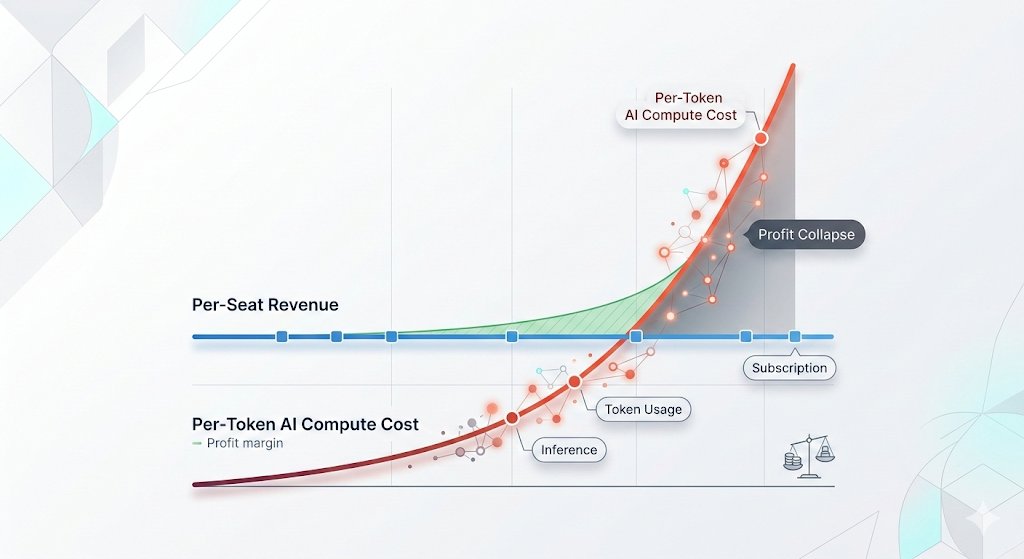
We will enjoy cheap AI coding assistants while they last. Once VCs/tech giants stop subsidising the compute, the scaled cost of AI-generated enterprise software will likely outpace human developers.
Where does the industry go when the subsidies dry up? A breakdown
You don't understand the current AI race if you don't think about it in terms of compute - and compute clearly distinguishes 3 tiers of companies.
Arthur Mensch, Mistral's CEO, recently had a hearing at the French Assemblée Nationale. He elegantly framed the AI race as a compute issue, where sovereignty would be ~"the ability to get leverage along the AI value chain" from electrons to tokens.
He also provided numbers (in MW) for Mistral's available compute : I was surprised at how low these numbers were compared to the gargantuan numbers touted by US labs.
So I ran the numbers, based on the recent and excellent @EpochAIResearch study, adding in my (not that reliable) AI-powered estimates of Chinese compute (see assumptions in blog post).
And I found out that there are 3 quite separate tiers.
1. US Champions are really far ahead. Anthropic, OpenAI and Google each command multiple gigawatts (OpenAI ~15 GW once you count the Stargate/Azure/Oracle capacity it rents). Ever wondered why their Claude/GPT /Gemini consistently top benchmarks? Now you know. By the way, tick in Meta and xAI and you'll see them entering tier 1 too with their recent buildouts.
2. Chinese giants scale fast. Alibaba, ByteDance, Tencent, Huawei and the three state telcos are racing from hundreds of MW toward multi-GW, increasingly on domestic Ascend silicon and the national "East Data West Compute" grid. They report "computing power" in EFLOPS rather than MW, so their points here are estimates, could be quite off the mark.
3. The contenders. Europe's Mistral commands ~90 MW today and aims at 1 GW by 2029, an order of magnitude behind the leaders. Interestingly, some of the best Chinese labs (DeepSeek, Moonshot, Zhipu, MiniMax) have no longstanding compute : they are pure-play : they rent or get allocations from government capacity for specific efforts. DeepSeek (~90 MW, the only one of this category that owns its cluster) is the largest.
With all that said, I hope someday someone in Europe wakes up to the absolute necessity of building compute faster than we do today.
If you want to go inspect the graph, I've got the interactive version and full sources in my blog post, link below.
🦔Microsoft canceled its internal Claude Code licenses this week after token-based billing made the cost untenable, even for a company with effectively infinite cloud resources. Uber's CTO sent an internal memo warning the company burned through its entire 2026 AI budget in just four months. American AI software prices have jumped 20% to 37%, and GitHub (owned by Microsoft) is dropping flat-rate plans for usage-based billing across its products.
My Take
The AI subsidy era is ending in real time. The same company that put $13 billion into OpenAI and built the Azure infrastructure powering most of Anthropic's compute just looked at the bill from a competitor's coding tool and decided it was not worth paying. That is not a productivity failure on Anthropic's end. Token-based pricing is forcing every enterprise customer to confront the actual cost of running these models at scale, and the number turns out to be far higher than the flat-rate experiments suggested.
This ties directly to my Gemini Flash post yesterday. Anthropic, OpenAI, and Google all raised effective prices in the last six months. Enterprises that built workflows assuming AI costs would keep falling are now watching annual budgets evaporate in months. Two outcomes look likely from here. Either enterprises scale back AI usage to fit budgets, which slows the revenue ramp the labs need to justify their valuations ahead of IPOs, or the labs cut prices and absorb the losses, which makes the unit economics worse at exactly the wrong moment. Both paths land in the same place, the numbers stop working, and somebody has to take the writedown.
Hedgie🤗
When i was in my 20’s in the 1990’s, I ate out twice a day, went to the bar every night, every summer weekend drove 200 miles to the family cabin & still had money left over, to say Gen Z just needs to stop eating lunch is ridiculous.
BOOMERS NEED TO STOP THIS NONSENSE.
“Why don’t you just eat fucking ramen everyday? Just eat peanut butter and ramen for 50 years dumbass and invest all your money into the pico top of the gayest most fragile empire in history you dumbass idiot. Just starve and eat shit and dirt everyday for your entire life and then you can spend $30 on lunch when you’re old and about to die it’s simple. Don’t you know your 20’s are for grinding?? You’re supposed to eat shit for the majority of your life that’s why your ancestors built America. So you could eat shit and fucking die moron.”