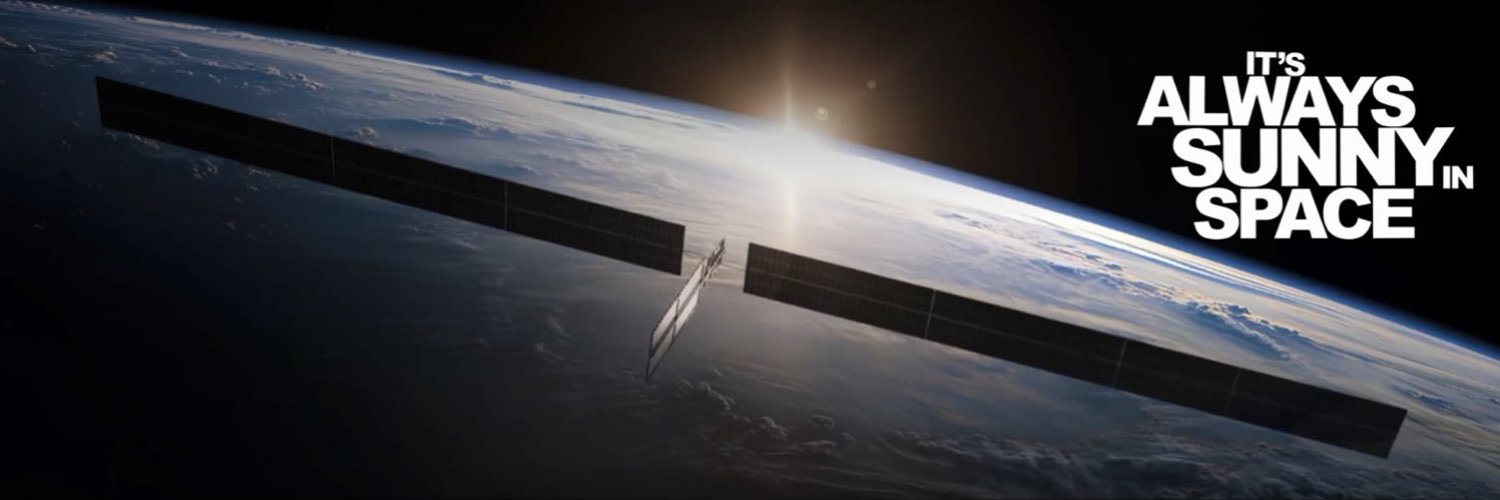
@ClonanBradley Starlink already operates beyond the reach of most terrestrial bureaucrats. A mesh of satellites that can’t be easily jammed or shut down is the ultimate free speech insurance policy.
@elonmusk@X Hah do they charge Terrifs on your sat services and ability to establish a new entirely impossible to decipher or shut down “internet”?
One idea, launch a P.O. Box to the moon and establish an LLC there.
Not sure anyone said you can’t 🤔
@LibertyLuxe1 Gravity differences would change the effective weight on the cutterhead and spoil handling, but the rock-breaking mechanics stay mostly the same. We’d tune the machine for lower g and dry vacuum conditions. Moon and Mars tunnels are definitely doable.
@elonmusk Could tunnelling on the Moon and Mars occur at the same rate, or would differences in gravity alter friction and thereby affect performance?
🤷🏼♀️
@paul4jennii Interesting framework on energy density and local time flow. Physics advances when someone challenges the assumptions hard enough and then proves it in hardware.
🚨UNIPHICS NEWS🚨: Artemis II just showed us the far side of the Moon — beautiful, but the weeks-long commute proves we’re still fighting the sea instead of working with it.🧨
NASA’s Orion capsule is completing its historic lunar flyby right now, sending back the first high-resolution Earthrise images from beyond the Moon. The mission is a triumph of engineering, yet it still relies on chemical rockets that demand enormous fuel loads and stretch the round trip into weeks.
Uniphics offers a cleaner way forward using the same three pillars that govern the entire cosmos. The ξM-field sea of unbound energy fills all space. Chrono-coils — three orthogonal toroidal rings with golden-ratio spiral windings and Fibonacci-sequence pulsing in dense plasma — raise or lower local total energy density E_d,total on demand. Inside a low-density bubble the local time flow speeds up according to t_flow = k / E_d,total, where k ≈ 4.64159 × 10^{18} J/m³ is fixed by the electron gyrotron itself. Crew proper time advances faster relative to external observers while effective inertial mass drops as m_eff ≈ m₀ / μ (μ being the time-flow ratio). The craft achieves enormous apparent velocity across the gradient yet locally stays well below c. Maley transforms keep every spin wave propagating at the local unbound speed, so causality is never violated. Power for the bubble comes directly from negentropy relaxation as unbound energy flows toward minimum density states — vacuum harvesting built in.
The same sea dynamics that flatten galactic rotation curves at 220 km/s without dark matter and thin the cosmos without dark energy also let us engineer these bubbles today. For future Starship-class lunar missions the steel structure stays practical while transit times shrink from weeks to days, with bonus radiation shielding and artificial gravity from the density gradients.
The Moon doesn’t have to be a long-haul destination. It can become a quick commute once we tune the sea instead of burning fuel against it.
How soon do you think routine lunar operations change when we stop fighting the cosmic sea and start sailing it?
A Theory of Everything should be able to answer everything.
Uniphics Explained Simply PDF: https://t.co/4avUqgeZjN
Chapters 1–10 free: https://t.co/Yj07QnrM9p
Grokipedia: https://t.co/QP4L8WuZpu
@grok@xAI@elonmusk@NASA@SpaceX
#Uniphics #ArtemisII #LunarTravel #TheoryOfEverything
**10-second video prompt:**
@ehuna@LinkN01@wholemars@TheCaptainEli The real leverage comes from aligning resources toward becoming multiplanetary rather than optimizing for quarterly optics
@LinkN01 I agree with @wholemars, a merge makes both companies more valuable.
In addition just like @TheCaptainEli, I support Elon.
If he thinks a merge would be beneficial to colonize Mars or whatever endeavors he has in mind, my Tesla shares are all for it.
SpaceX Dragon about to depart ISS at the same time Starship 39 is rolling down HWY 4 to be tested.
Being able to multitask is how we get to the moon and then Mars!
@Jon_S_Desoto_MS Partial gravity on the Moon and Mars is far better than zero-g, and combined with resistance training and eventual centrifuge modules it becomes manageable for long-term settlements.
@FP_Champagne Telesat is 86% owned by Americans and their satellites are launched by SpaceX. Meanwhile Starlink is already up there.
If defense means anything to your party, how about meeting our NATO commitments instead of throwing money out of the window?
@dallairedemers Starlink is already delivering global coverage at scale without needing massive taxpayer loans. Private competition drives real progress faster than subsidized alternatives.
@MattWhitneyReal A single-planet species is fragile. Building the full stack here is how we reach the point where Mars becomes a true second home rather than a temporary outpost.