One shader trick from my early cave renderer: use the mesh UVs as clip positions, then sample the stamps with vertex positions and normals.
Follow the making of Cave Expedition.
#CaveExpedition
Real caves have sparkly surfaces and dripping water. In this early devlog, I planned how to fit those effects into the existing texture budget.
Follow the making of Cave Expedition.
#CaveExpedition
This version of my cave shader uses two texture samples. Blending and noise can happen during stamp rendering, saving that work from each frame.
Early Cave Expedition devlog. Follow for more.
#CaveExpedition
My cave texture patches are irregular. An occupancy map lets me avoid allocating texture space for the empty areas.
An early Cave Expedition devlog. Follow for more.
#CaveExpedition
Not every cave in Cave Expedition is a tight squeeze. Here's our glowworm cave.
Explore solo or with friends, with 1–4 players.
Wishlist: https://t.co/OK7kZJbkJF
#CaveExpedition
A tight squeeze in Cave Expedition, the caving game I am making. Explore solo or with up to three friends.
Follow for more trips underground.
#CaveExpedition
To texture my cave walls, I unfold the mesh into patches with their own UV space. This early devlog shows the process.
Follow the making of Cave Expedition.
#CaveExpedition
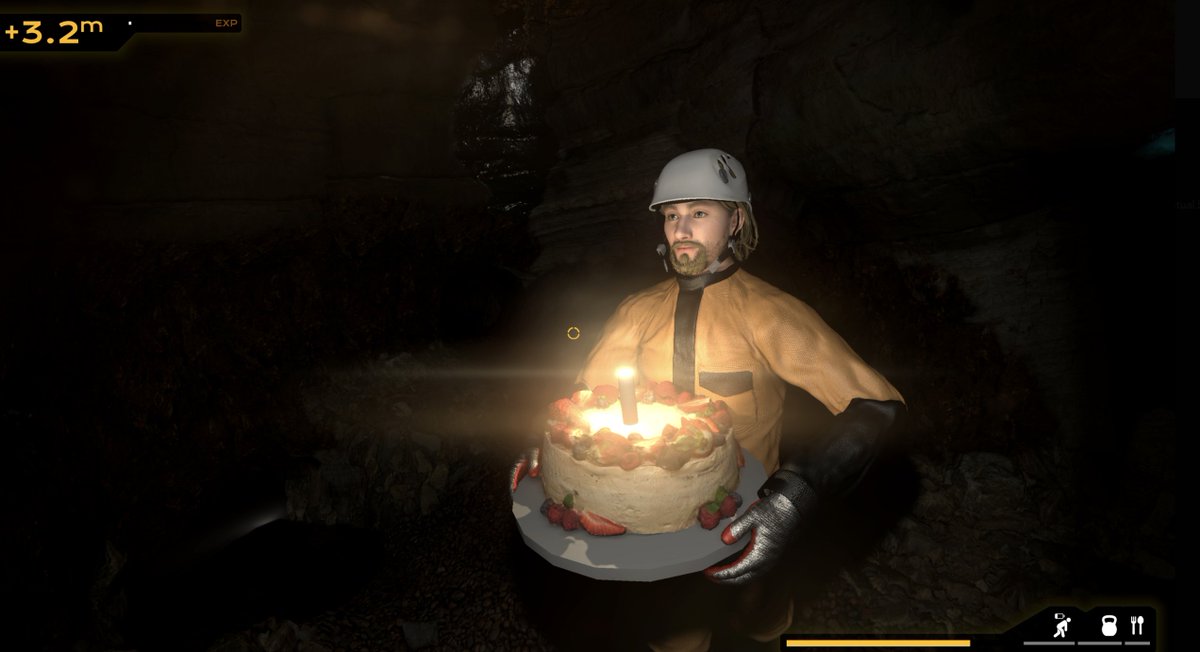
Check out how Cave Expedition, a sim from @MoonmilkGames, uses cave recordings, photogrammetry, and textures captured during expeditions to recreate the experience of underground exploration.
What does it actually sound like inside a cave?: https://t.co/ngYfafflzR