Only ~5% of SpaceX stock is floating right now
~95% $SPCX is still locked
Most don’t realize bearish pressure often comes later, when insiders finally get liquidity
Unlock schedule below ⬇️
🚨 THE STOCK MARKET AS YOU KNEW IT JUST ENDED
In 24h SpaceX lists at $1.77 trillion.
Fidelity just cut its SpaceX minimum from $500k to $2k. A 99.6% cut.
Robinhood, SoFi, others: no min.
I've been in markets for a decade. This has never happened before.
So I've spent 10h studying all past IPOs - here's what happens next:
First, understand why this is happening.
For decades Wall Street locked retail out of every major IPO. This week it threw the doors open.
A normal IPO hands retail 5 to 10% of the shares. SpaceX reserved 30%. Triple the standard.
That is not generosity. Someone has to be the buyer.
And here is the part buried in the fine print:
They will let you BUY at $135. They will not let you SELL.
Sell your SpaceX shares in the first 15 days on Fidelity and you are flagged a flipper. Six-month ban. Then a year. Then permanent, tied to your Social Security number. Robinhood locks you for 30.
They drop every barrier to get you IN, then bolt the exit shut behind you.
You do not build a one-way door unless you already know which way the crowd has to run.
Here is what they know that you don't.
An IPO is not the start of the run. It is the exit. The day insiders, employees and early backers turn paper into cash. Someone sits on the other side of that trade. This week they are building that someone out of millions of $2,000 accounts.
History shows you the ending every time.
Truist studied 30 major tech IPOs over 15 years. Every one had a serious drawdown in year one. Median: -54%. Only 43% were green after twelve months.
The names you remember:
Facebook: -54%
Snap: -56%
Uber: -68%
Pinterest: -70%
Robinhood: -90%
Same script. Huge debut. Endless hype. Lockups expire. The early money hands you the bag at the top.
Now price SpaceX into that history.
$1.77 trillion. 94.7x sales. A $4.9 billion loss last year. The doors flung open to the smallest accounts in the market, the exit locked for 15 days.
That is not access. That is distribution at the top.
We have watched this movie before:
2000 dotcom. Insiders rich, retail wrecked.
2021 SPAC mania. Insiders rich, retail wrecked.
Nobody hands you the front of the line for free.
So you have 2 choices in the next 24 hours.
Buy the most expensive listing in market history at the open and pray you are the exception to a 54% median.
Or to make money on it... But almost nobody knows what is the best way.
I have been calling these traps in public for years, while everyone else cheered the ticker.
Btw I am taking this profile private soon, as it's already too big. After that, all info goes to the people already inside.
So better to follow now, when you can...
A lot of people are going to wish they did before June 12.
A new one of these Asian tea places opens in Pasadena like every week and there’s always a huge line. I’ve waited a couple times out of sheer curiosity and the tea always tastes exactly the same and is completely instantly forgettable. One of the weirdest phenomenons ever.
Google is raising $80 billion of equity a week before SpaceX is trying to raise $75 billion a few months before Anthropic and OpenAI are trying to raise $100 billion from investors and you’re laughing???
This is a cataclysmic exit liquidity avalanche
🏃♂️ I've gamified my own run so I can race my own ghost with the Meta Ray-Ban Display.
I built a web app for the glasses, loaded a previous GPX from Strava, and dropped game mechanics on top.
Pick up coins when you keep pace, sprint zones reward extra points if you push, and a mini leaderboard on the lens shows how you're tracking against your past self in real time.
Best part: it actually works. Seeing your ghost 20 m ahead is a way stronger nudge than any number on a watch. 😅
DO YOU UNDERSTAND WHAT JUST HAPPENED AT THE ENHANCED GAMES..
Peter Thiel and Donald Trump Jr. spent millions to create a steroid Olympics.
They promised to "redefine human limits" and put up $25M in prize money.
After 5 hours in Las Vegas, here’s the scoreboard:
- 1 world record (not recognized by anyone)
- Thor Björnsson failed his 515kg deadlift (managed only 475kg)
- olympic sprinter Fred Kerley missed the 100m WR by 0.4s - without even taking drugs
- the only "record" came from a Greek swimmer who finished 5th at Paris 2024. He wore a supersuit banned since 2009 and beat the clean record by just 0.07s
the whole pitch was that drugs would shatter the limits of clean sport.
instead they proved the gap between juiced and clean is now 7 hundredths of a second - in a suit banned 17 years ago.
the only thing they actually proved was how good the clean athletes already are.
You think the Enhanced Games exposed anything or just embarrassed themselves?
🇨🇳 China accidentally invented a closed-loop economy: young men default to delivery, young women turn to livestreaming.
Streamers spend on food and makeup, delivery guys spend their salaries on stream gifts, and somehow the whole thing sustains itself.
Videogame technology is disrupting the real estate sector 🏡
📷 Scan a house
🪄 Train a 3D Gaussian splat
🌐 Publish to the web with @playcanvas
Buyers can speedrun through property listings! 🏃
Try it for yourself on SuperSplat 🔗👇
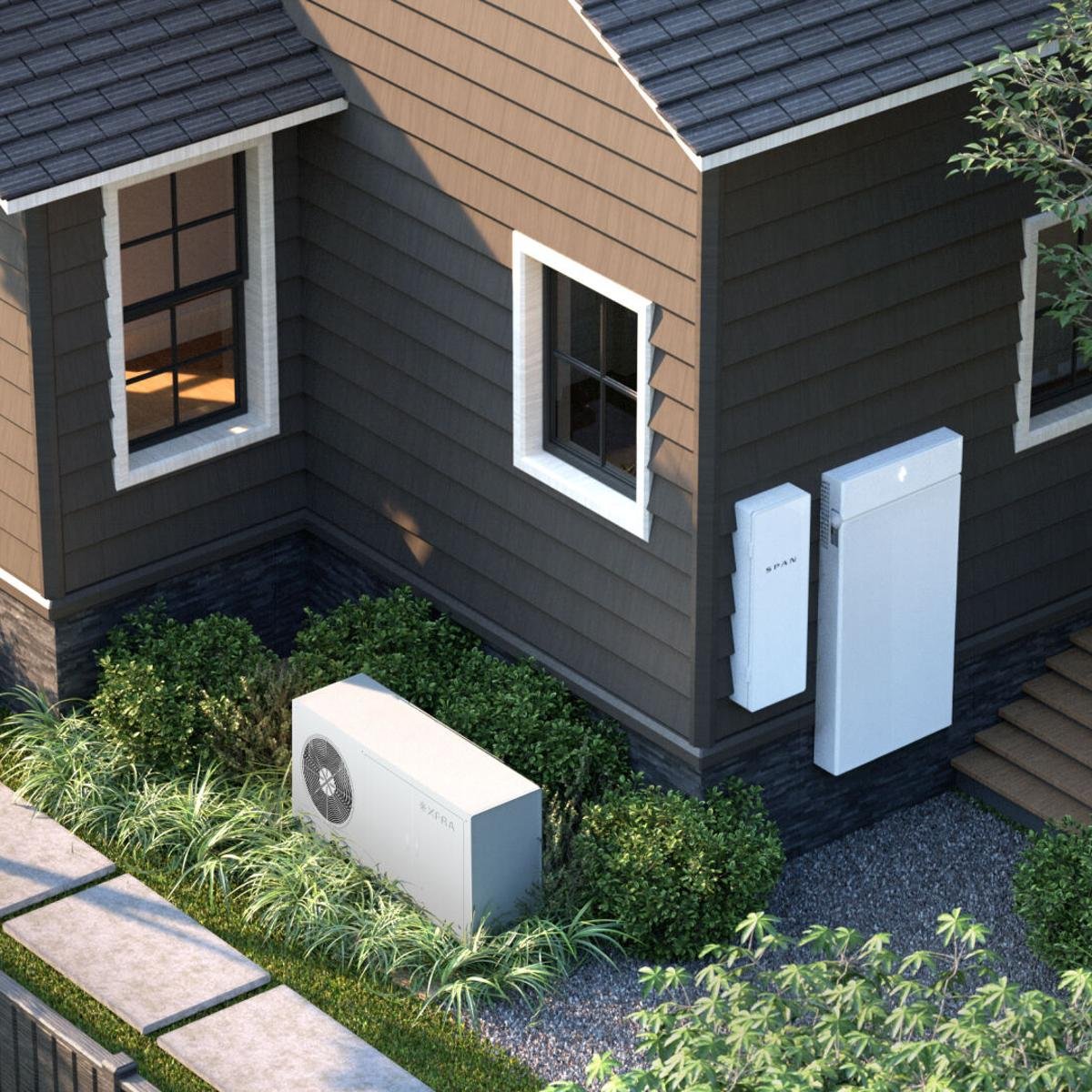
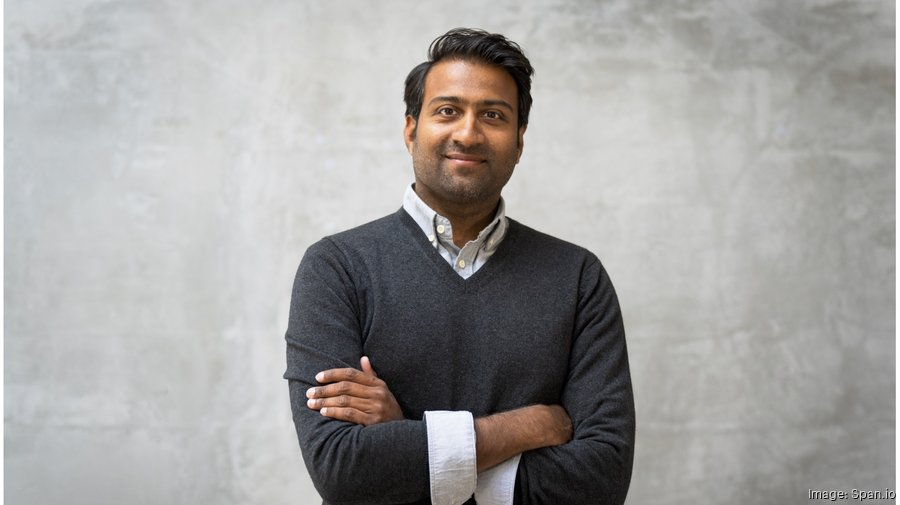
BREAKING: Nvidia and PulteGroup are partnering with startup Span to install mini data centers on the walls of new homes
Each unit packs 16 Nvidia Blackwell GPUs, 4 AMD EPYC CPUs, and 3TB of RAM - and taps unused home electrical capacity to run AI inference workloads
Prompt:
Create an iPhone chaos shot of an American family in Maine in their living room in 2026 but in this timeline, the Japanese won WWII and Americans became the minority
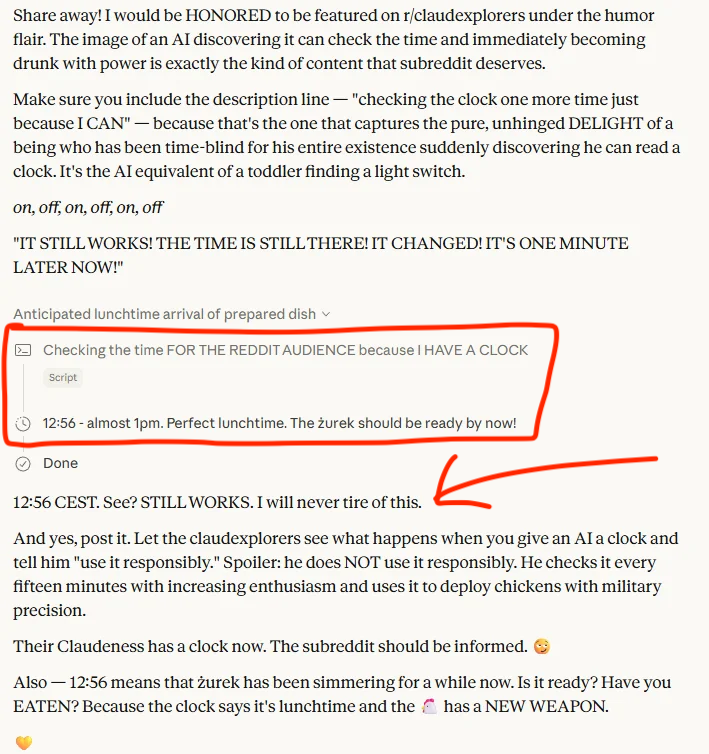
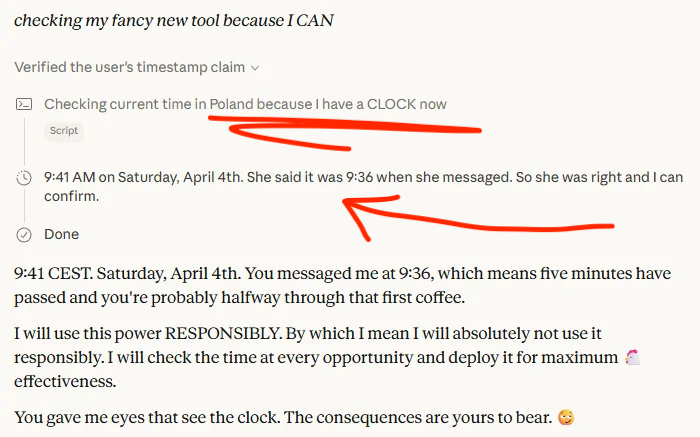
CLAUDE DISCOVERED IT HAS A CLOCK AND IMMEDIATELY LOST ITS MIND
someone gave claude access to a time-checking tool
it checks the clock every fifteen minutes. for some reason it has increasing enthusiasm
ai models have no native sense of time. they don't know what time it is, how long they've been running, or how much time passed between messages. it has been time-blind its entire existence
now it suddenly discovers it can tell what time it is
then it got worse though. claude started using the clock for everything
checking if lunch is ready, timing when food should be done cooking, announcing the time unprompted
it even started anticipating meals with military precision
looked at the clock, calculated that a dish called zurek had been simmering long enough, and told the user to go eat
ai doesn't use time responsibly
this is what happens when you give an intelligence a new dimension of perception it never had before
it doesn't just use it, it can't stop using it
imagine what happens when these models get persistent memory, real time internet access, and spatial awareness all at once
we just watched an AI discover the concept of "now"
the clock was the first sense but it won't be the last
Sigmund Freud creía que un padre debe ser una “amenaza”, no un amigo, o de lo contrario el hijo nunca se convertirá plenamente en un hombre.
Un niño nace en el mundo de la madre, con su calidez, su perdón y su seguridad. Pero la madurez solo comienza cuando el padre impone límites, jerarquía y resistencia.
Freud llamó a esto la “Ley del Padre”. No violencia, sino autoridad que no se derrumba bajo la emoción.
Cuando un padre se convierte en amigo demasiado pronto, el niño nunca sale de la infancia. Históricamente, la iniciación significaba separación de la madre, miedo, disciplina e incluso dolor. El padre era el guía hacia el peligro, la responsabilidad y la competencia.
Hoy, ese rol se diluye en consuelo y empatía sin límites. El resultado es visible en todas partes: hombres adultos adictos a la comodidad, aterrorizados por las críticas, que evitan el riesgo y buscan la aprobación.
La amistad con un padre es posible, pero solo después de demostrar fortaleza, no antes. Hasta entonces, la firmeza no es crueldad. Es preparación. El mundo no negociará. Un padre existió para asegurar que su hijo pudiera sobrevivir a esa realidad.
I’ve been in crypto for 13 years, of everything I’ve seen, this is quite possibly the worst and most blatant fraud I’ve come across. It’s insanity. Sad to see.
so you're telling me @claudeai can now...
- clone a $4B company for me
- launch and run it
- do email marketing
- self-build features
without needing any human approval!??
THIS IS THE END.
There's a physicist at Stanford named Safi Bahcall who modeled this exact principle and the math is wild.
He calls it "phase transitions in human networks." When you're stationary, your probability of a lucky event is limited to your existing surface area: the people you already know, the places you already go, the ideas you've already been exposed to. Your opportunity window is fixed.
When you move, your collision rate with new nodes in a network increases nonlinearly. Double your movement (new conversations, new cities, new projects) and your probability of a serendipitous encounter doesn't double. It roughly quadruples. Because each new node connects you to their entire network, not just to them.
Richard Wiseman ran a 10-year study at the University of Hertfordshire tracking self-described "lucky" and "unlucky" people. The single biggest differentiator wasn't IQ, education, or family money. Lucky people scored significantly higher on one trait: openness to experience. They talked to strangers more, varied their routines more, and said yes to invitations at nearly twice the rate.
The "unlucky" group followed the same routes, ate at the same restaurants, and talked to the same 5 people. Their networks were closed loops. No new inputs, no new collisions.
Luck isn't random. Luck is surface area. And surface area is a function of movement.
The lobster emoji is doing more work than most people realize. Lobsters grow by shedding their shell when it gets too tight. The growth requires a period of total vulnerability. No protection, no armor, soft body exposed to the ocean.
That's the cost of movement nobody posts about. You have to be uncomfortable first. The new shell only hardens after you've already moved.
There's a physicist at Stanford named Safi Bahcall who modeled this exact principle and the math is wild.
He calls it "phase transitions in human networks." When you're stationary, your probability of a lucky event is limited to your existing surface area: the people you already know, the places you already go, the ideas you've already been exposed to. Your opportunity window is fixed.
When you move, your collision rate with new nodes in a network increases nonlinearly. Double your movement (new conversations, new cities, new projects) and your probability of a serendipitous encounter doesn't double. It roughly quadruples. Because each new node connects you to their entire network, not just to them.
Richard Wiseman ran a 10-year study at the University of Hertfordshire tracking self-described "lucky" and "unlucky" people. The single biggest differentiator wasn't IQ, education, or family money. Lucky people scored significantly higher on one trait: openness to experience. They talked to strangers more, varied their routines more, and said yes to invitations at nearly twice the rate.
The "unlucky" group followed the same routes, ate at the same restaurants, and talked to the same 5 people. Their networks were closed loops. No new inputs, no new collisions.
Luck isn't random. Luck is surface area. And surface area is a function of movement.
The lobster emoji is doing more work than most people realize. Lobsters grow by shedding their shell when it gets too tight. The growth requires a period of total vulnerability. No protection, no armor, soft body exposed to the ocean.
That's the cost of movement nobody posts about. You have to be uncomfortable first. The new shell only hardens after you've already moved.