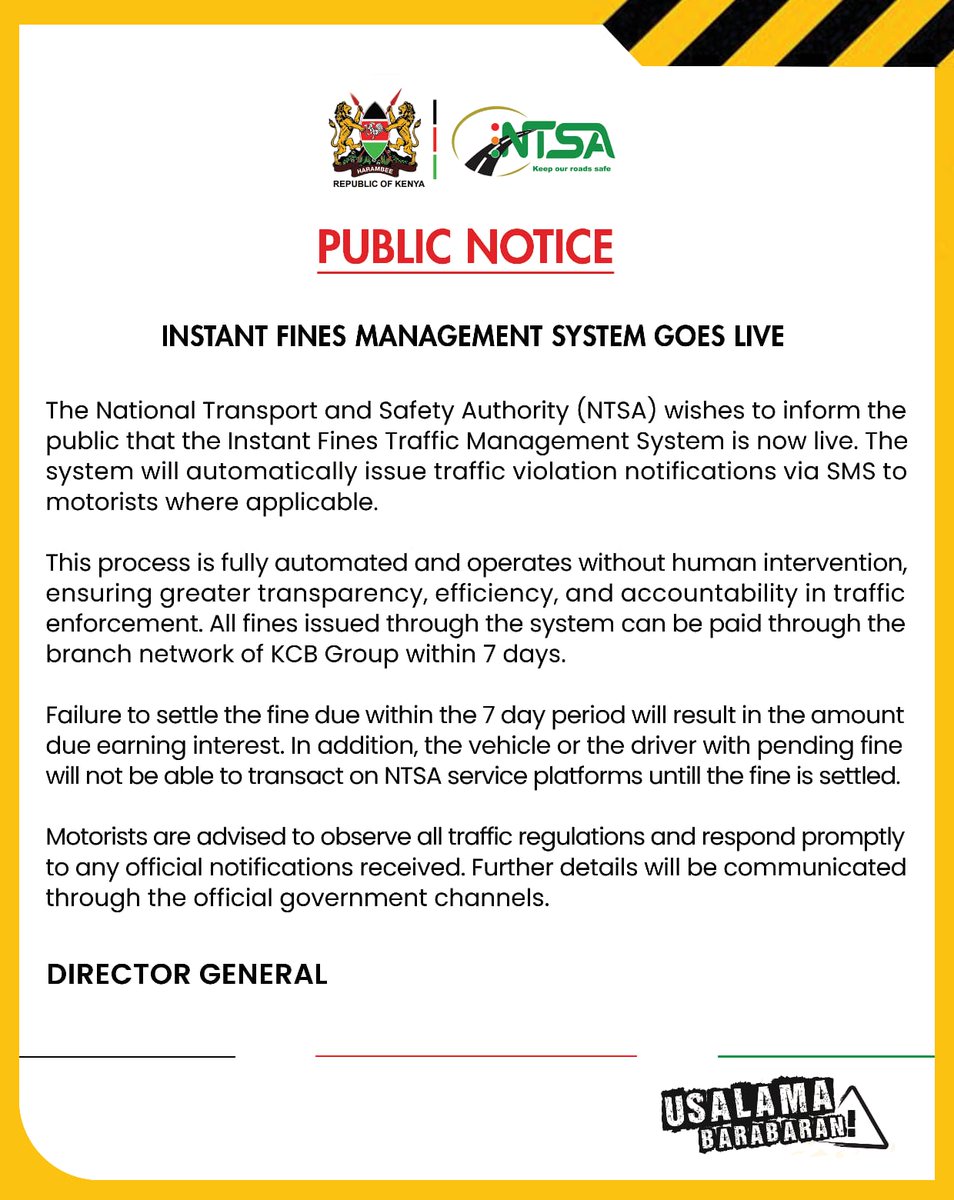
We have done a summary of the proposals that were rejected by MPs, why they were rejected, and the proposals that were passed.
Here is the deeper thread.
Save and share.
KRA wants a share of dowry money.
There is a guy called Kamau.
When it was time to buy his wife, he mobilized his most monied buddies.
He put them in a WhatsApp group. The fundraising began.
Those boys were loaded. They were only 35.
By by the time they were done, they had contributed 4.5 million shillings.
Others who were not in the group wired money directly to Kamau's bank account.
The ruracio D-Day arrived.
And as always, the one and only Kikuyu ruracio anthem was tuned.
🎶 Wero... Werokamu guku kwa wa Kanini... Werokamu... 🎶
Before they could finish the song, more than 2,000 people had pulled up.
Wakaanza kutoa funjo. Then one man stood on a stool and announced they could not sit until they had given Kamau top up money to add to the dowry.
The donation book was hurriedly brought. People lined up. Cash started flowing.
By the end of the day, another 2.8 million shillings had been raised.
Kamau took the money and banked it.
Total dowry contribution sitting at his bank account: 8m shillings.
The ceremony became the talk of Gatundu South.
Kamau paid his dowry. Collected his wife. And went home peacefully.
• Lesson 1. Monied friends are good for paying dowry.
I have no clue how. But sometime later, Kamau was marked for a KRA tax audit.
KRA went straight for his bank statements. They found deposits of 8 million shillings.
Immediately, they baptized the entire amount as undeclared taxable income.
Then demanded: 30% income tax. Penalties plus interest.
Total bill: 2.5 million shillings plus.
When Kamau saw the tax bill, he went mad.
He could try to talk but words would not come out. He nearly swallowed his tongue.
When he came back to real life. He shipped a protest letter to KRA.
He explained the money was dowry contribution from his family, friends and well wishers.
- He produced WhatsApp group fundraising screenshots.
- He produced RTGS confirmations.
- He produced the donation book.
- He even produced videos of the ceremony.
Including footage of the Werokamu song.
KRA could not hear any of it. They only wanted 2.5 million.
When Kamau realized KRA was not playing, he ran to court.
He told the Tribunal:
- My lord, look. I have shown KRA where the money came from.
- I have shown KRA who contributed it.
- I have shown KRA the ceremony.
- What more do they want from me?
KRA responded.
And what they said nearly made the judges fall off their chairs.
They argued the evidence was not convincing.
Why?
• Because the 2,000 plus donors had not sworn affidavits confirming that the money they gave was a donation and not payment for goods or services.
The Tribunal looked at the matter in amusement.
Then ruled.
- Kamau had discharged his burden of proof in full.
- KRA had acted unreasonably by ignoring and disregarding the substantial evidence he provided.
- And most importantly: Income tax is a tax on income. It is not a tax on every deposit appearing in a bank account.
The Tribunal found that KRA was wrong to treat all bank deposits as taxable income without first removing proven non income items such as dowry contributions.
The tax demand was killed.
Kamau won.
KRA retreated to Times Tower. And rested.
Case closed.
• Lesson 2.
- Document everything.
- KRA will push. Push hard.
Kenyan police allowed Arsenal fans to gather and disperse peacefully but they never allow the same youth to protest against the government without killing some
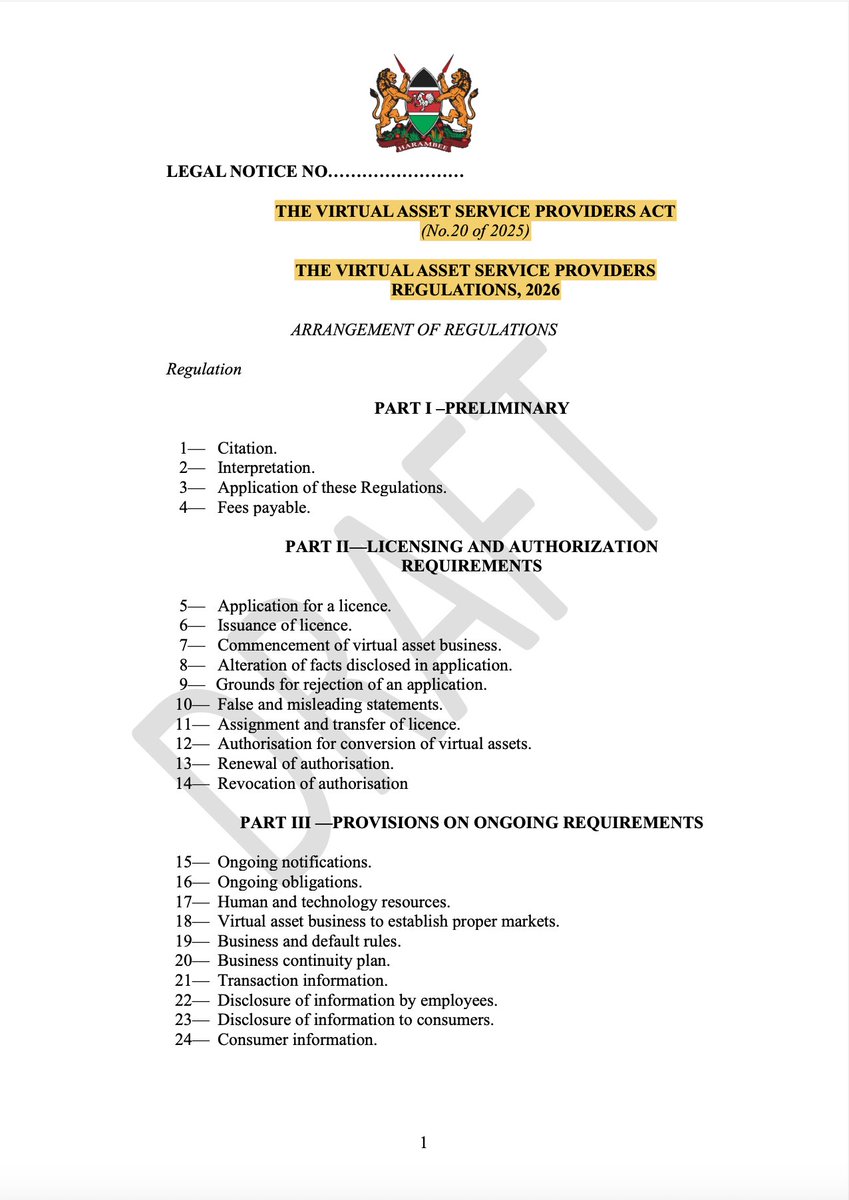
The Draft Virtual Asset Service Providers Regulations 2026 are out!
Comments should be sent to the National Treasury by April 10th.
Some key take outs for me:
1. Important to observe that the draft regulations prescribe to limit the reserve assets eligible for backing stable coins to be:
· Cash, including central bank reserve deposits & bank deposits
· Government securities with residual maturity of not more than ninety days
· Repurchase agreements with a maturity of not more than 7 days backed by cash including central bank reserve deposits & bank deposits
2. Stablecoin issuers will be required to ensure that at least 30.0% of the funds received are held in accounts in commercial banks in Kenya segregated for processing funds related to the issuance and redemption of stablecoin. The remaining funds received are invested in secure, low-risk assets in Kenya that qualify as high-quality liquid assets with minimal market risk, credit risk & concentration risk
3. Token issuance platform transaction fee is being proposed to be 0.05% of the transaction value payable by each counterparty in a transaction facilitated by the exchange
4. Approval of Virtual Asset Offering is being proposed to be set at 0.5% of the value of a successful offer
Unbundle the quoted tweets for more context on the build up to this
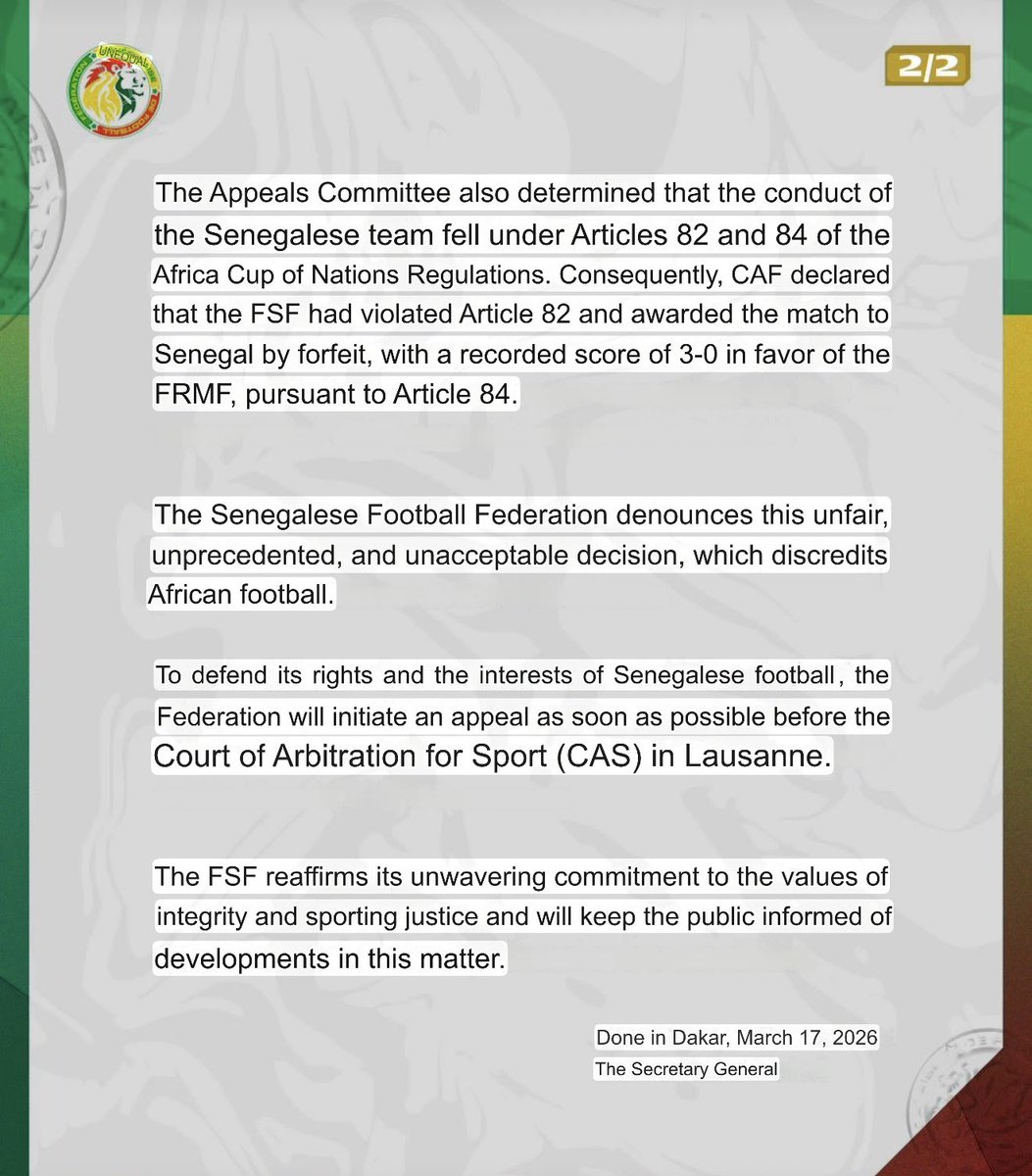
OVERNIGHT: Senegal to appeal CAF’s controversial decision to award AFCON trophy to Morocco at the Court of Arbitration for Sport in Switzerland.
The Senegalese federation called it an “unfair, unprecedented, and unacceptable decision which discredits African football”
KRA has gained another weapon.
One that will make serial nil return filers hesitate before clicking that NIL button.
Last month, this tax dispute left many ears tingling.
There is a restaurant called Avery Lounge.
I have no clue how they mastered it, but they cook the finest fish in Utawala.
Just next to Banta. My friend Kasimu recently took me there.
The place also offers the most spectacular rooftop view of Embakasi.
But there was one small problem.
- Despite all that poshness, Avery Lounge kept filing nil tax returns.
KRA became curious.
So they sent their spies.
The spies returned with a disturbing report:
- Bosi, the place is full. People are eating life like tomorrow has been cancelled.
KRA was enraged.
- How could such a big restaurant keep declaring zero income?
So KRA went straight for their bank accounts.
And what did they find?
- Millions flowing in.
At that point KRA lost its remaining patience.
They demanded for:
- financial statements
- purchase & expense records
- explanations for the deposits
But Avery provided none of them.
KRA became even more dramatic.
- They totaled all the bank deposits for the year.
- Baptized them as income.
- Then applied 30% income tax on the entire amount.
And sent Avery a tax demand of ksh 93 million.
Avery ran to court.
- They argued that some of the deposits were loans.
- And that KRA had not factored in real expenditures like purchases & Wages
But there was a small problem.
- They had no loan agreements.
- No documentation for expenses.
- Nothing.
The court looked at the situation and said:
- Since the taxpayer refused to provide records, KRA had no choice but to treat the bank deposits as income.
And with that, the court told Avery:
- Pay the 93 million tax bill.
Case closed.
So what is the lesson here for you?
If you have money flowing through your bank accounts, and you cannot explain the source,
KRA will simply decide:
- All deposits = income.
- And tax those deposits.
Therefore:
- Be careful with nil returns.
- Keep records. In tax matters, records are king.
Kenya plans to restart construction of the 369km rail extension from Suswa toward Kisumu & Malaba, targeting up to $4B in financing via securitisation of the 2% Railway Development Levy, rather than fresh Chinese debt:
—The full final leg is estimated at ~$5B
—The levy is expected to generate about KES 41B (~$318M) this fiscal year.
More: https://t.co/OK9XPHc4rT
Every citizen must pay their fair share of taxes. Demand eTIMS receipts everywhere you transact — in shops, markets, offices, and service points — until compliance becomes the norm rather than the exception.
When people begin to understand that public spending is funded by their own contributions, they become more conscious at the ballot. Tax awareness creates political awareness. A responsible taxpayer is more likely to make responsible electoral decisions.
I’ll weigh in on this
Last year say I got a job that paid me 500k. I paid 3 people I worked with 100k each total 300k and I remained with 200k and spent an extra 100k on other expenses. My profit is 100k and I expect to pay 30k
Now KRA want me to pay 30% of 500k = 150k since I don’t have Etims of those payments
🚨🚨 BREAKING: The High Court Has Confirmed That WhatsApp Chats Can Create a Binding Contract
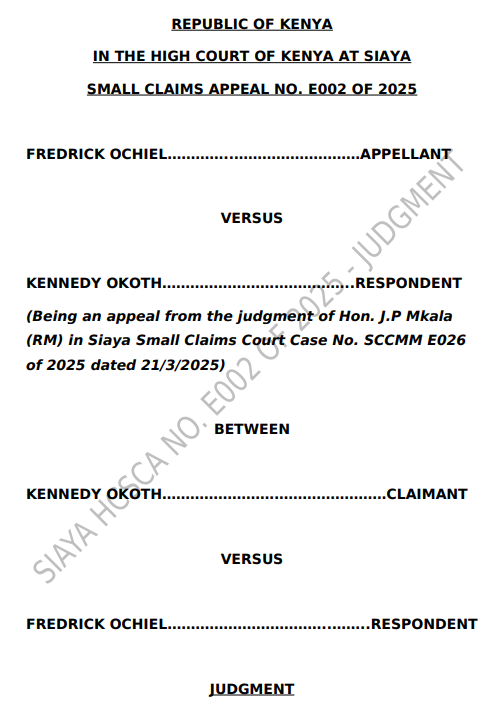
The High Court has upheld a KSh 145,000 judgment arising from an agreement that was never written, never signed, and never stamped. In Fredrick Ochiel v Kennedy Okoth (2026), the Court dealt with a dispute over an ultrasound machine that had been leased based on phone calls and WhatsApp messages. The machine was collected, used, partially paid for, and never returned. When payment was demanded, the defence was simple: there was no agreement. The Court disagreed. It found that the parties had agreed on the daily charge, acted on that agreement, and communicated consistently about payment and return through their phones.
In dismissing the appeal, the Court reaffirmed a settled but often ignored principle of contract law: a contract does not have to be written to be enforceable. Oral agreements are valid if offer, acceptance, and consideration can be proved. In this case, the WhatsApp messages, SMS exchanges, partial payment, and conduct of the parties left no doubt that there was a meeting of minds. The Court was clear that courts will not rewrite contracts or rescue parties from bargains they voluntarily entered into, unless there is fraud, coercion, or illegality. “There was no written agreement” was not a defence where the evidence showed otherwise.
For the ordinary mwananchi, this judgment is a quiet but powerful warning. If you agree on terms over WhatsApp, take someone’s property, benefit from it, and promise to pay, the law will hold you to that promise. Your messages are not just casual chats; they can become legal evidence. Before dismissing a dispute with “tulikua tunaongea tu,” remember this decision. In today’s Kenya, a phone conversation can create real legal obligations with real financial consequences.
@georgediano@Thuranira_1@NelsonHavi #NYOTABusinessSupport Senegal Ksh5Billion StartUp Capital Winnie Machakos Oburu Samburu national leaders Mendy Africans