Out today!👇 Why do we still need to talk about budget support? How can we use lessons from a conflicted past to address the many urgent needs in a changing world?
Thanks to @OUPAcademic for hosting our book.
@Lodewijk_Smets@stefankoeberle@gamblingondev
Many thanks to Oxford Professor Stefan Dercon (@gamblingondev) for his endorsement of our book on #BudgetSupport : “This Book is an excellent and timely review of our experience with budget support. “
A budget allocation only matters if it gets spent.
New World Bank evidence finds large short-run multipliers from health & education spending: $2.20 overall, nearly $4 during recessions, and $4.55 for health alone.
A strong link between macro policy, health financing and PFM.
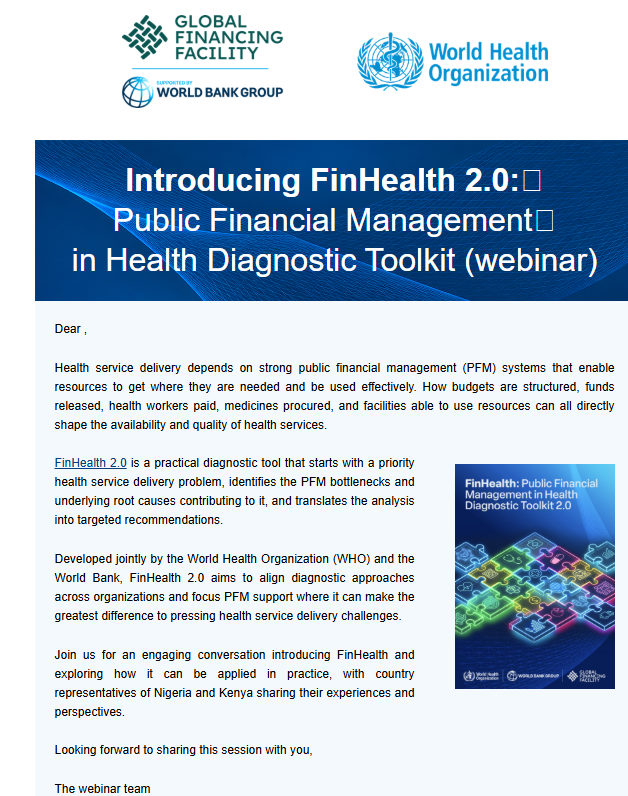
WEBINAR | Nov. 19 | Introducing #FinHealth 2.0: #PFM in Health Diagnostic Toolkit
Join us for an engaging conversation introducing FinHealth 2.0 and exploring its practical applications, with country reps from Nigeria 🇳🇬 and Kenya 🇰🇪 sharing experiences + perspectives.
🗣️ English & French
More info & registration: https://t.co/vxx1mAANPk
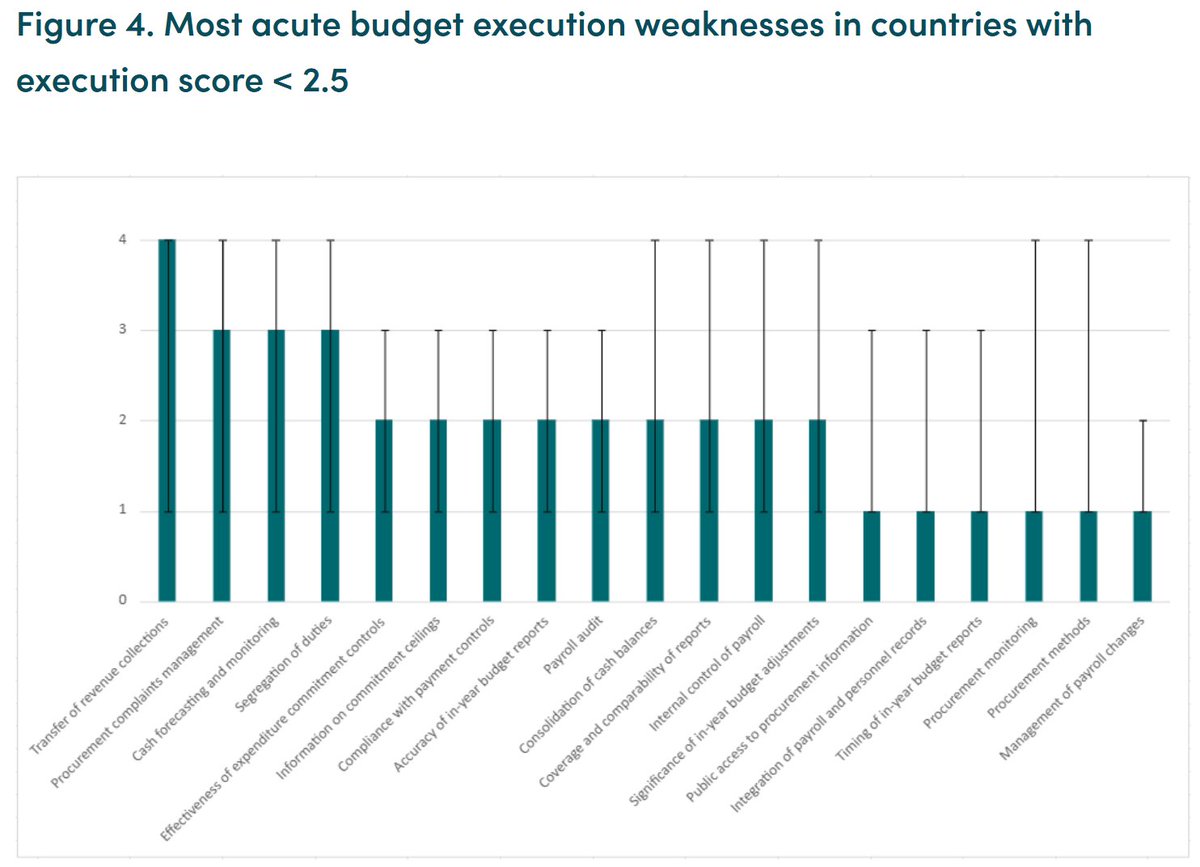
With aid budgets under pressure, budget execution matters more. Countries vary considerably in how well they execute public budgets. Better execution helps scarce resources reach services and strengthens the case for more. See CGD blog below
https://t.co/igODY5NHvd
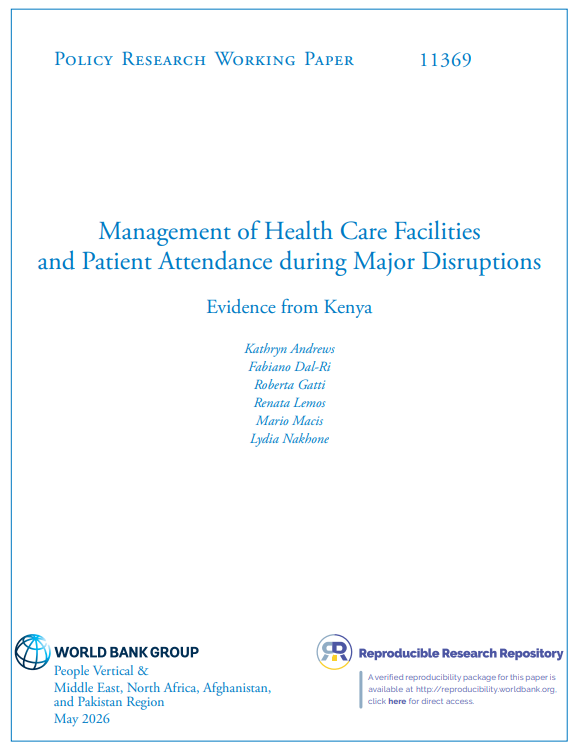
Excellent policy research on why management capacity matters for PHC resilience 👇
The PFM implications: get budget appropriations right, delegate authority, build capability, trust managers to use funds prudently, and check that they do.
https://t.co/VFLtlK93Hx
Strong public financial mgmt supports quality health services which are essential for helping create economic opportunity.
Join us on 11/19 to explore FinHealth 2.0, a new toolkit to identify financing bottlenecks & improve health service delivery. https://t.co/F3sxHwrbJf
Strong public financial mgmt supports quality health services which are essential for helping create economic opportunity.
Join us on 11/19 to explore FinHealth 2.0, a new toolkit to identify financing bottlenecks & improve health service delivery. https://t.co/F3sxHwrbJf
A new OECD publication: "Government Unstuck" asks: how can governments create room to maneuver when fiscal constraints are tightening? Relevant for health, where growing needs must increasingly be reconciled with constrained and often rigid budgets. https://t.co/GUL0UFk8Sw
Health budgets often underperform not because of low allocations, but because of weak alignment between PFM systems and sector needs. A new open-access chapter (Kwesiga et al.) traces this across the budget cycle, with cases from Uganda, Chile and Kenya.
https://t.co/0KBFmgrV2r
Join us for this Webinar introducing FinHealth: our new tool to address PFM bottlenecks in health. This will be an interactive session with substantive contributions from country voices.
Registration details below 👇
https://t.co/5kQp1ItQut
Public investments can have consequential externalities. Returns are aggregate, but costs born local. This can drive serious discontent.
In this @IMFNews blog I argue that we should consider these in the appraisal process.
More below. 👇
https://t.co/yzEPAQwKlB #PIM#PFM
ANNOUNCEMENT: Michael Kremer appointed as World Bank Group Chief Economist and Senior Vice President for Development Economics. https://t.co/B1hXFzHOnl
Both matter. Closing the gap on domestic resource mobilization and improving how those resources are allocated and executed are two sides of the same coin. PFM is how that credibility is built. It earns the trust, confidence of markets, and the leverage to negotiate from strength
This week the Public Finance for Prosperity and Resilience initiative will be launched at the #AfricaMindsetReset forum.
The forum, convened by leaders including President Kagame Mahama, is about who controls Africa's development trajectory.
@Francis_Gatare@KatoKimbugwe
Public financial management sits at the center of that conversation. Many African governments face a dual challenge. Revenue mobilization that falls well short of potential. And public spending that delivers far less than it could.